Text description provided by the architects
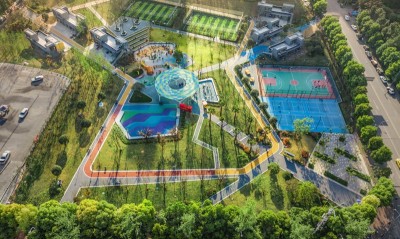
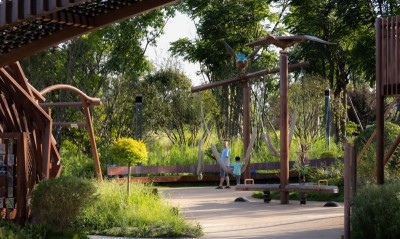
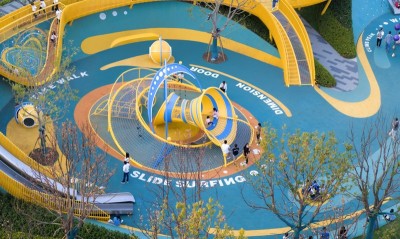
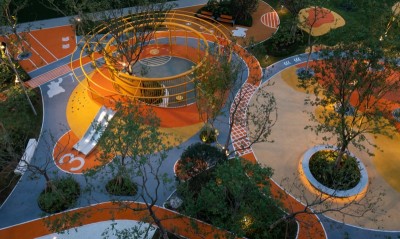
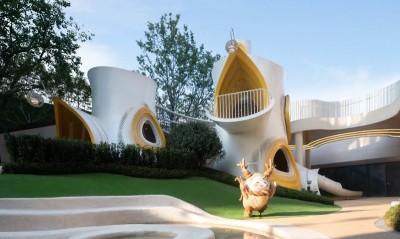
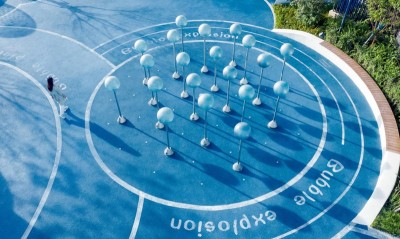
Taoyuan Forest International Tourism Resort is located in the core of the Yangtze River Delta Integrated Demonstration Zone, at the intersection of the Shanghai-Suzhou-Hangzhou golden tourism center, adjacent to Wuzhen, one of China's six great ancient towns. The overall plan covers approximately thirteen square kilometers, with tens of thousands of mu of water-town forest wilderness and nearly one hundred resort islands on the East China Plain. The forest coverage rate is about 90 percent, earning it the reputation as a natural forest island ecological museum, separated from Wuzhen by only a single river. The site is naturally flat and densely vegetated, mostly with tall trees. The design vision is to create childhood wonder within a forest sea, using natural exploration as the core concept for designing and implementing scenes and play equipment. The hope is that children, within this camphor forest, can understand and protect nature in a profound and fundamental way, opening up a new exploration of urban children's playgrounds. The site possesses excellent natural vegetation conditions, and the park is built within an original camphor forest. In this project, a low-intervention design strategy was used to achieve integration between facilities and environment, maximizing respect and protection of existing vegetation with moderate development. Ultimately, a regionally distinctive nature exploration park was quietly inserted into the camphor forest. Presented in an original ecological state, the park uses unpowered natural exploration to create the most intimate contact and play between people and nature. The Mumu Adventure Zone takes its name from a classical poem: the first rays of dawn are an invitation from the forest. The distinctive forest-water-town of Jiangnan is the origin of all stories at Taoyuan. In this mysterious forest haven, adults and children alike discover nature's wonders.




 Editor's Pick
 Latest Design