Text description provided by the architects
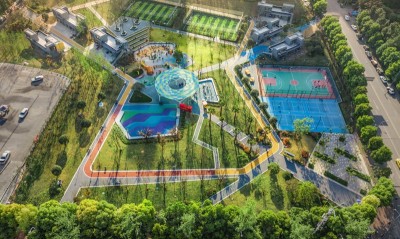
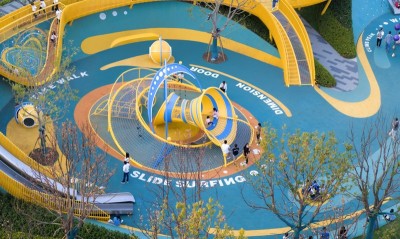
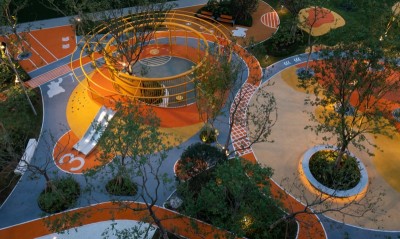
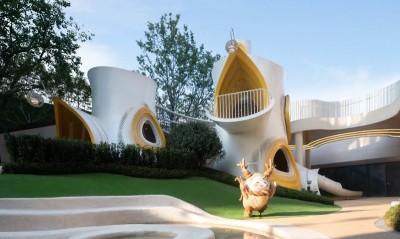
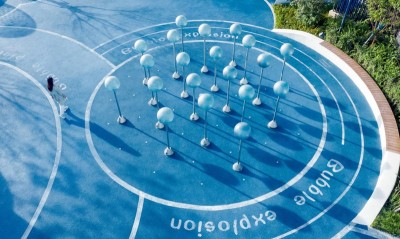
Hidden inside the wetland island of Dong'an Lake Park, the landscape heart of the 31st Summer Universiade in Chengdu, the Niaoyu Tanmi Wetland Children's Playground is a 5,500-square-metre nature-play destination developed by L&A Design's Folkee children's brand for Chengdu Jingkai Construction Management. Framed by reeds, water plants and flowering perennials, the park is pitched as a place where children meet wildlife face to face, learning about wetland ecology through play rather than on a textbook. The design takes the birds and plants that actually live on Dong'an Lake as its cast: grey herons, black-headed gulls, white-headed ducks, fork-tailed sunbirds and calamus reeds are translated into towers, climbing structures, signage and interactive exhibits organised around four narrative zones. At the entrance, a heron tower perches above the water with three chicks in a nest containing three eggs, and animation hidden inside the eggs reveals the hatching process. Three further nest towers represent different nesting strategies, each holding three ordinary eggs and one interactive egg that lights up or sounds when children clap or knock. Spinning puzzle tables match beak shapes to diets and habitats, and a suspended ribbon bridge links the north and south of the site with high-ropes challenges at two difficulty bands for younger and older children. Along the reed-lined path, children follow animal footprints set into the ground to compare how waders, gulls and other birds walk. Multi-user swings and a wing-shaped seesaw dramatise aerodynamics, while a birdwatching hut uses floor sensors that change seasons on a projected migration map as children step across it. A final zone honours the peach-blossom jellyfish, the so-called panda of the water that reappeared in Dong'an Lake in 2021 as evidence of improving water quality, and a ball-chain exhibit makes the wetland's nutrient loop visible. With more than sixty high-ropes elements and a suite of science quests, the park is intended both as a camp and as an outdoor classroom, seeding in its young visitors a concrete instinct to respect the wetland around them.




 Editor's Pick
 Latest Design