Text description provided by the architects
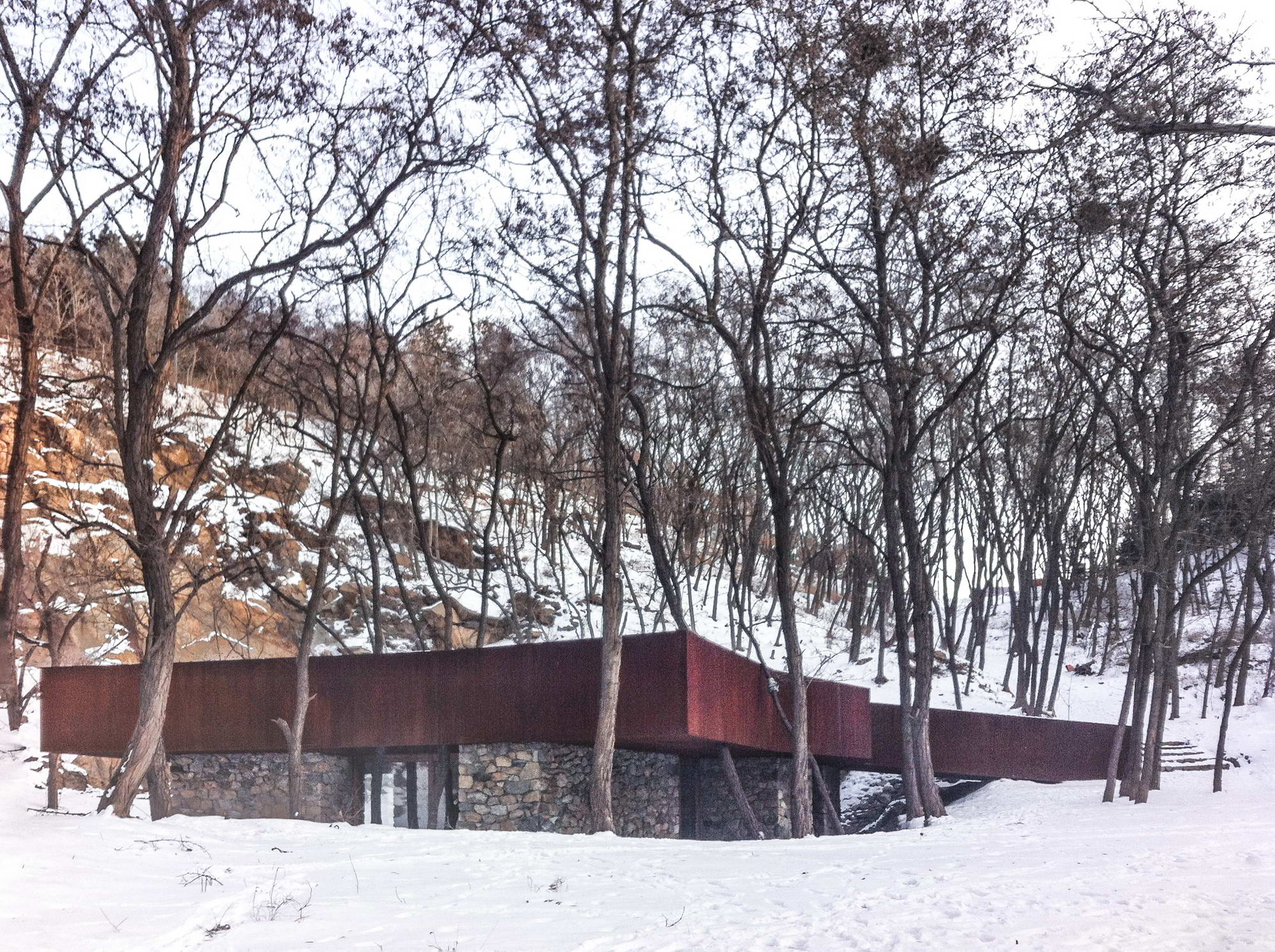
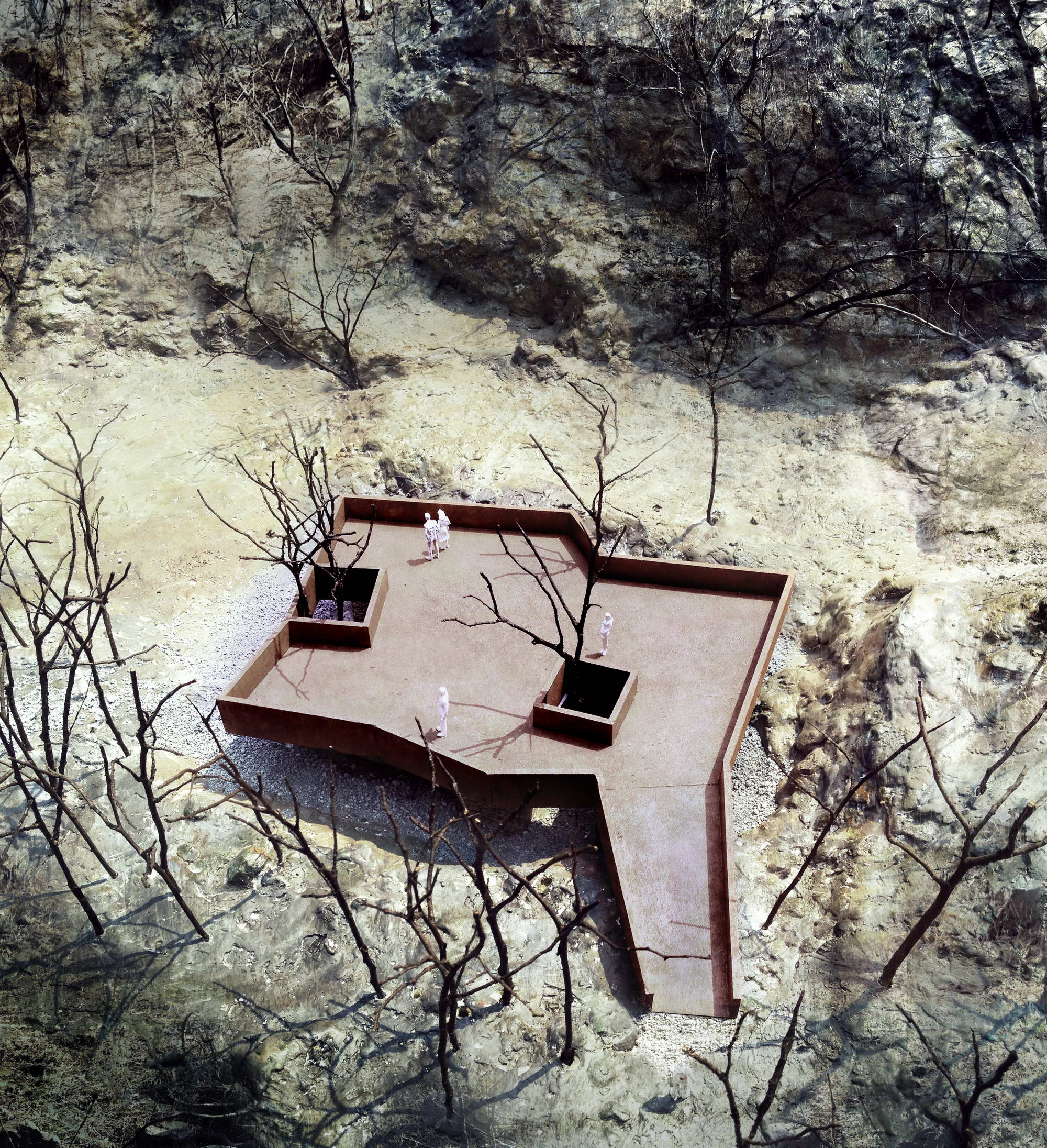
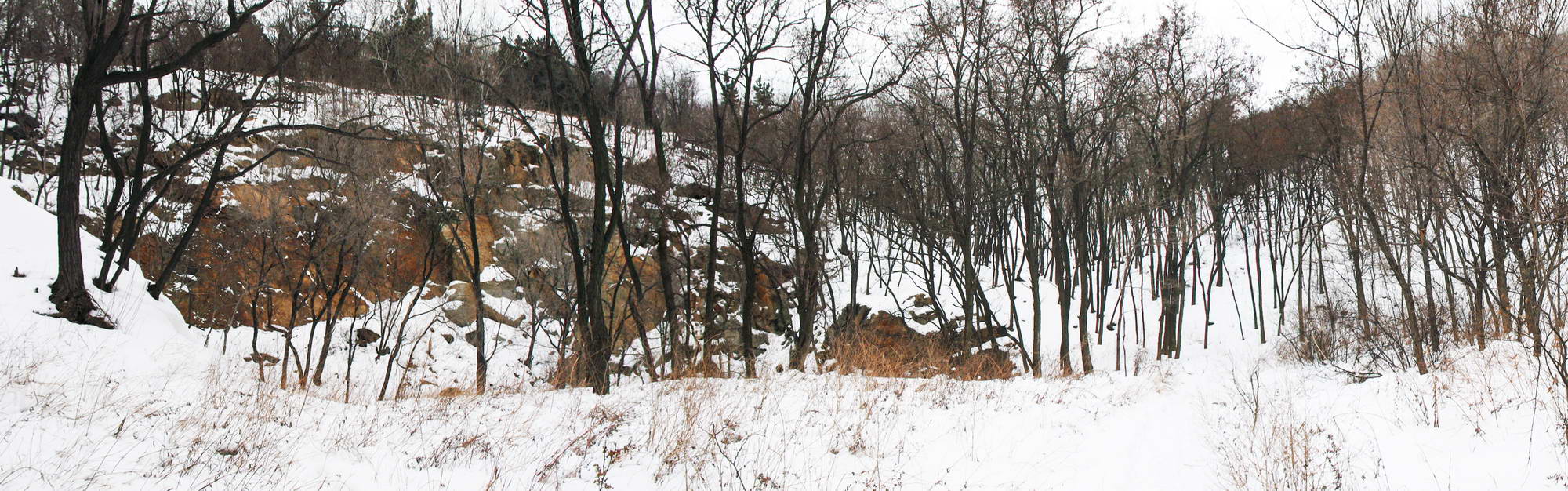
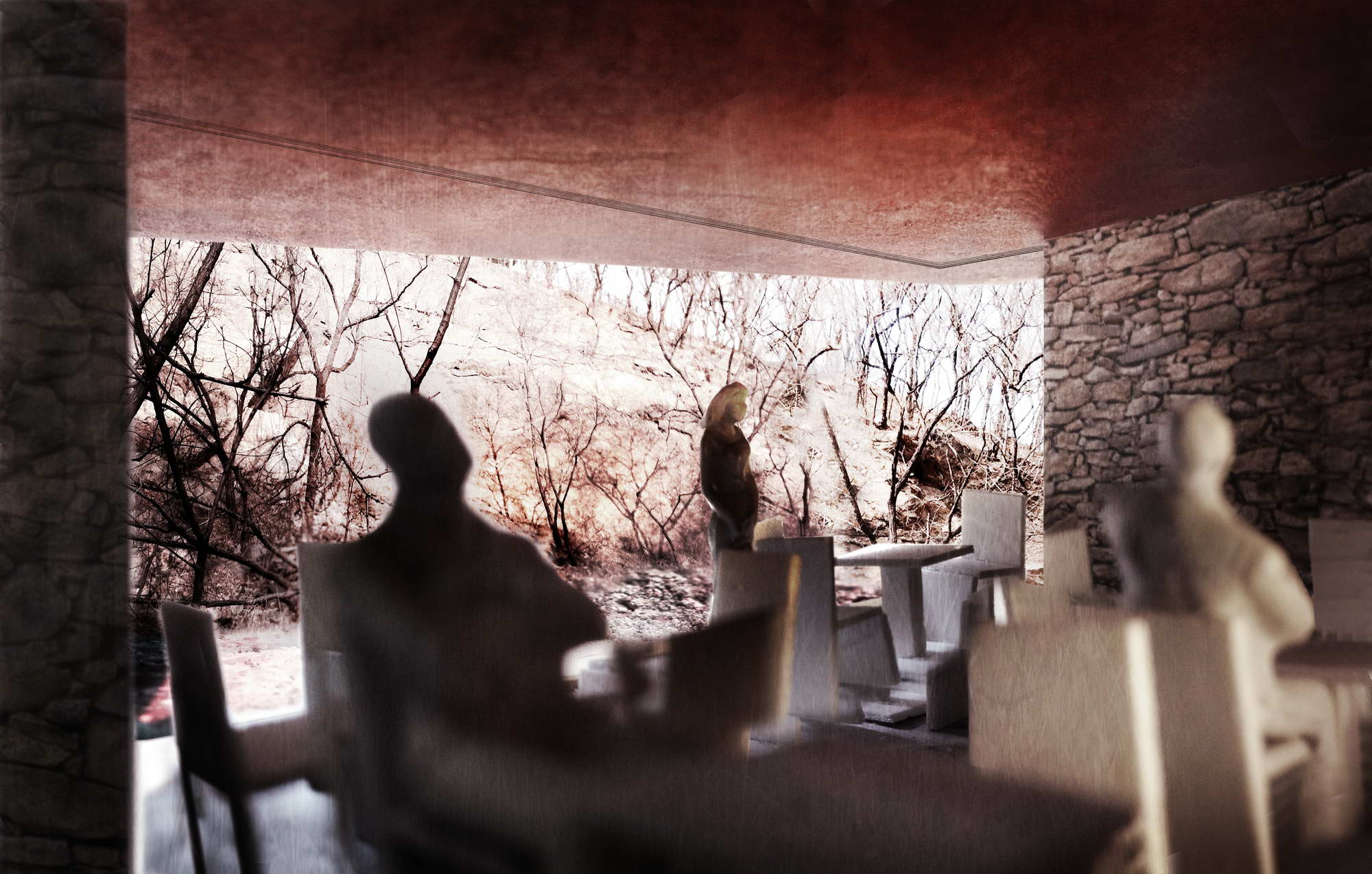
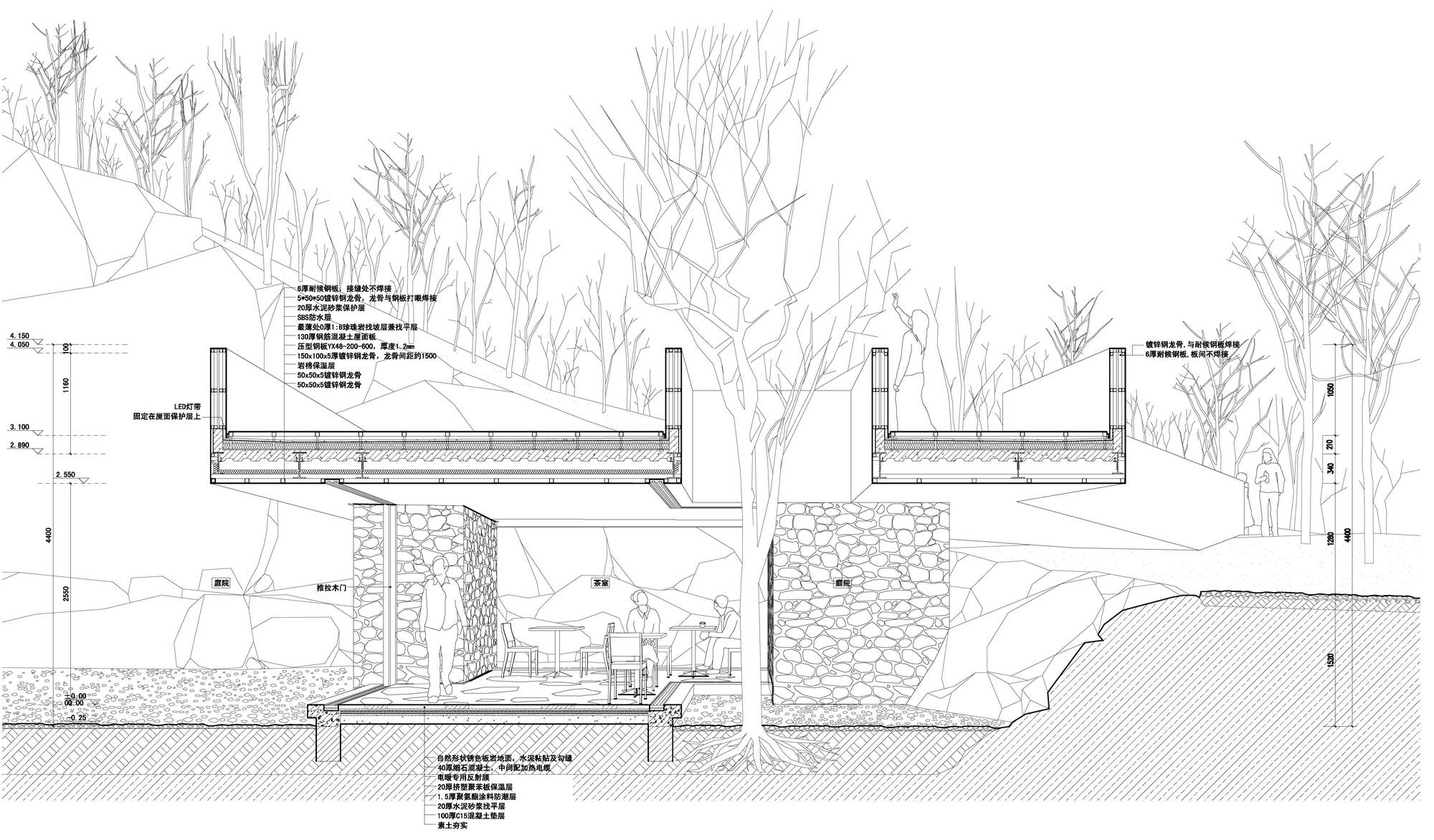
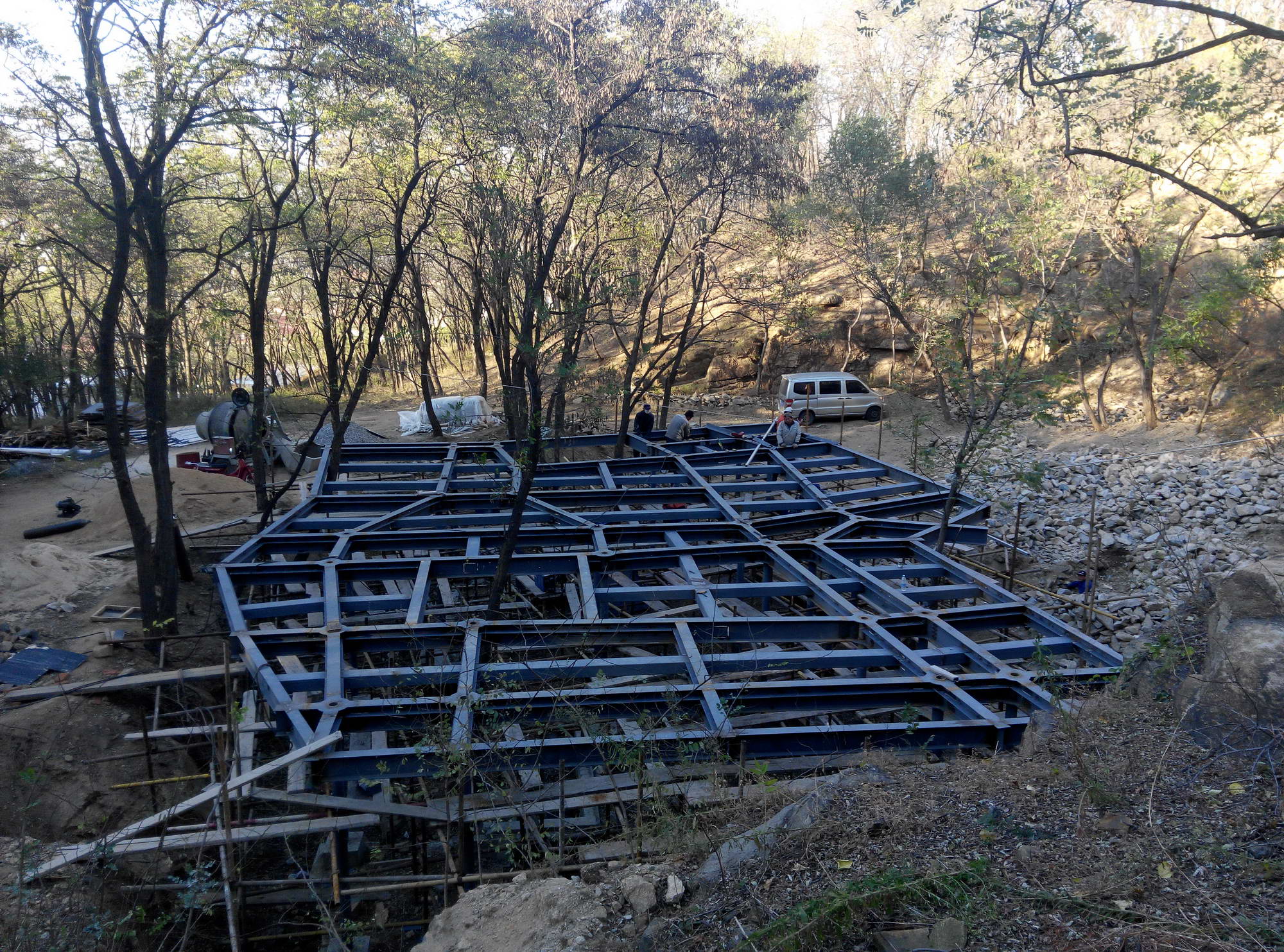
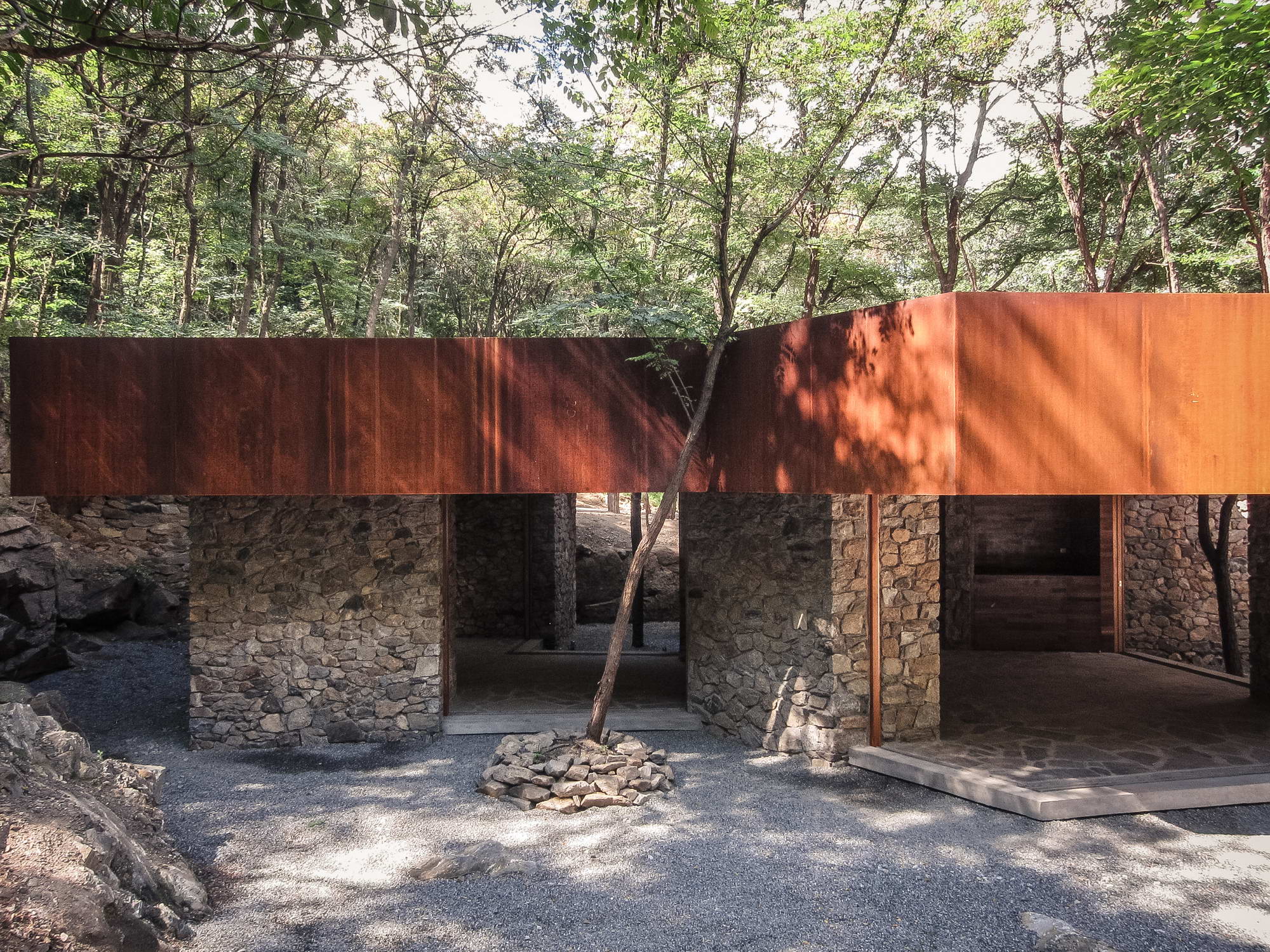
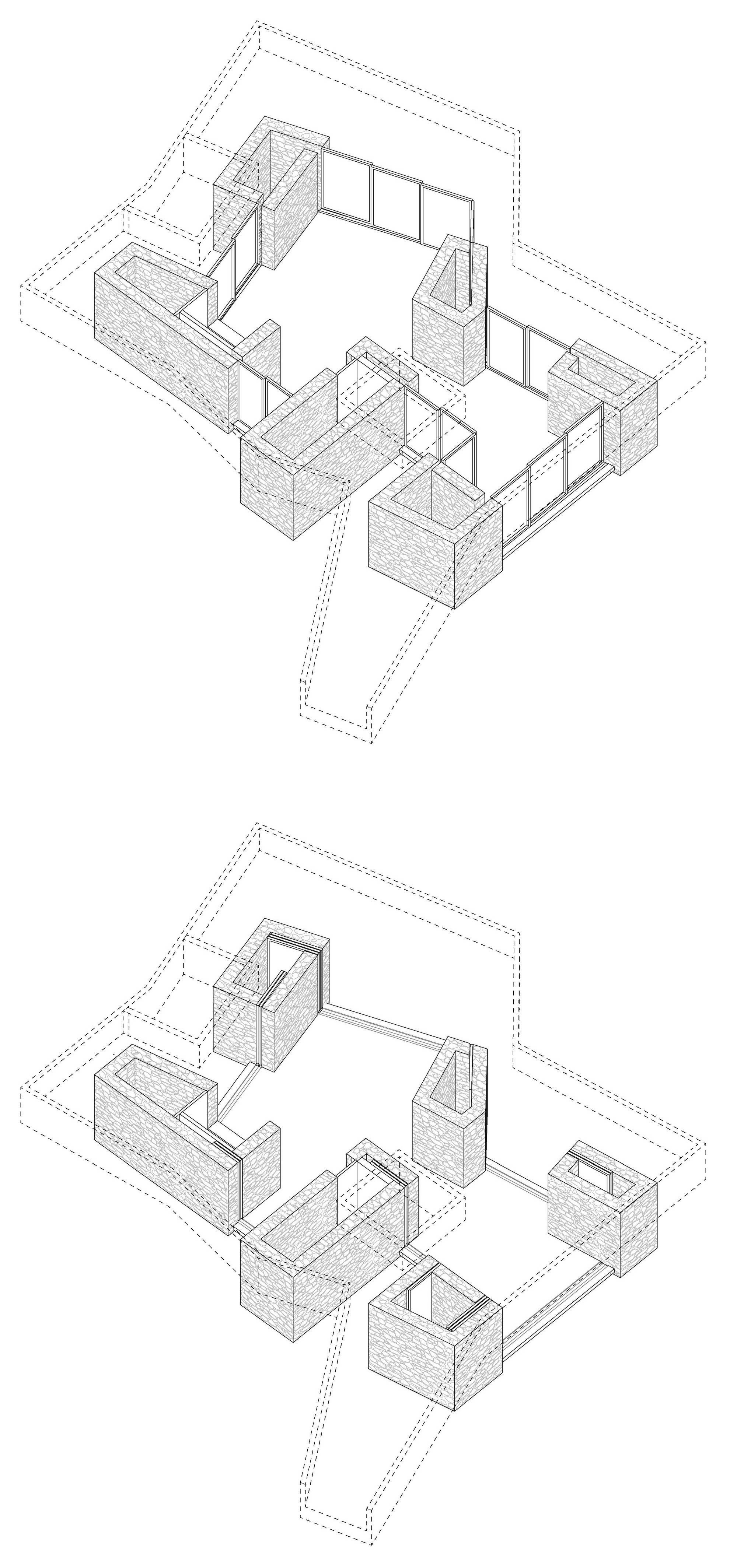
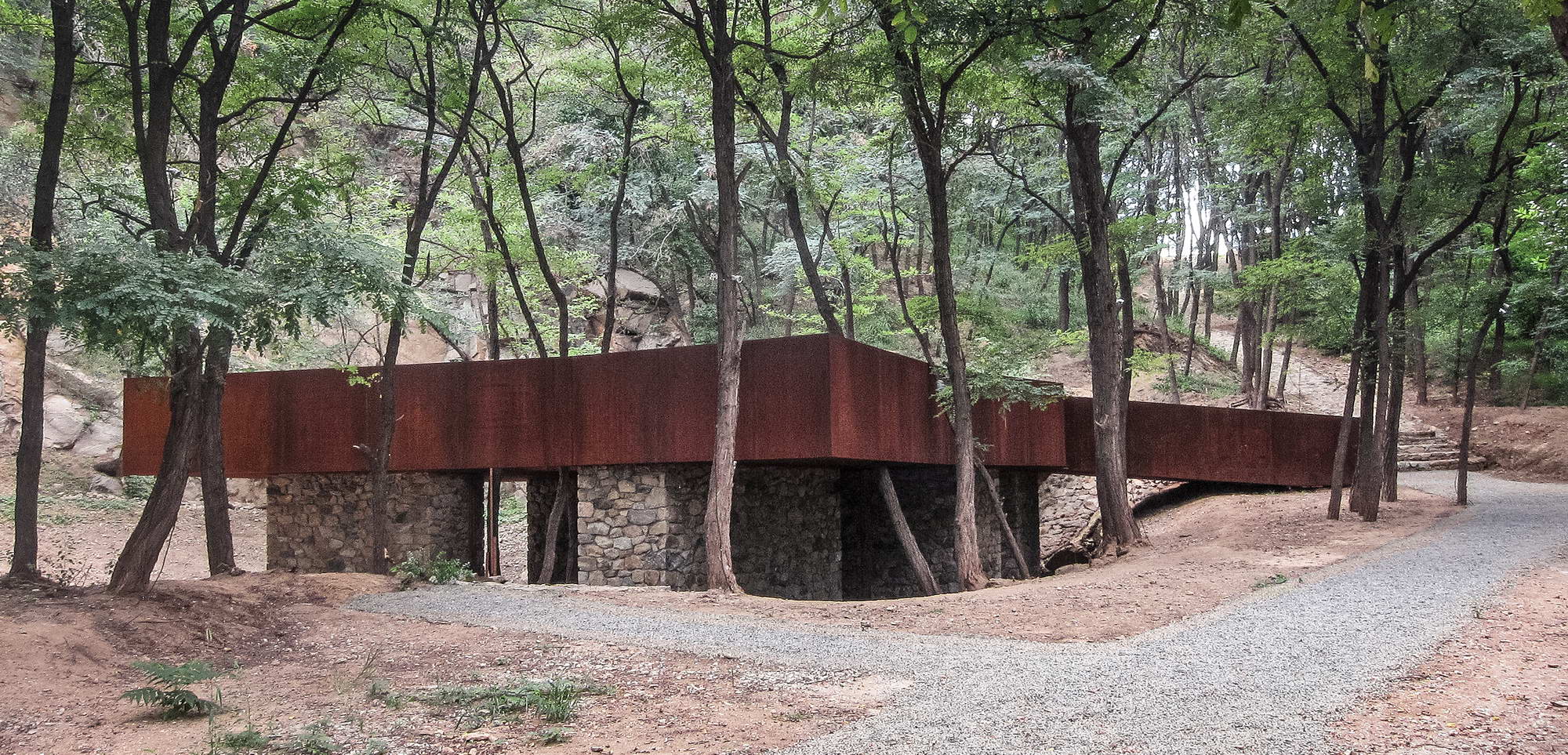
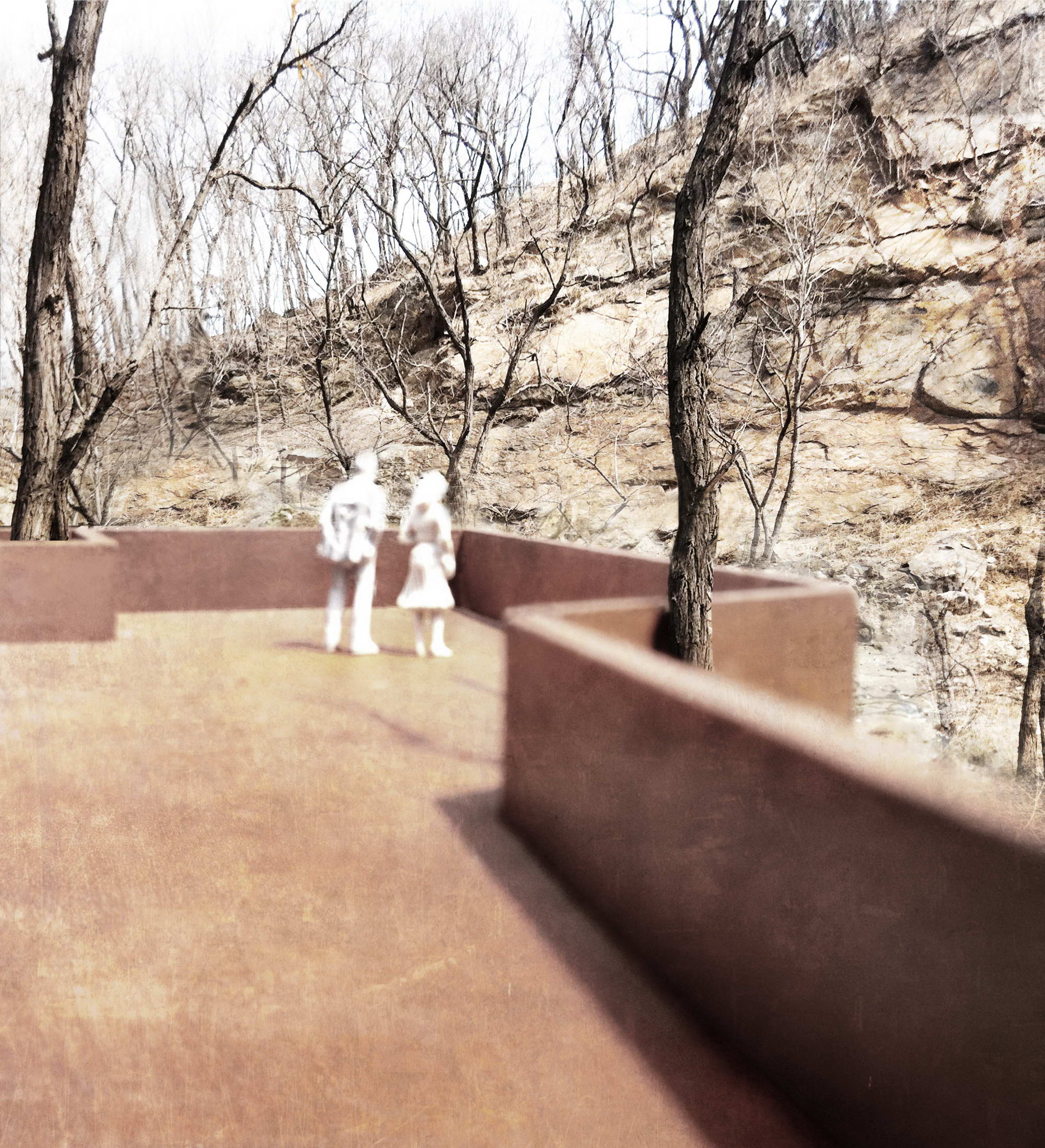
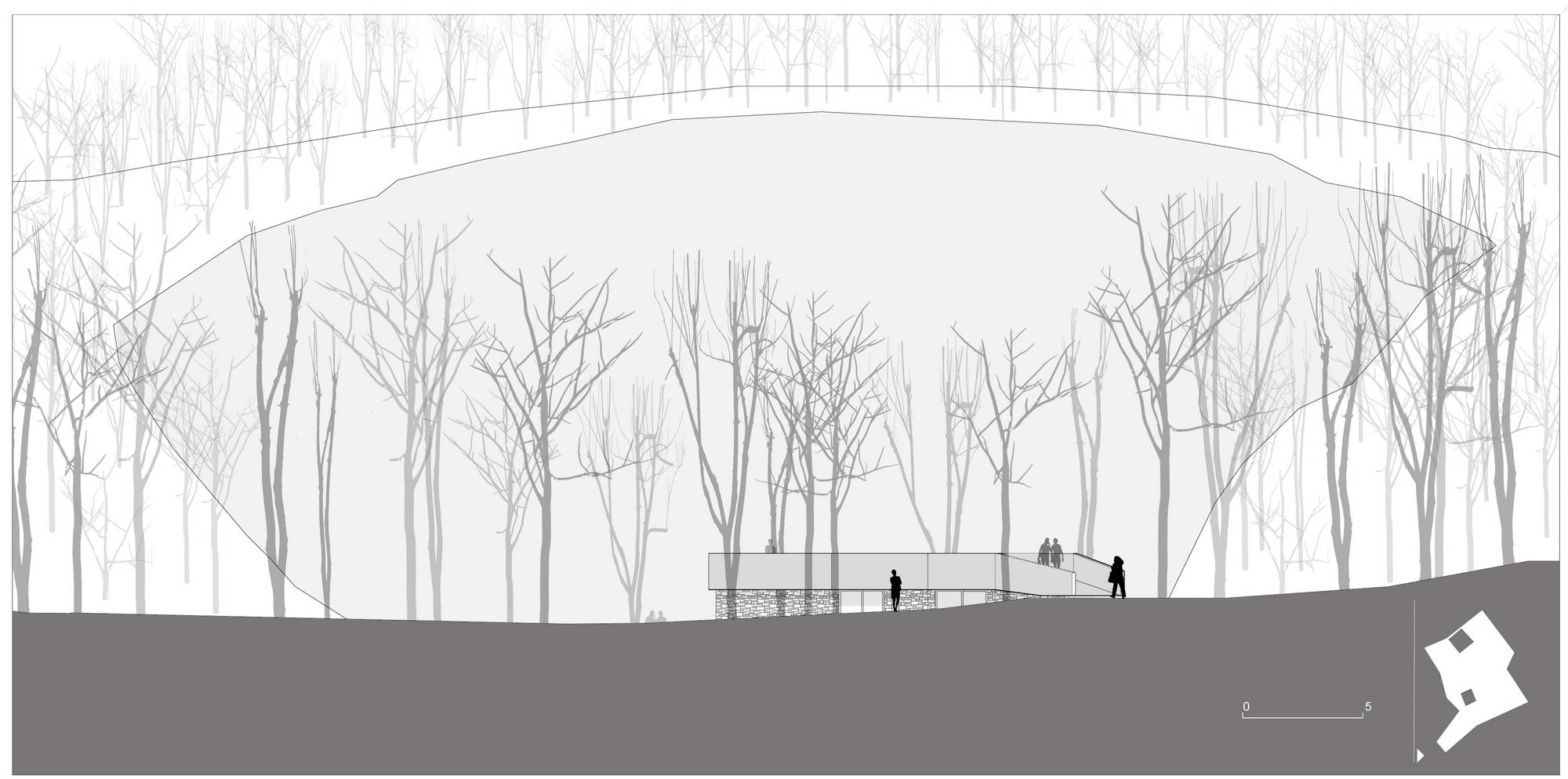
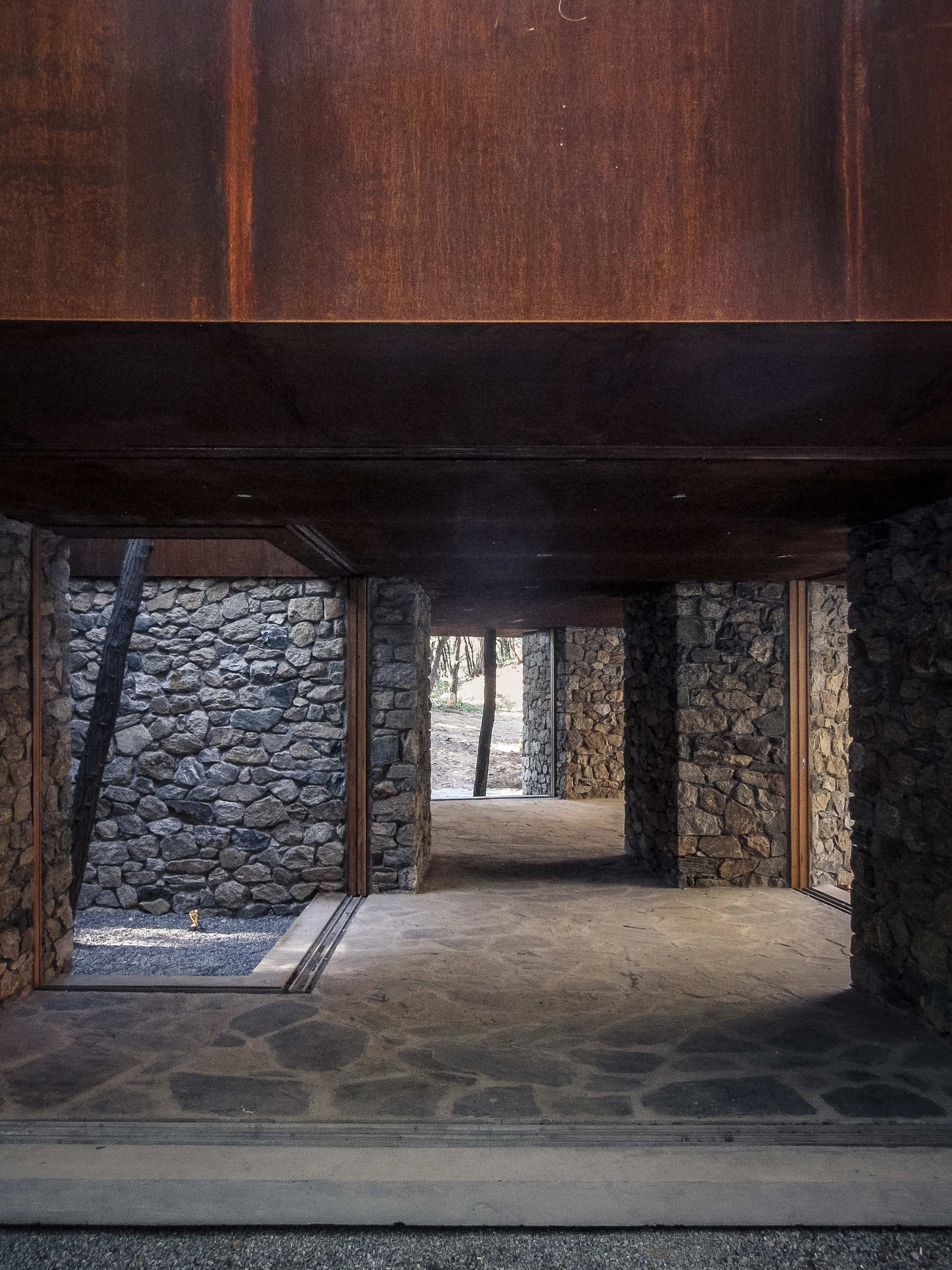
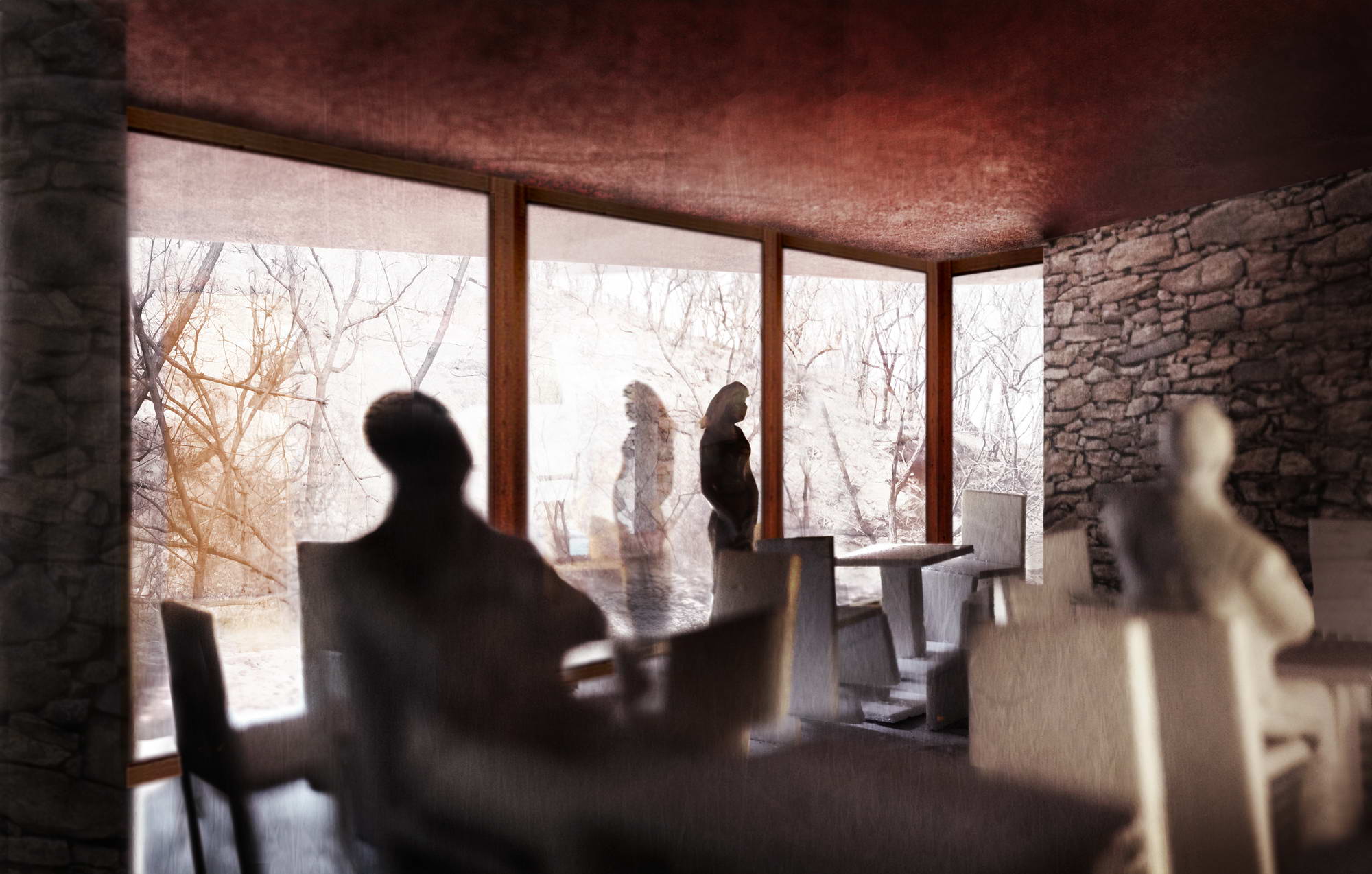
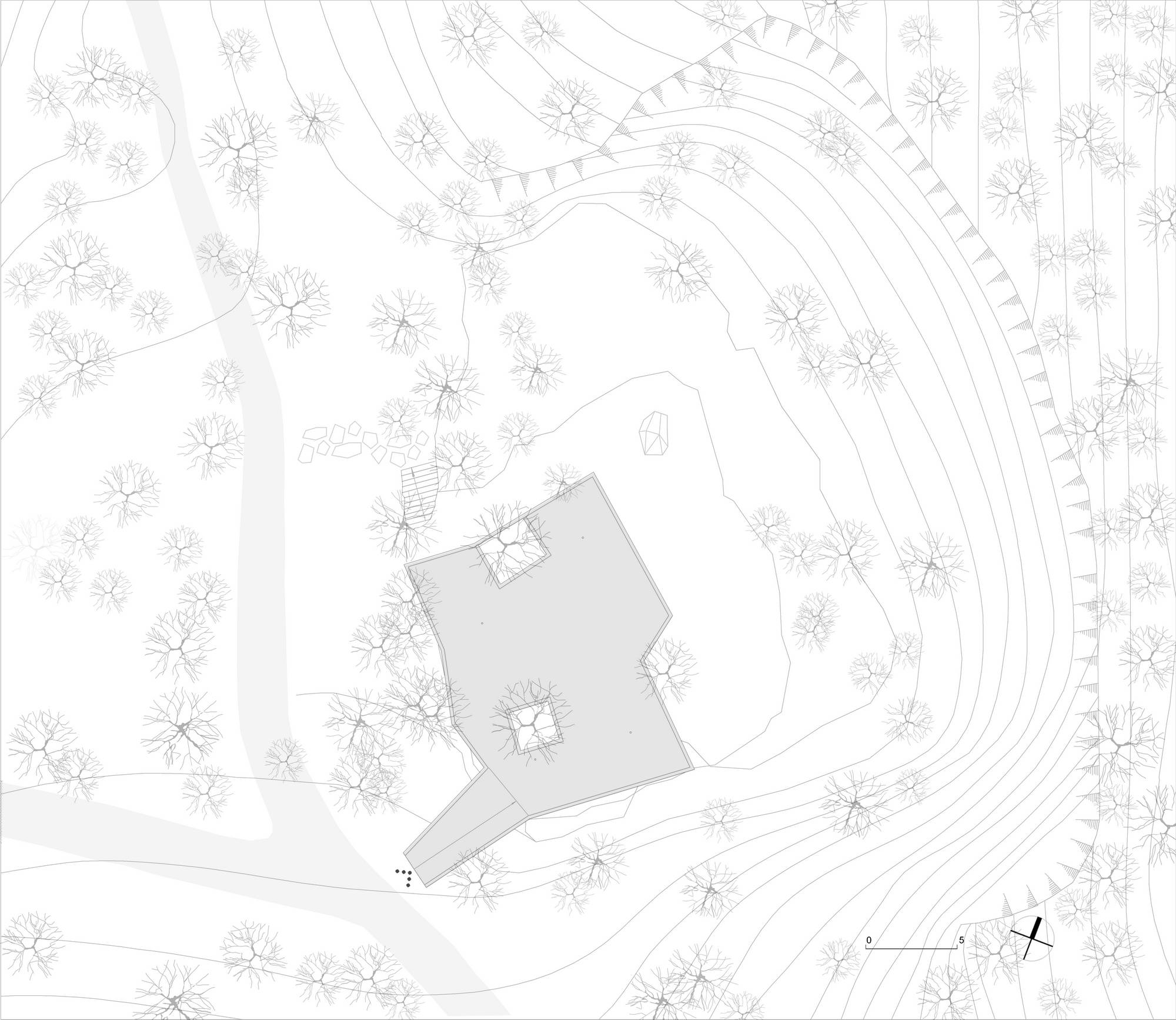
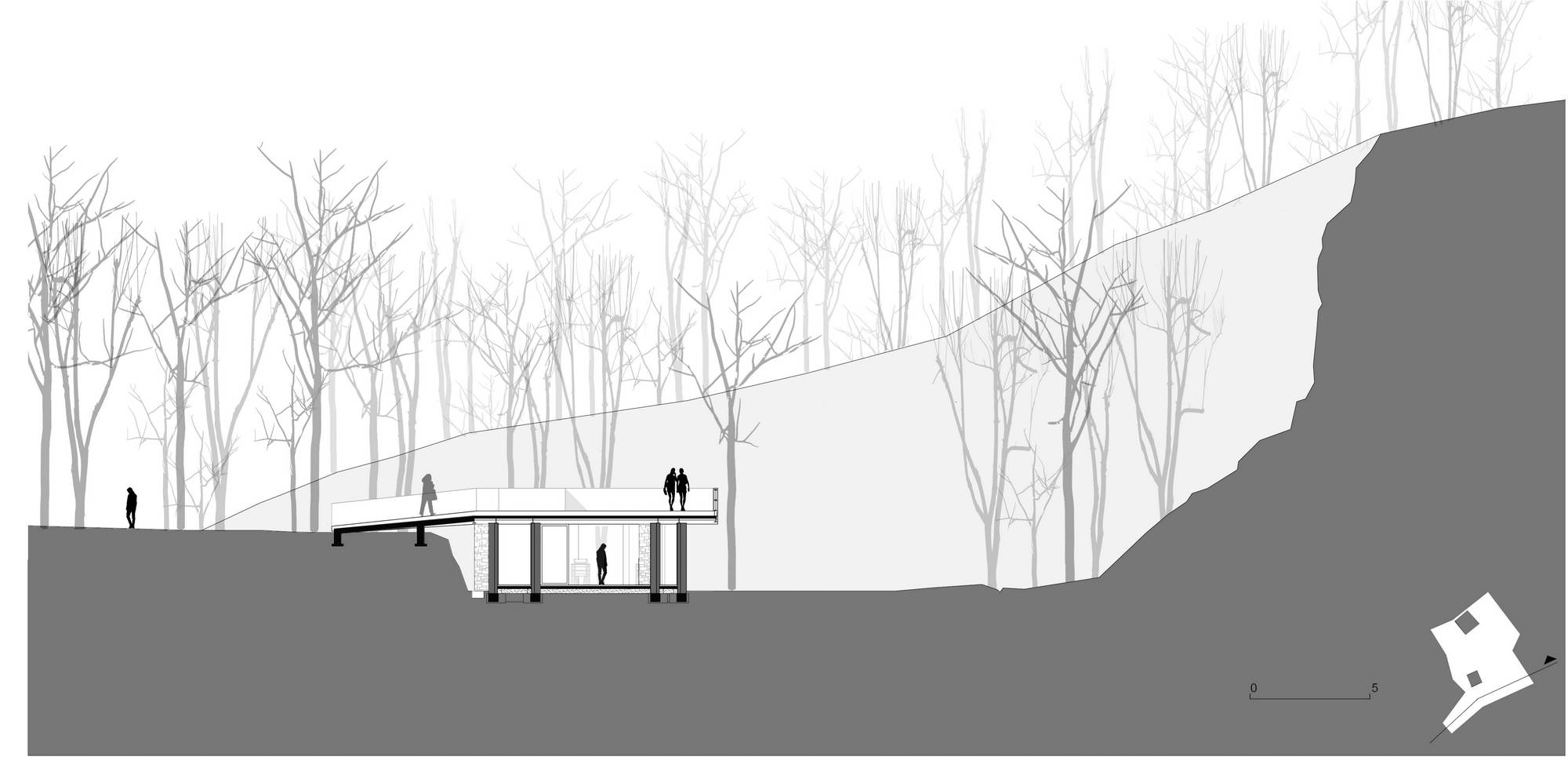
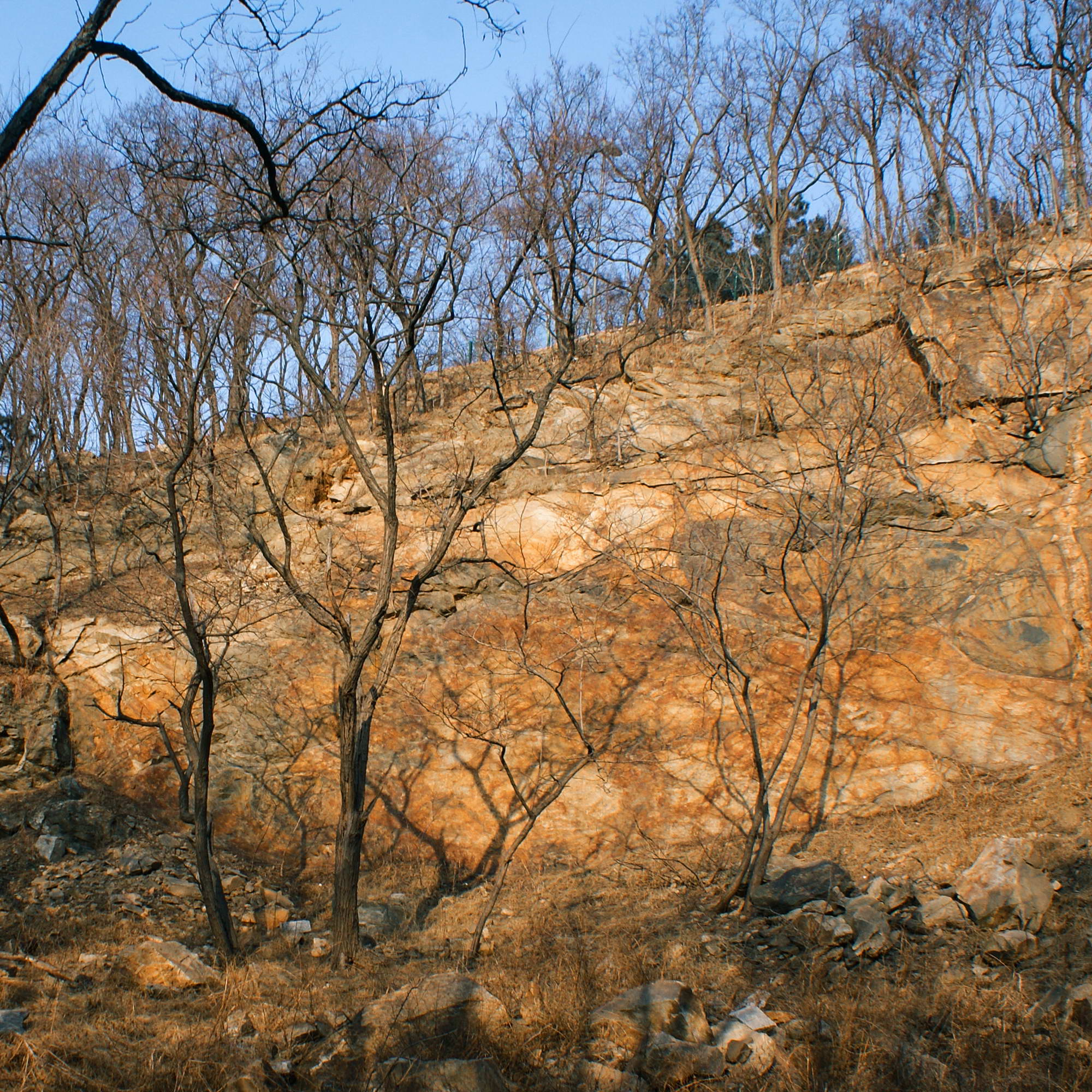
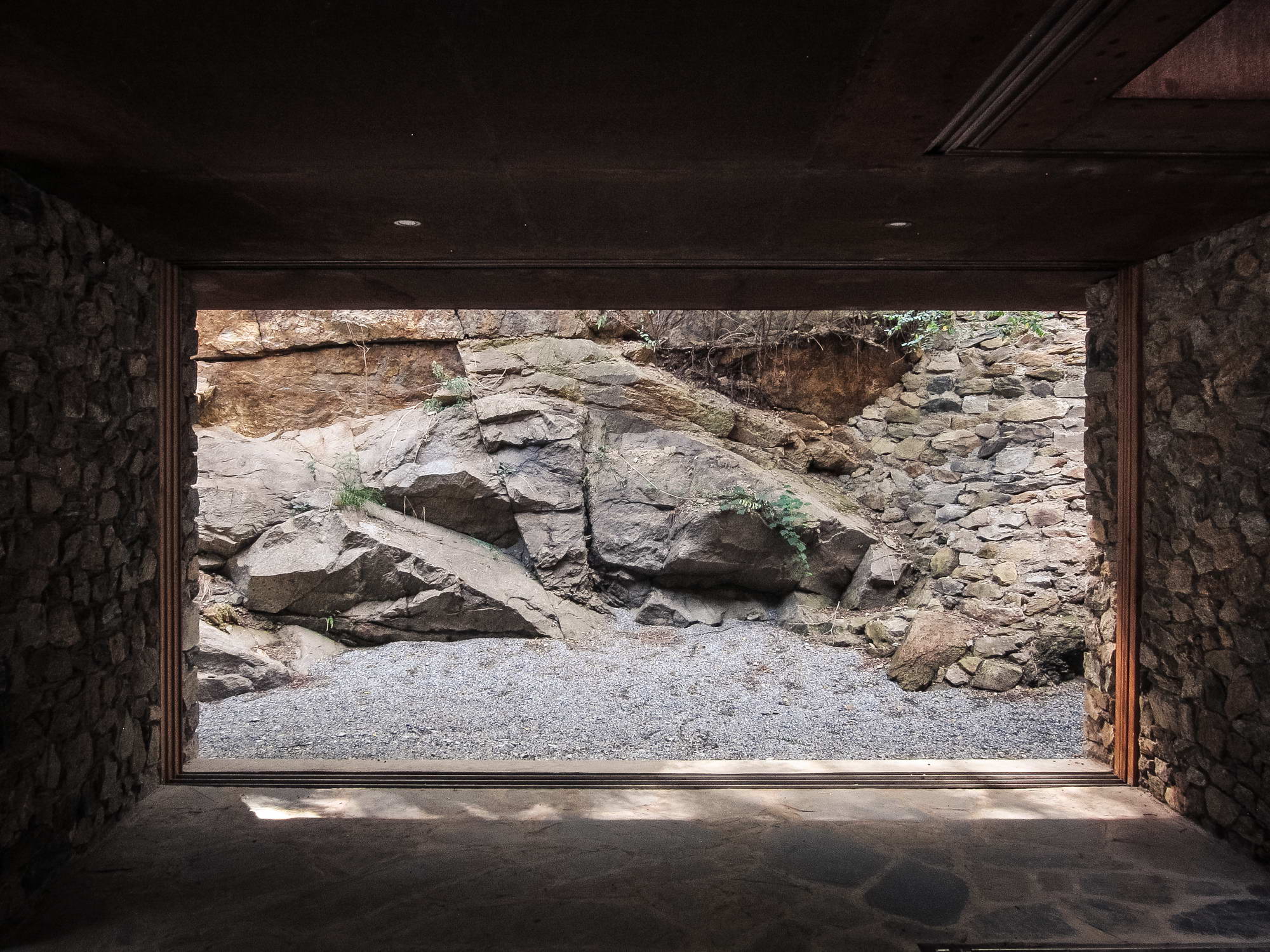
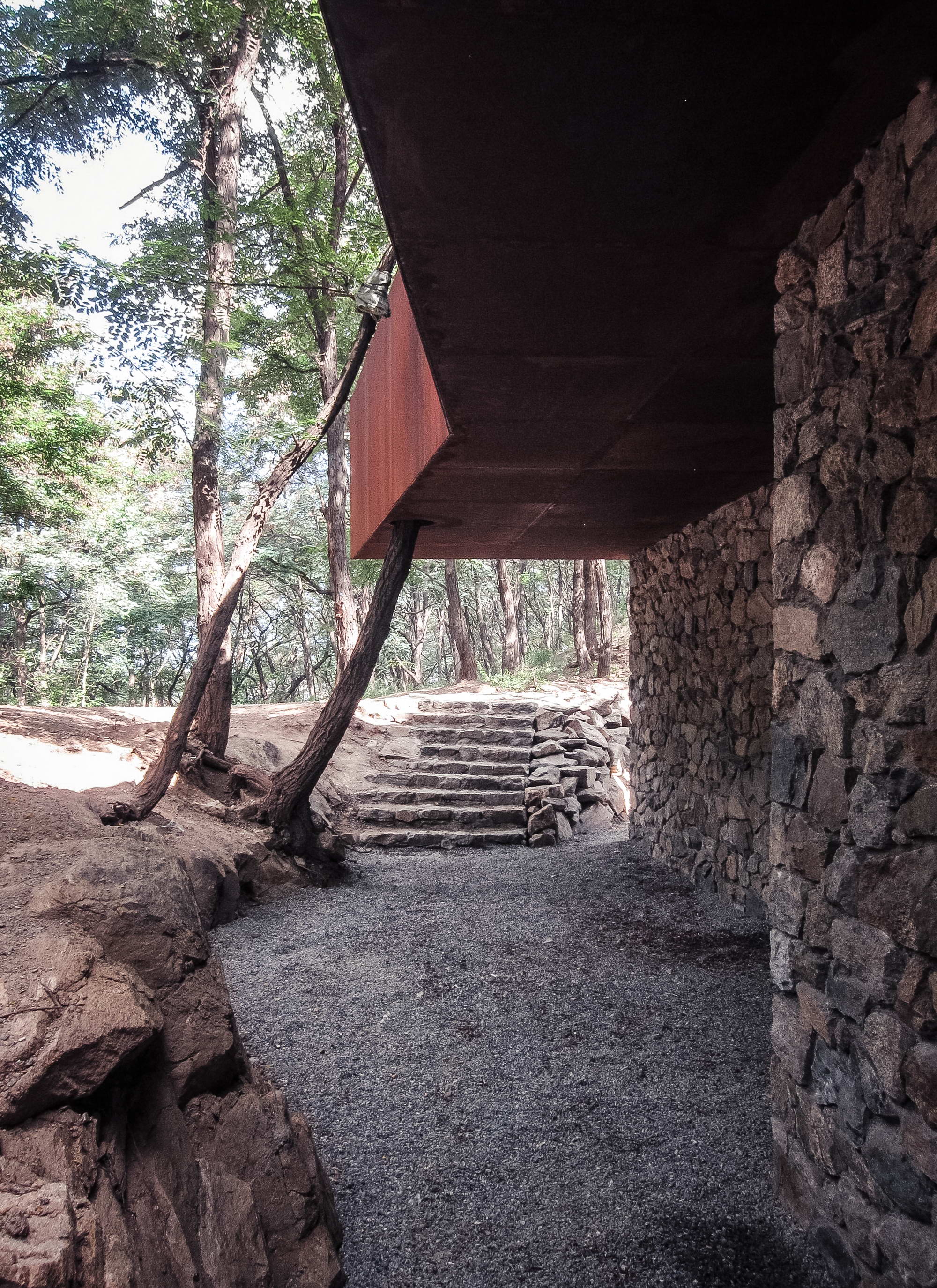
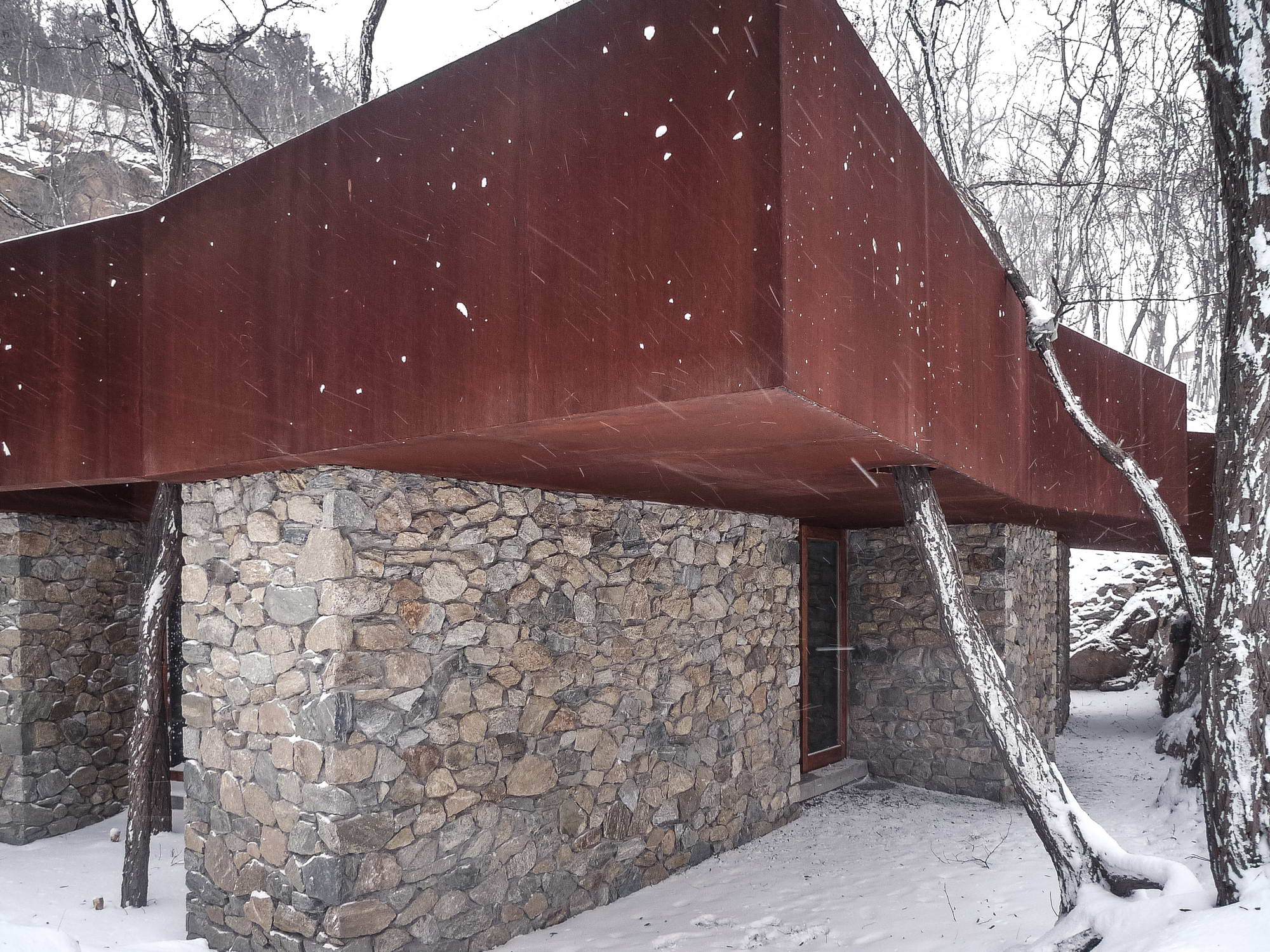
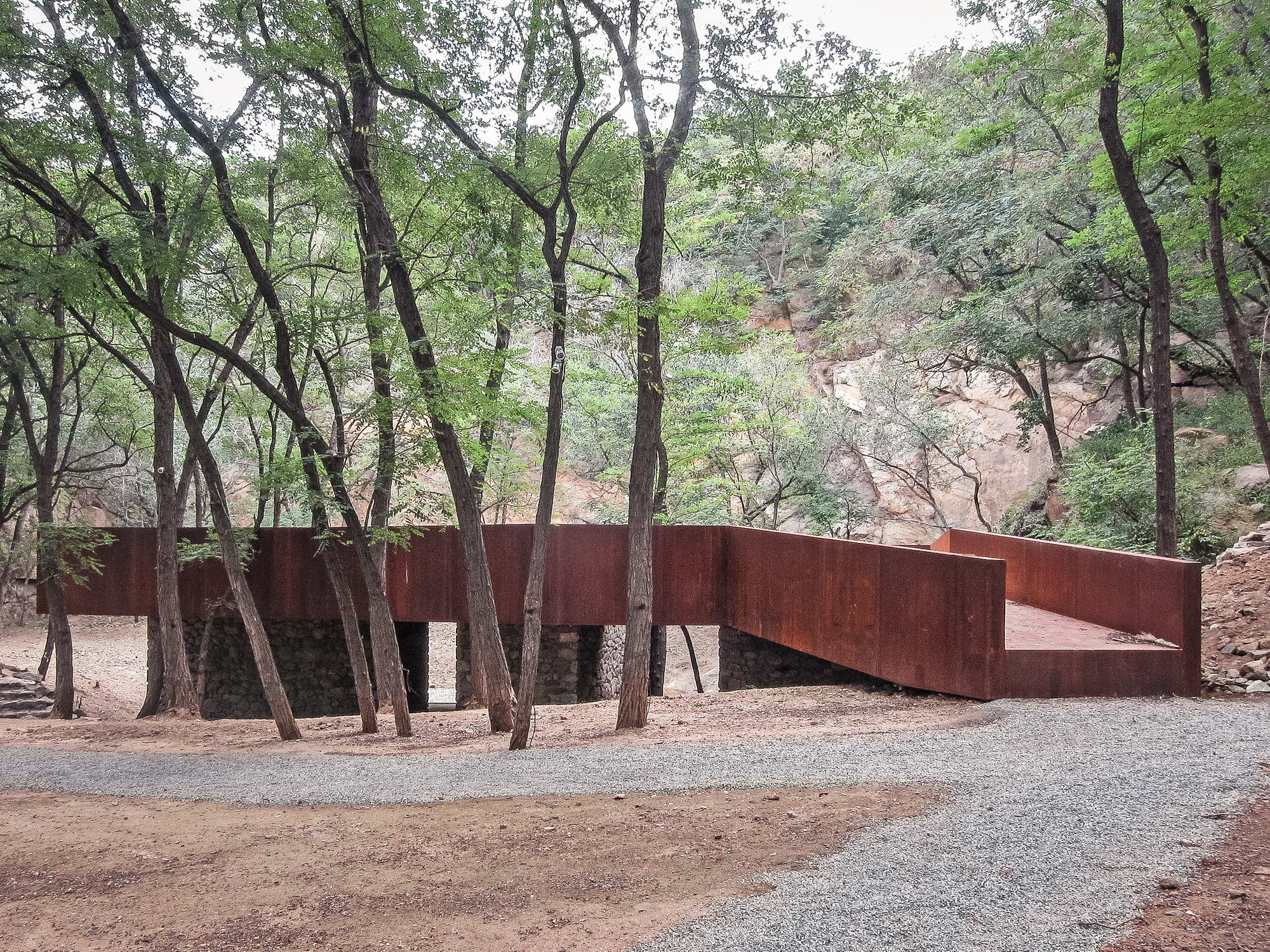
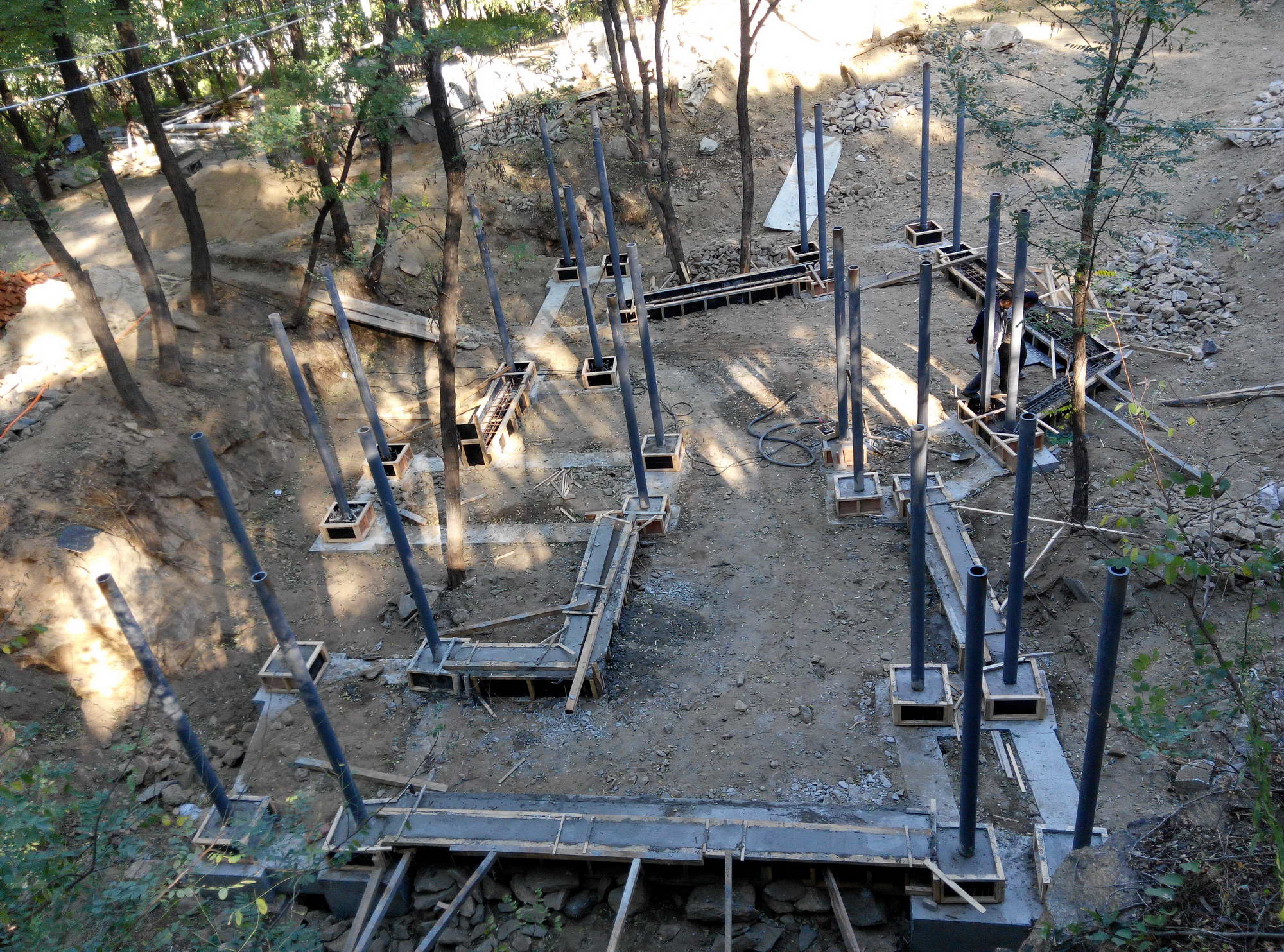
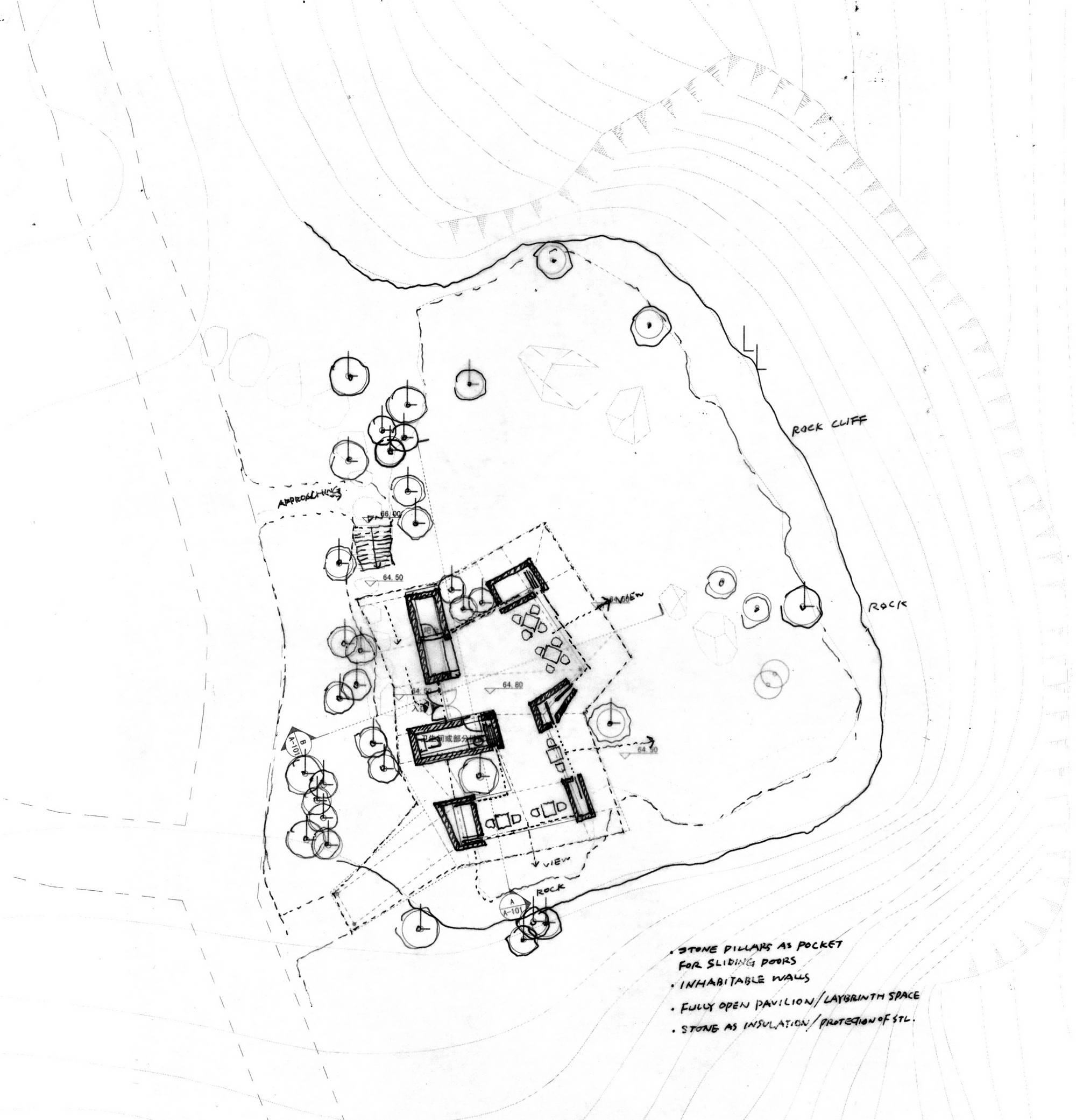
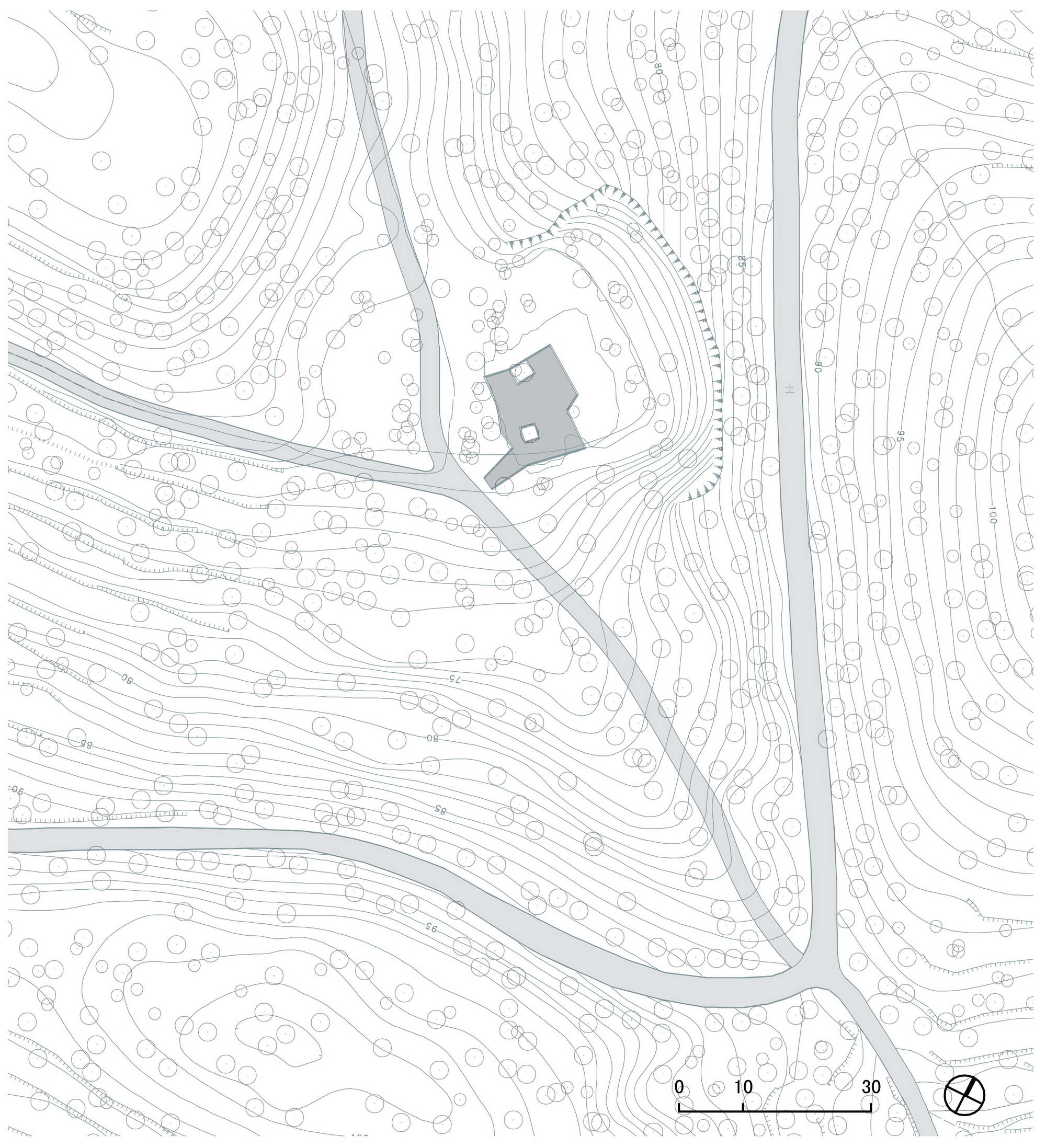
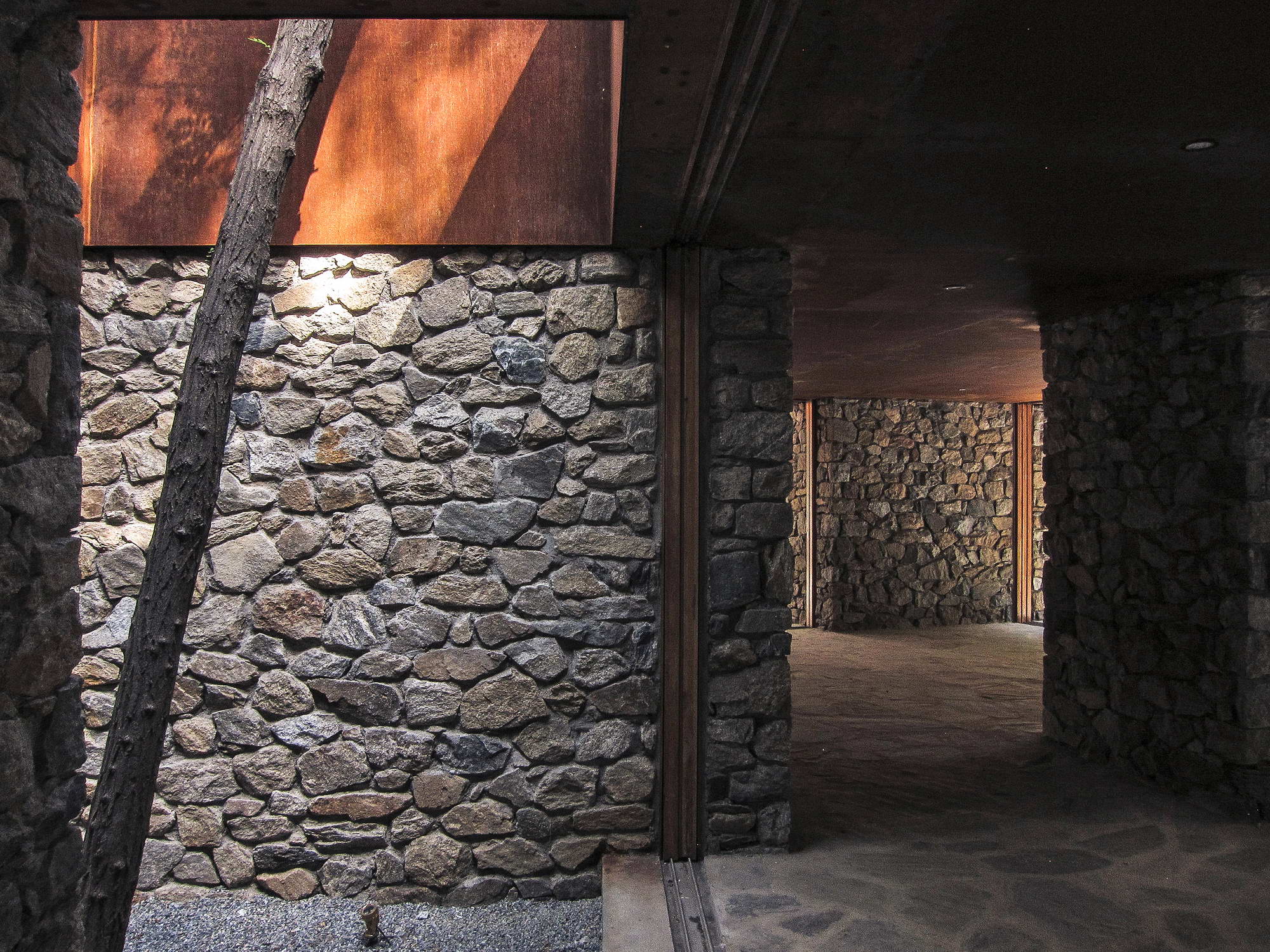
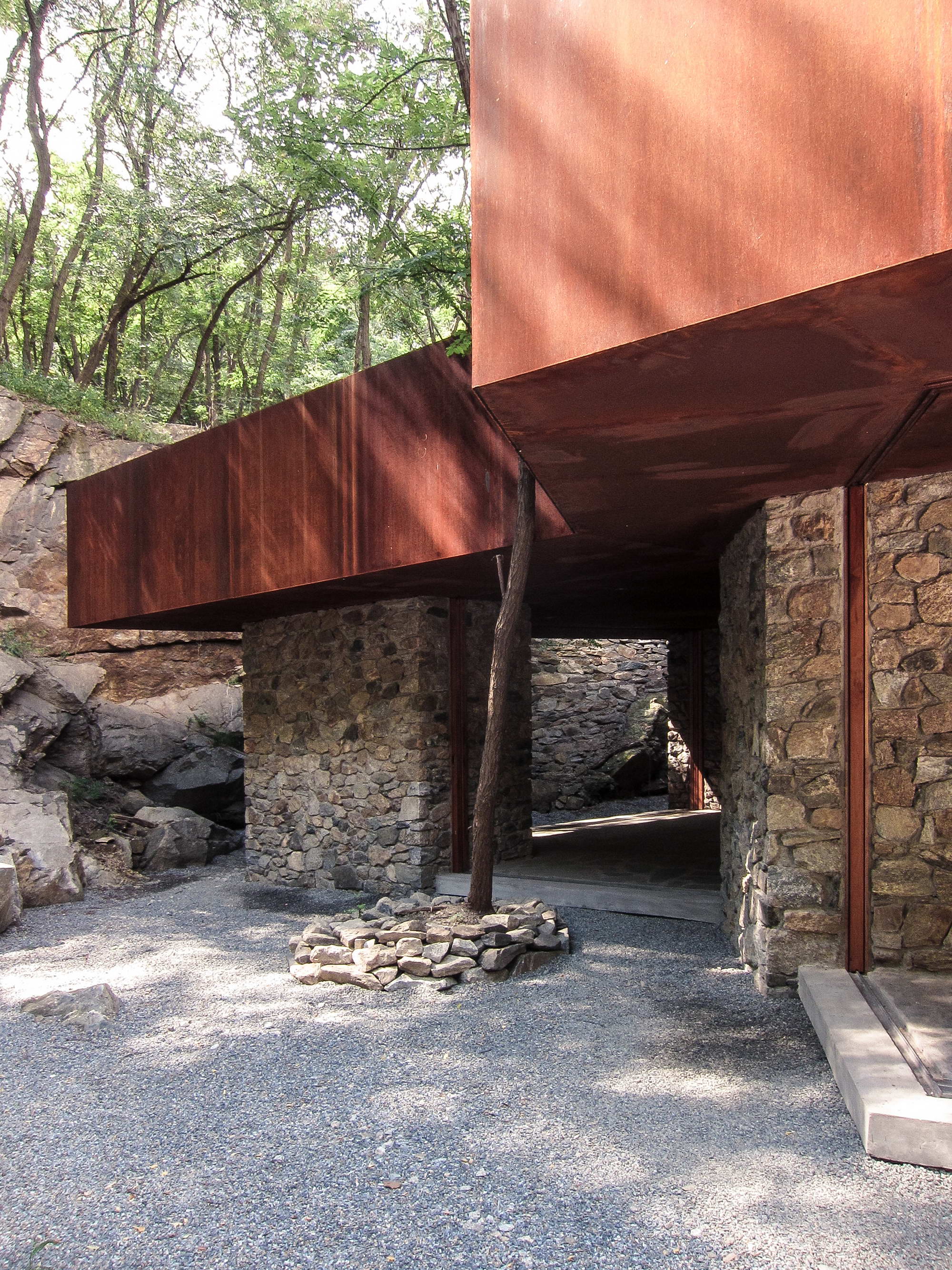
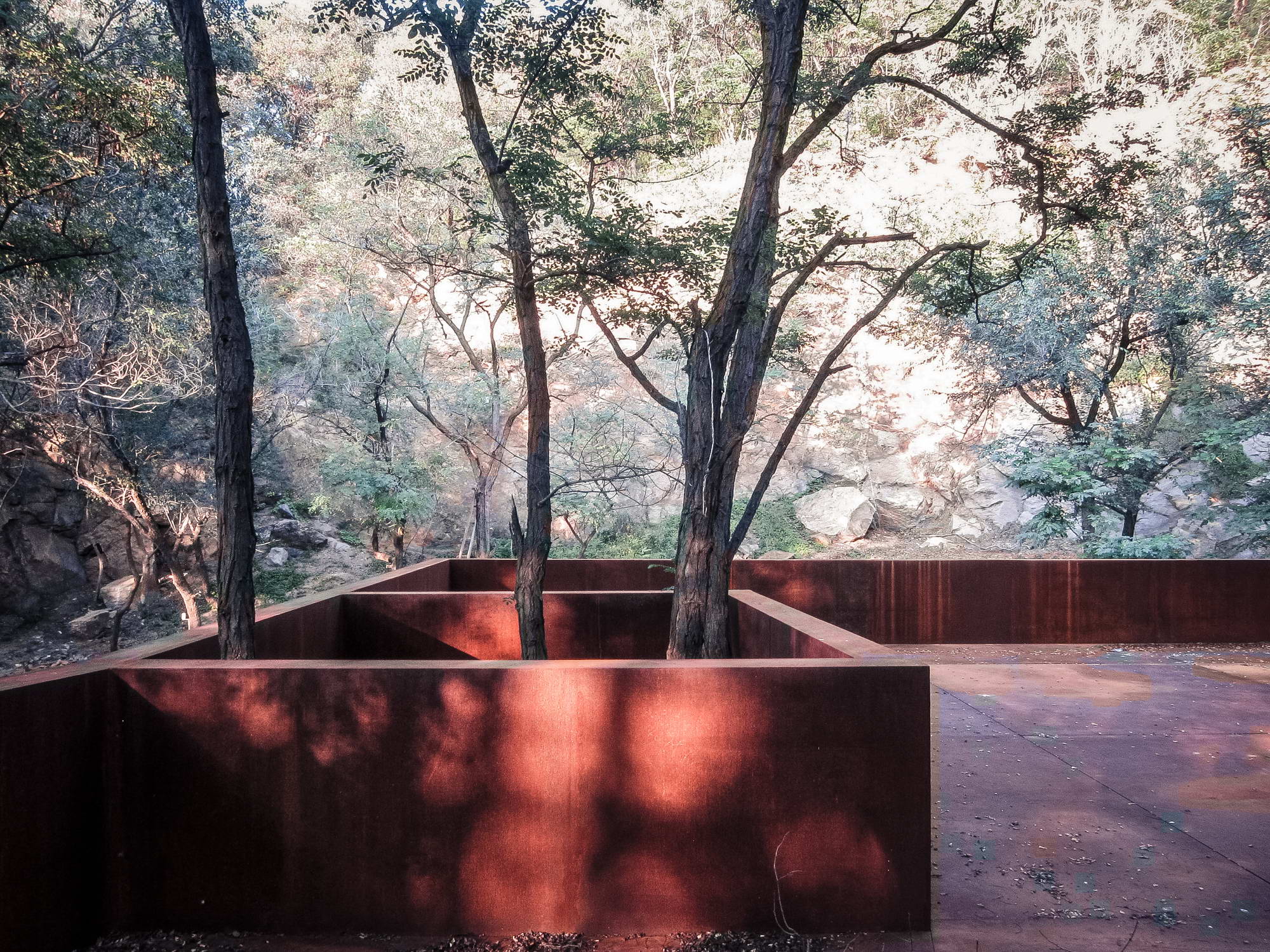
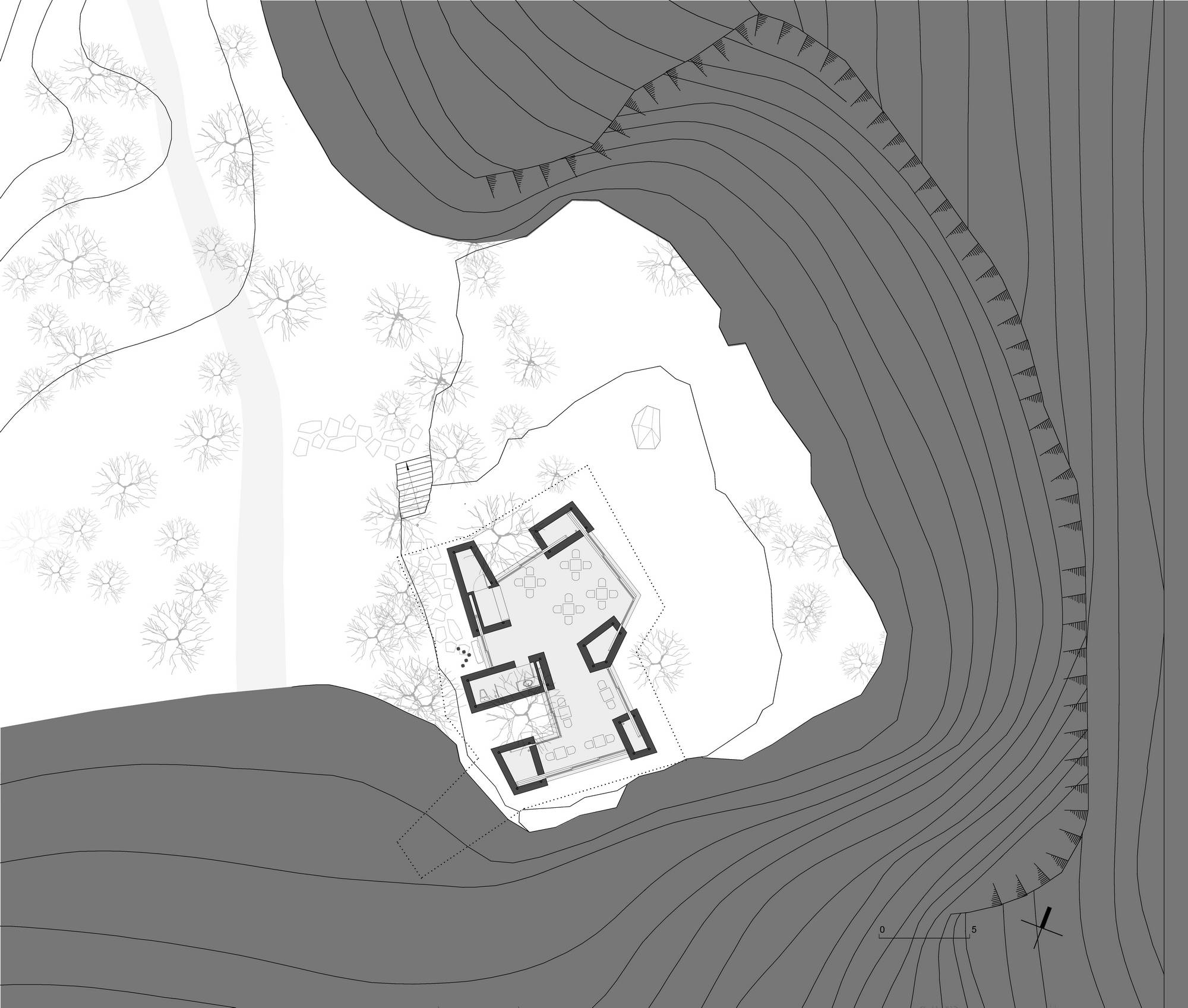
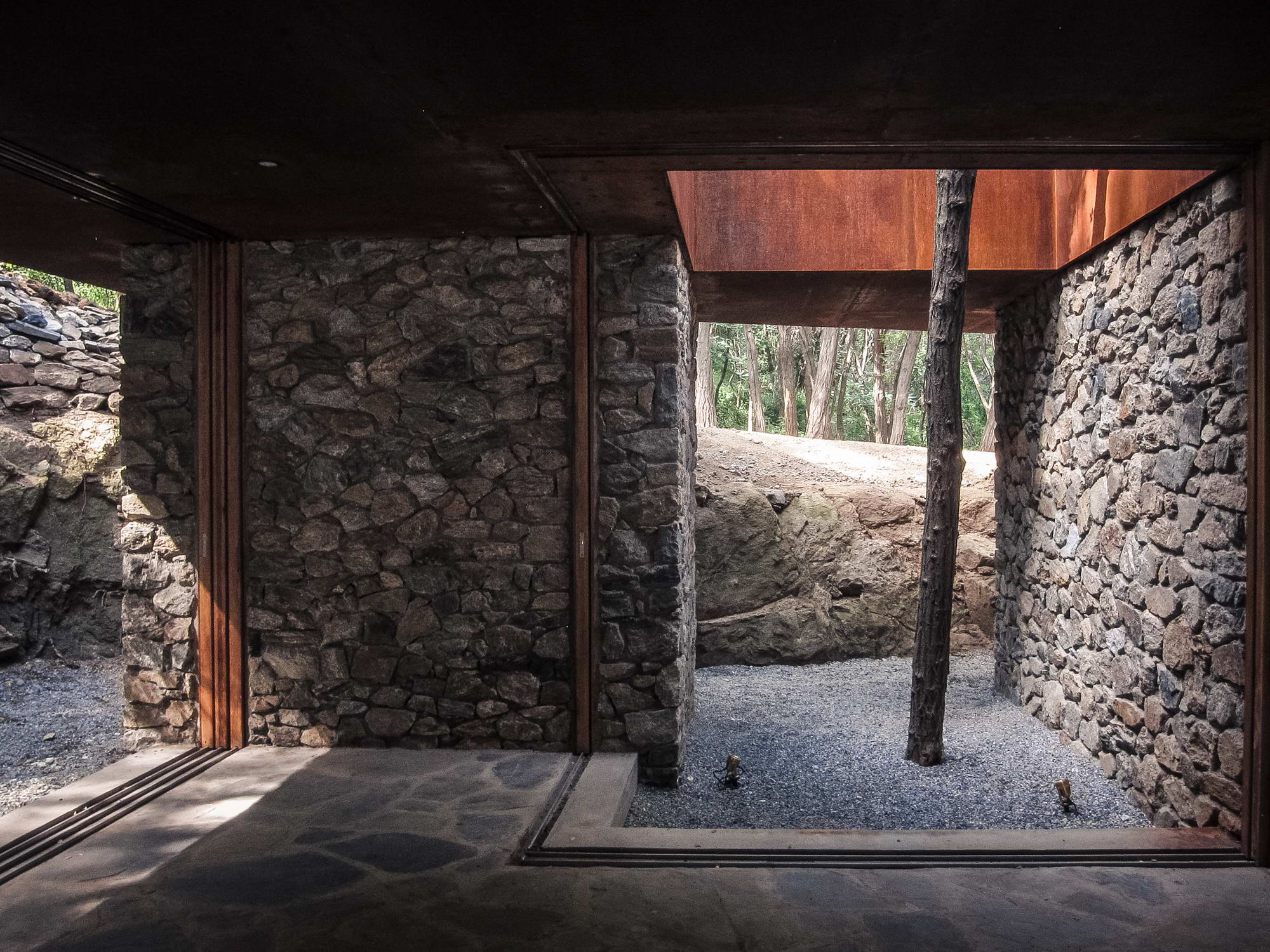
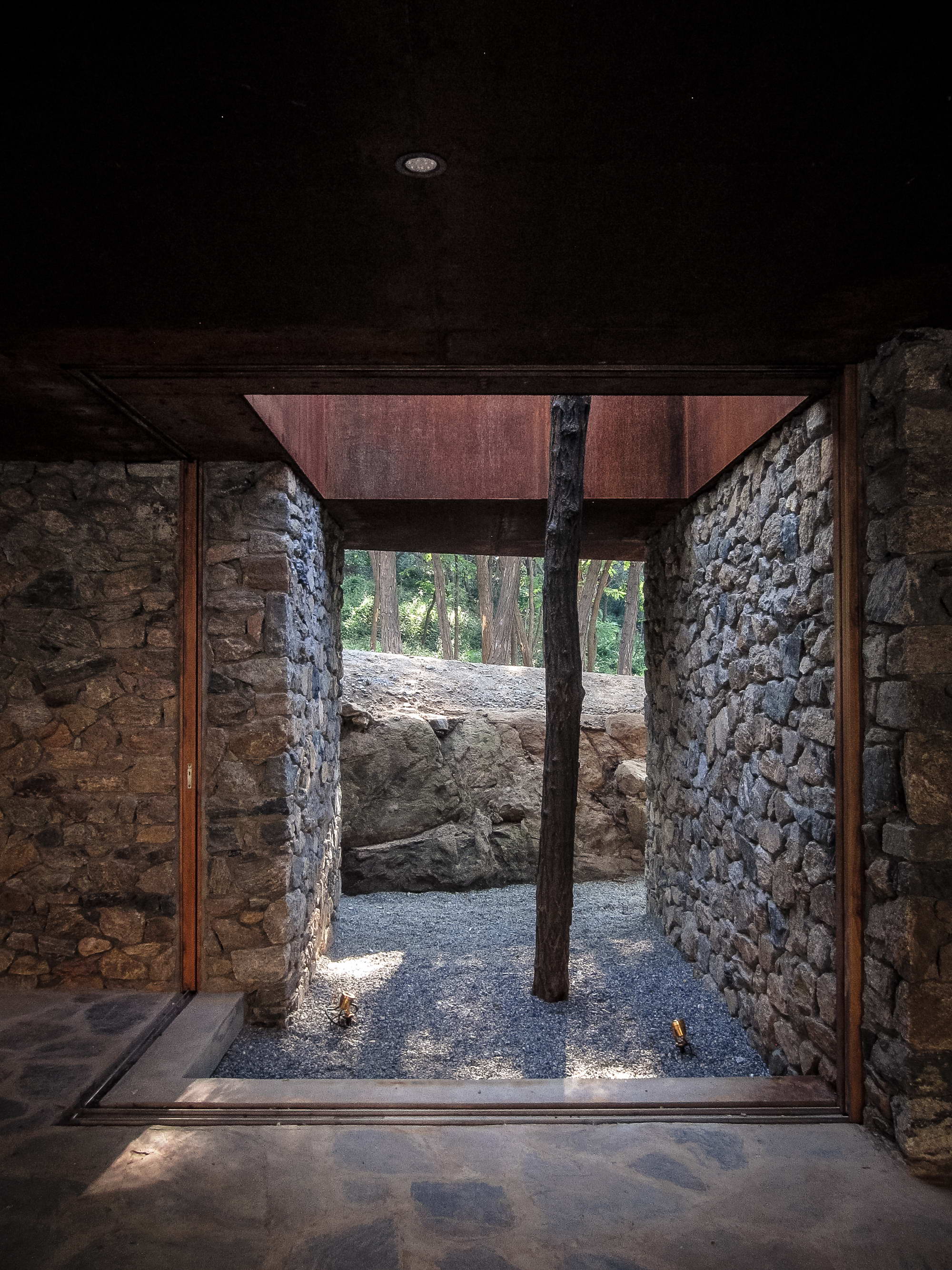
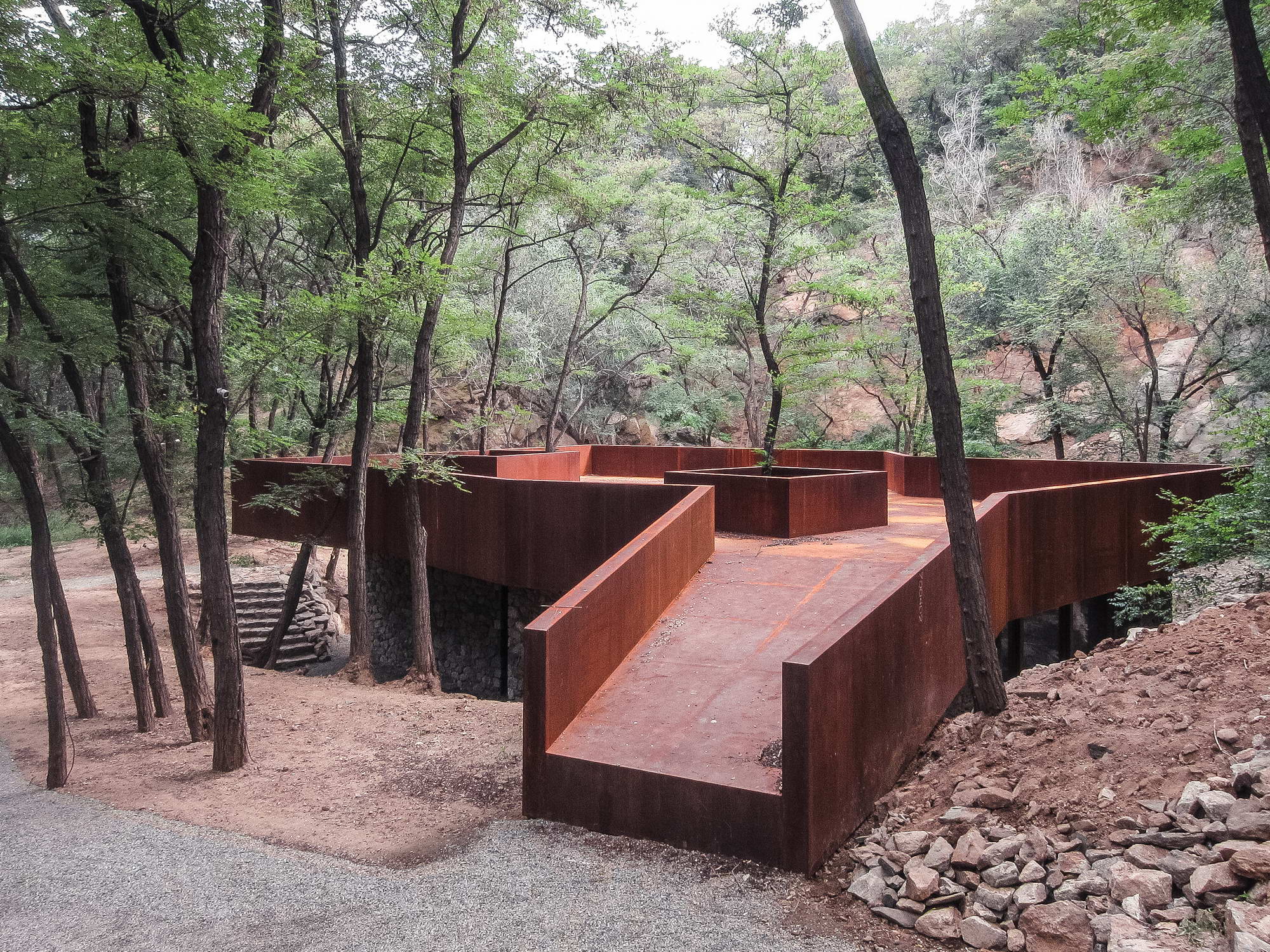
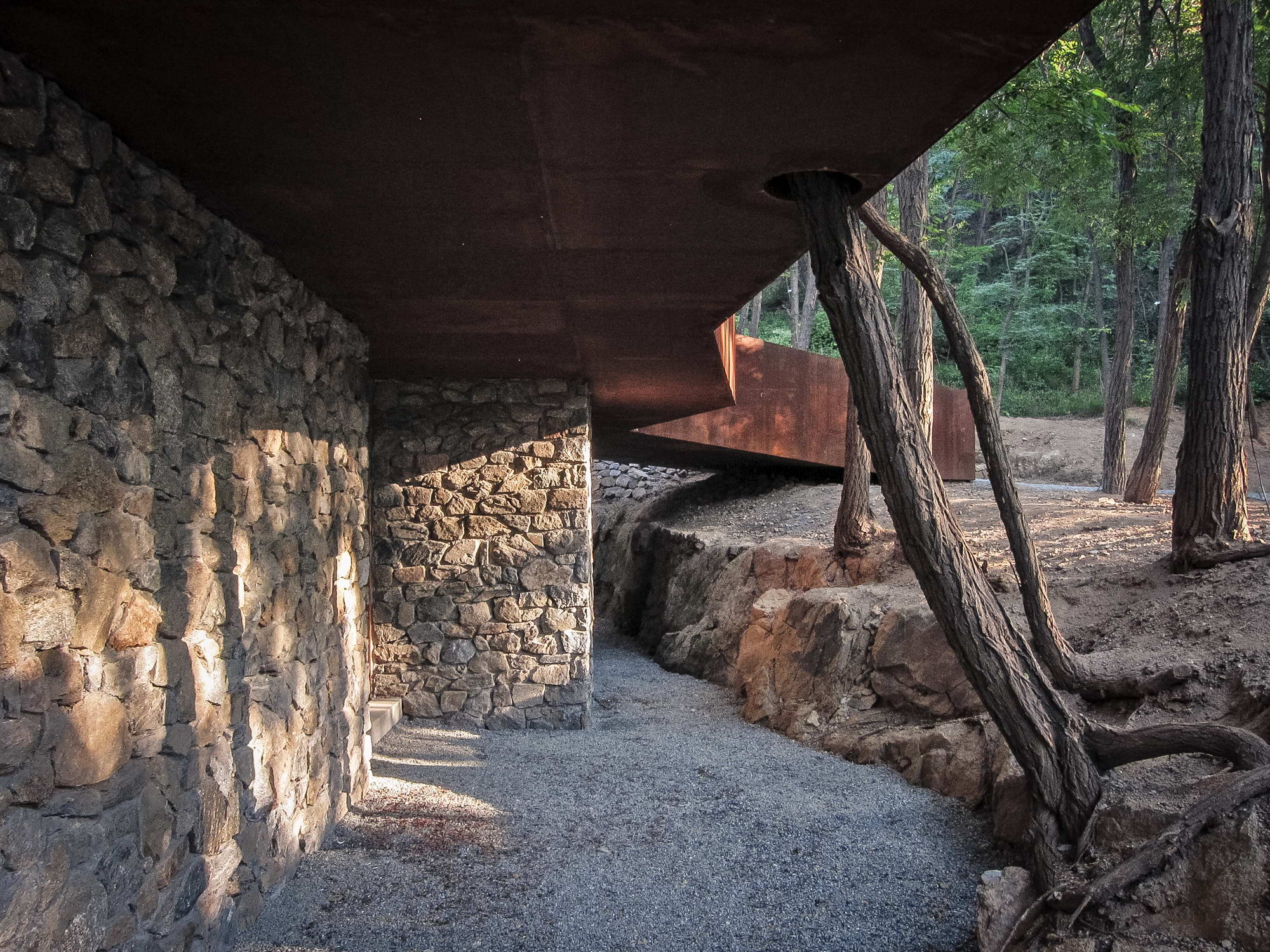
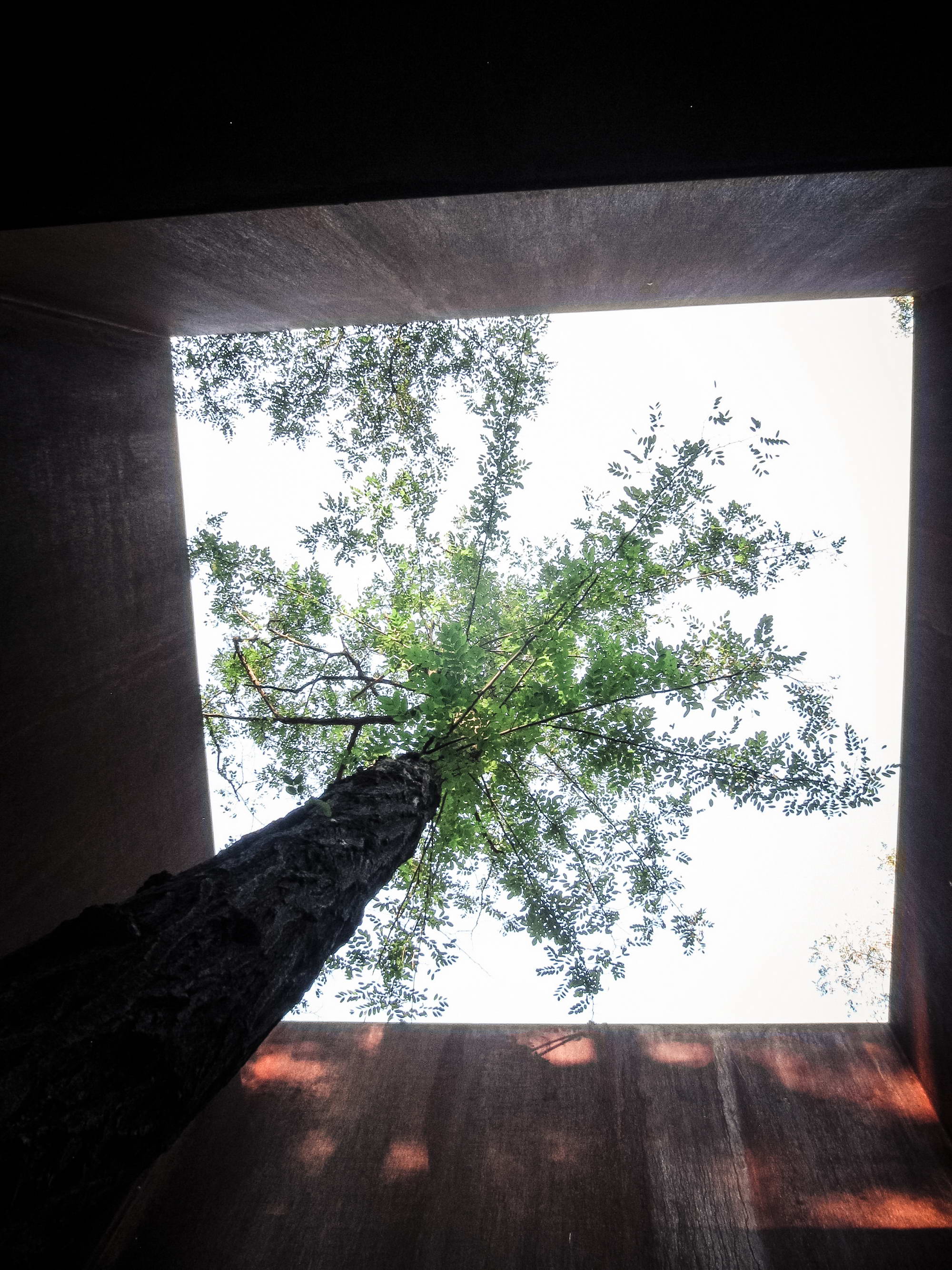
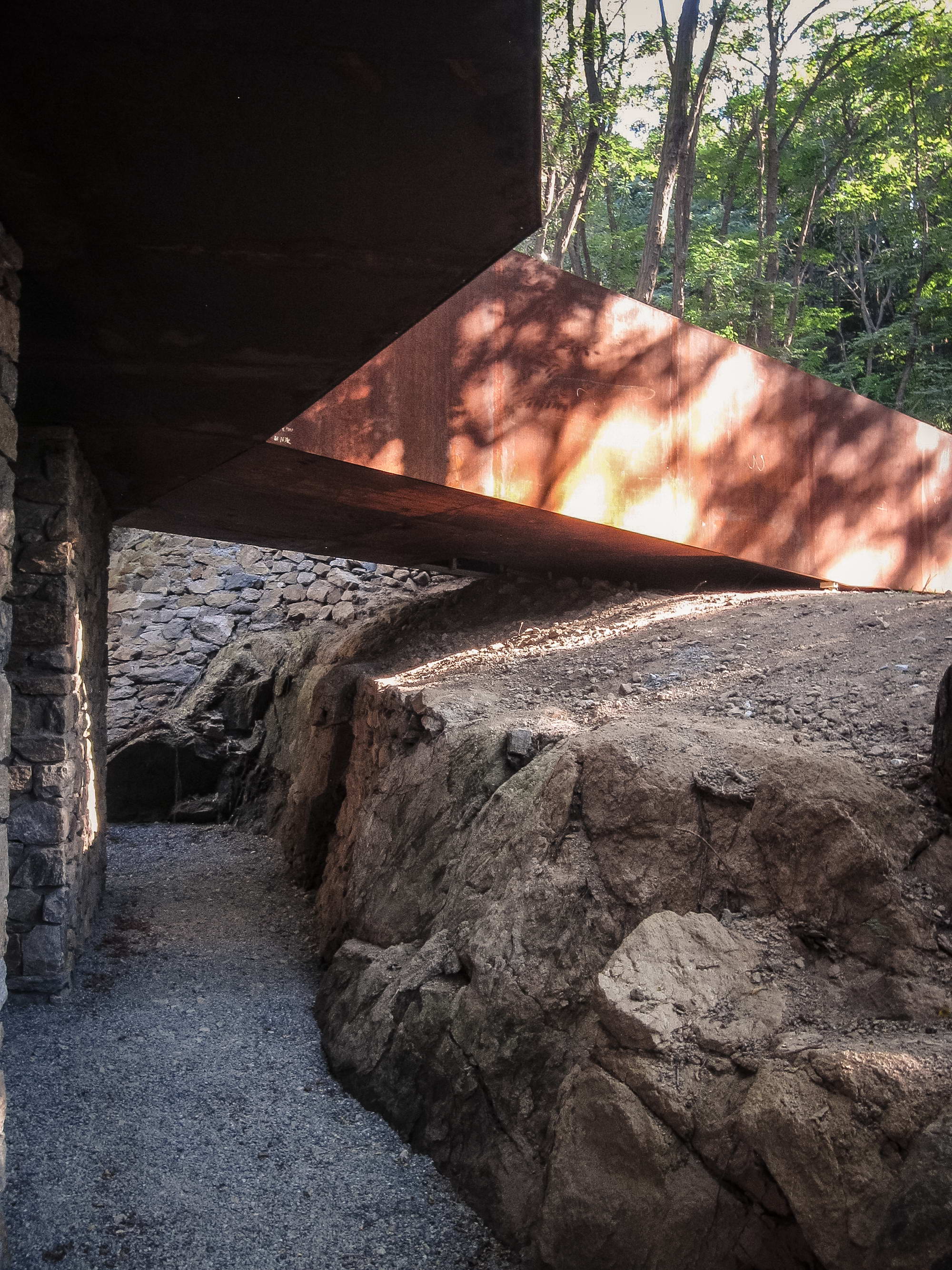
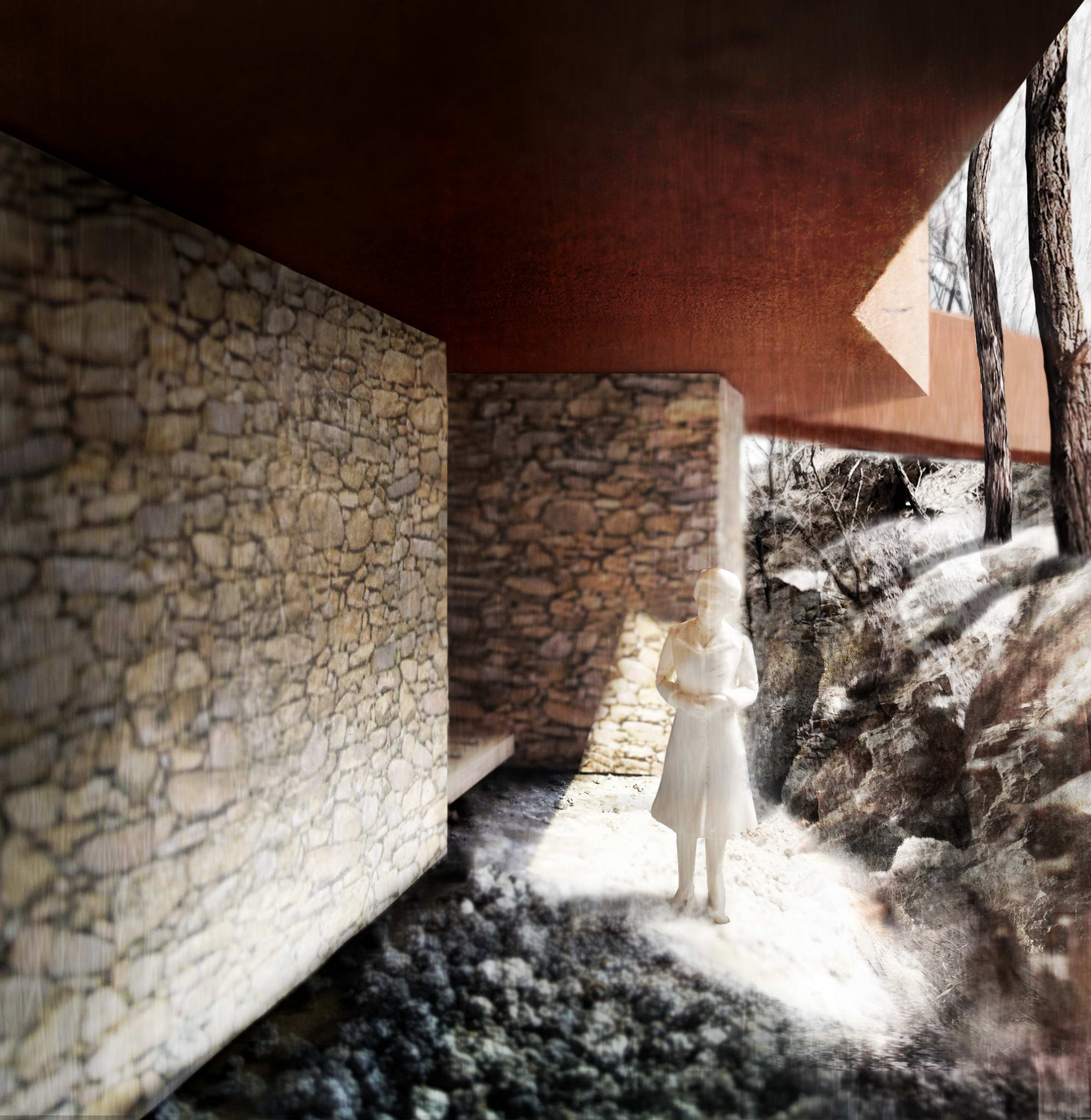
The Rock-View Teahouse sits inside one of the disused quarries, known locally as stone nests, that were gouged into the hillside of Tashan Park in Weihai during the 1970s and 1980s. The municipal gardens bureau, which manages the free public park, asked the architect Hua Li to turn these raw, abandoned cuts into civic landscape nodes, and the teahouse is the first of them. Quarrying has sliced the formerly vegetated slope into sheer cliff faces whose weathered reddish-brown rock, set against dense acacia woodland, reads almost like an ink-wash painting after winter snow. Hua Li's governing intention was to preserve the site's wild, uncultivated atmosphere rather than stage a picturesque version of it, and so the building intervenes as lightly as possible. It is placed on the flattest south-western corner, its folded plan traced around existing trees and rock outcrops so that natural features dictate the footprint. In section the teahouse is half-sunk: a ramp climbs from the platform up to the roof, which becomes a viewing terrace aimed at the cliff, while the main tea room sits below, reached by a few turning steps. Six load-bearing stone volumes define the interior, hiding all structure and producing a column-free hall; each volume doubles as a door pocket, so that when sliding timber doors are retracted the boundary between inside and outside disappears and the cliff becomes a framed painting. Two internal courtyards, opened around preserved trees, punctuate the sequence and turn the woodland itself into interior scenery. A long, thin floating roof cantilevers over the stone walls, dissolving the mass of the building against the vertical trunks. Despite its heavy appearance, the structure is steel, chosen because the quarry's difficult access favoured prefabricated, lightweight components, and shallow foundations were specified to spare the trees. Corten steel, whose rusted brown echoes the cliff, is paired with rough quarried stone picked on site, raw timber doors and naturally cleaved flagstone floors, so that every material speaks the same unvarnished language as the rock around it.










 Editor's Pick
 Latest Design