Text description provided by the architects
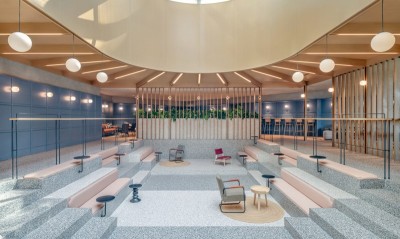
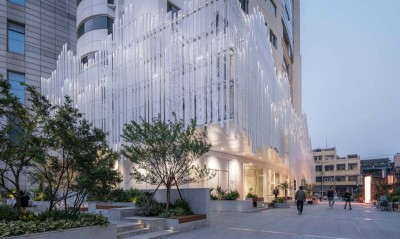
The relocation and reconstruction of the Liutan farmers' market in Wuxi is presented as a typical upgrade experiment at a moment when Chinese cities are moving from four decades of rapid construction to the renewal and reconfiguration of what was quickly built. The old push was functional; the new wave carries both functional and spiritual meaning, and public buildings play a leading role in re-knitting key urban nodes through upgraded programme and form. The new Liutan Market is both an essential livelihood project and a major move in upgrading the spatial quality of the entire Liutan district. The project consciously contrasts with the dominant Chinese urban-renewal model of coverage, in which the buildings of the old order are simply erased before a new block is begun. Large-scale rapid construction delivered basic needs but also erased accumulated traces of historical life; the new market is an attempt to hold both. The design uses a diamond-shaped unit that encloses a central atrium roof and begins and ends at the entry, generating a repeating but richly modulated spatial order. The market is not a hygienic container inserted into the city but a civic room that acknowledges the neighbourhood's living memory, raising the quality of everyday urban space while preserving the social density that makes a wet market irreplaceable. The project is positioned as an important livelihood guarantee and an upgraded spatial intervention for the whole Liutan area, and it is intended to demonstrate how a public building can lead larger change in the city without sweeping away the life it serves.




 Editor's Pick
 Latest Design