Text description provided by the architects
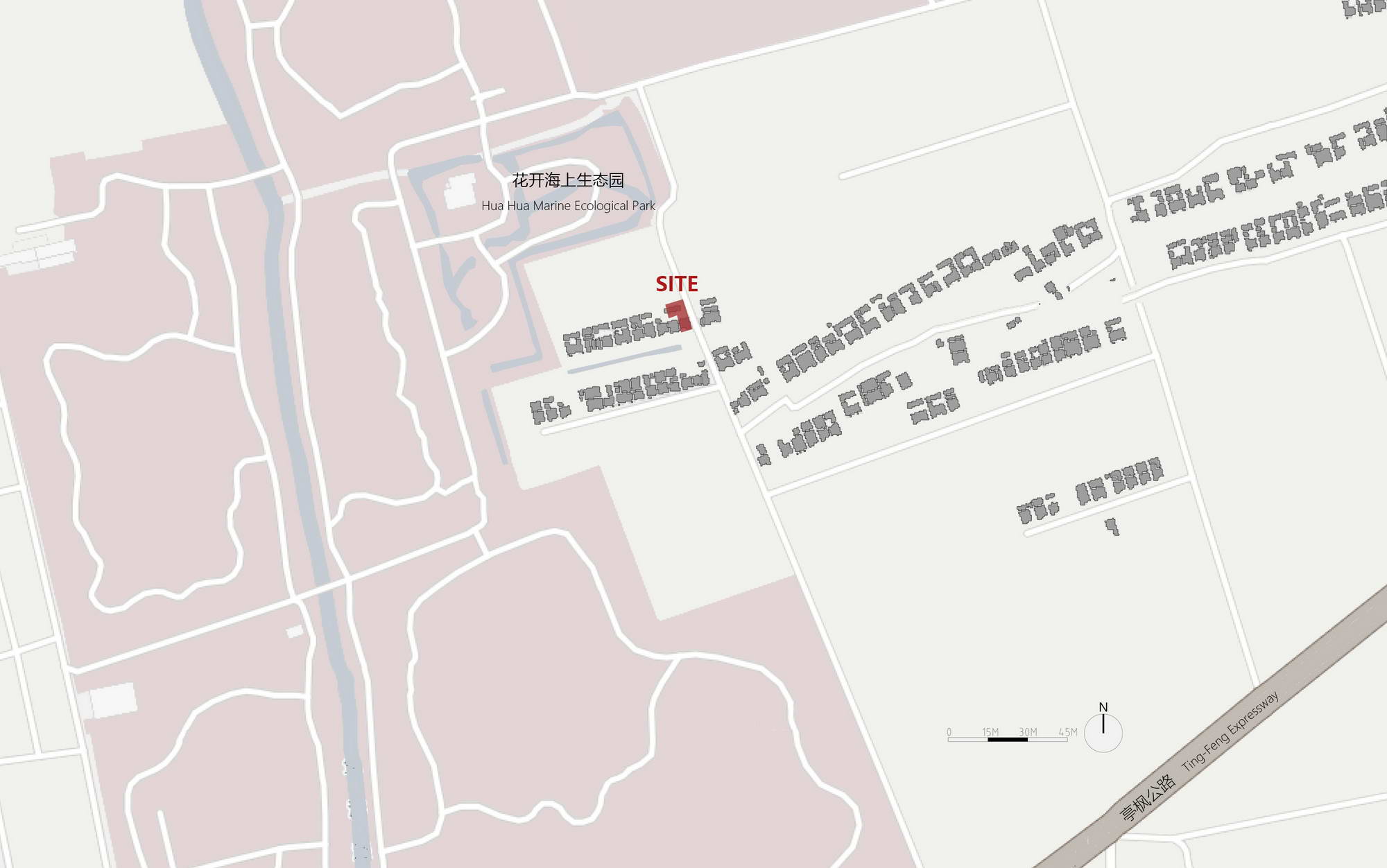
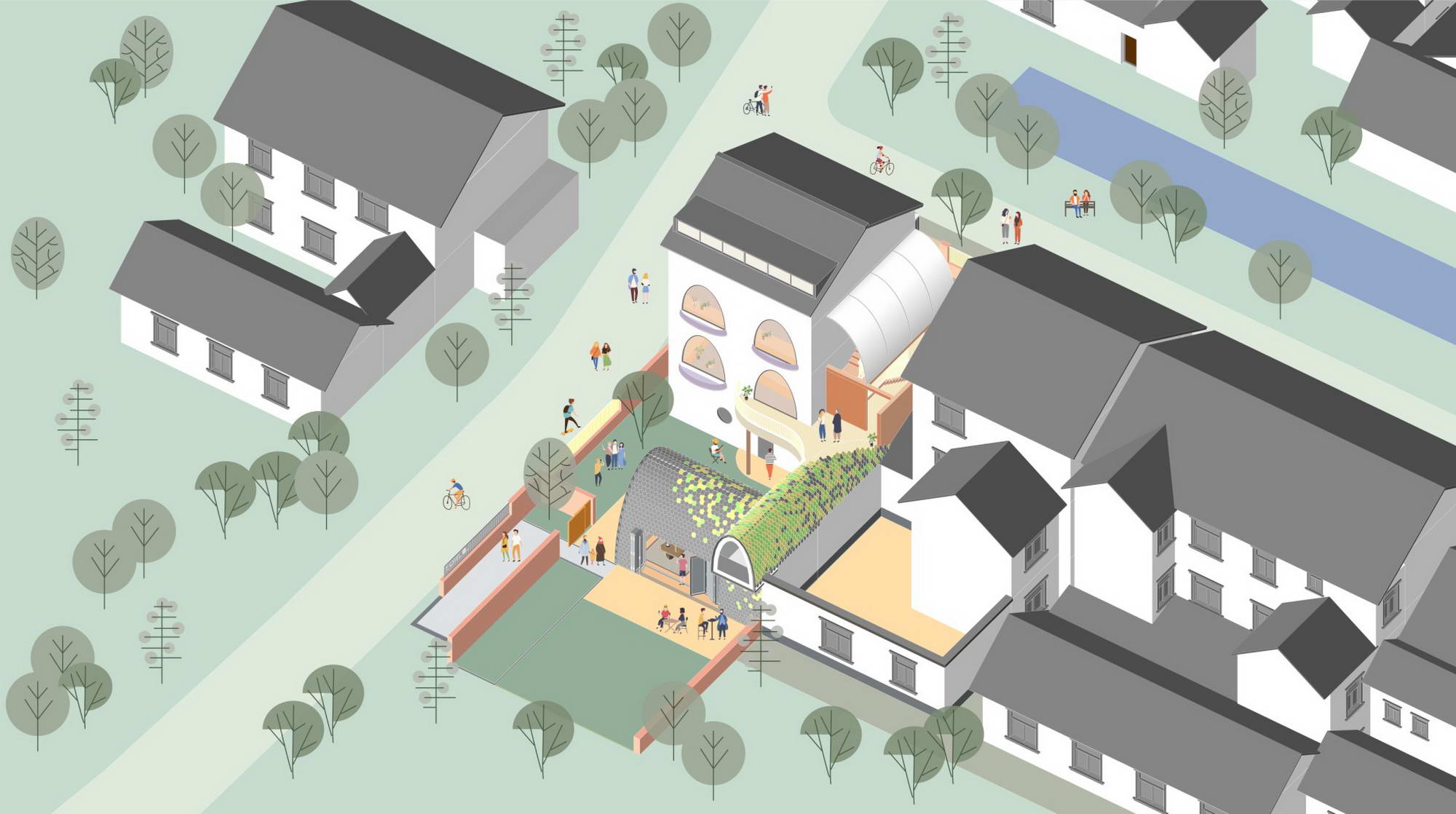
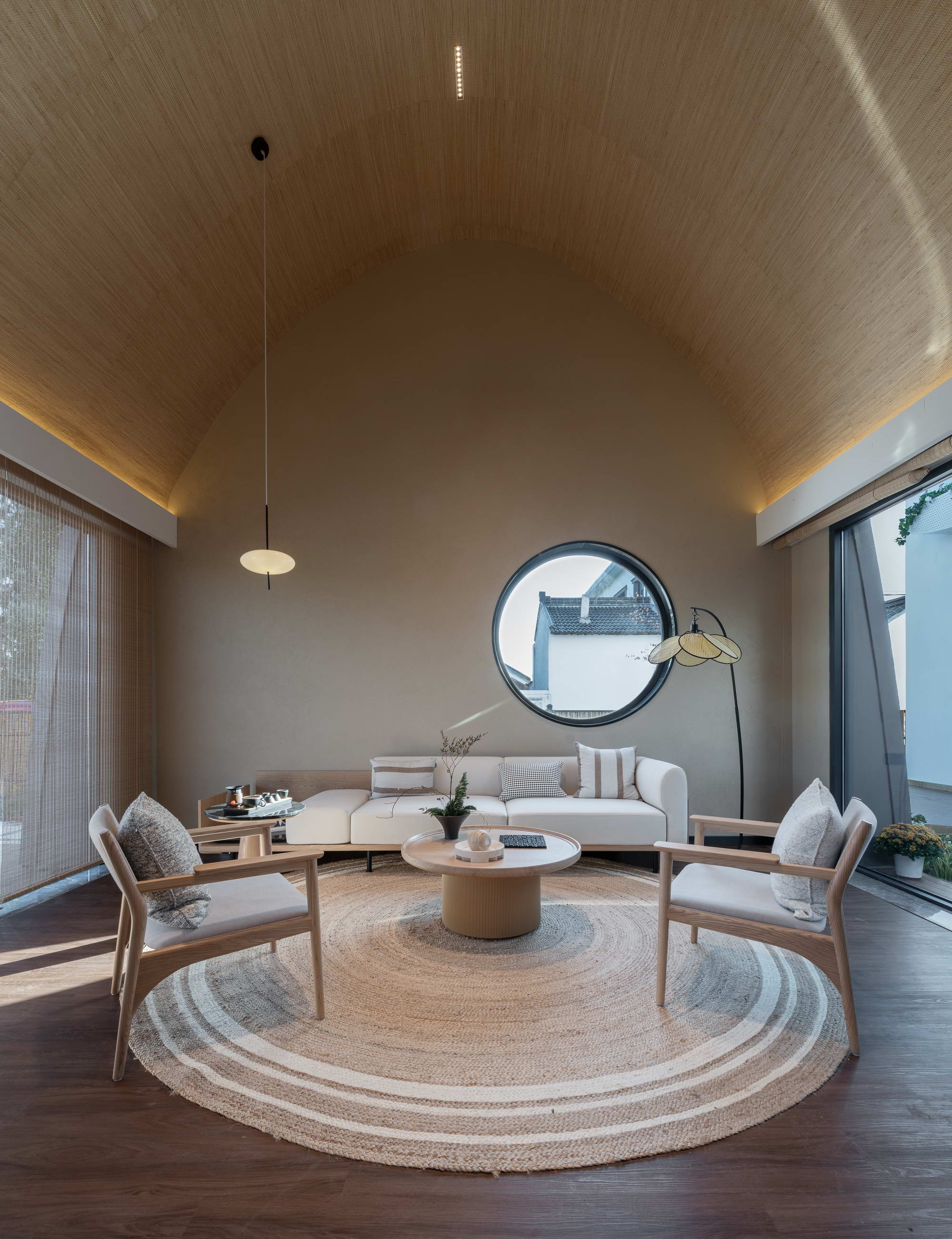
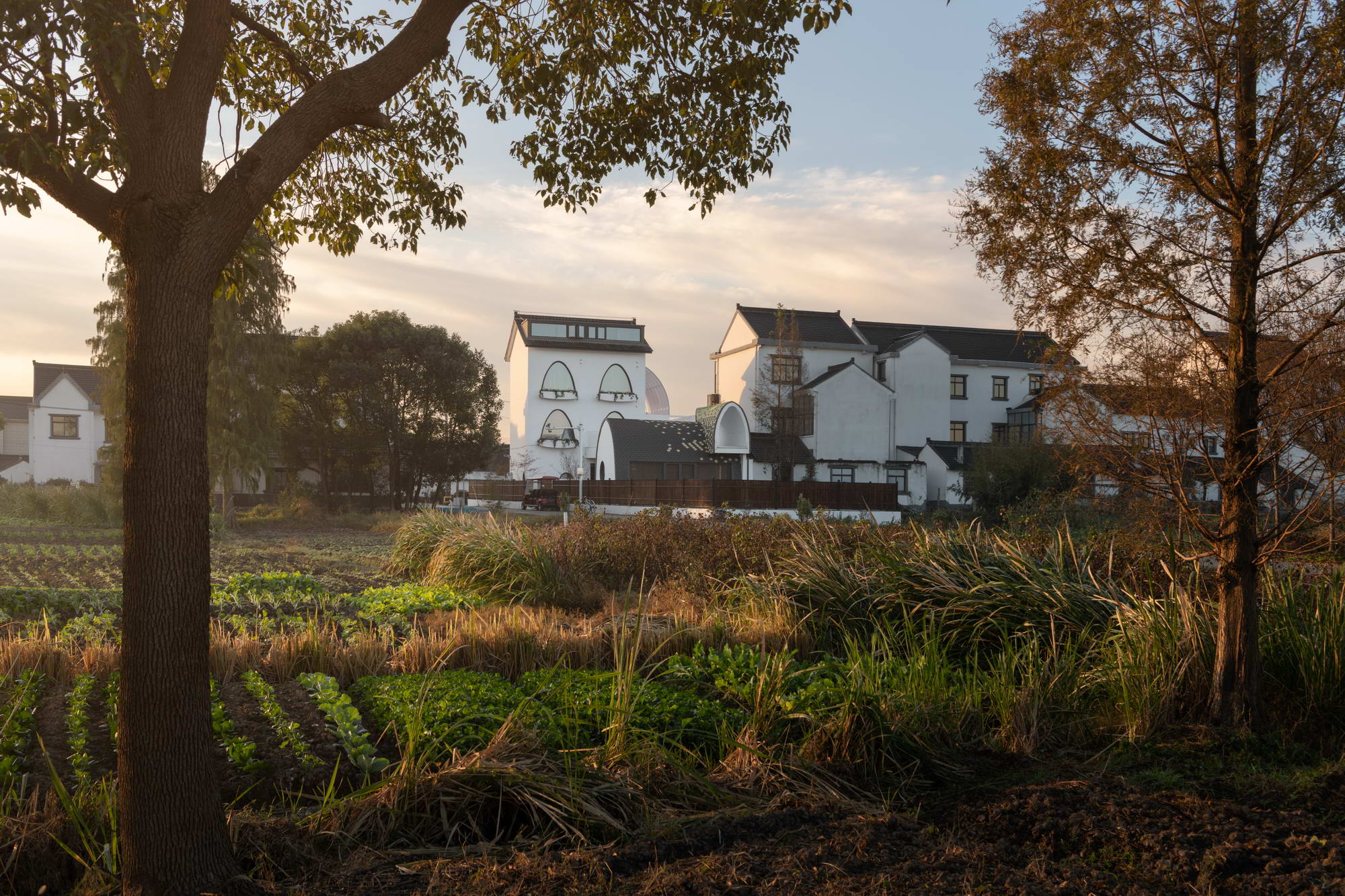
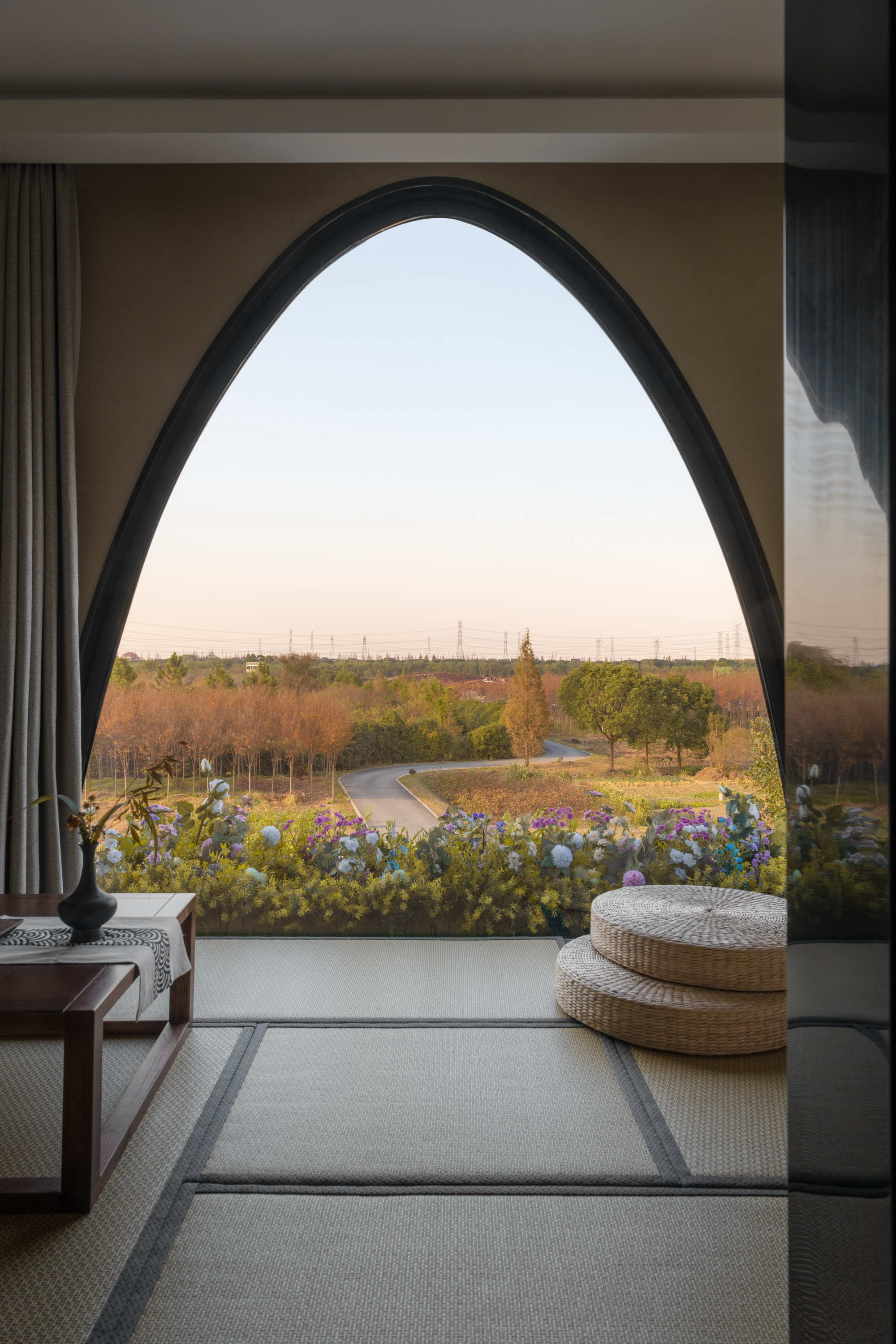
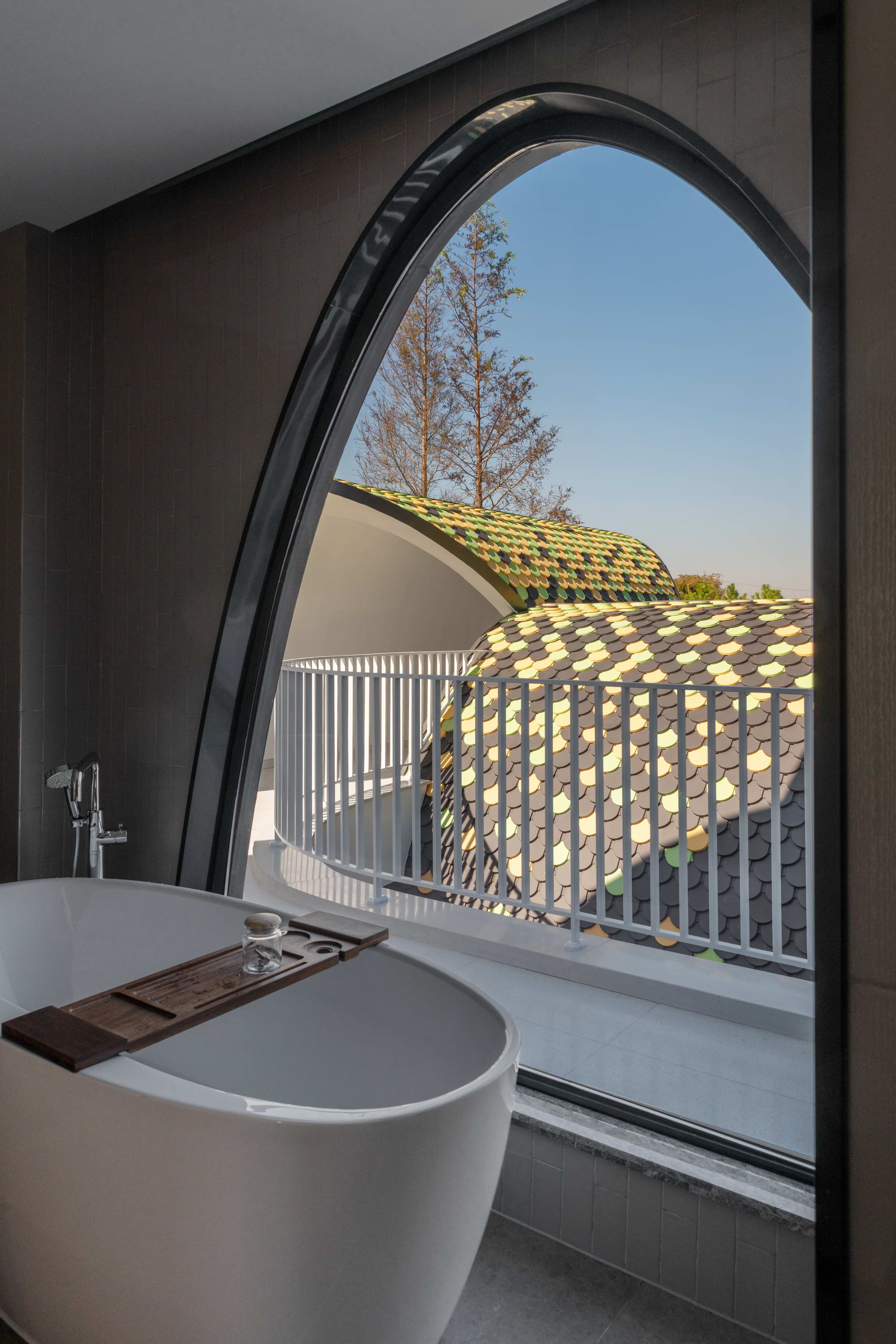
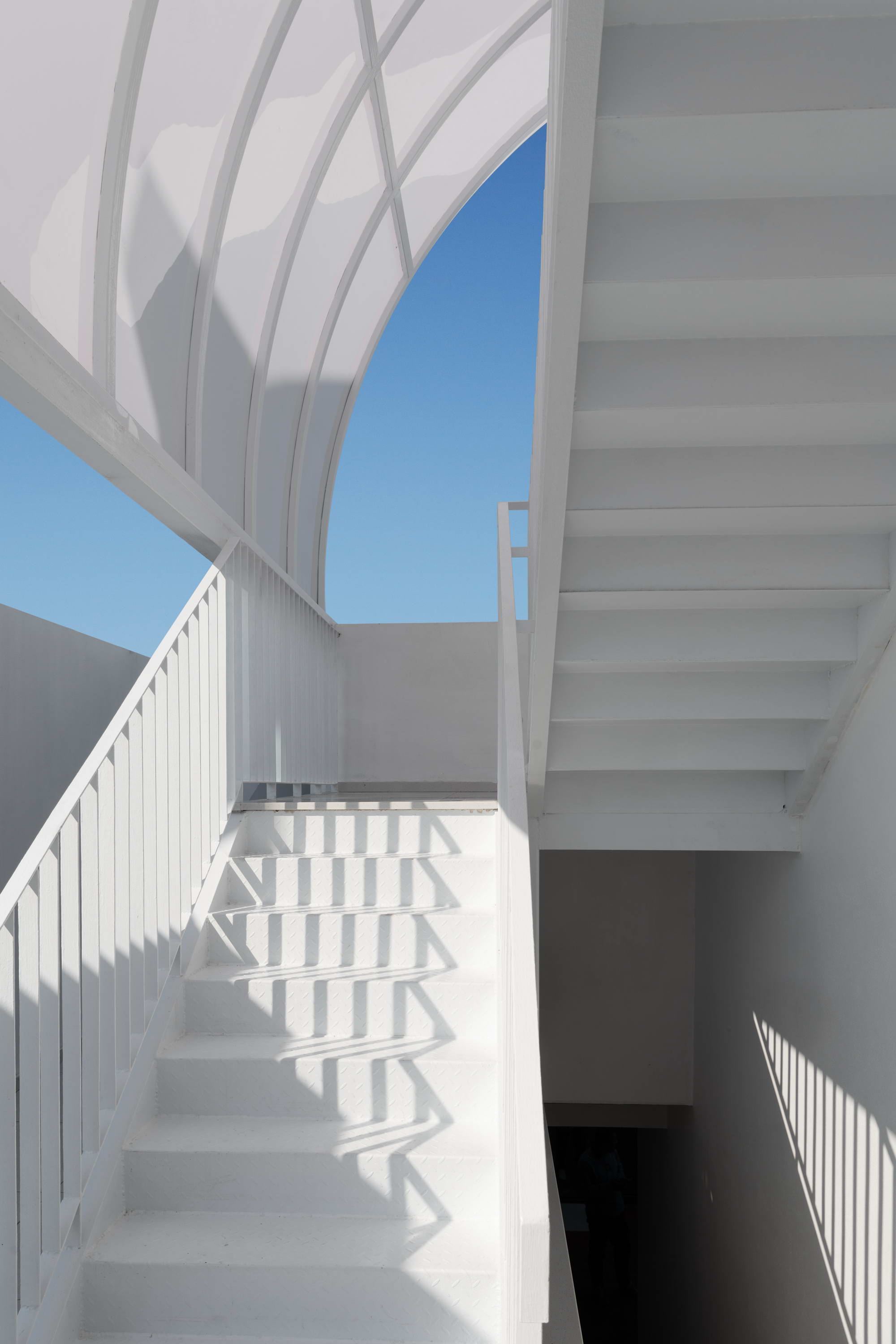
The Huahai (Flower Sea) Homestay Renovation in Daijing Village, Jinshan District, Shanghai, is designed by Fandu Design Office, with a team including Wu Maohui, Li Kuan, Huang Xinbo and Sun Yujie, for developer Shanghai Huajian Construction Development. Daijing Village is a typical Jiangnan water-town settlement where people have lived by the water and farmed and fished for generations; recent Beautiful Countryside construction has renewed its houses into white walls and dark tiles. Without the adjacent Kaishang Haishang (Blooming over the Sea) Ecological Park, the village would have flowed quietly through time; but the four-season flower sea has changed the village and its people. Rising visitor numbers call for new business formats, and traditional farmhouses can no longer satisfy urban holiday-makers, so the project is conceived as a pilot and model for a new-type homestay that can drive industrial upgrading among local farmers. The design entry point is how to link a thousand-mu flower sea to a Jiangnan water town. The team largely preserves the original farmhouse's north one-storey and south three-storey envelope and its north-court, south-garden layout, and within the local policy limit that does not raise the existing roof contour, the plan functions are rearranged. The north face, the main flower-sea view, is given to second-and third-floor guest rooms, with large windows drawing the flower sea inside: lying in bed and drawing the curtains opens onto flowering abundance, a more local version of 'facing the sea, spring warmth'. The stairwell is made the most vivid visual element of the building, connecting terraces, open galleries and small balconies; walking toward the third floor, the eye wanders between flower sea and water town, encountering unexpected views. The building's own character is deliberately modest: within a village of white walls and dark tiles beside a four-season flower sea, the homestay should not stand apart but half-hide in its surroundings. As a pilot for the village's homestay renovation, overly complex craft or a too-unique form would be neither repeatable nor leading, and the team refuses to conflict with the basic character of the Jiangnan water town. The inherited white-wall, dark-tile baseline and the scale of water-town dwellings are therefore held as first principles; on this base, petal curves are extracted and used as local breakthroughs in the stairwell canopy, shared resting spaces and window openings, so that heterogeneous forms are inserted point by point into the overall character. On the roof of the shared resting space facing the flower sea, dotted coloured metal tiles read like petals blown onto the roof, enriching the courtyard's colour and recalling the flower sea. The encounter of Jiangnan water town and four-season flower sea shapes the homestay's distinctive character, and the team hopes this simple attempt brings more beauty to Daijing Village and to the visitors who come to see the flowers.










 Editor's Pick
 Latest Design
 Best Idea
 Hottest of Week