Text description provided by the architects
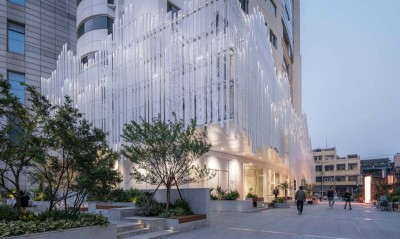
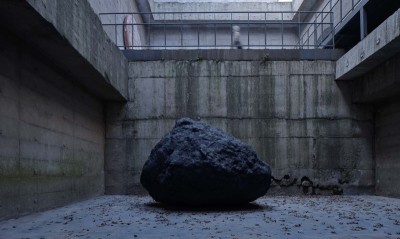
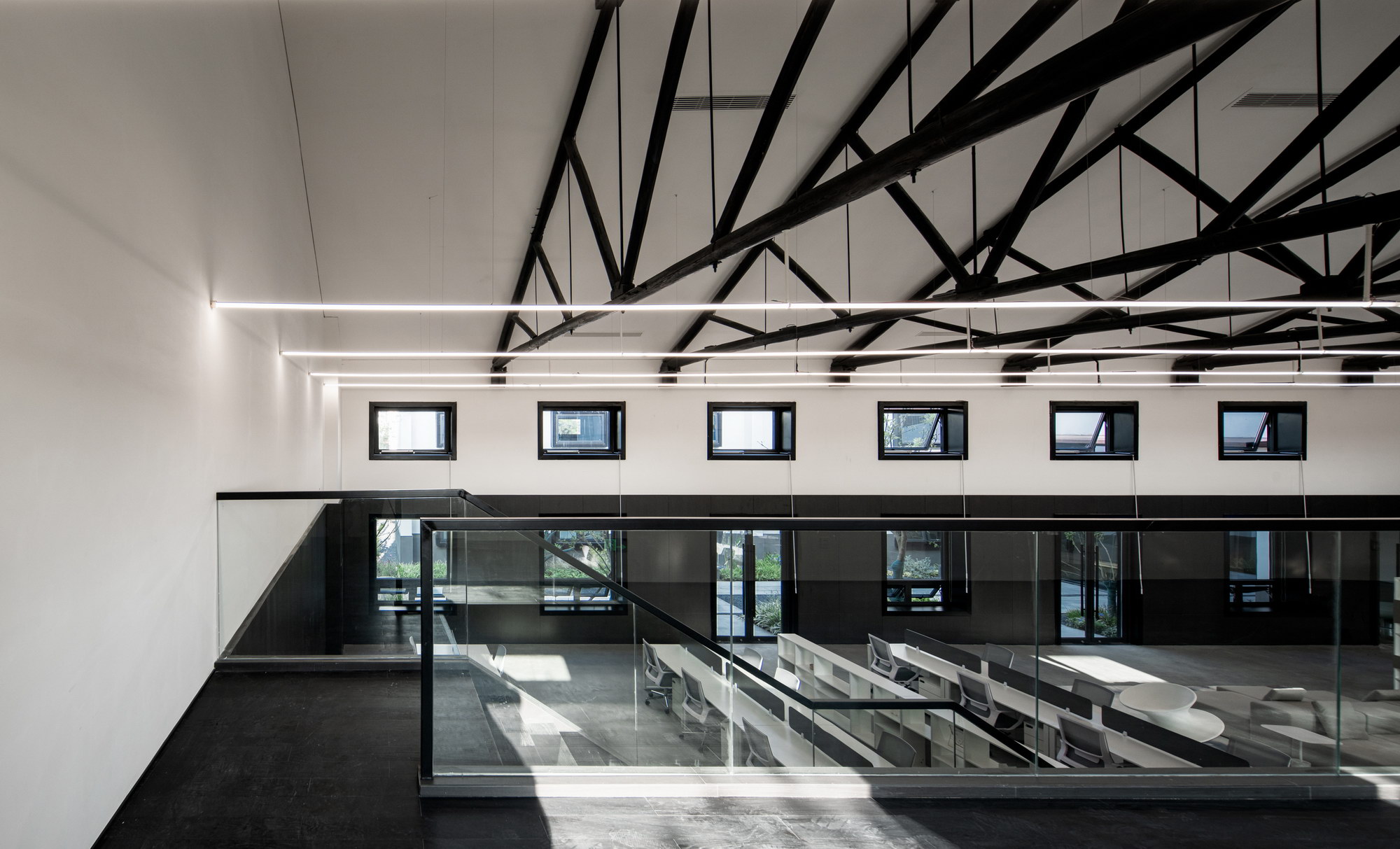
Located in Dingzha, a town at the tri-junction of Shanghai, Jiangsu and Zhejiang, within the Yangtze River Delta Integration Demonstration Zone, the Shuixiang SOHO Smart Granary is a rural-revitalization project that reinterprets a cluster of 1960s grain silos as a creative-camp community. Designed by line+ Architecture (lead architect Zhu Peidong) together with MLA+, the project was commissioned by Jiashan Yaozhuang Rural Revitalization Development and Construction. Dingzha, once an important grain-producing area in northern Zhejiang, lost population to the city and became a hollowed-out town; after the 2016 film Duckweed shot scenes in the derelict granary, the site gained cult status, and with the regional integration policy the old industrial heritage was reopened to design. The architects argue that town revival is not about replacing buildings but restoring employment, gathering places and everyday life. Phase one, the five-creative core on 18,285 square metres, repurposes abandoned silos, processing sheds and adjacent traditional dwellings into agricultural, cultural, scientific, rural and youth-creative workspaces. The central remnant cluster is treated as a shared knowledge living room using a remove, link, insert and illuminate strategy: the entrance hall preserves the traditional four-bay roof while stripping away enclosing walls; a water court around the cylindrical silos uses timber wind-screens and perforated weathering-steel panels; a modernized waterside stage reinterprets the southern-drama stage; a raised stair and rooftop path becomes a mountain walk; and a glass viewing pavilion on top of a silo acts as a beacon for returning residents. The southern house-type granary block is converted into start-up offices, while a new agricultural terrace with arched plantings meets the rice fields. Landscape uses local materials and an urban-wilderness attitude, leaving space to the fields. By 2023 multiple start-ups had moved in, including a micro-robotics firm in which eighteen village collectives invested 18 million yuan, and the town's first Starbucks opened, turning the granary into a model of urban-rural integration.






 Editor's Pick
 Latest Design
 Best Idea
 Hottest of Week