Text description provided by the architects
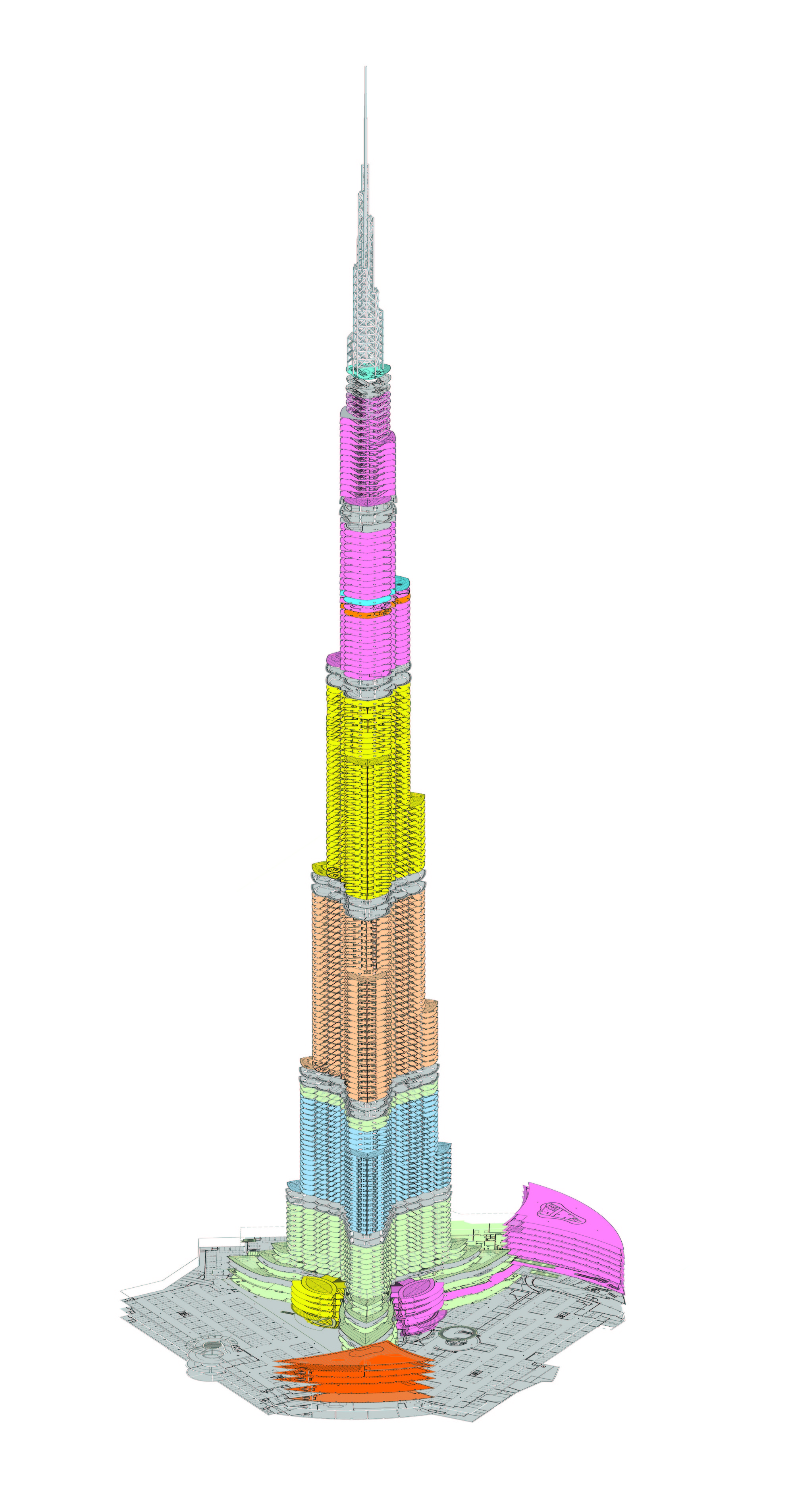
Rising 828 meters above the metropolis of Dubai, the Burj Khalifa is the tallest building in the world. The 162-story tower combines local cultural influences with cutting-edge technology to achieve the highest performance in extreme desert climate conditions. The building's center is a large mixed-use development including offices, retail space, residential units, and an Armani Hotel. The Y-shaped plan maximizes views toward the Arabian Gulf. At ground level, the skyscraper is surrounded by green spaces, water features, and pedestrian-friendly promenades. The overall design is inspired by the geometric form of a desert flower native to the region, whose patterned structure has influenced many Muslim architectural designs. It is constructed of reinforced concrete and glass curtain wall, with sculptural masses wrapping around the central structural core. Rising from a broader base, the exterior steps back in a spiraling arrangement as it ascends, reducing the building's mass as it approaches the skyline. At the summit, the central core emerges to form the spire. In addition to its record-breaking height, the Burj Khalifa combines structural and construction efficiency to reduce material consumption and waste. The tower has become a global icon and a symbol of Dubai's ambition, engineering prowess, and rapid urban transformation.





 Editor's Pick
 Latest Design