Text description provided by the architects
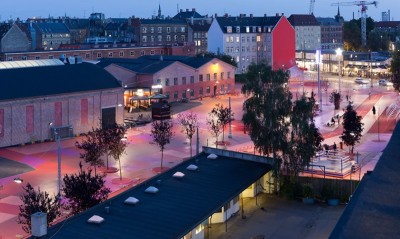
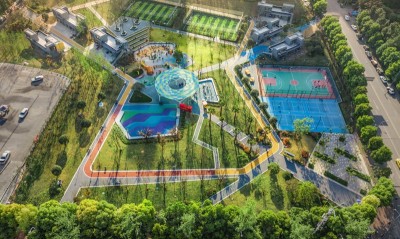
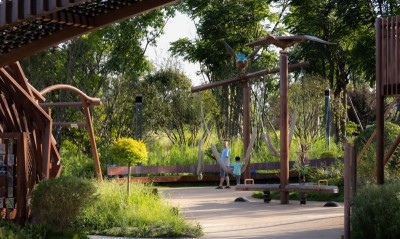
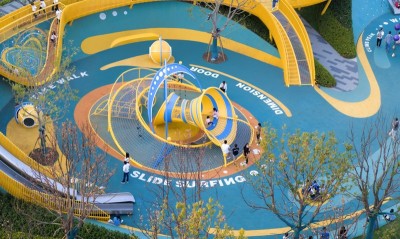
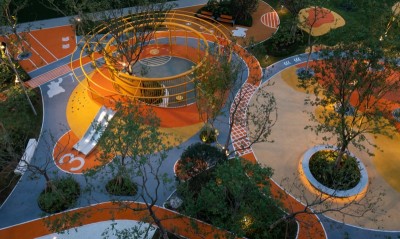
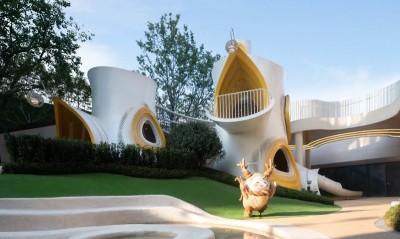
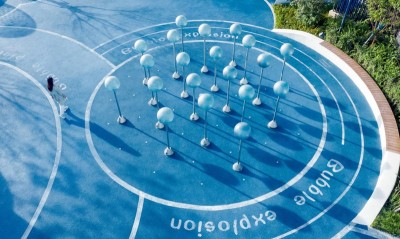
What is old factory adaptive reuse to Hongdu? What is urban renewal to Nanchang? It is a memorial and reflection of our heritage. It is an imaginative attitude towards a life full of new possibilities. Home to China’s aviation manufacturing industry, Hongdu once held the important mission of creating countless aircrafts to fulfill men’s dream to fly. As the first part of the old town to be redeveloped, this project transforms an old aircraft factory into a creative center for the community. In doing so, it aims to preserve a piece of architectural history and revive from memory its rich past. A Bridge in the Sky, A Valley of Clouds The front plaza utilizes the language of folded paper plane to capture the spirit of flying. The sculptural benches in the plaza also take on the folding plane language so that ergonomically they allow one to sit or lie down to gaze into the sky. The interactive fountain in the plaza also mimics the trails of white mist behind jet aircrafts, bringing the plaza to life with energy and speed. ▲ the design of the plaza trying to capture the spirit of site’s history Continuing to be inspired by its aviation history, an existing infrastructural bridge is integrated into the meandering path as the bridge in the sky. Hovering above, the bridge has the best vantage point in the park. From there, one discovers a playground in the valley, distinguished by colorful topographical contours. Integrated water vapor mimicking clouds drift lightly over the grounds, creating a dreamy and magical world for children. Memories of Ancient Trees, Melodies of the Wind Besides retaining the original factory structure, the project also preserved the existing natural surrounding as much as possible. With this respectful attitude in mind, the design kept every single tree by meandering paths around each. The wooded area at the park entry becomes the “Stage of Trees” where the community can come together for a variety of social activities. Accompanied by soft whistles of the wind, foot paths weave through the park under the shadows of the trees, becoming the perfect place for an afternoon walk. Living in the Woods, Hiding in the Wild The winding paths connect three houses hidden within the forest. These houses are designed such that they reveal the scale and beauty of nature. These houses are carefully composed inside the woods to respect the locations of existing trees. Thus, the built is integrated into nature, merging the landscape completely with our lives. Timeless Habitats Beyond preserving history, activating the park, and continuing the local heritage, ensuring a sustainable habitat is also an important task. Bioswales, rain gardens, and stormwater treatments are integrated into the design of the park such that it is self-sustaining. In addition, educational signage plates with plant knowledge are placed throughout to help children understand nature early on, and learn to nurture and protect our environment.




 Editor's Pick