Text description provided by the architects
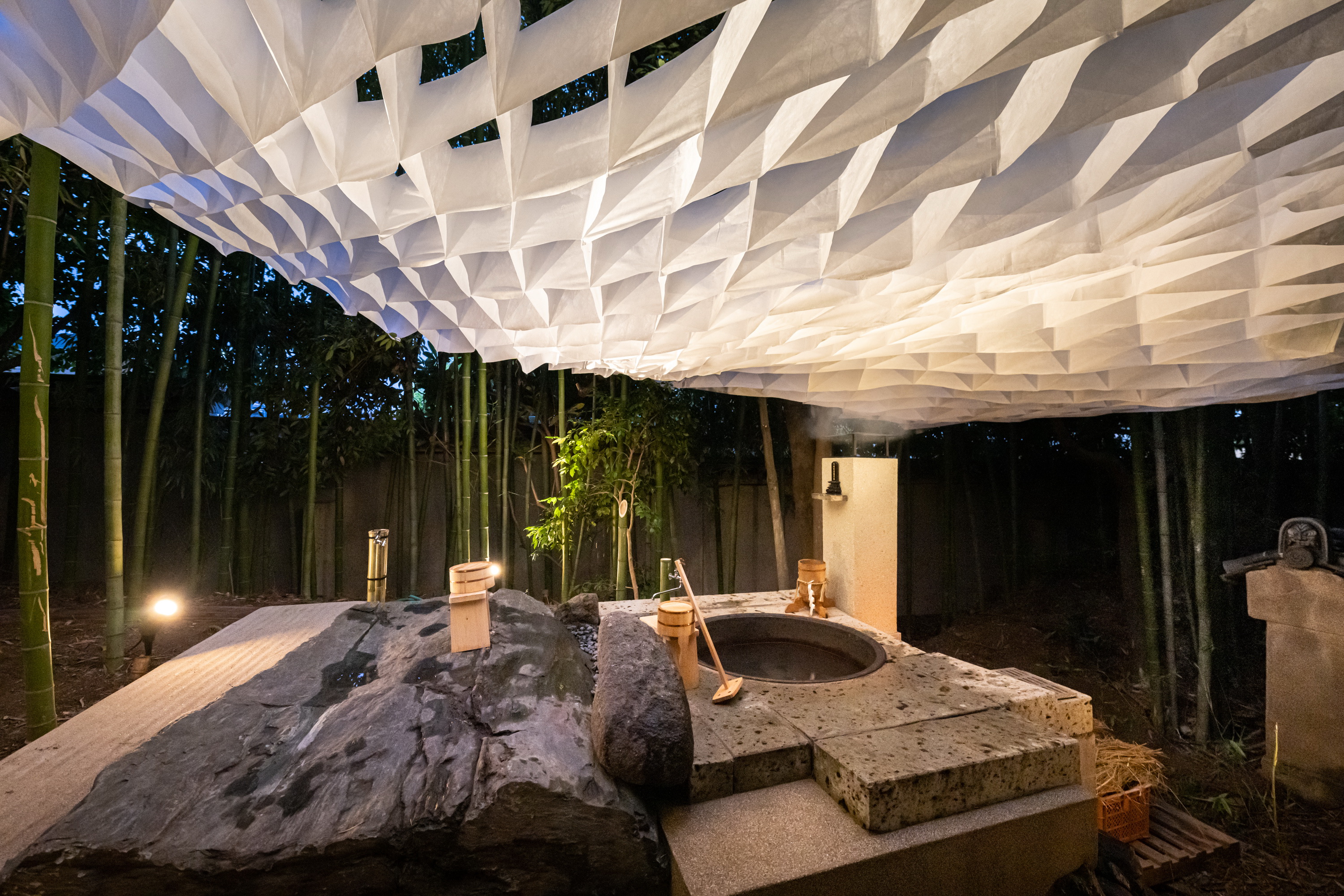
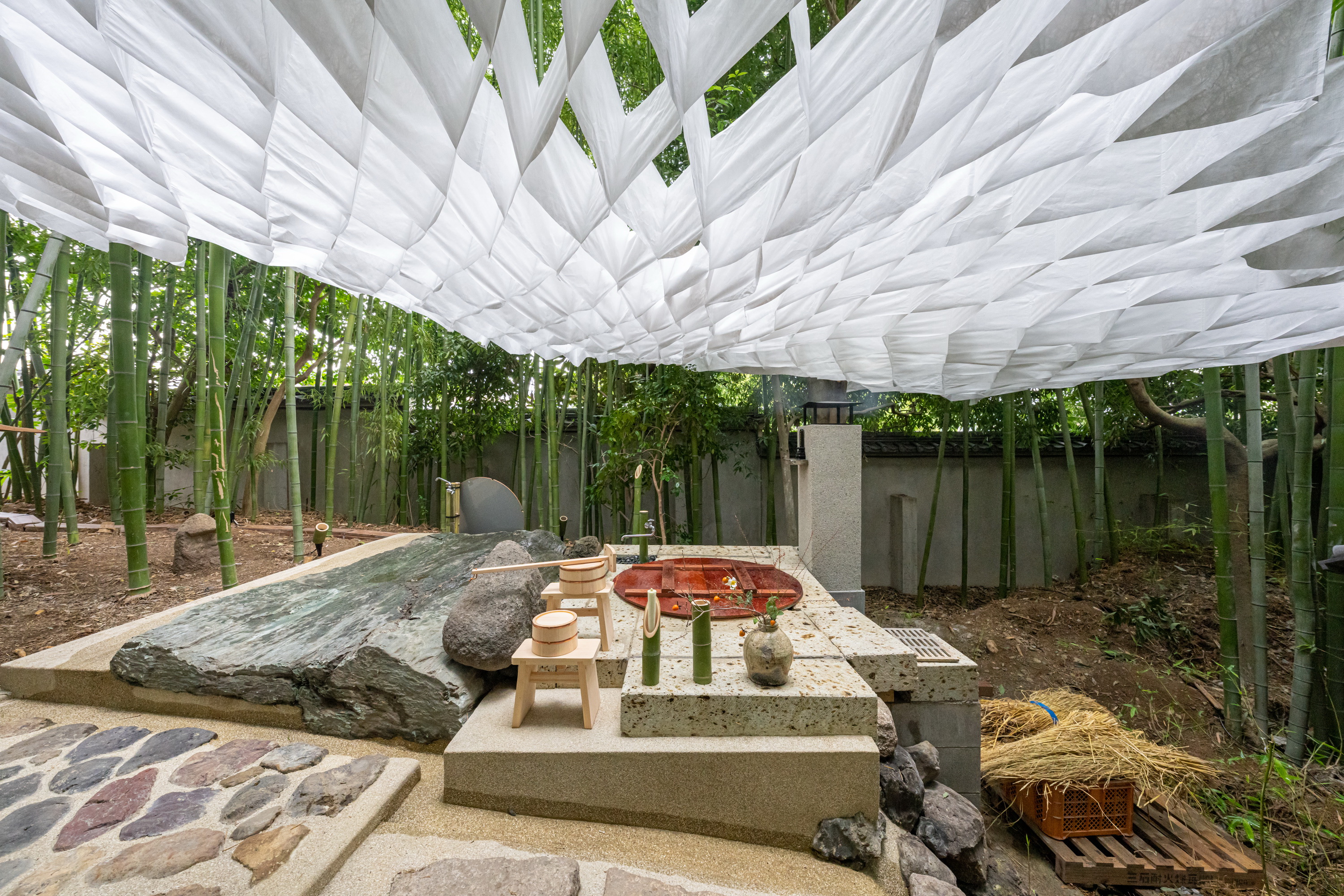
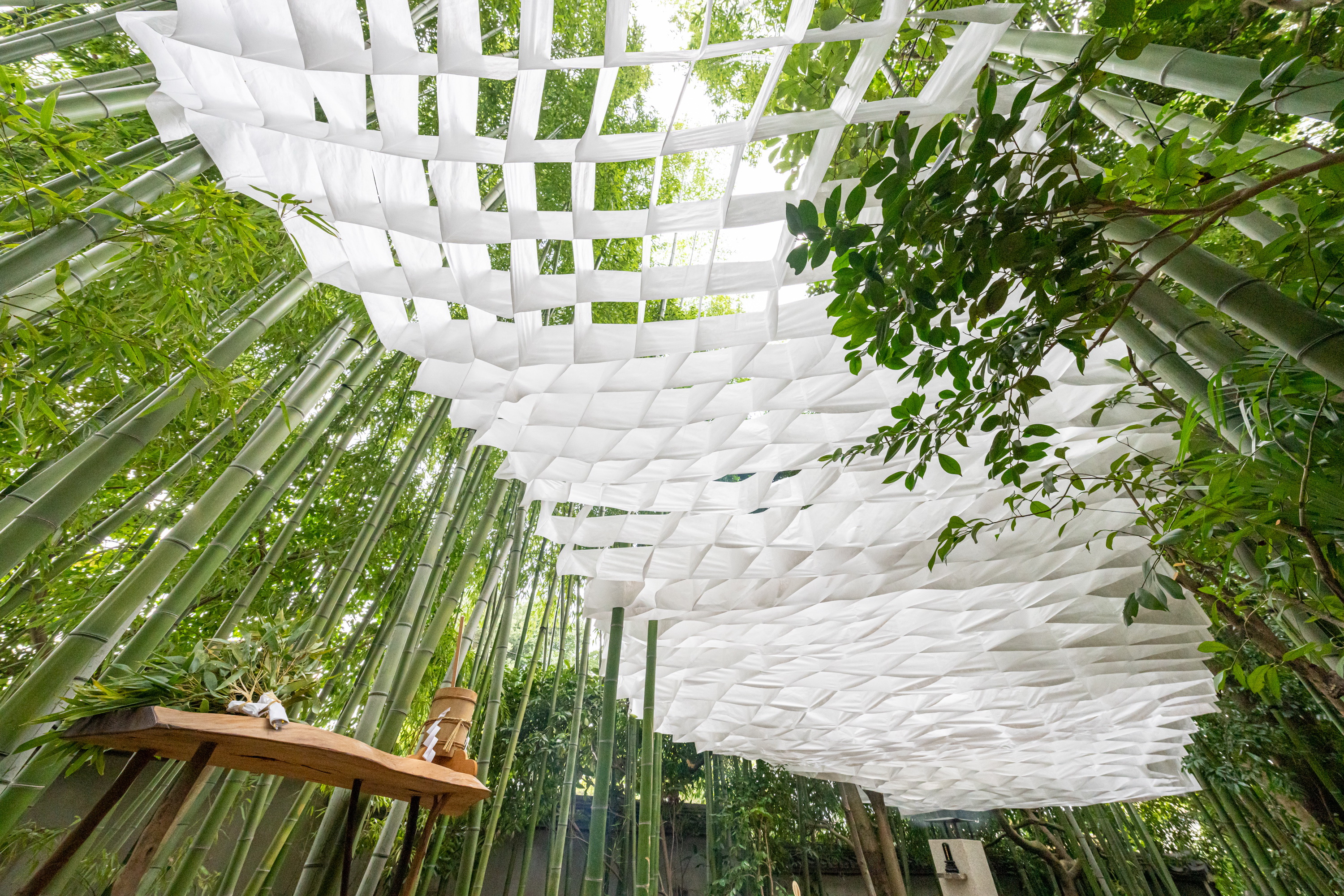
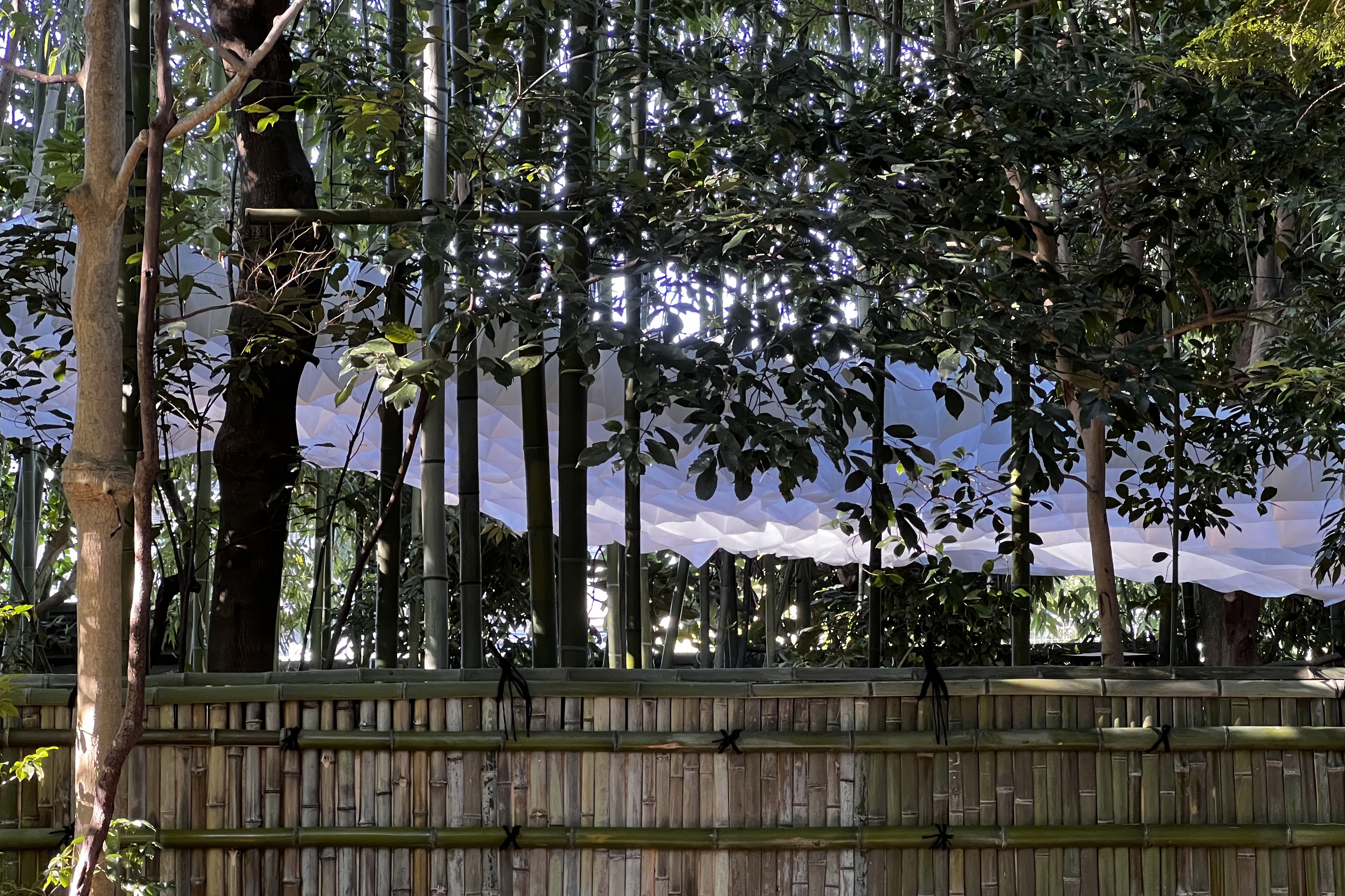
A temporary fabric pavilion floats in the bamboo grove of a Kyoto temple. Flat Tyvek paper is woven into a three-dimensional structure, constructing a fabric architecture above a bathing pool to create a semi-open-air bath where visitors can bathe in sunlight filtered through the fabric mesh and enjoy the hot water. The team transformed a simple flat surface into a three-dimensional architecture. Using the surrounding living bamboo still growing in the grove as the support structure for the fabric is itself an expression of the architect's long-standing negative architecture philosophy. The white fabric sways gently in the breeze. The pavilion demonstrates how a minimal, temporary intervention can create a poetic, immersive spatial experience within an existing natural setting, relying on light, material transparency, and the movement of the wind rather than on monumental form. The semi-open-air bath becomes a place of quiet contemplation where visitors can bathe in filtered sunlight while surrounded by the vertical rhythm of the living bamboo. The fabric roof catches the dappled light and transforms it into a soft, ever-changing luminescence, blurring the boundary between the built intervention and the forest. The project embodies the idea that architecture need not assert itself aggressively; by working with the existing growth, gravity, and atmosphere of the site, a humble pavilion can become a deeply memorable retreat.




 Editor's Pick
 Latest Design