Text description provided by the architects
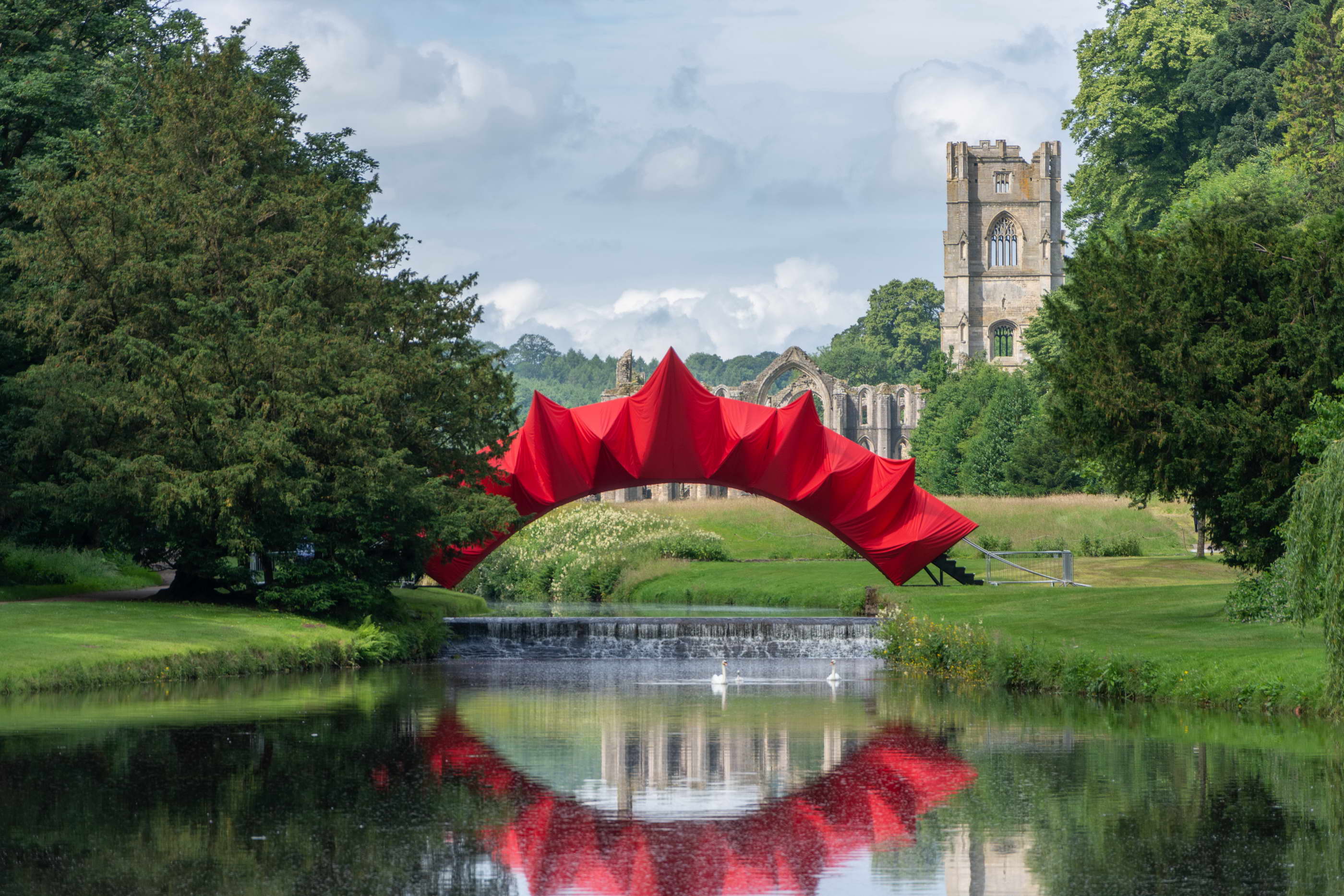
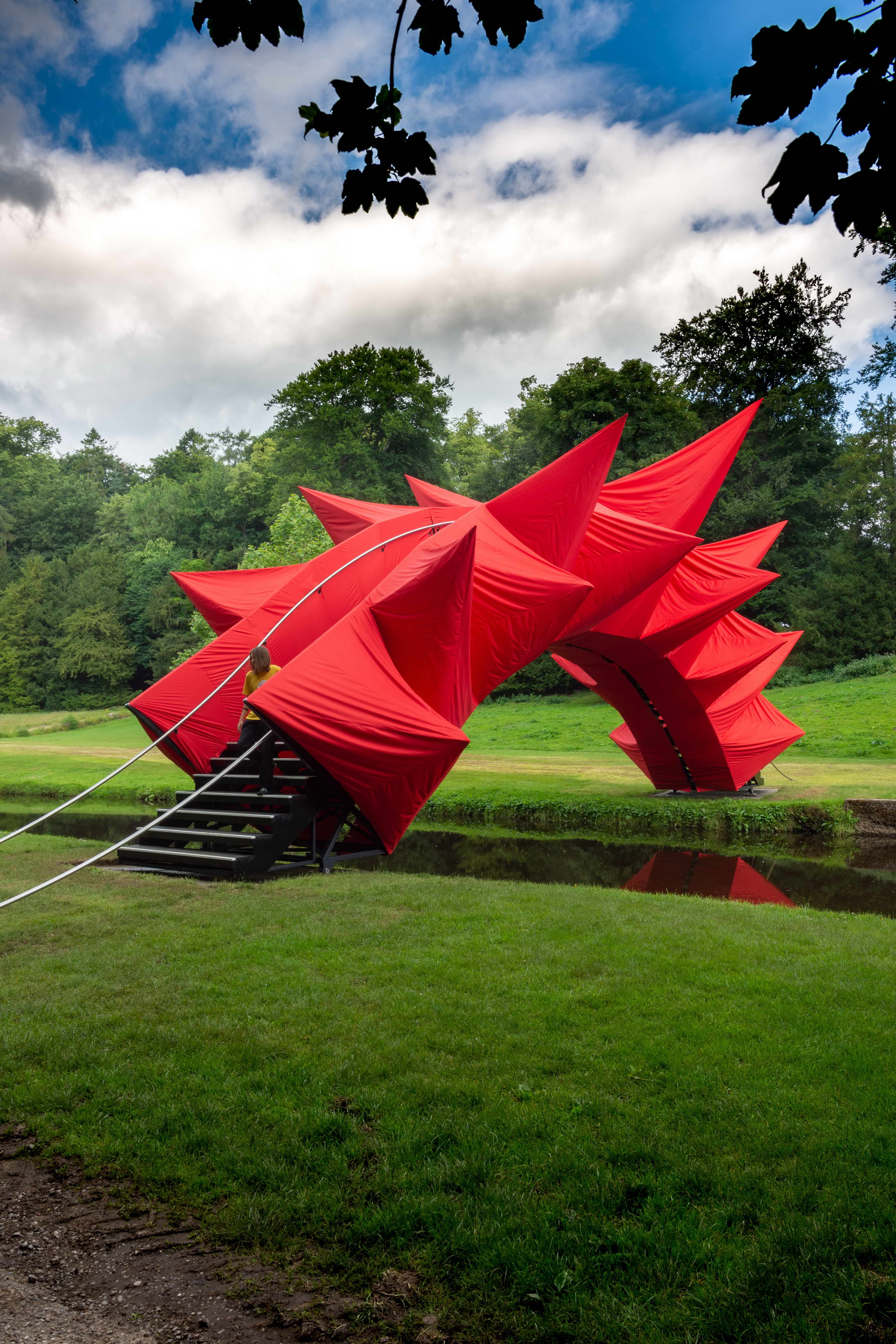
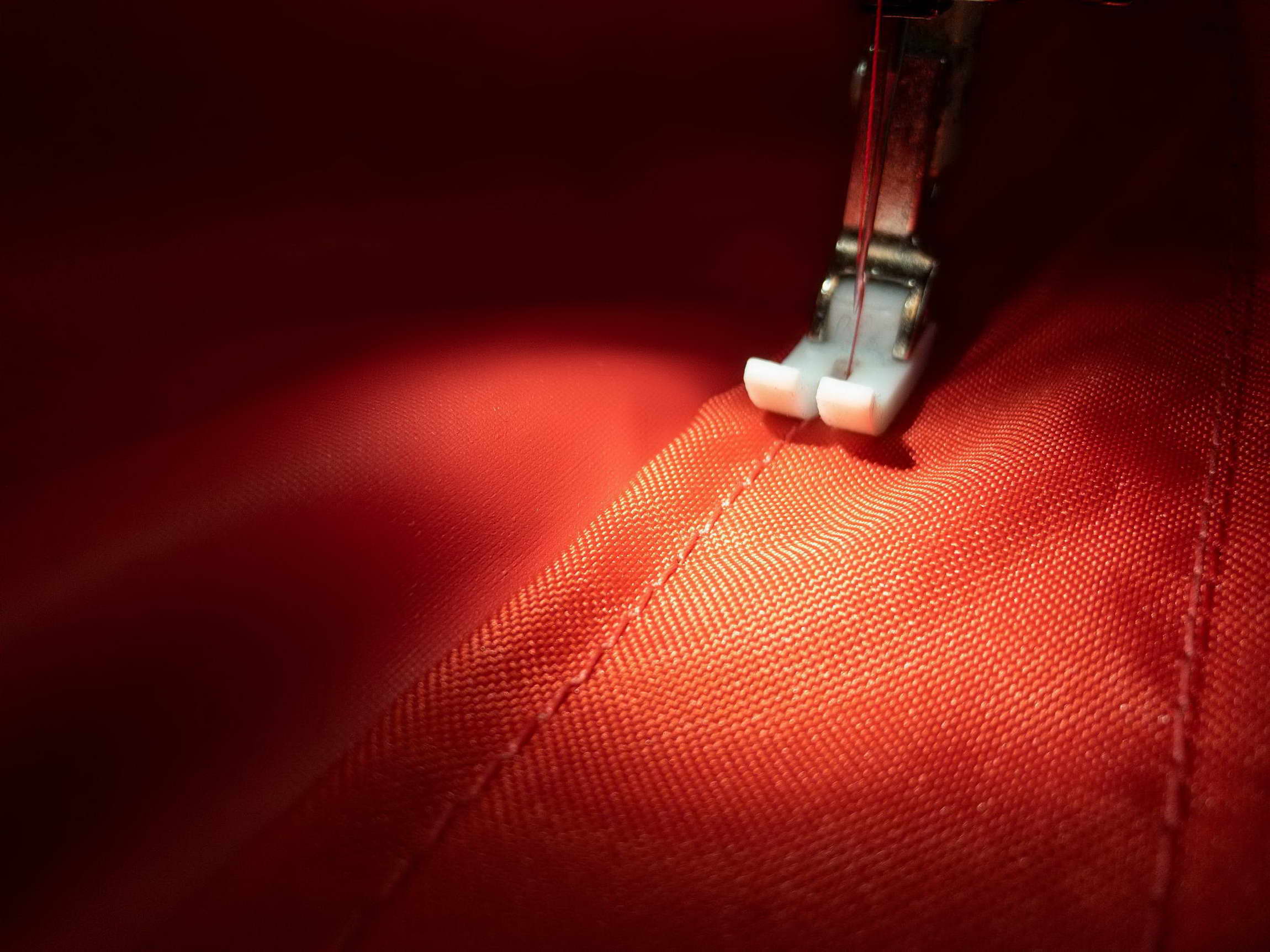
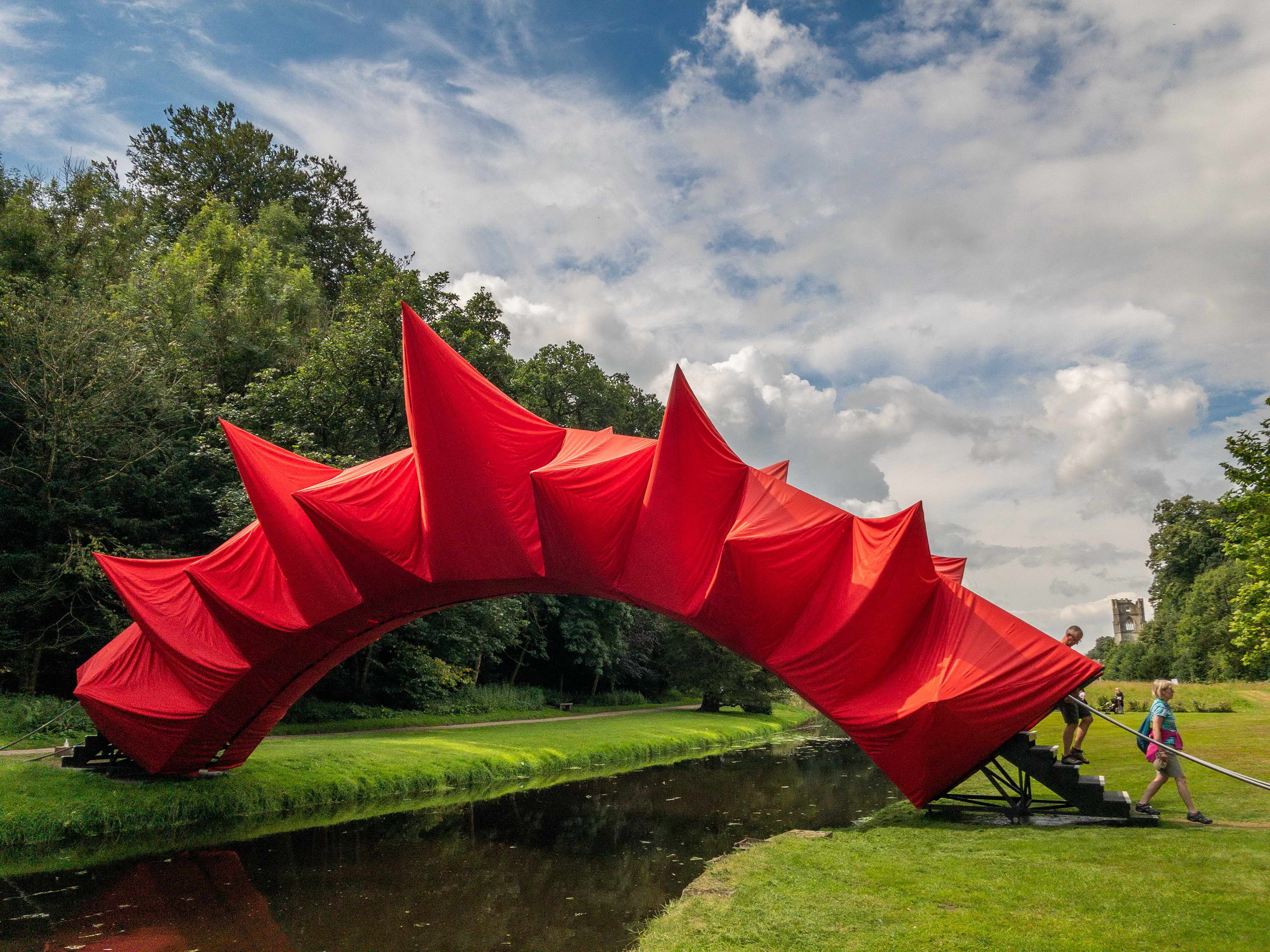
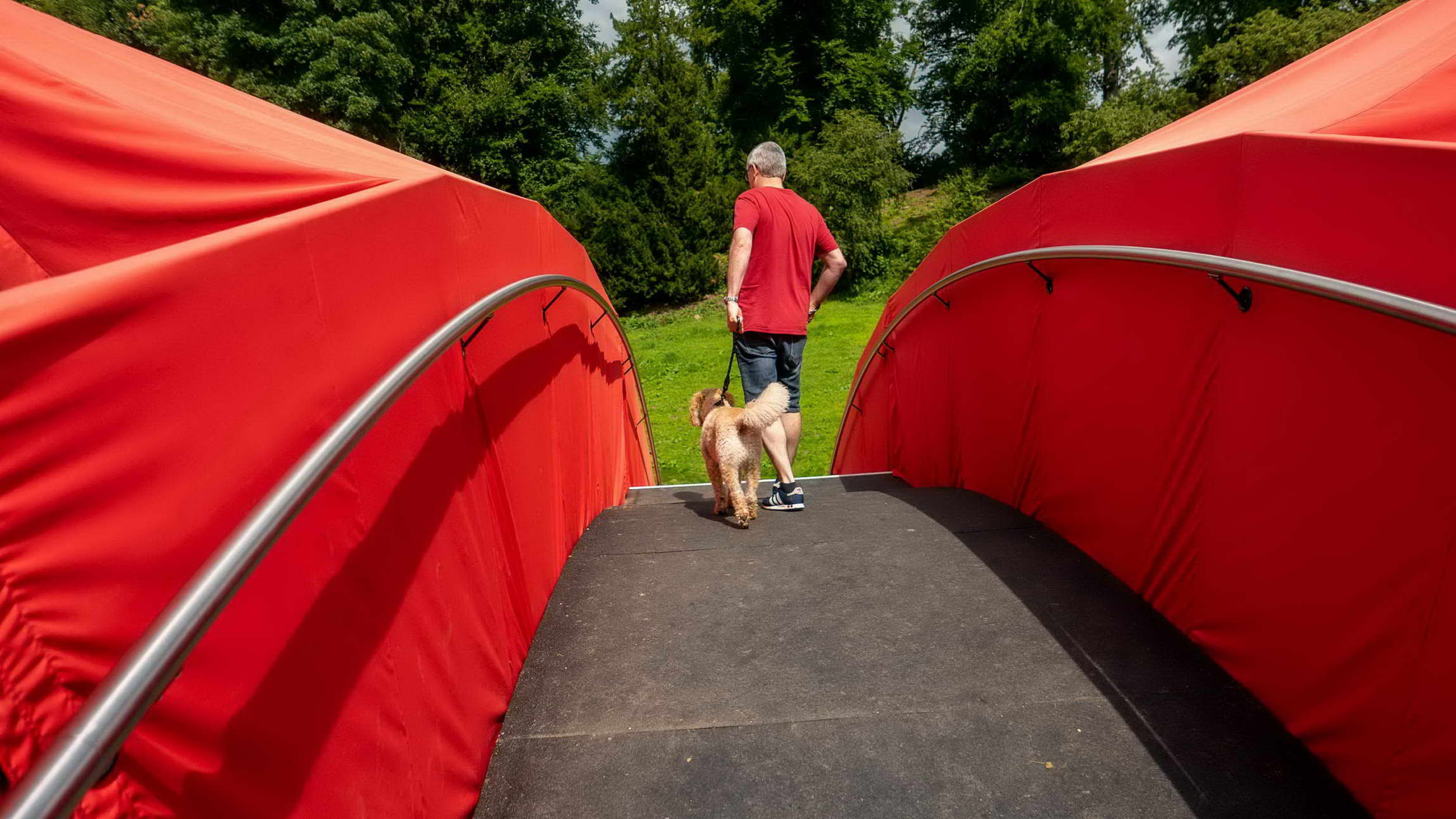
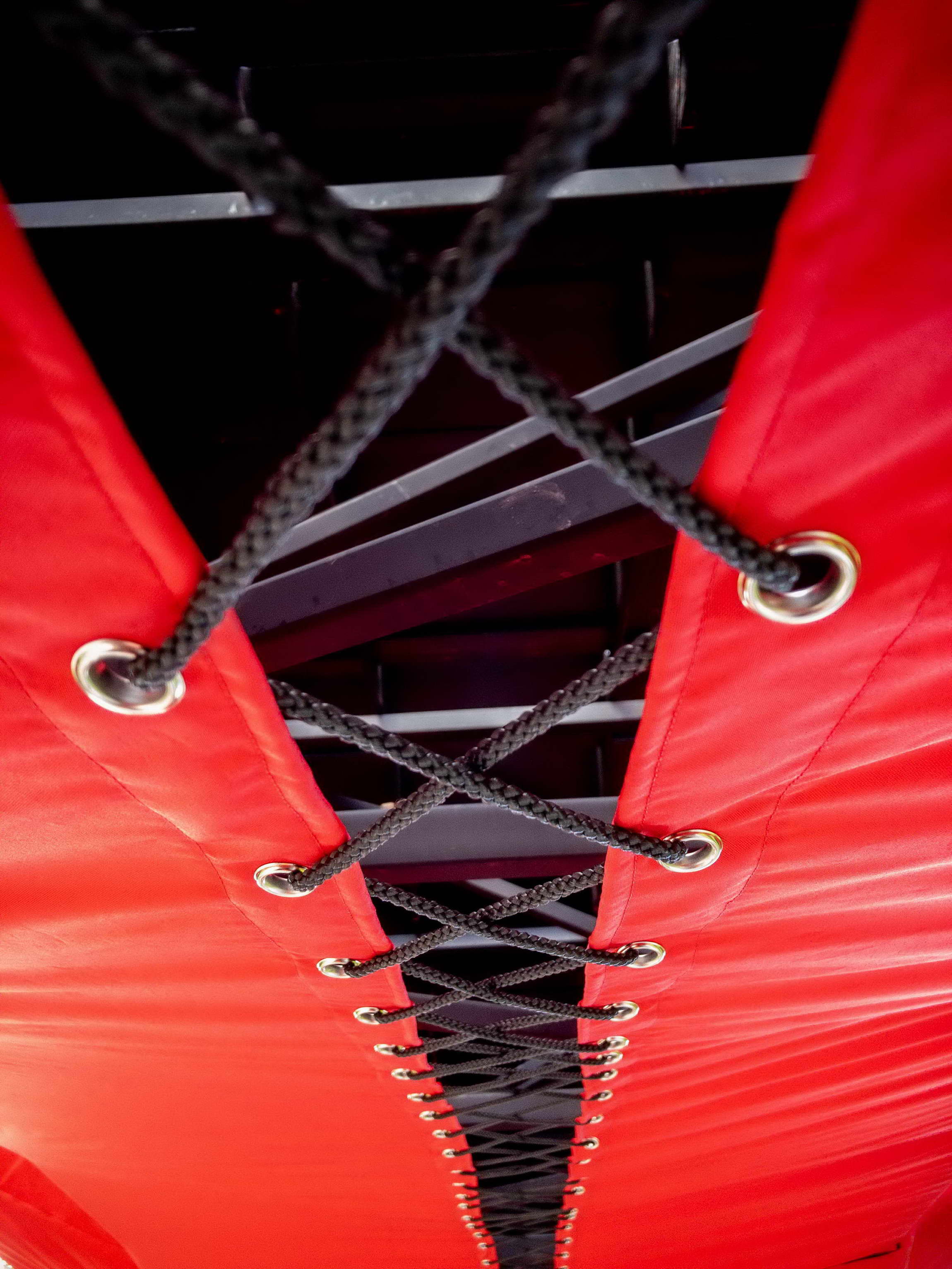
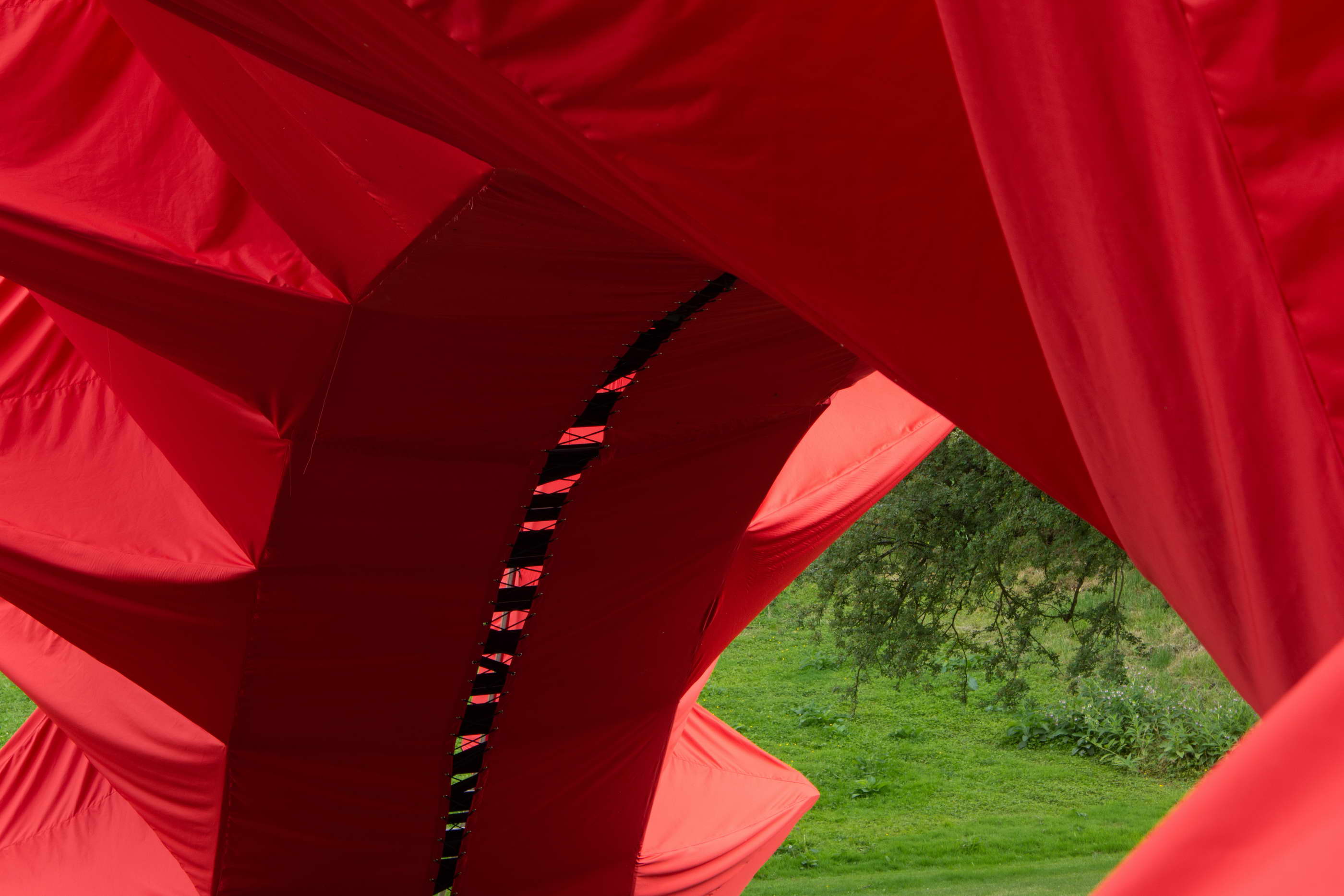
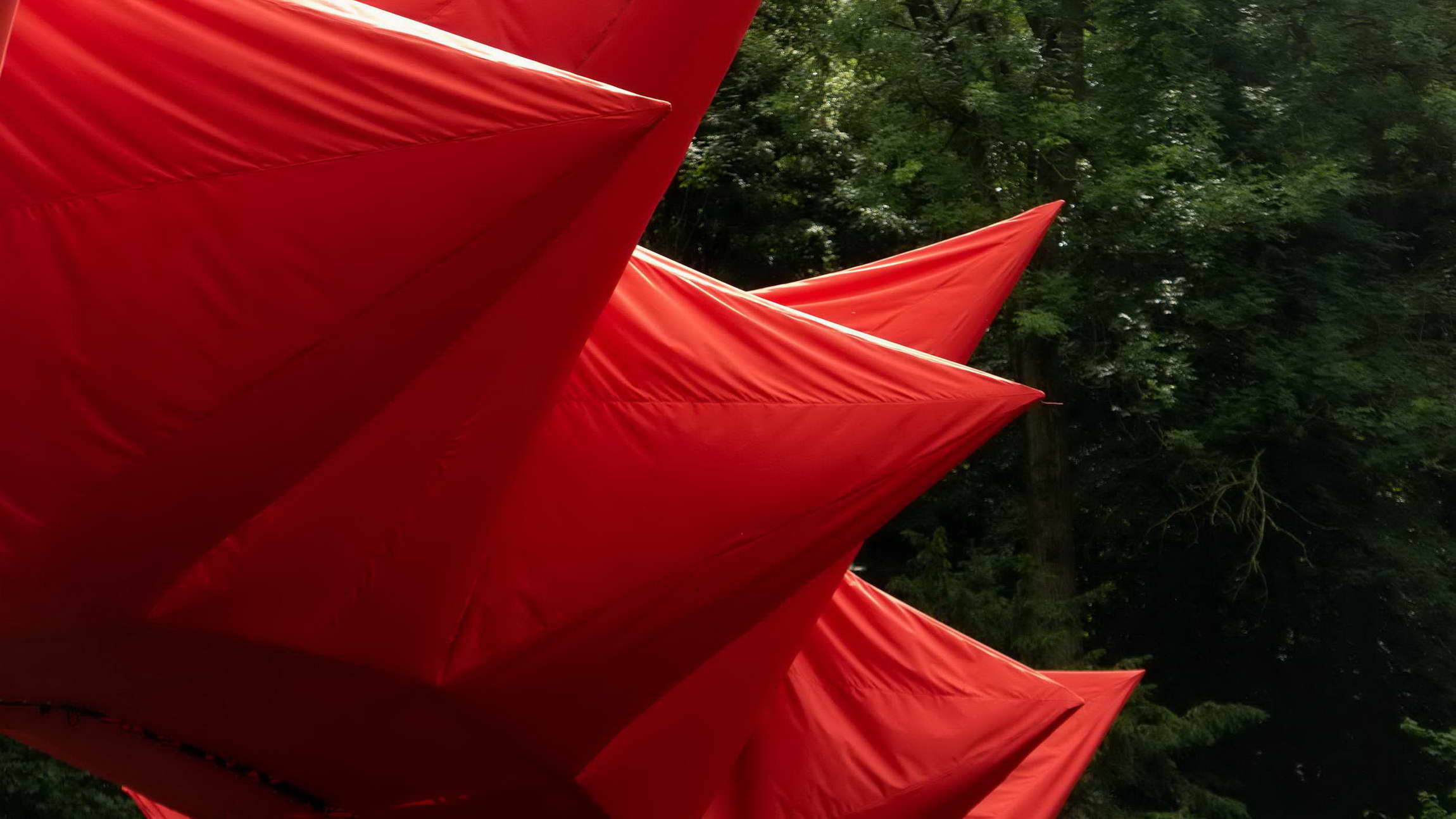
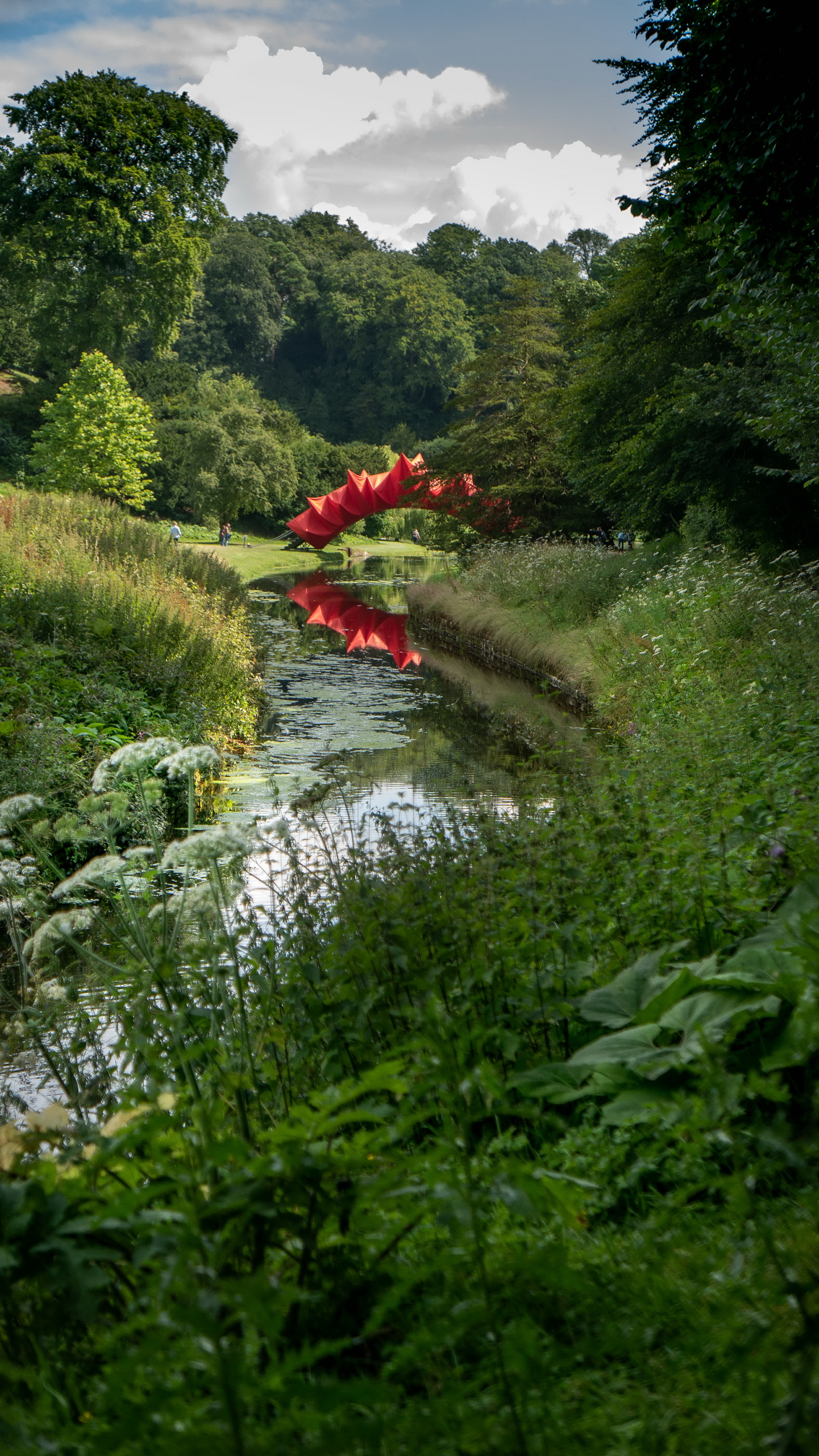
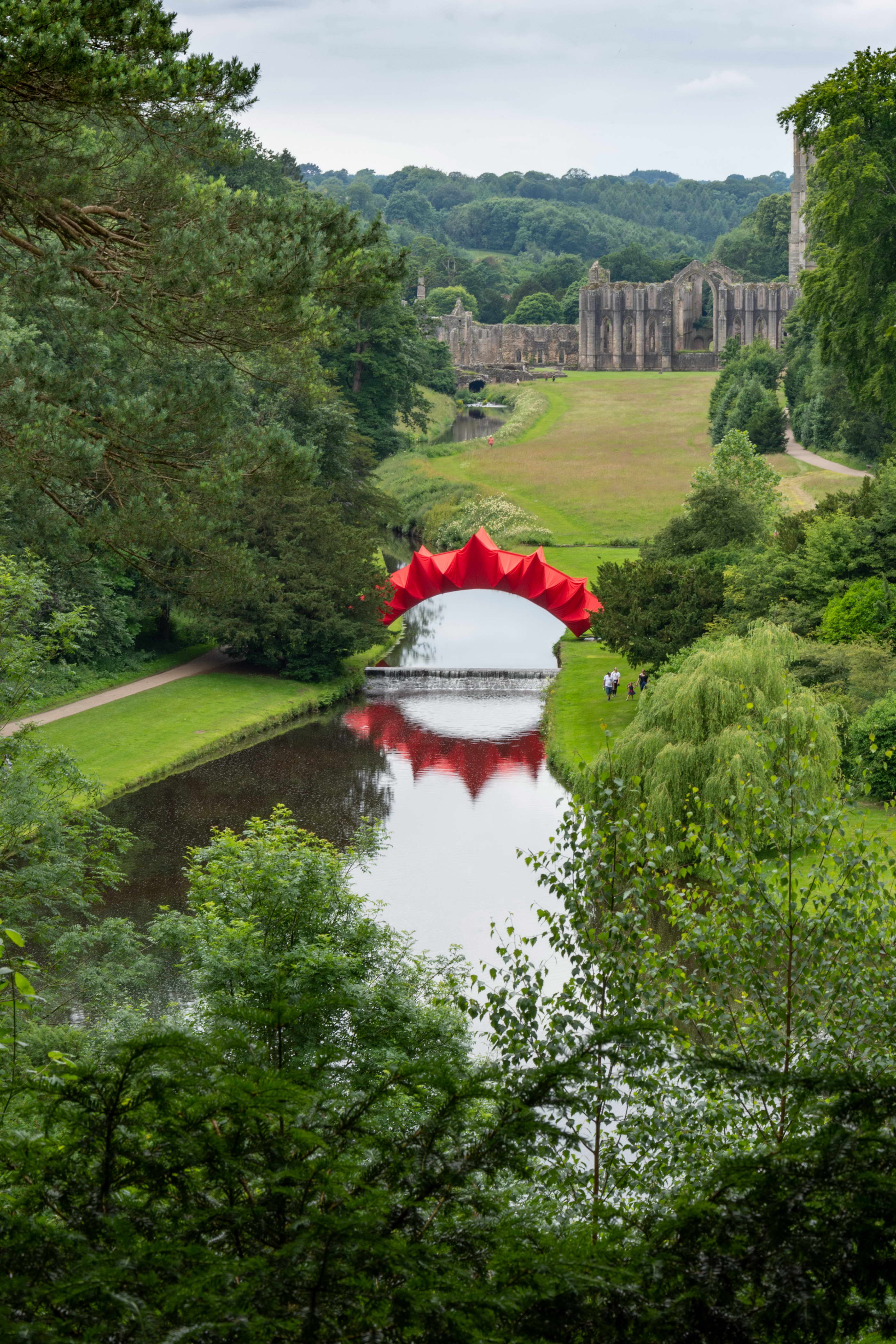
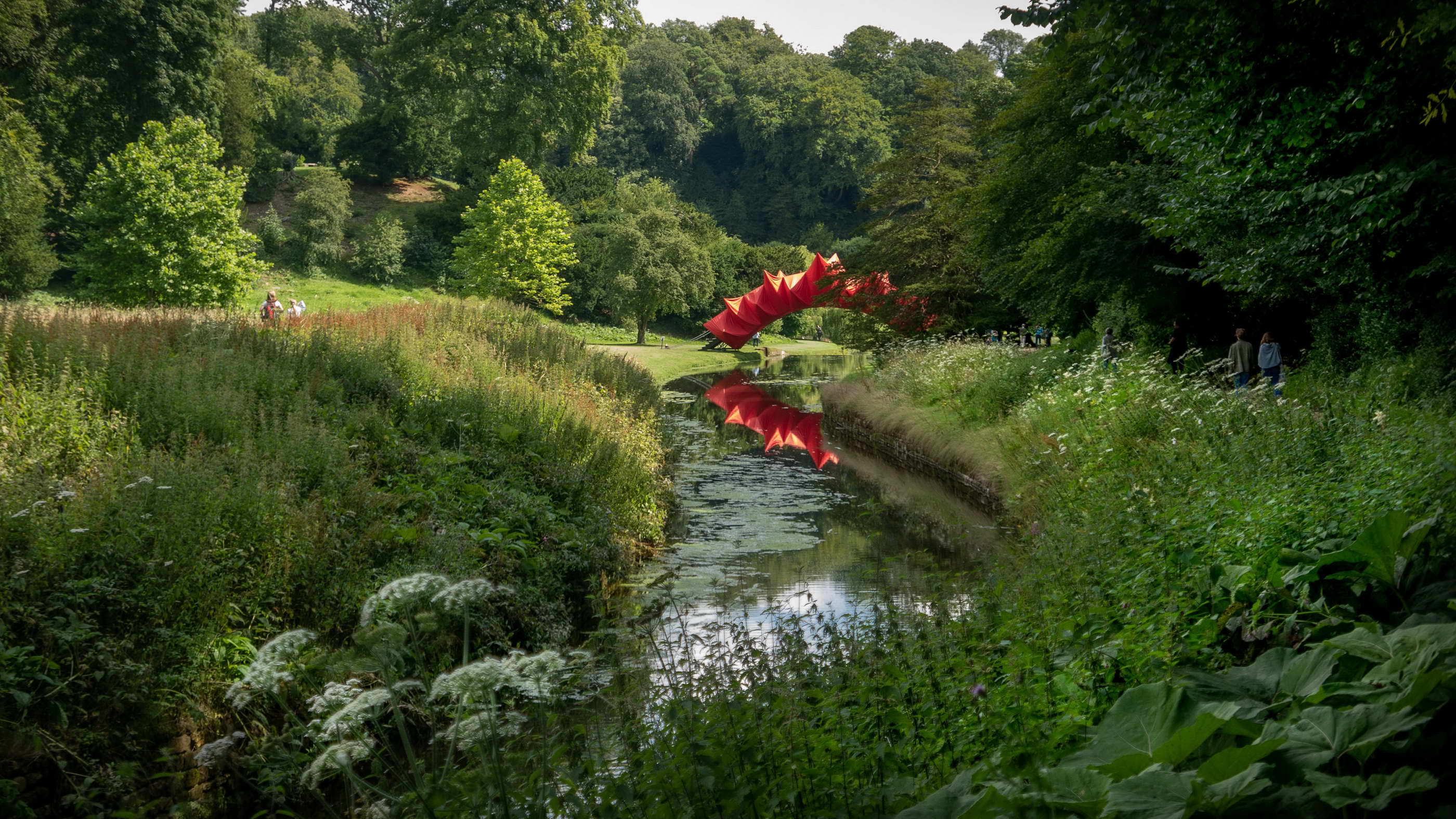
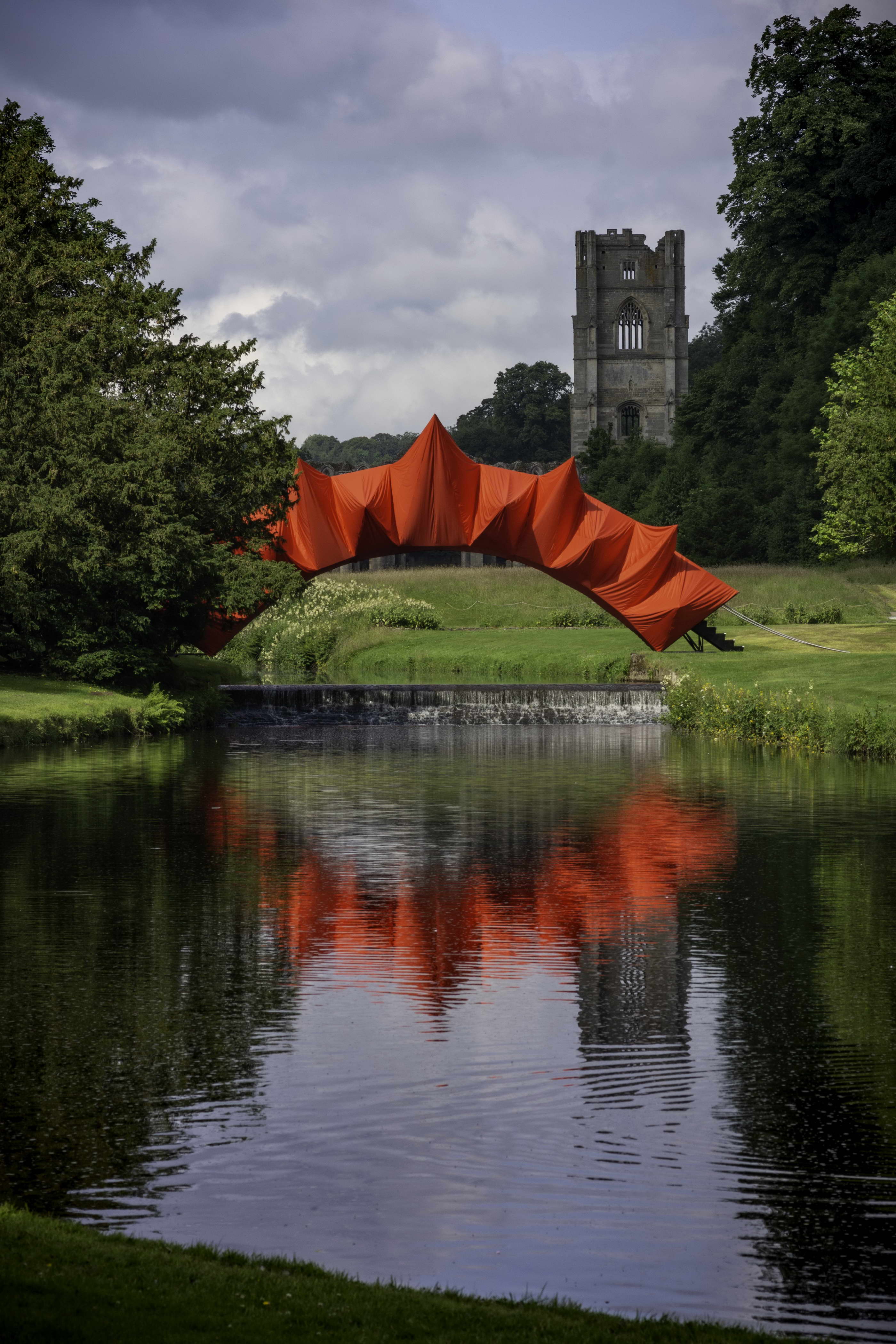
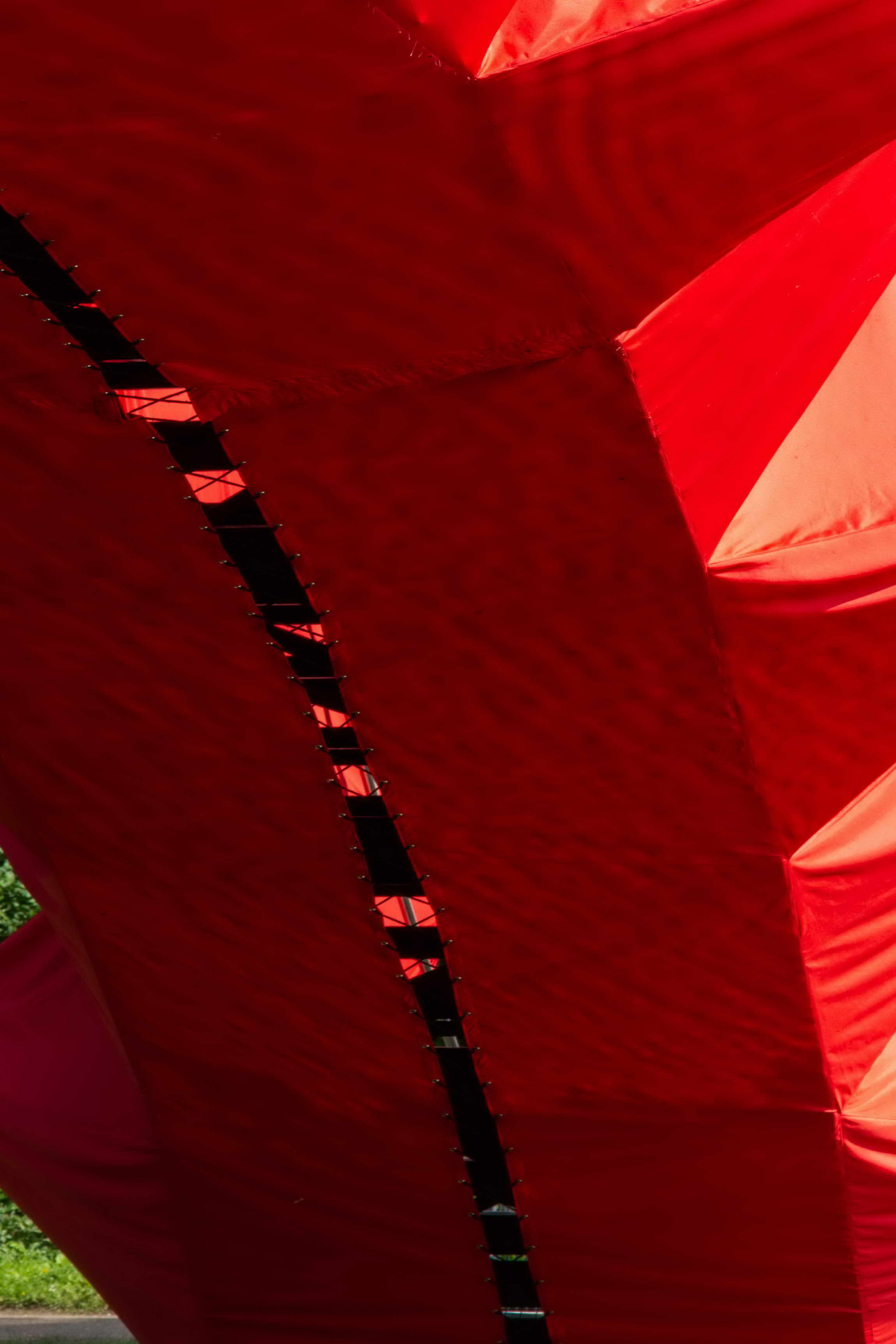
At the southern end of Studley Royal WaterGarden, close to the border between the historic garden and Fountains Abbey abright red bridge arches over the river. The piece is a lightweight steelconstruction with a waterproof polyester skin wrapped around it creating aseries of starburst spikes. The red contrasts with the predominantly greensurrounding palette making a strong visual reference point in the landscape. The bridge is located at the historical site of the ‘New Bridge’ which linkedthe east side of the gardens with tent hill on the west. The original bridgeworked as a visual focal point in the view from ‘Anne Boleyn’s Seat’. The tent bridgedraws on the temporary tent structures on adjacent Tent Hill, while the spiritof the lost Pyramid folly rests in its four-sided spikes. Visible from the Abbey the bridge becomes avisual link between the two parts of the site and attracts Abbey visitors whomay not normally venture to the Water Gardens. As a functioning weight-bearingstructure, Tent Bridge opens up new circular paths on both the Abbey and WaterGardens ends of the site. From the ‘Surprise View’ pavilion on theupper terrace of the garden, ‘Bridged’ sits within the sculpted landscapeacting as a focal-point in the composition of the view. From that point therole of the bridge becomes apparent and completes the picture in a way not seenfor over 150 years. Created with investment from Arts CouncilEngland and the National Trust, who commissioned this artwork, as part of TrustNew Art.













 Editor's Pick
 Latest Design
 Best Idea
 Hottest of Week