Text description provided by the architects
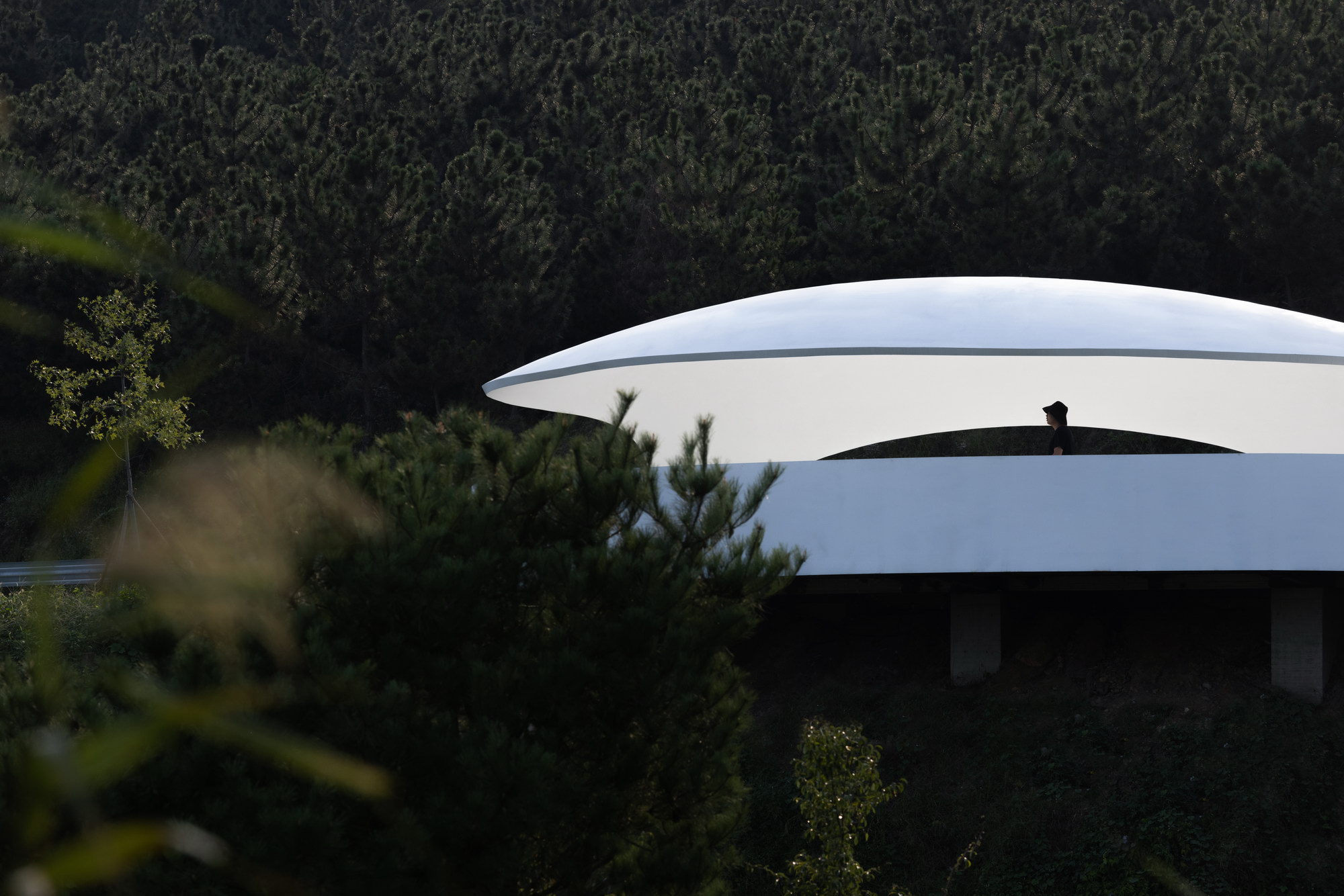
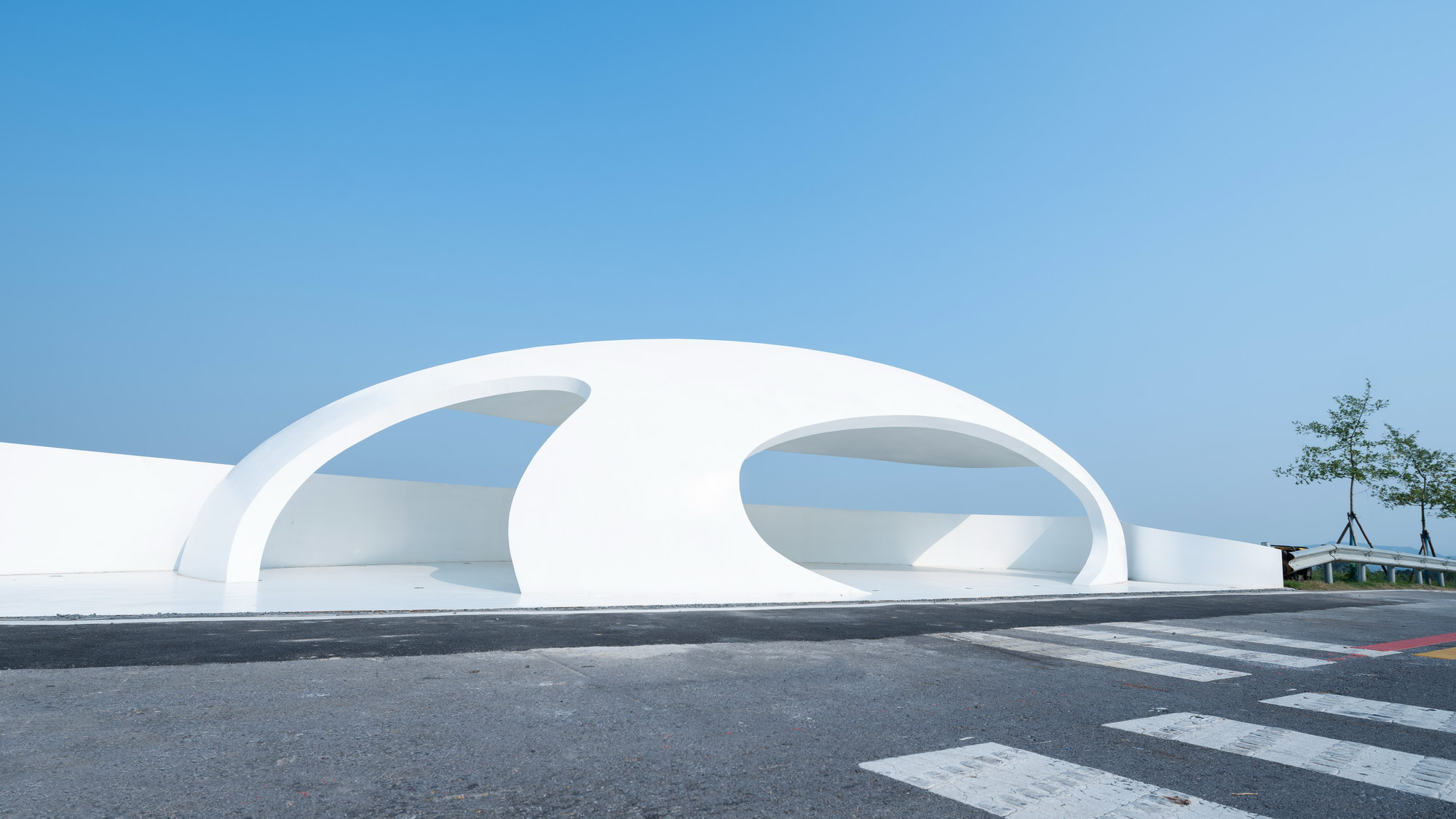
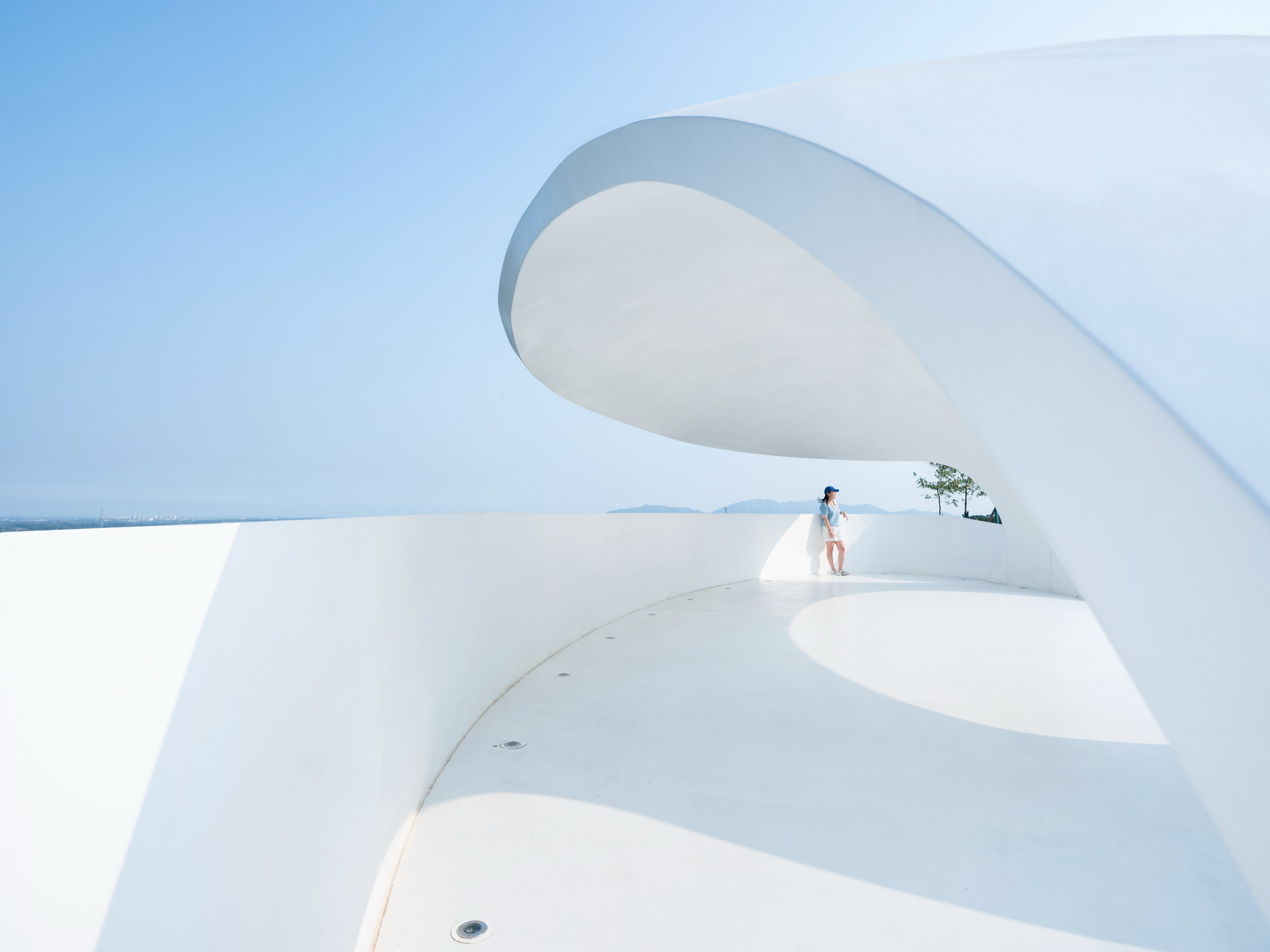
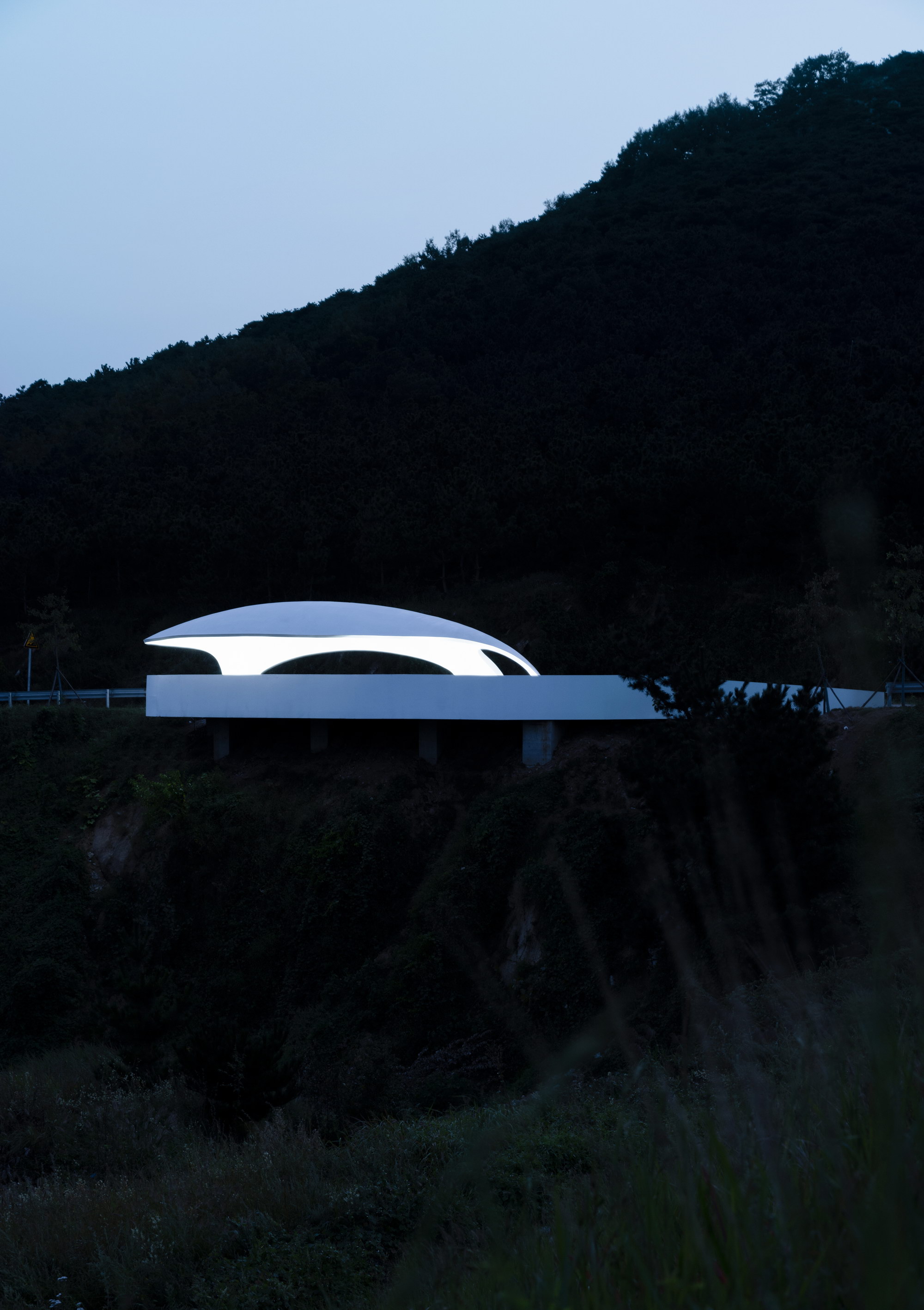
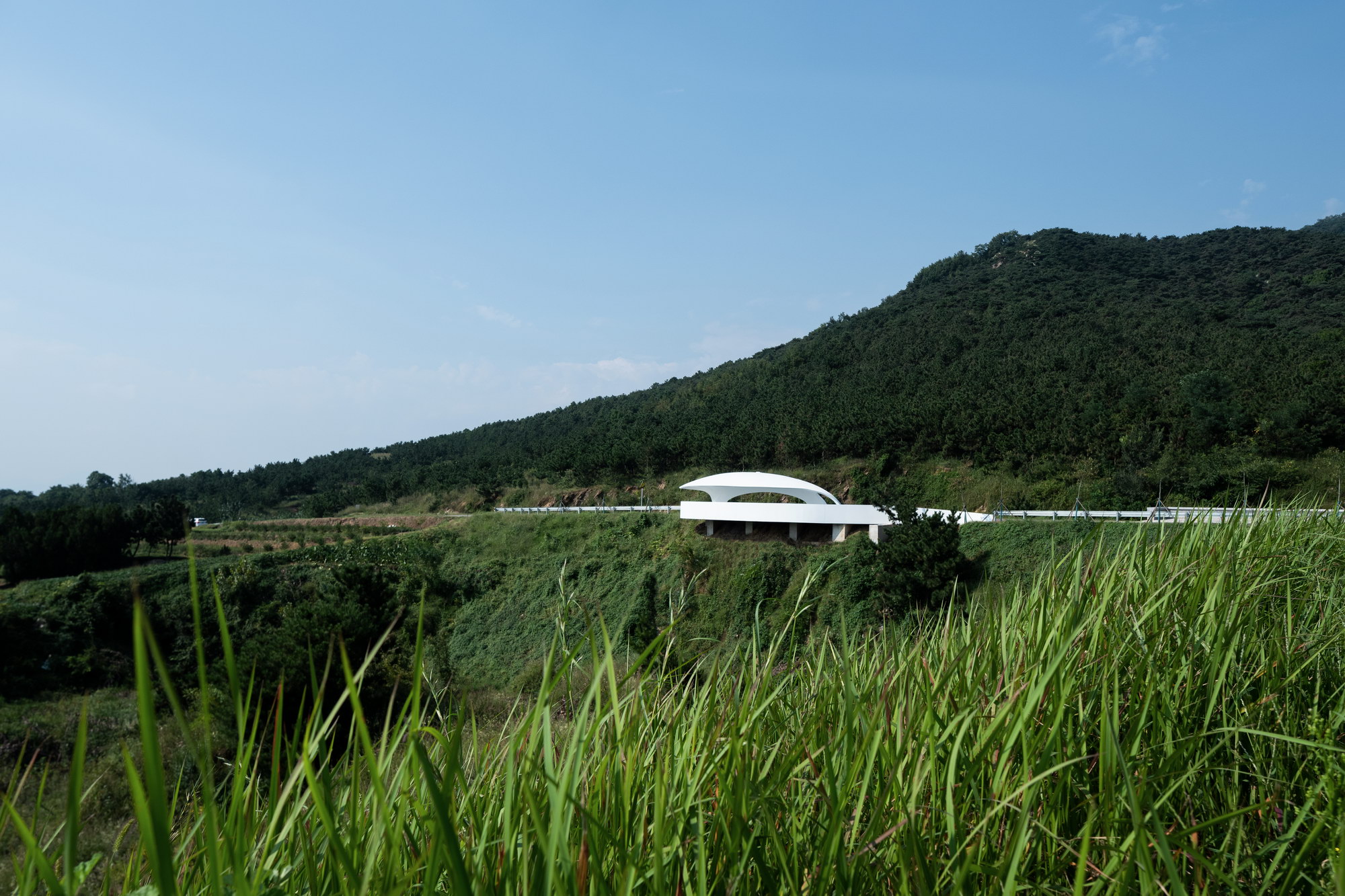
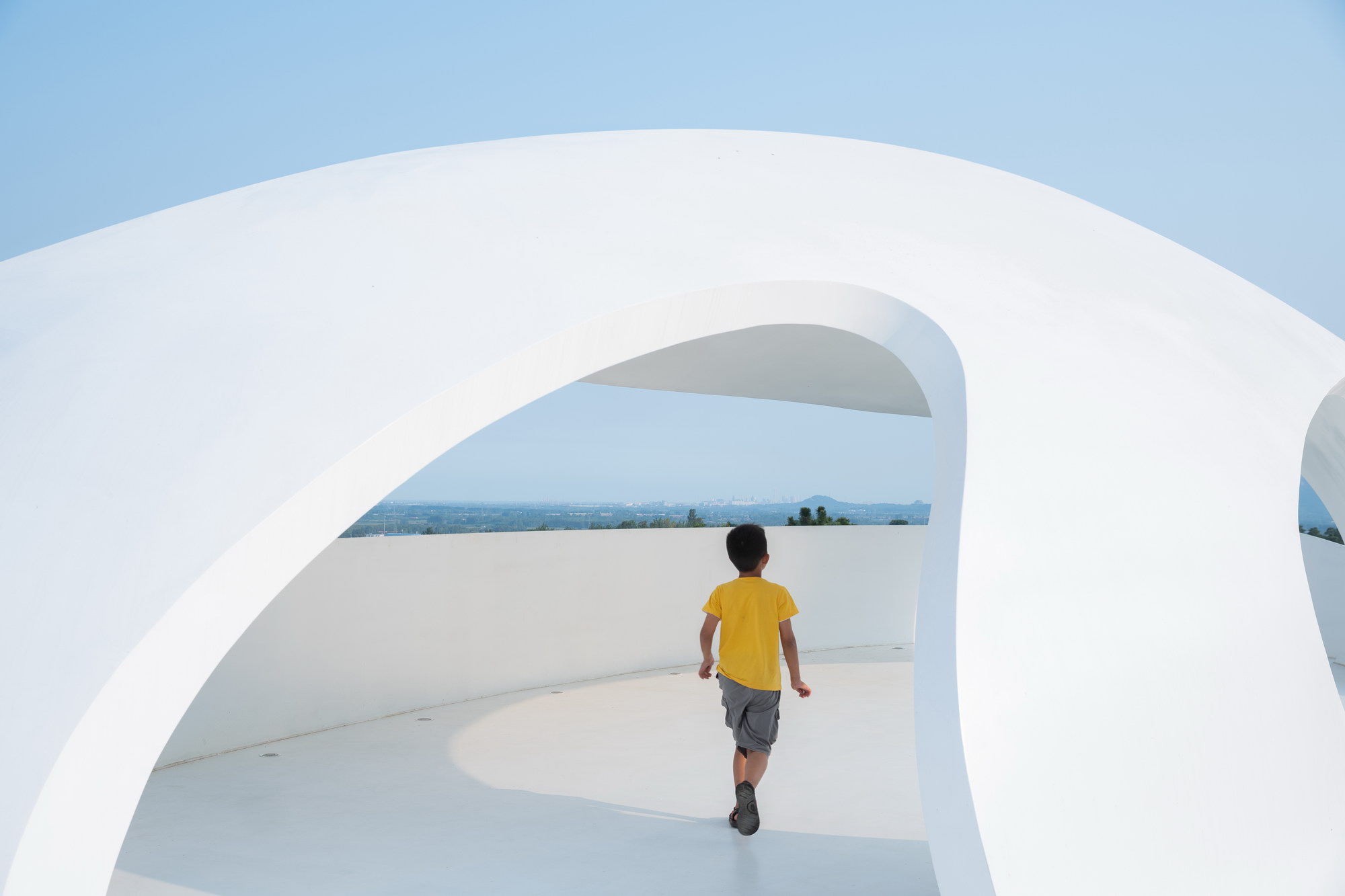
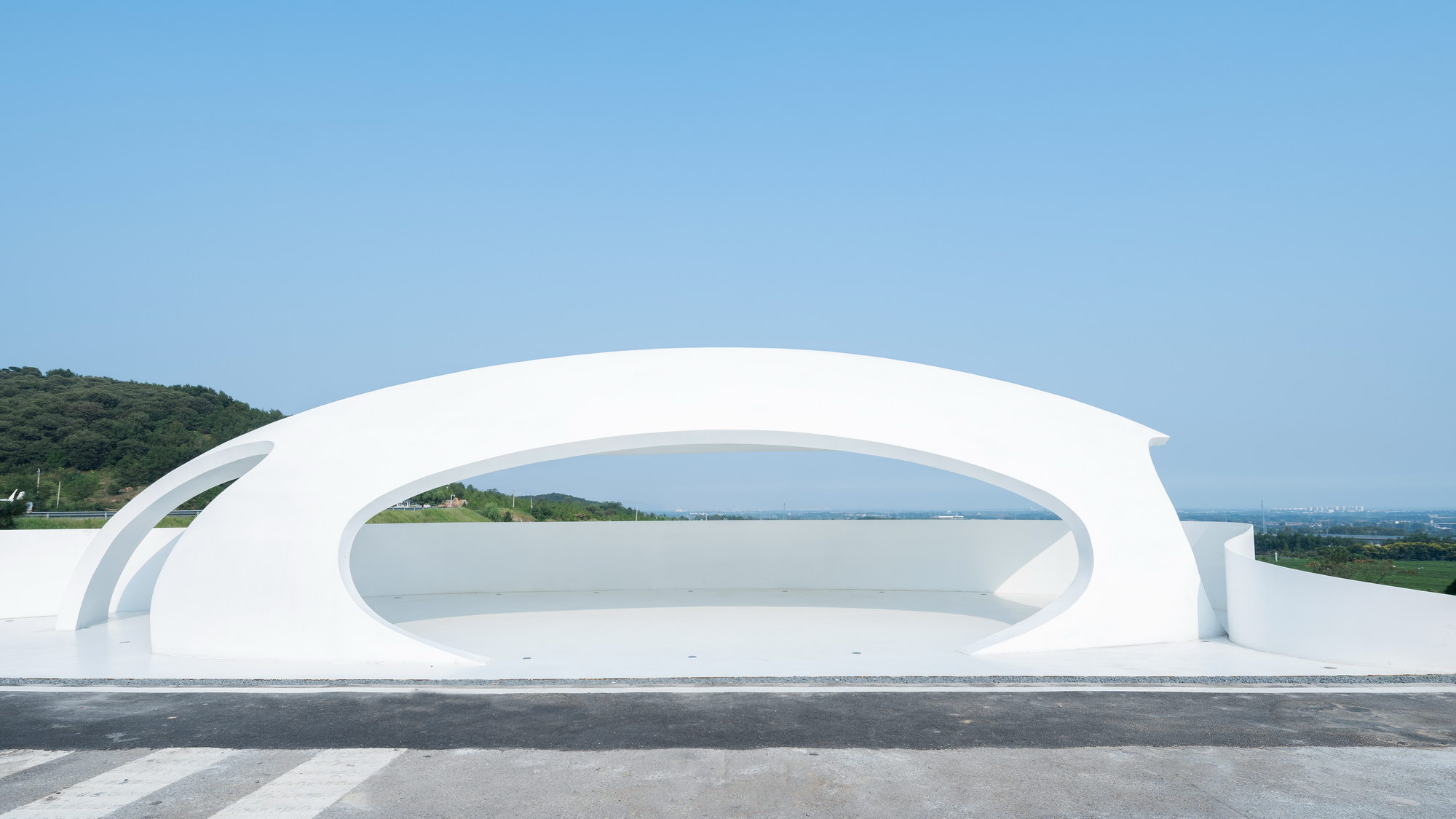
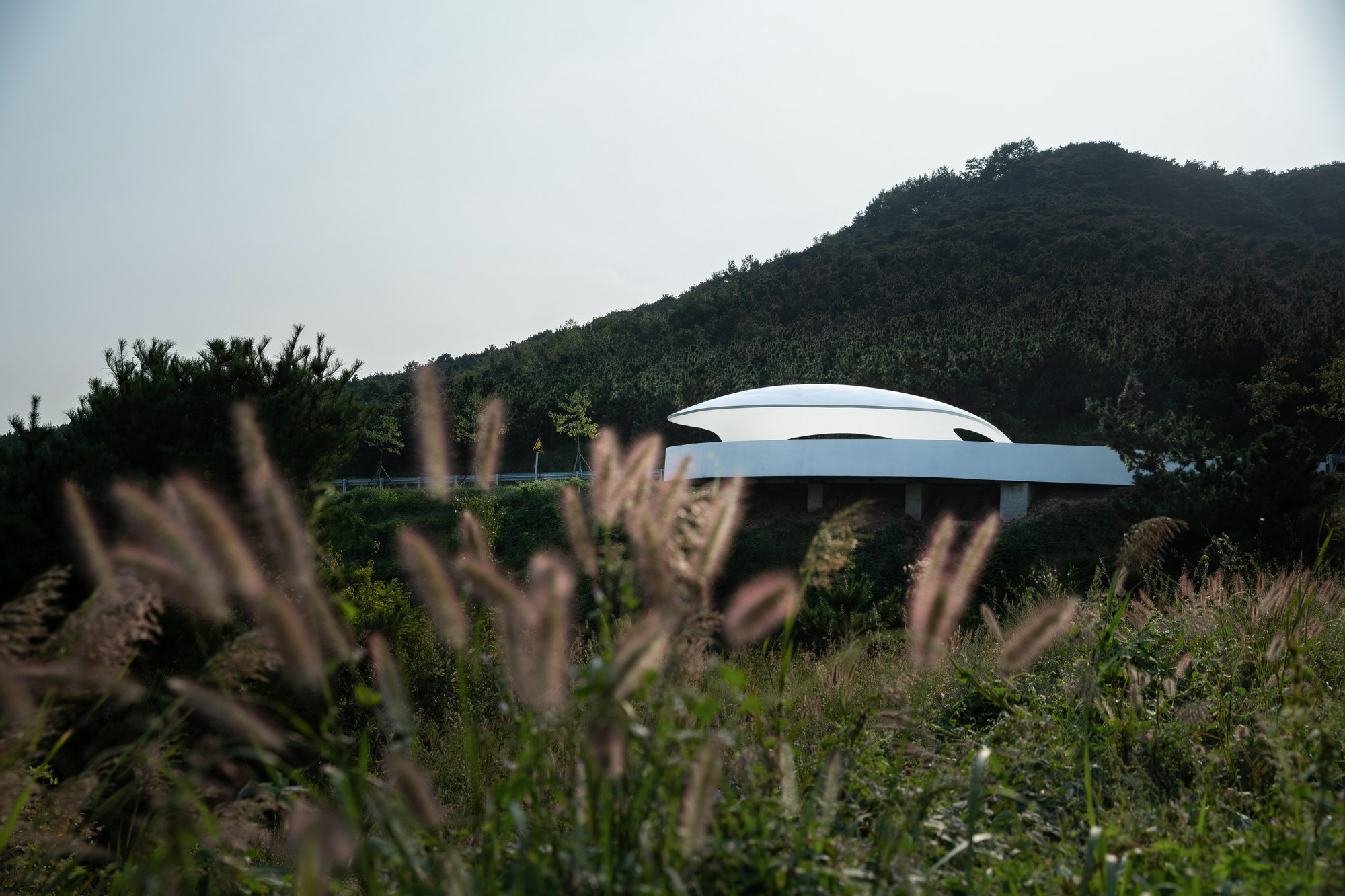
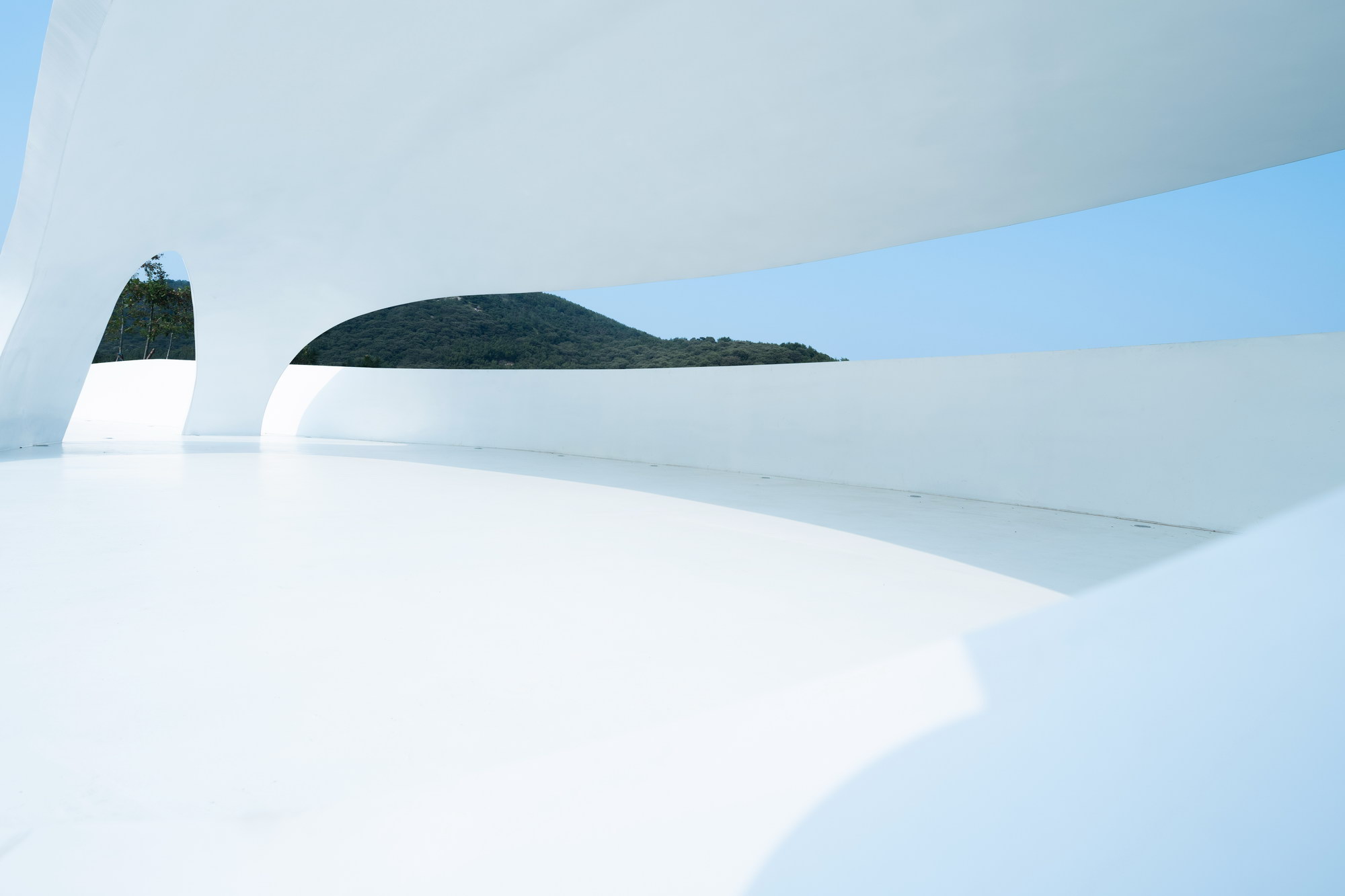
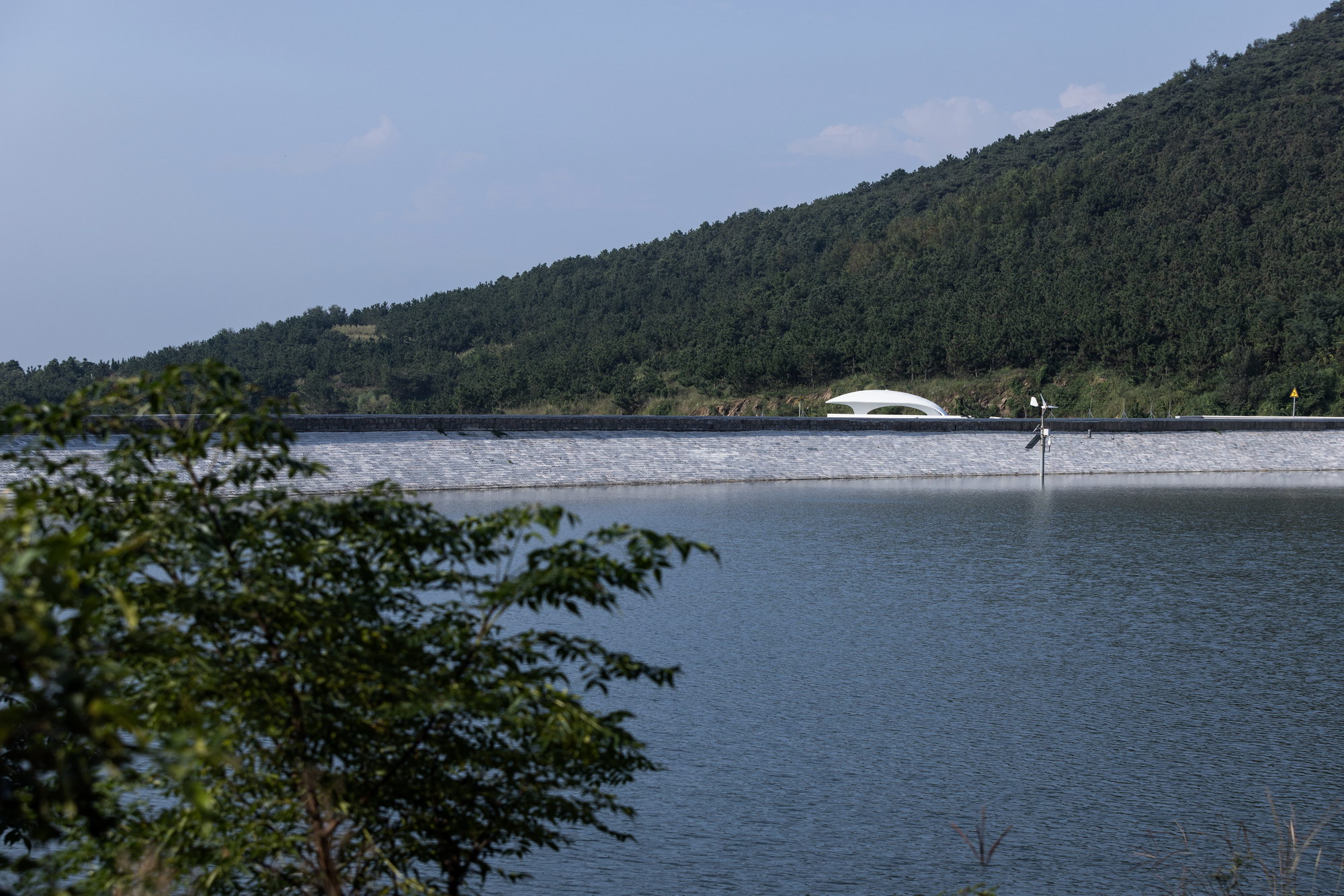
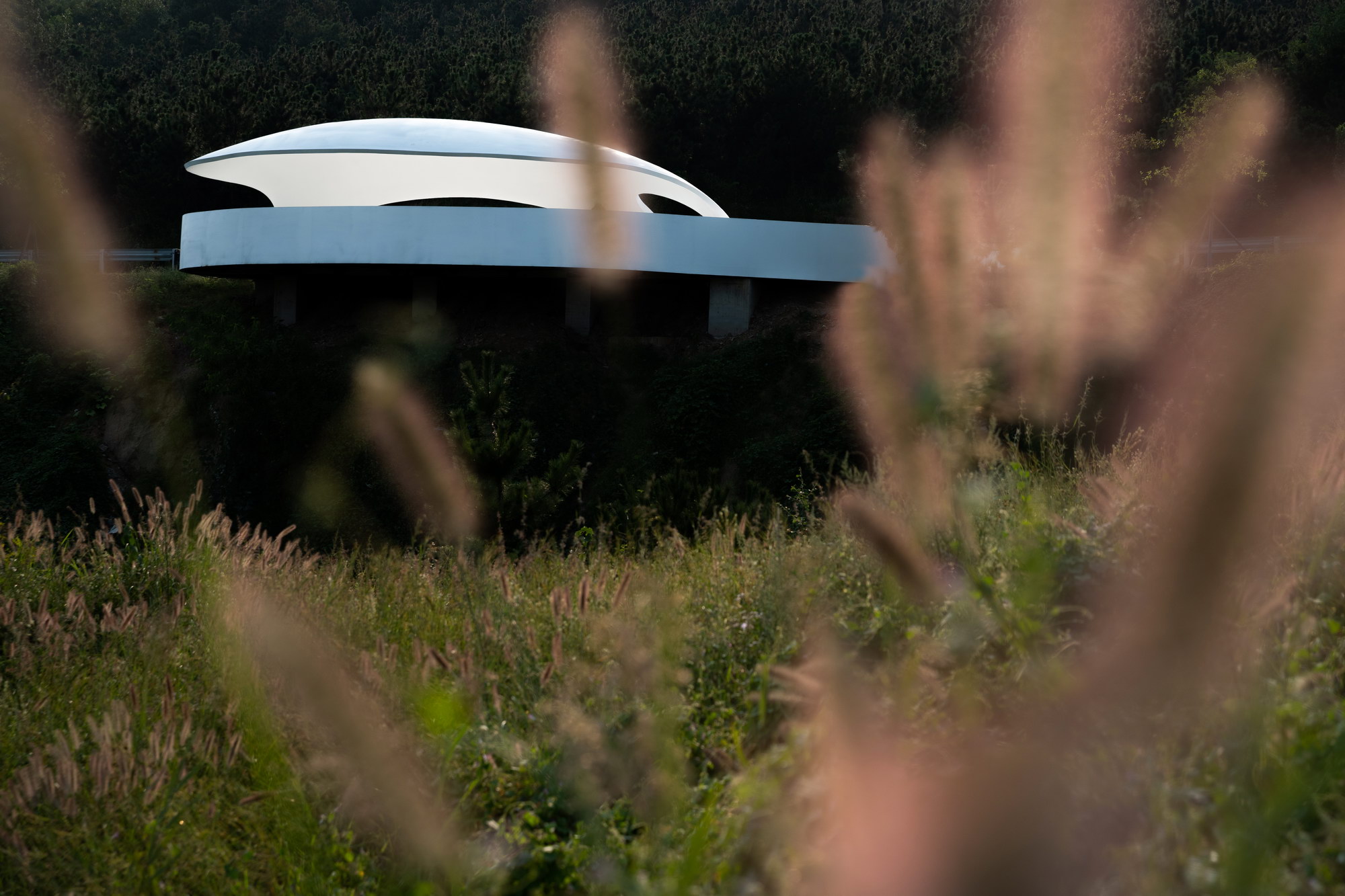
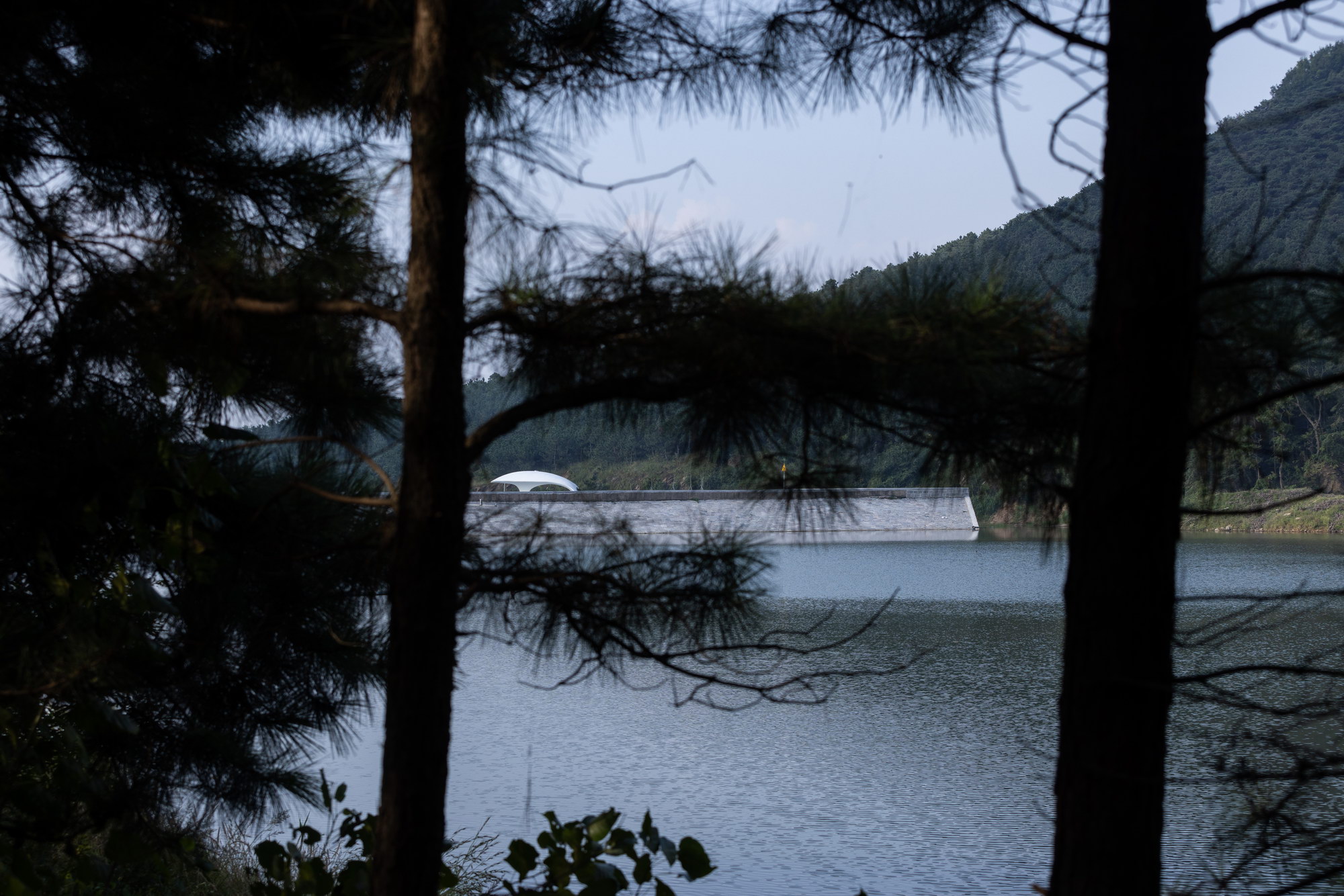
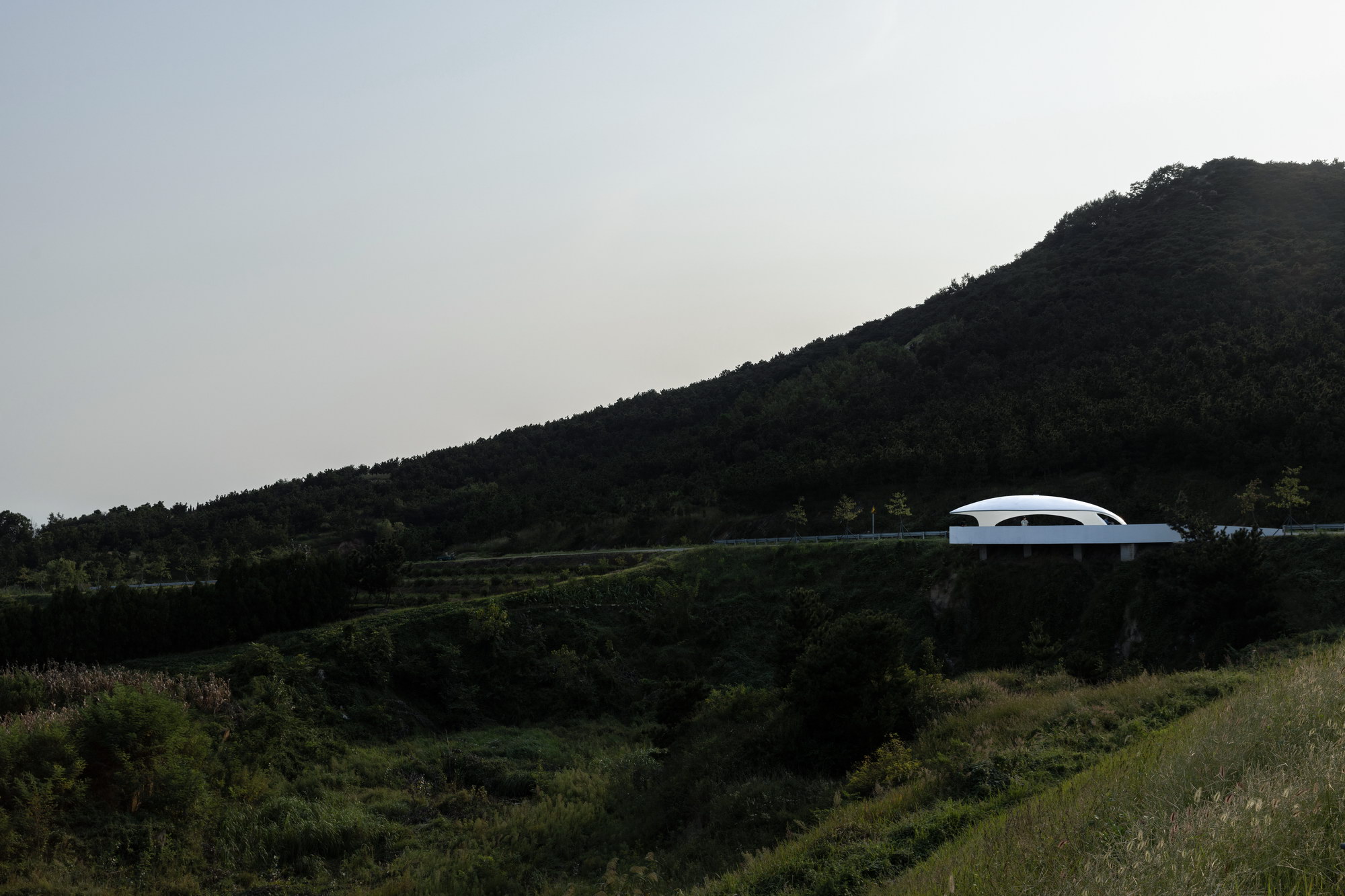
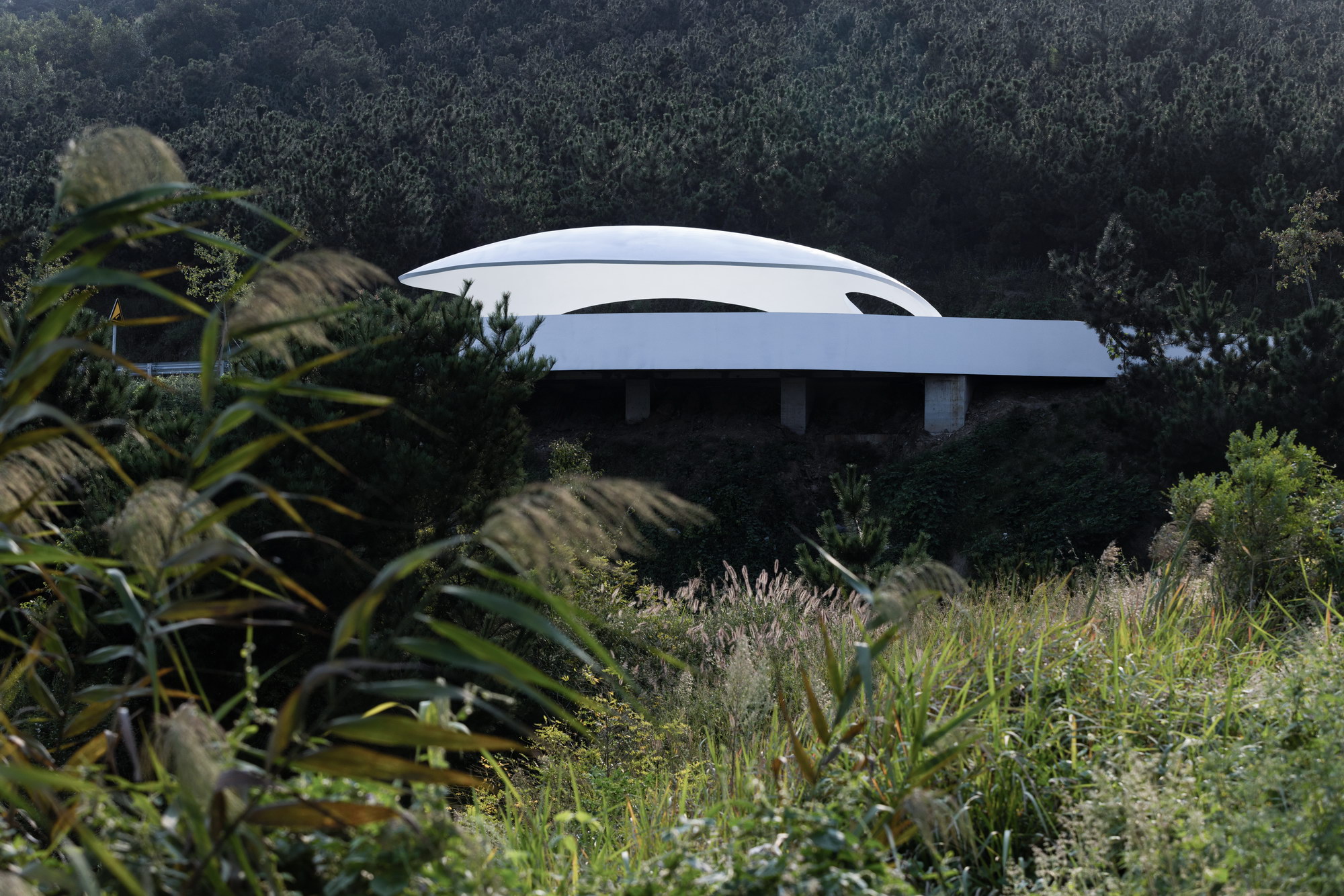
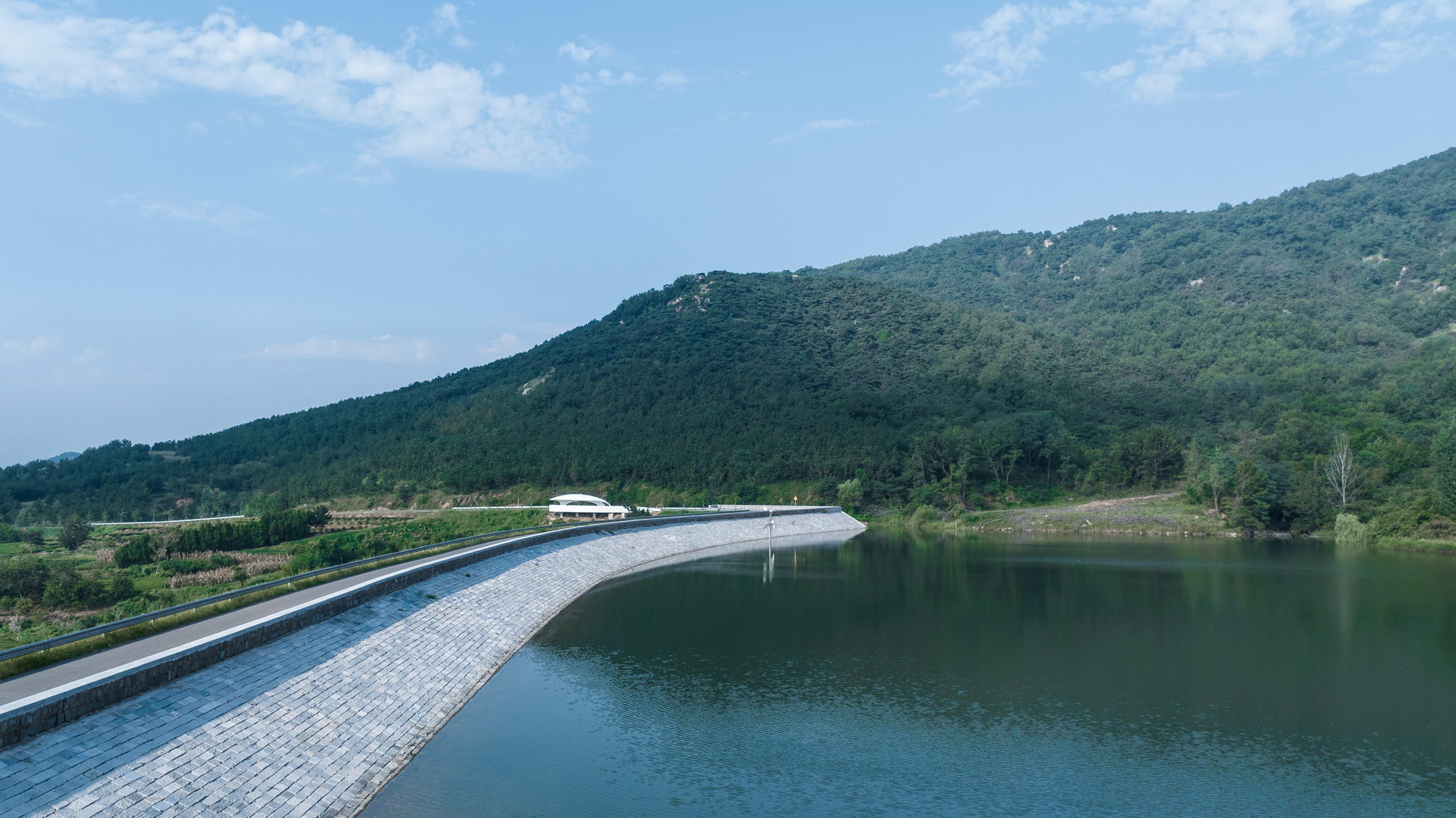
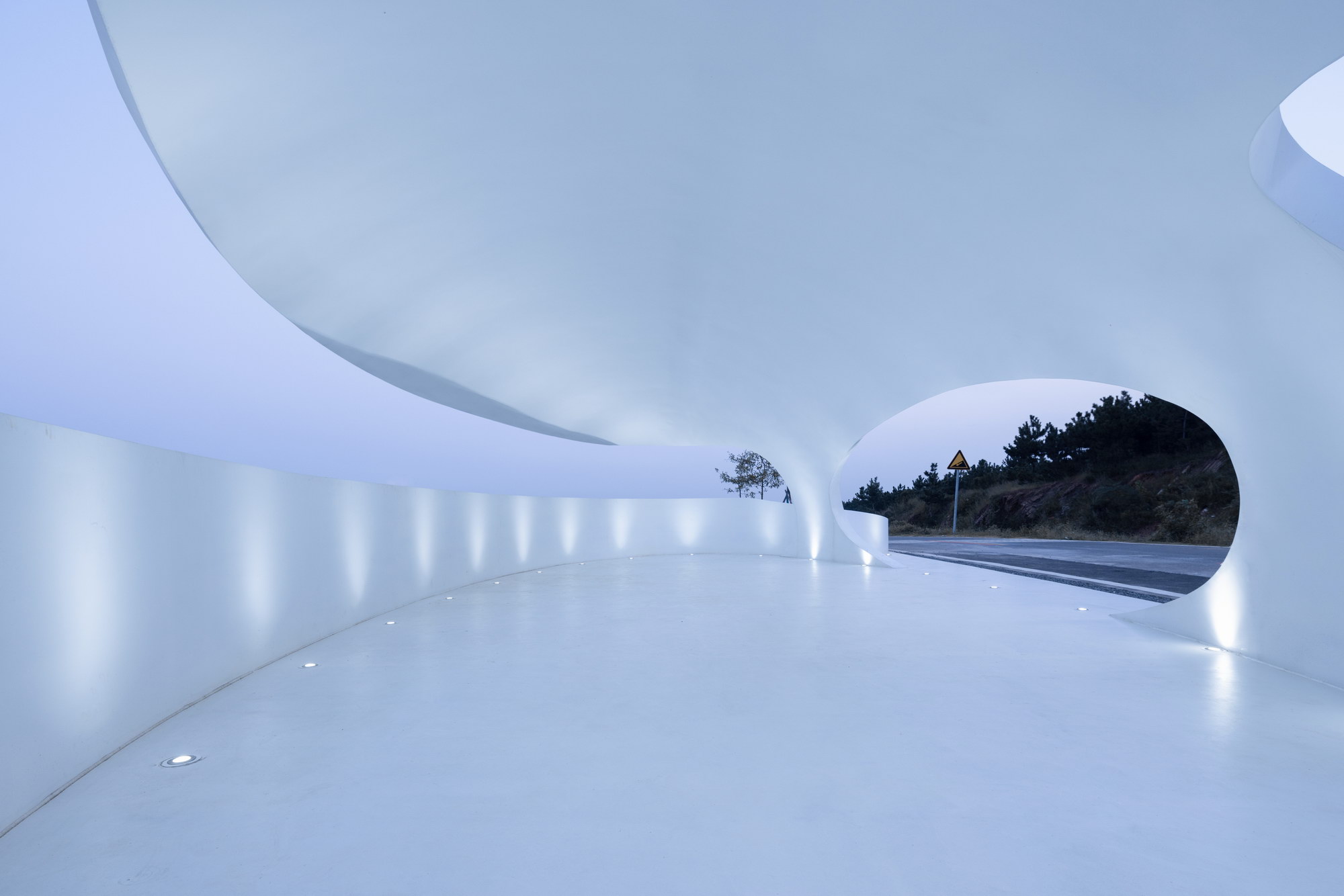
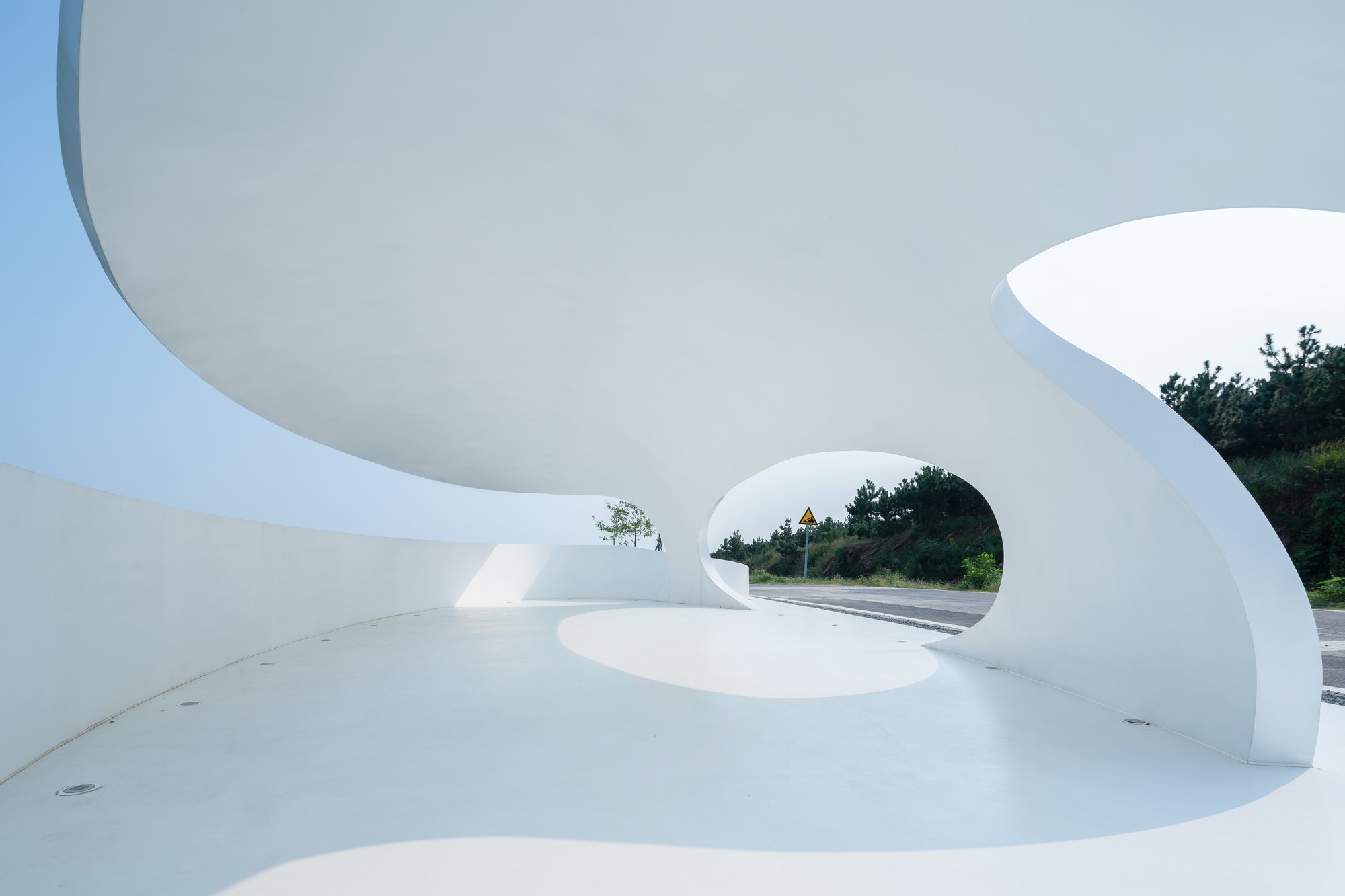
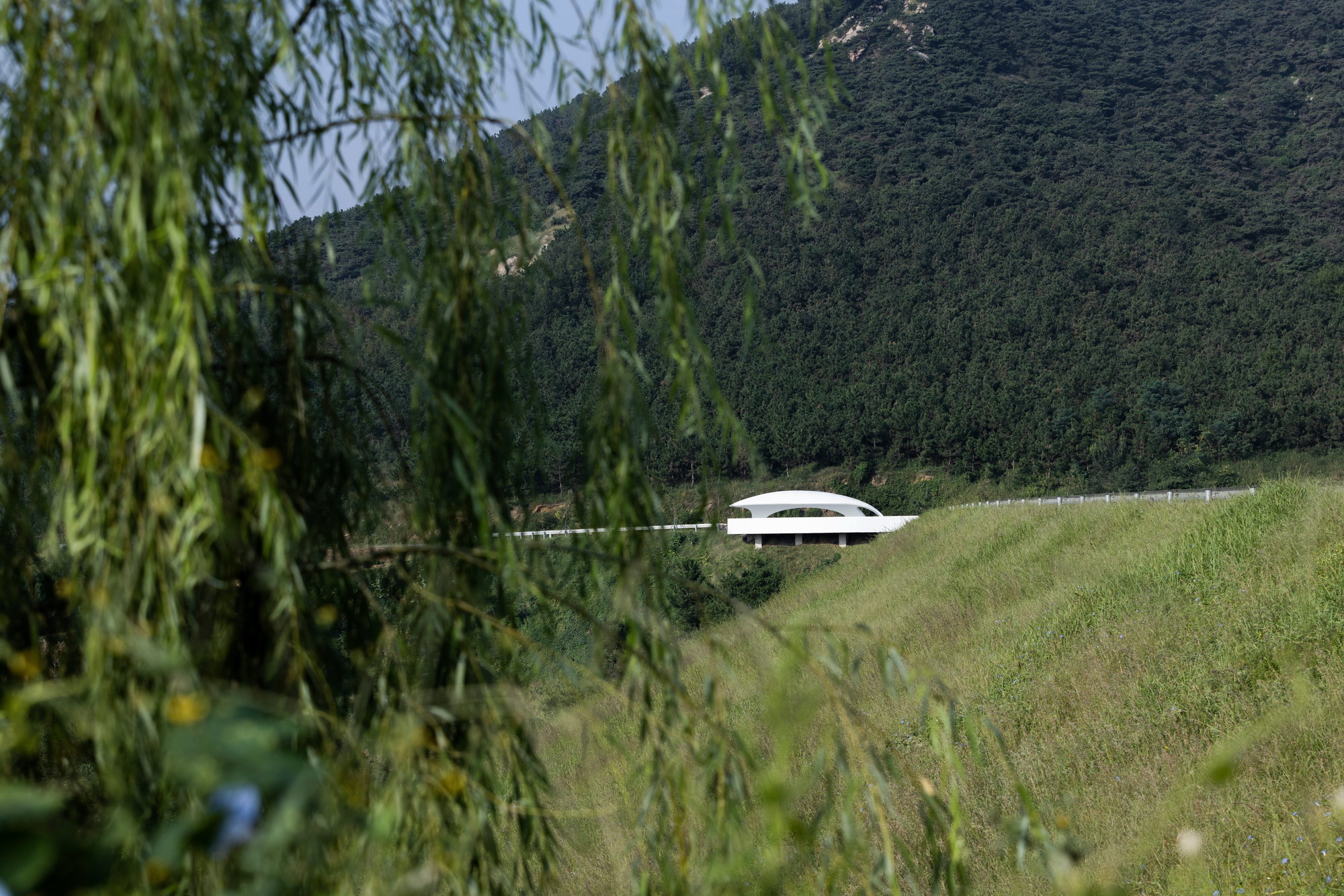
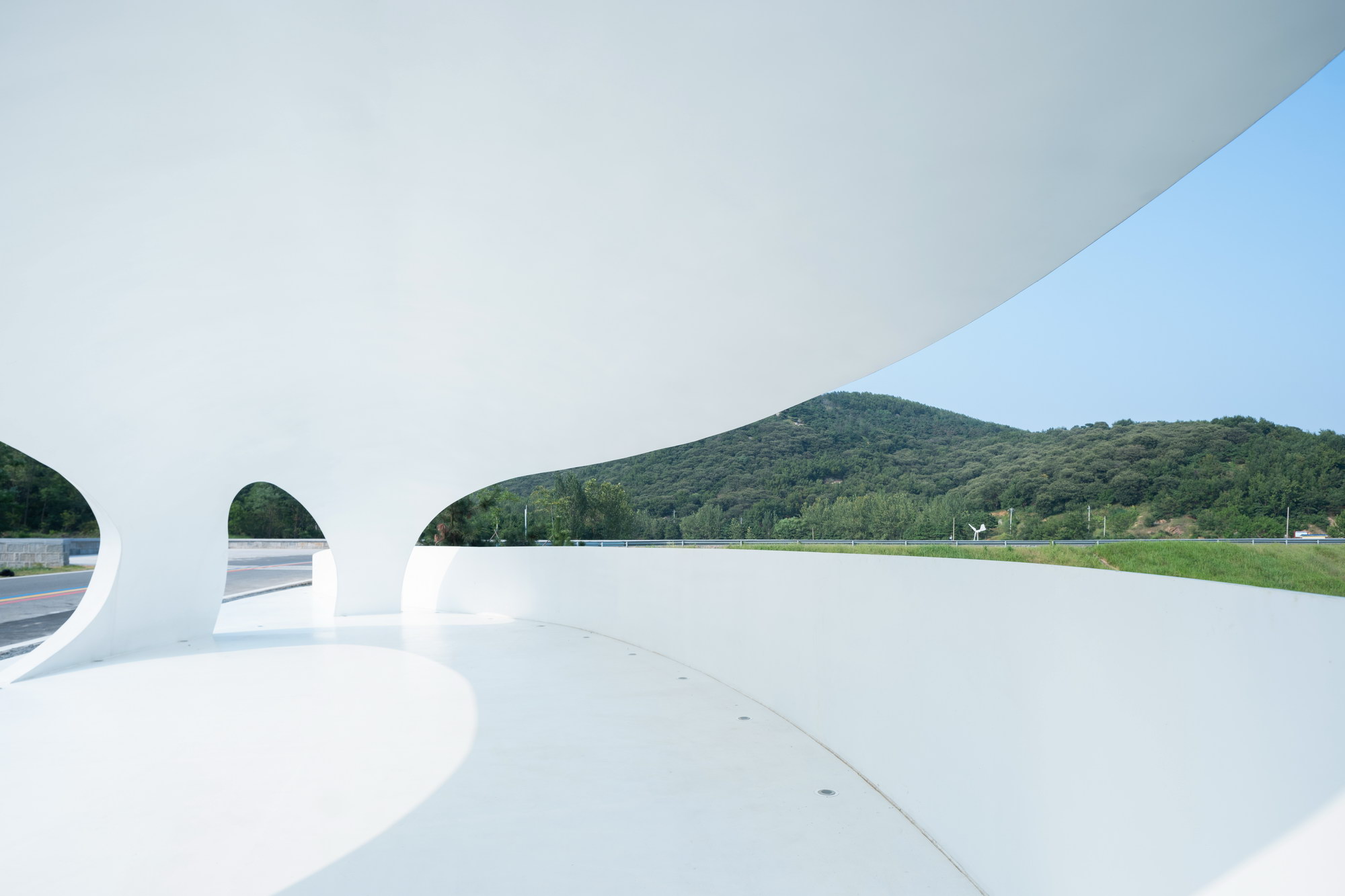
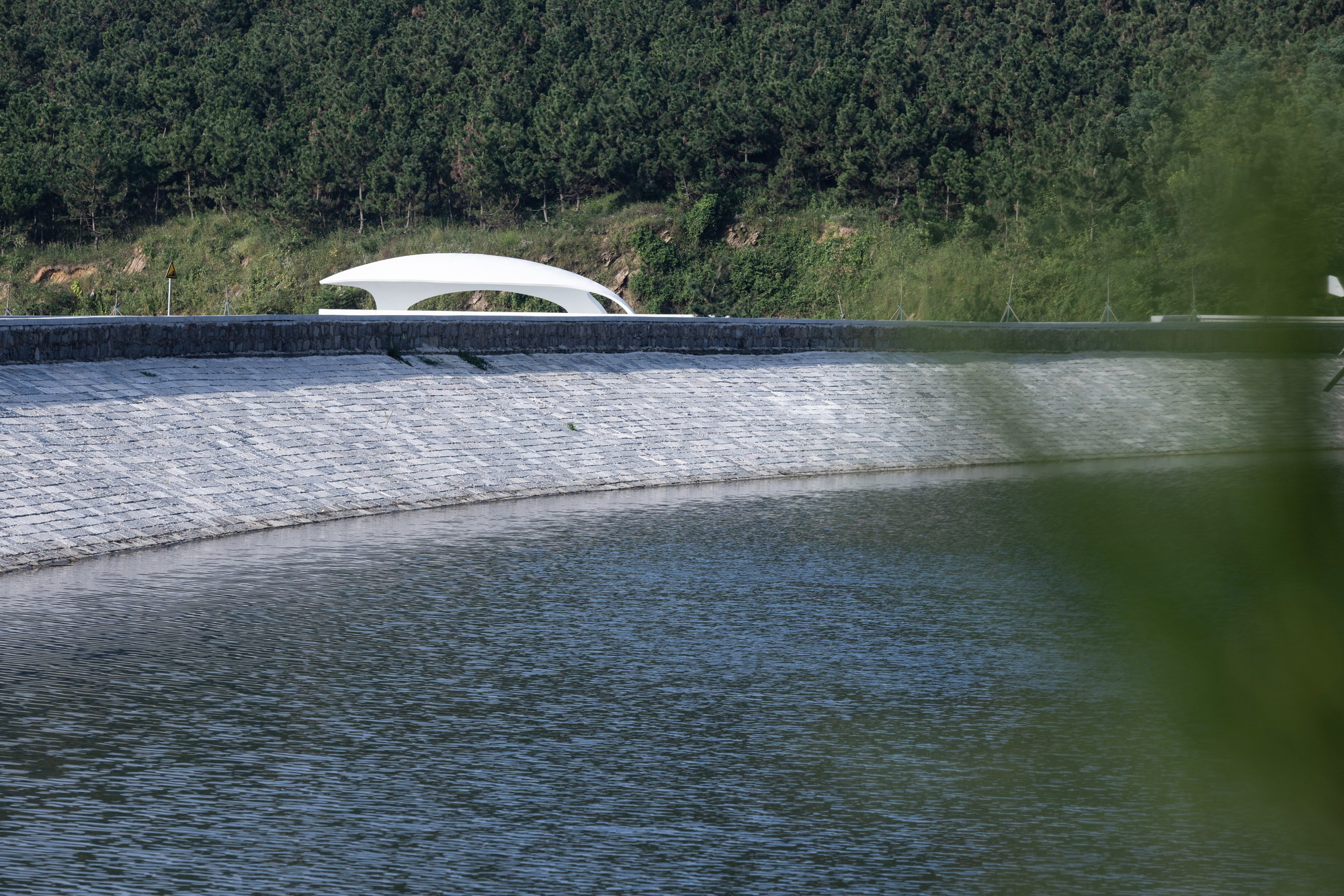
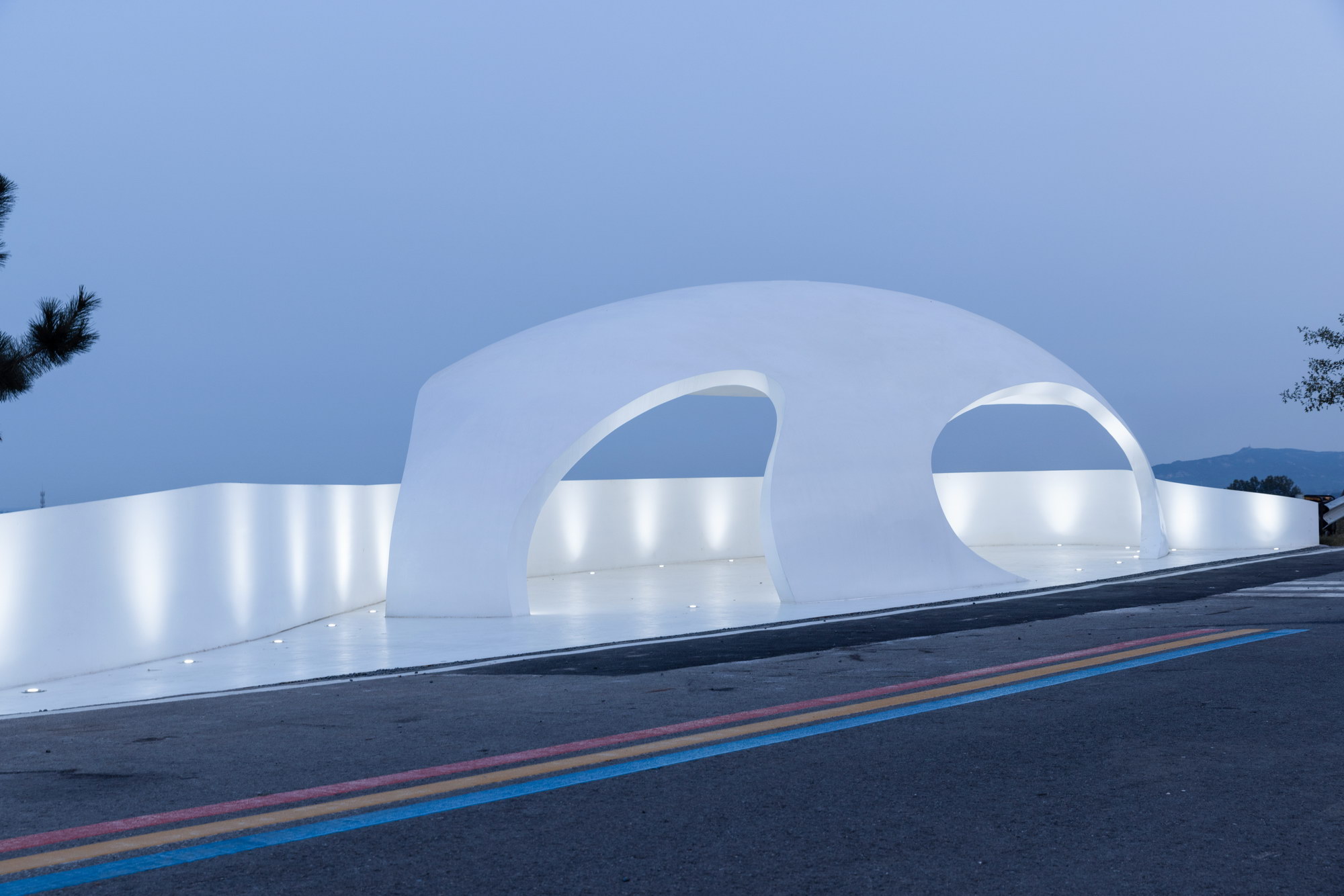
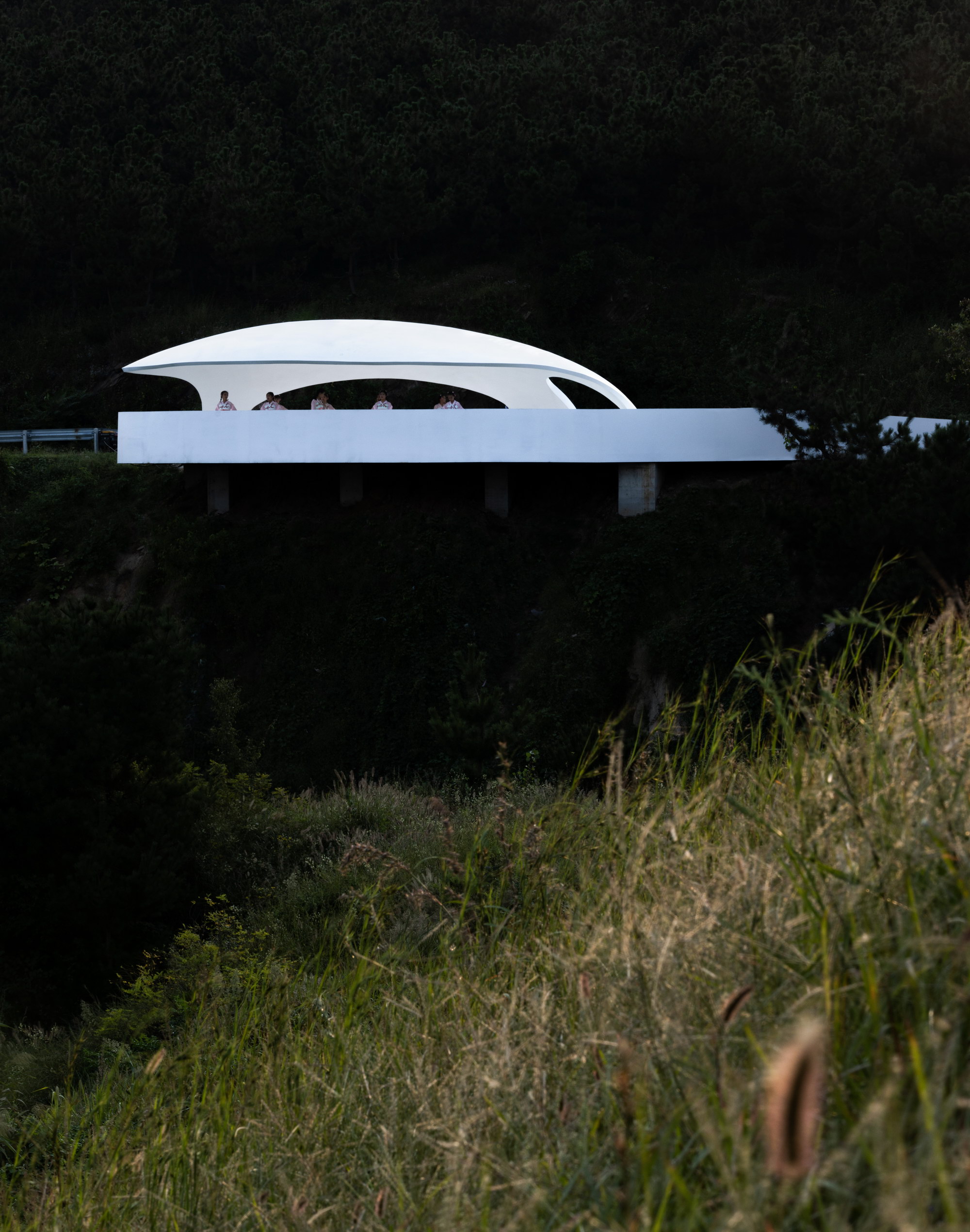
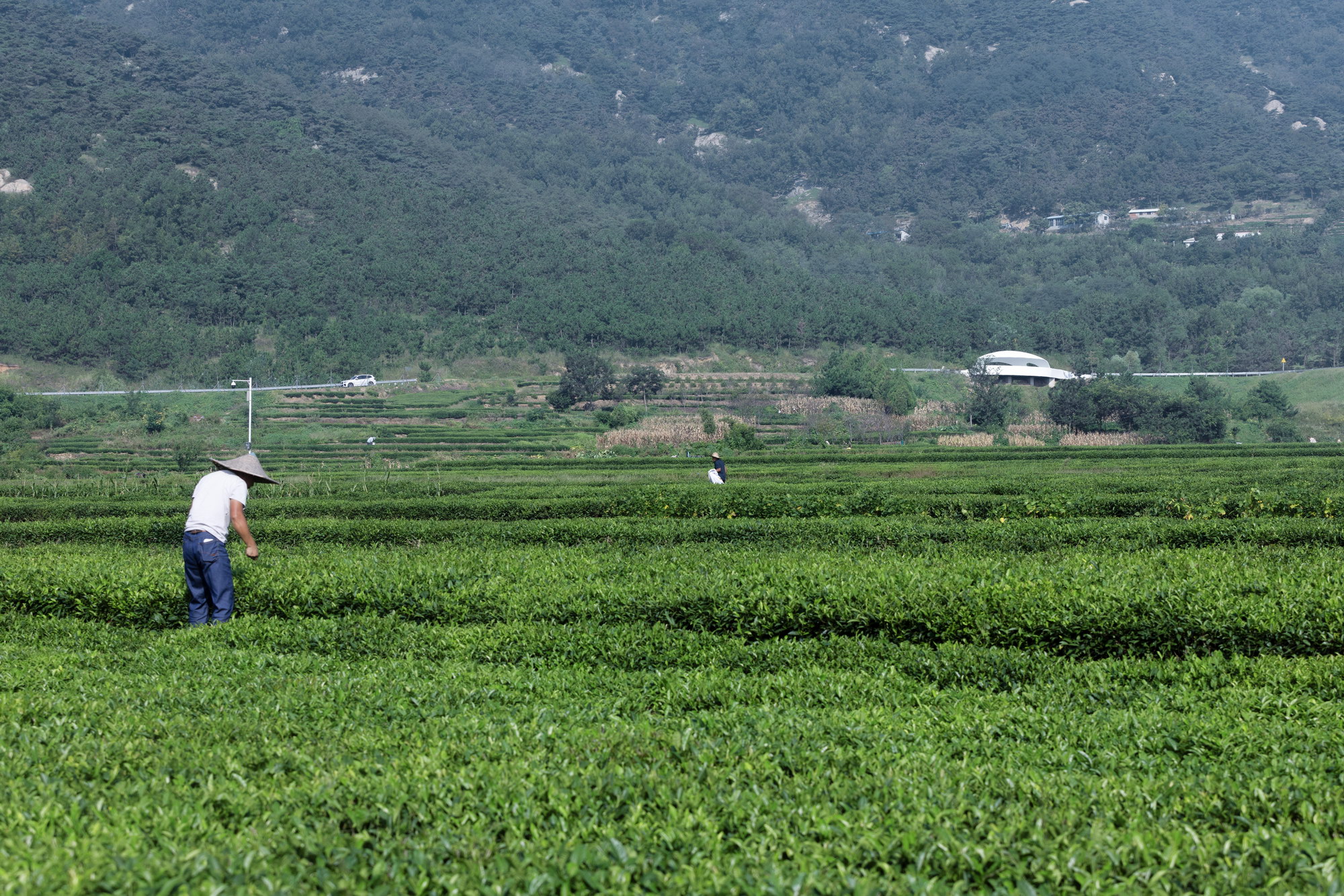
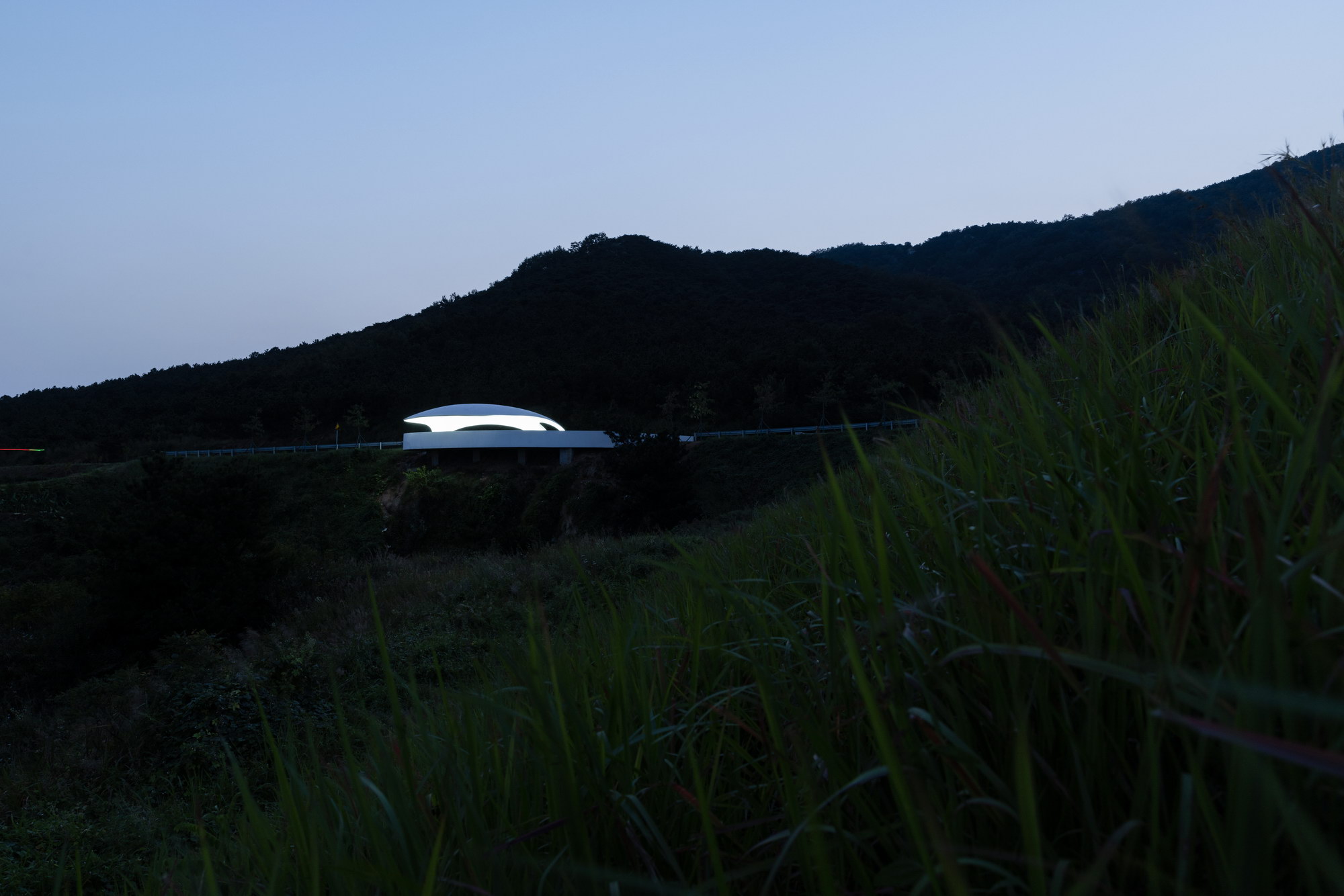
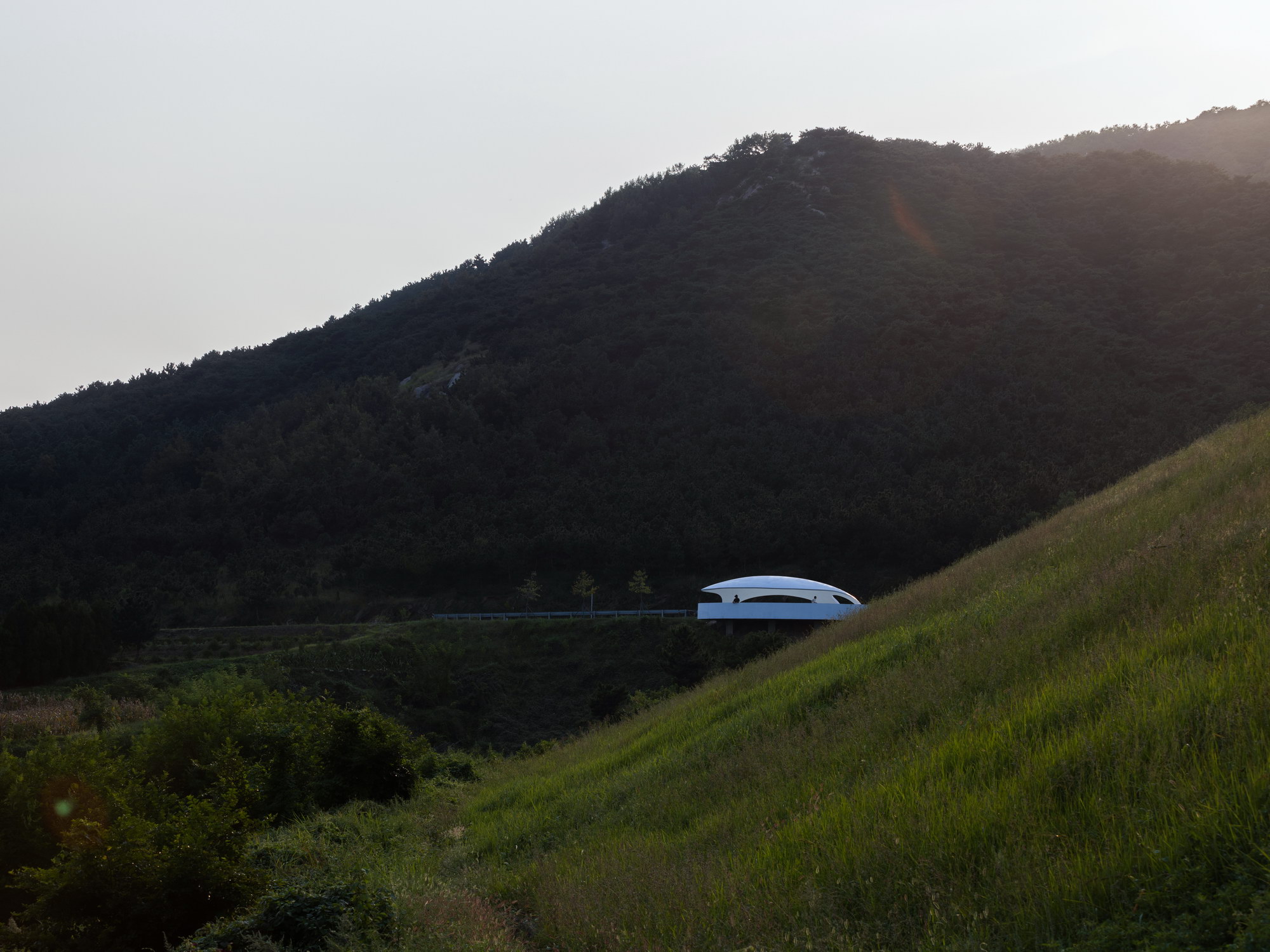
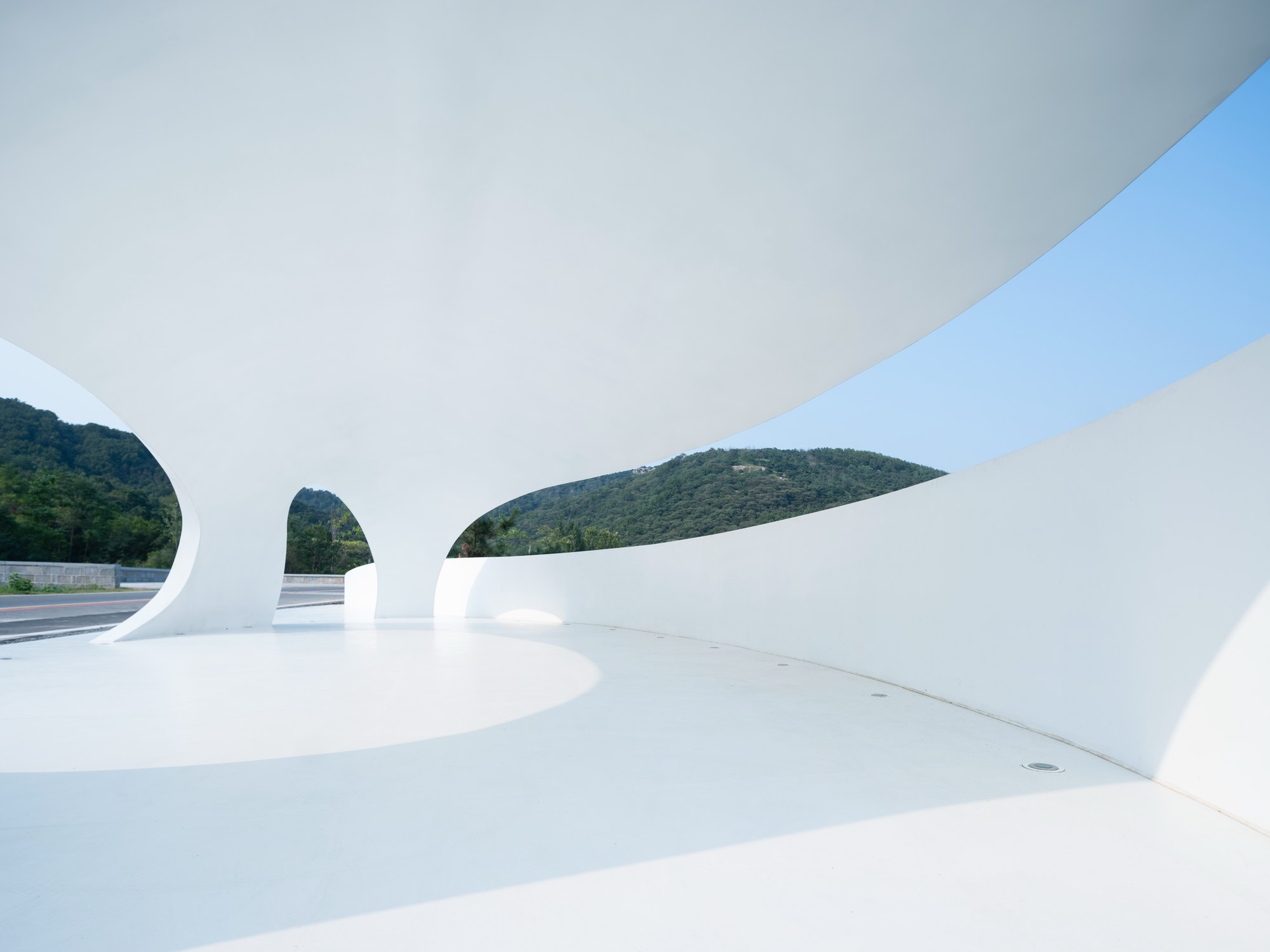
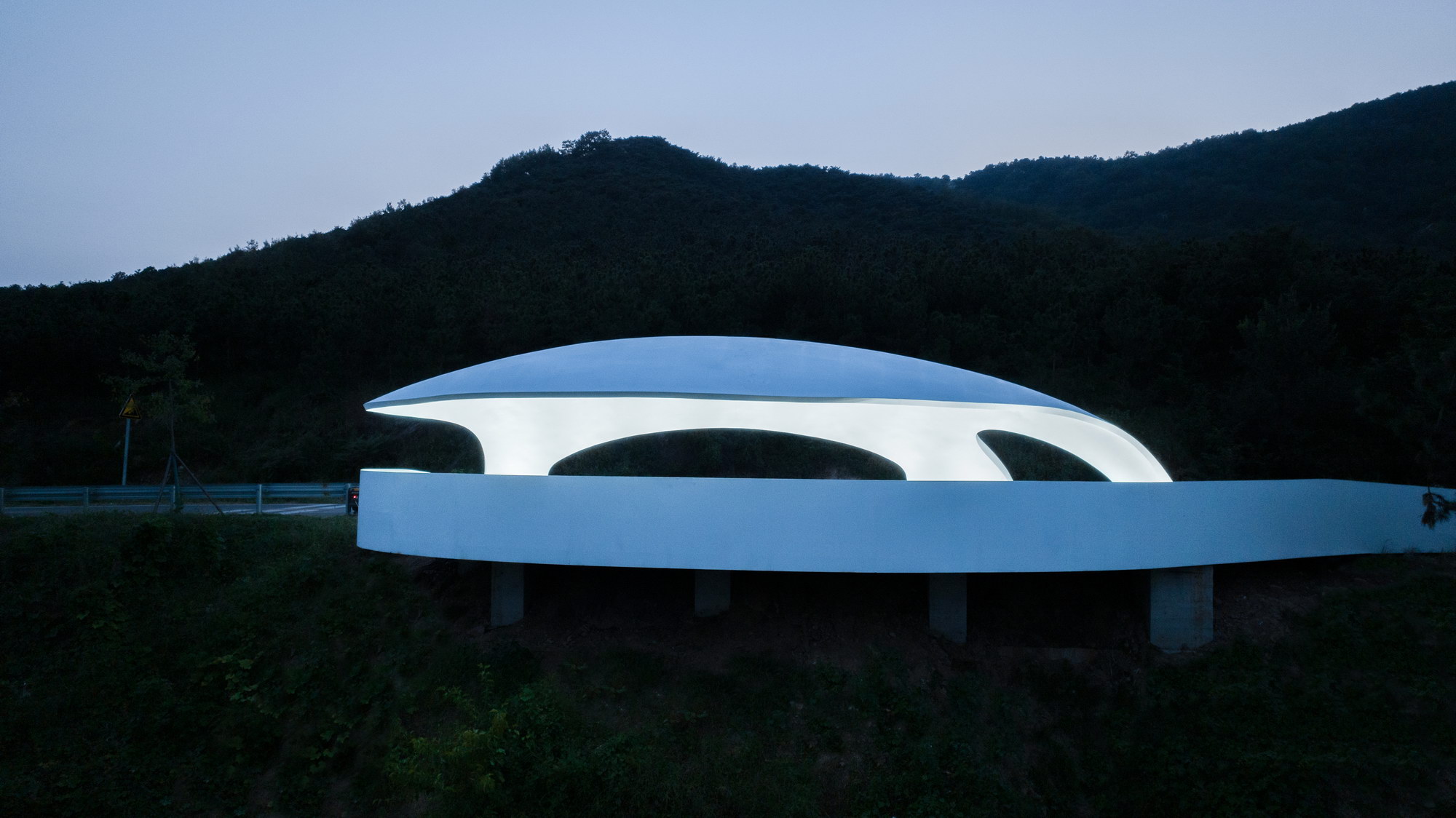
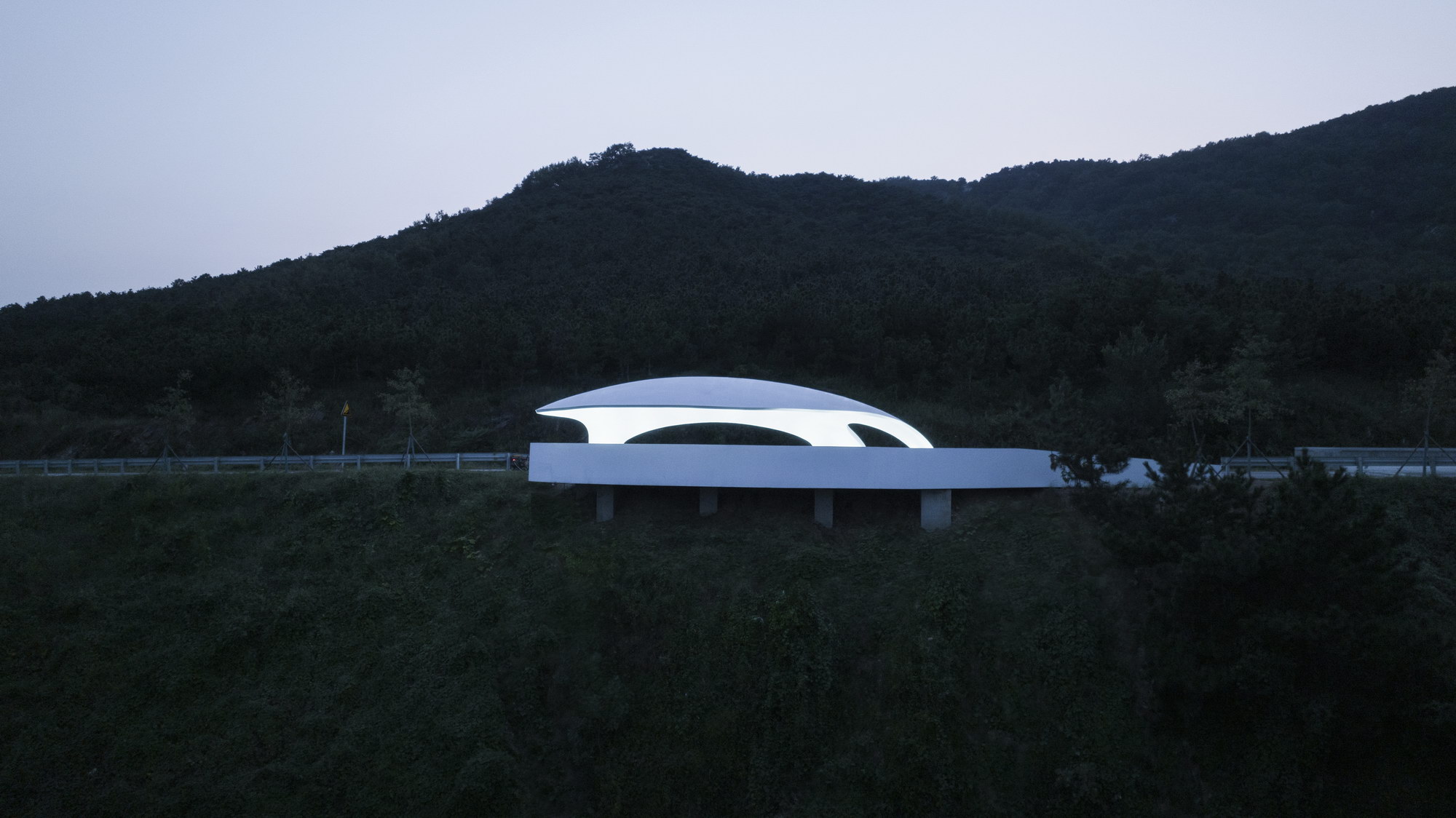
The One-Leaf Tea Pavilion by Kong Xiangwei Studio, completed in July to September 2022 in Jufeng Town, Lanshan District, Rizhao, Shandong, is a 96-square-metre architectural folly on the southern slope of Mount Chaoyuan, where a rainbow-coloured road winds along the hillside between pine forest and terraced tea fields. The brief is an old Chinese one: walking the countryside, one longs to pause at a beautiful view, and under a strong sun one needs shelter between work. The pavilion is therefore both shelter and viewing device. The local context is a northern tea country, where green tea — traditionally a southern plant — was successfully introduced in the 1960s; to honour that history, the pavilion takes its form from a single tea leaf, its blade gently curled, the northern end anchored to the ground and the southern end opened toward the view. The structure is welded steel plate, ground and finished with white fluorocarbon paint, and cantilevers over the road slope so that, seen from afar, it seems to float in the green forest and fields. In a rural, natural setting the futuristic white oval reads by day as a counterpoint to cars on the road, and by night as a gently humorous, almost UFO-like object. Inside, a hollow volume lets visitors look through a narrow frame formed by the eave and a steel parapet toward the eastern forest, southern tea fields and southwestern distant mountains; the internal light and shadow shift through the day, and when it rains the eave becomes an even bead curtain. The pavilion is both seen and seeing: passers-by and tea-pickers gaze at it, while those inside look out over tea fields. The designer recounts how local women quickly adopted it as a landmark — one husband no longer gets lost on the mountain, another family can call a worker home by referring to the pavilion's direction. After completion, the structure has been used by tea-pickers sheltering from rain, by a woman livestreaming a tea ceremony on the white floor, by children in pale pink hanfu dancing under the Mid-Autumn moon, and by a lone man stopping on his motorcycle at dusk to watch a crescent moon. The project is presented as an artistic marker for high-quality local tea, a piece of rural-revitalisation infrastructure, and above all as a place in which the deep, wordless emotion of nostalgia for the land can be felt.





 Editor's Pick
 Latest Design
 Best Idea