Text description provided by the architects
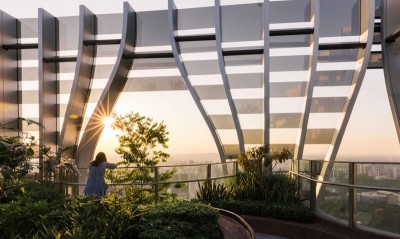
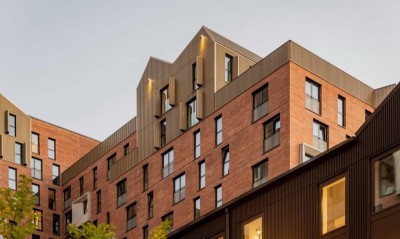
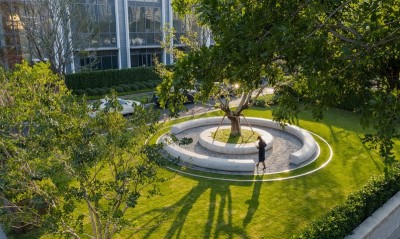
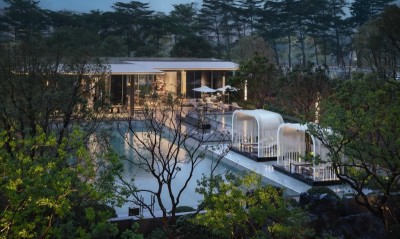
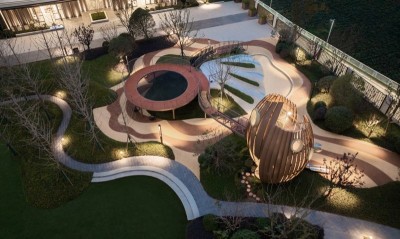
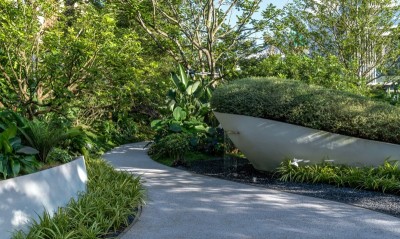
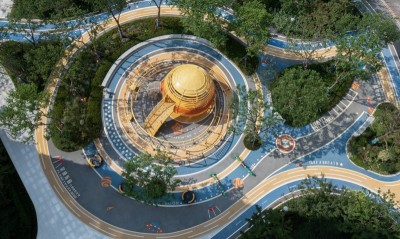
Sunac Wuhan 1890 is the landscape renewal of the former Hanyang Steel Works site in Hanyang District, Wuhan, designed by Shenzhen Yian Design and completed in 2019 on 7,482 square metres. Founded by Zhang Zhidong in 1890 in the late Qing dynasty, Hanyang Arsenal was China's first and largest integrated steel complex, marking the country's industrial awakening and listed in 2018 as part of the first batch of Chinese industrial heritage. The site sits at a central junction of Wuhan's districts and declined with the wider collapse of heavy industry in the late twentieth century, yet its historical DNA remains indispensable to the city. Sunac acquired the plot in 2019, and the demonstration landscape is designed as a restrained urban-renewal act: the design team treats every building and mature tree as a precious relic, including two protected factory structures and dozens of tall cedar, poplar and plane trees, together with salvaged industrial components reused in landscape installation. The strategy follows three movements. Reservation orders the spatial hierarchy, clearing and organising the overgrown site while keeping its rugged industrial character. Remould imposes a modern, restrained spatial language that opens the forecourt into a transparent exhibition ground, letting the buildings present themselves against a refined urban interface, then wraps the core courtyard around the architecture with calm, functional planting. Regenerate completes the transformation into an urban garden, using a wide mirror pool to reflect the red-brick factory and form a spiritual stage, and extending the axis toward the Zhang Zhidong and Wuhan Museum as a dialogue between old and new. A key installation is the Ring of Time, welded from 107 salvaged metal components into a rotating, upward-reaching ring that frames the museum and the forested courtyard, linking memory with future. Other industrial artefacts find new homes as courtyard sculpture. The project is offered as a Wuhan urban-renewal practice: a humble, non-gestural approach that maximises the exposure of historical information and fuses landscape with building to revive a once-dead factory district into an emerging neighbourhood.




 Editor's Pick
 Latest Design