Text description provided by the architects
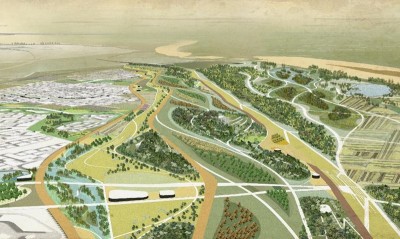
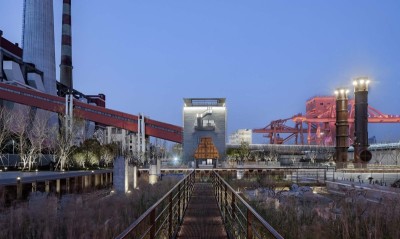
On a 52.7-hectare site in the dense heart of Bangkok, Turenscape has converted the derelict campus of an eighty-year-old tobacco factory into the Benjakitti Forest Park, a sprawling new civic landscape for one of the world's fastest-growing megacities. The brief arrived stacked with constraints: alternating cycles of flooding and drought, a heavily polluted northern canal, poor pedestrian access, a construction budget capped at roughly twenty US dollars per square metre, and an impossibly tight schedule that the Covid-19 pandemic stretched to eighteen months. Rather than accept these as limits, the team reframed the former factory as a central park capable of delivering the full spectrum of urban ecosystem services for a low-lying, monsoonal metropolis of more than ten and a half million people. Four lakes, each divided into shallow terraced shelves and deeper cores, were excavated with cut-and-fill earthworks, and their islands were sized around three common canopy diameters measured across the site's surviving eight hundred and sixty-five mature trees, including ninety-one species of banyan, bodhi, rain tree, tamarind and mango. An L-shaped linear treatment wetland along the northern and western edges pulls canal water through aerated and planted beds, cleansing up to eight thousand cubic metres a day and recycling nitrogen and phosphorus into fertiliser for the park's own soils. The same porous sponge logic extends into the retained industrial fabric: existing factory roofs were opened to daylight and wrapped as green walls, while basketball courts and paddy fields were inserted inside other structures, turning concrete shells into what the office calls living green buildings. To keep costs and maintenance low, excavated concrete rubble was reused for island cores, slopes and paving, native saplings and seed mixes were broadcast across newly formed mounds, and a single excavator could build the entire system. An elevated pedestrian loop threads across the adjacent expressway, reconnecting severed neighbourhoods while giving visitors views over the wetland and the skyline at once. Since opening, the park has absorbed major monsoon events without flooding, its water has turned clear, nearly a hundred bird species have returned, and tens of thousands of residents now jog, picnic, skate and photograph weddings on its lawns. The project is an export of China's sponge-city doctrine at its most pragmatic: a low-budget, low-maintenance, repeatable template for tropical metropolises that need nature-based infrastructure more than another ornamental garden.




 Editor's Pick
 Latest Design
 Best Idea