Text description provided by the architects
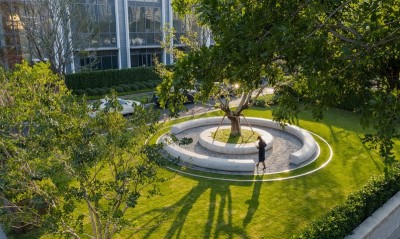
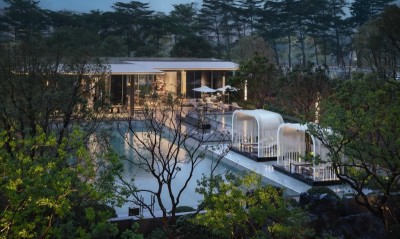
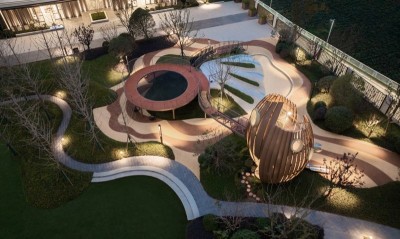
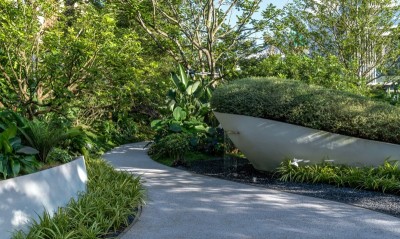
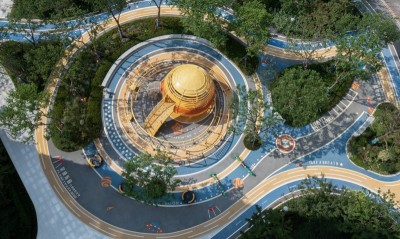
Sunac Guobin Yiha Yuan in Chongqing is the full-scale residential landscape by Shenzhen Yian Design for Chongqing Junyue Real Estate, following the 2017 demonstration district that presented a peach-blossom retreat inside the bustling city. Three years later, the 26,736-square-metre main garden delivers the modern urban residential promise, treating the courtyard as a contemporary shelter, a place connected to nature within the enclosed architecture. The design abstracts the traditional Chinese courtyard, deconstructing its cultural elements and recomposing them into several themed gardens that express clean, restrained simplicity as a counterpoint to the city's cold, fast order. The outer gate continues the demonstration phase's mansion atmosphere, with cast-bronze lions flanking the entrance. The courtyard gates shift mood through the seasons—spring, summer, autumn, winter, sun, moon, cloud and water—suggesting boundaries that appear and disappear between emptiness and substance. The household entrance is kept clean and free of fallen leaves, so that returning home feels immediately reassuring. Terraces, drawn from the Shuowen definition of a raised square platform, are the ritual places of contact with heaven and earth. Covered corridors and a book-lined pavilion link garden islands like warm winds between isles. The Lan Pavilion rests above clear ripples, a shelter from which poetic encounters slowly unfold; its pavilions reuse the demonstration-phase language so that the original landscape vision continues into the main estate. Water is not a winding curve but a modern, self-contained plane; dry bridges, stepping stones and scattered pines and stones introduce gentle surprises. White gravel paths with pines lining the way borrow the humanistic spirit of traditional literati gardens. The argument is that escape from the world is not passive: a landscape serving daily life must be private and relaxing, easing residents' mood as they return from the city and giving them time alone with nature, so that the Chinese garden's inner ethics and contemporary urban language can coexist.




 Editor's Pick
 Latest Design