Text description provided by the architects
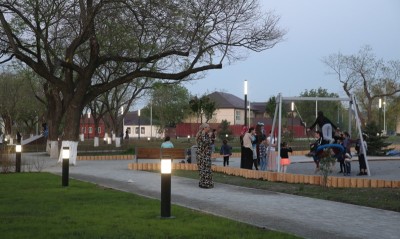
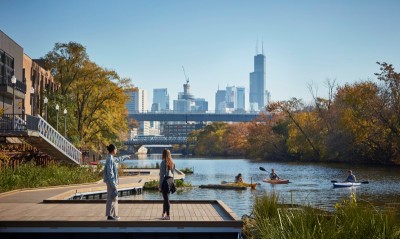
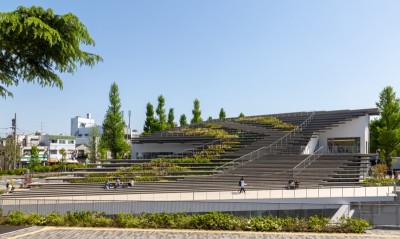
Automatic irrigation system By launching a water management system, Russian developer Brusnika offers a comfortable urban environment and sustainable landscape in modern residential areas. By supporting biodiversity and biomass, water benefits the climate. Water constitutes a key sustainability factor for the landscape and urban environment. It maintains biodiversity and boosts biomass in floodplains (areas of flood-prone flat land next to a river). The water management system reduces utility overload by integrating phytoremediation facilities, such as rain gardens and bio drainage systems, or wadi. Designing rain gardens and planting moisture-loving grasses in a controlled growing medium is scientifically proven: it is an effective way to treat, collect and utilise surface runoff in residential areas. Phytoremediation facilities also prevent water logging, providing local spots for absorbing water, filtering and storing it for later use. Another crucial factor of water efficiency is preserving neighbouring rivers and lakes. “European Riverfront”, Novosibirsk. Embankment “First Quarter”, Moscow region. Courtyard “Sukhodolsky Quarter”, Yekaterinburg. Courtyard Brusnika uses rooftop and parking roof runoff in its residential areas after the soil absorbs the rainwater and nourishes plant roots. The runoff first enters the ‘body’ of the rain garden through roof funnels and the system of internal drain pipes. After collection, the water infiltrates into the carefully balanced compost – an optimal mix of natural components and additives. At this stage, it frees from impurities – large and medium suspended solids, i. e. hard metals and organic matter inclusions. Pollutants enter the soil mix and are partly absorbed and processed by plant roots. The soil mix revitalises, and purified water enters a neighbouring river, lake, or storm drain. In terms of overall water treatment, the efficiency of this system is 93%. The total runoff volume from building and parking rooftops reduces to 90%. The scheme of rainwater use in Brusnika’s projects Landscape engineering distinguishes three levels of rainwater collection and usage. These are green roofs, trafficked parking roofs, and street phytoremediation facilities. A costly element of any project, a green roof often sits in inaccessible parts of the building, which affects its maintenance. It may be equipped with an automatic irrigation system at most, so plants usually used for landscaping in residential areas are unsuitable – they have to be hardy, with no need to tend them daily. Initially, to create extensive roofs, Brusnika used European green mats. However, in continental subarctic climates, plants are slow to take root and often fail to thrive. Moreover, due to their high cost, this technology is only limited to upmarket housing. Intensive green roof in one of Brusnika’s projects in Yekaterinburg A viable alternative is to plant a variety of steppe and meadow communities plants, resistant to the harsh climates of the Urals and Siberia with a range of seasonal temperatures of –30°C до +30°C. We have launched a pilot project on one of the house roofs in the “Na Nekrasova Quarter” in Russian city Yekaterinburg. This spring, landscape architects planted indigenous Ural plants, dividing the whole roof area into six equal plots varying in soil mix and drainage membrane depth. This way, they will derive a perfect formula for such landscaping. We can fully evaluate the experiment results next spring after wintering the plants. The scheme of extensive roof technology. Pie structure “Na Nekrasova Quarter”, Yekaterinburg. Extensive roof, planting of Ural plants “Na Nekrasova Quarter”, Yekaterinburg. Extensive roof, planting of Ural plants “Na Nekrasova Quarter”, Yekaterinburg. Extensive roof, planting of Ural plants Brusnika’s residential quarters generally comprise closed-up blocks, a street-facing retail zone on the ground floor, and the inner courtyard on the first-floor level sited on the parking rooftop. So basically, landscaping the roof equals landscaping the yard. “Southern Quarters”, Yekaterinburg. A courtyard on the parking roof “European Quarter”, Tyumen. A courtyard on the parking roof Based on the experience of European developers, Brusnika’s formula for a green courtyard on the parking roof contains 65-70% of plants, where 30% are shrubs, 20% – lawns, 20% – grasses and perennials, 5% – large-sized trees and the remaining 25% – hard surfacing. Except beautification, extensive greenery purifies the air, shelters the wind, provides shade and promotes a comfortable environment inside the yard. For example, conifers produce phytoncides – natural compounds killing bacteria and fighting air pollution. To water plants in the yard, we have refurbished surface funnels for water collection and automatic irrigation. Conifers exude phytoncides and create a dense hedge Street phytoremediation facilities These include rain gardens and bio drainage channels, known as wadi. These functional green buffers also concentrate surface runoff and channel it to feed nearby plants. They sufficiently reduce utility load, with runoff reaching storm drains drop to 90%. By using no complex chemicals for street cleaning, we prevent water pollution. “Oktyabrsky Quarter”, Tyumen. General view and floodplain meadows The first bio-drainage channels completed in “Oktyabrsky Quarter” in Russian city Tyumen have weathered several seasons and proved their efficiency. Built in dedicated buffers along the quarter perimeter, wadis collect water during rains, snow melting and seasonal overflow of the local Tura River, preventing water logging in the catchment area. With flood-resistant grasses, shrubs and trees planted along the slopes of the channels, they act as a biological pump, soaking up and evaporating water, which prevents flooding. Unlike rain gardens, wadis have only one infiltration soil mix slope to absorb impurities. To avoid spillovers, overflow pipes channel excess water to storm drains. “Oktyabrsky Quarter”, Tyumen. Street The wadi system in “Oktyabrsky Quarter”, Tyumen The scheme of the wadi system in “Oktyabrsky Quarter”, Tyumen Street rain gardens first appeared in one of the houses of“European Riverfront”residential area (Brusnika’s project) in Russian city Novosibirsk to channel runoff from the neighbouring pedestrian street. Their feature is the depth of the soil mix – 1,3 instead of the customary 2 metres. It is because water collection comes from the pedestrian street tile paving and building frontage, avoiding the rooftop. The runoff composition affects the nature of pollution – experts are still studying the soil mix in the system. The root system of moisture-loving plants and trees planted on top absorbs impurities. Sectional view. Street rain garden system “European Riverfront”, Novosibirsk. Street Feeding water bodies An alternative way to discharge rainwater runoff is by channelling it to the nearest water body in addition to storm drains. Take one more project of Brusnika — “House by the Lake”in Tyumen: rain gardens inside the area feed the neighbouring Tikhoye Lake. The rainwater runoff infiltrates into the rain gardens and several terraces of the phytoremediation system before discharging into the lake. It maintains water balance, where the lake benefits from an inflow of clear water, which feeds nearby plants and sustains wildlife. To realise this technology Brusnika has being revitalized Tikhoye Lake since 2021. The developer already cleaned the basin, removed 20 000 cubic metres silt from the bottom of the lake by pumping 26 000 cubic metres of water through an artificial dam, deepened the lake from 1. 4 to 2. 5 metres and erected supporting walls. Now landscaping in progress: lake is equipping with pedestrian paths and cycling lanes. Tikhoe Lake, Tyumen. Cleaning the basin by pumping water through an artificial dam, 2021 Tikhoe Lake, Tyumen. Landscaping in progress, summer 2023 Tikhoe Lake, Tyumen. Landscaping in progress, summer 2023 Tikhoe Lake, Tyumen. Landscaping in progress, summer 2023 Scheme of phytoremediation on Tikhoye Lake, Tyumen An essential part of the product standard in Brusnika, landscape sustainability is an undeniable priority in urban development across the globe, in line with the UN's goal to combat climate change. By implementing a comprehensive water management and phytoremediation programme, the company has managed to achieve the following objectives: •To divert runo ff by creating a biological cycle of rainfall collection, treatment and utilisation. •To double the area of green roofs. •To narrow the diameter of foul runoff collectors and create virtually clean runoff. •To create a green buffer between the street and courtyard runoff. To boost the ecological aspect of projects in compliance with BREEM Communities standards and enhance their sustainability.






 Editor's Pick