Text description provided by the architects
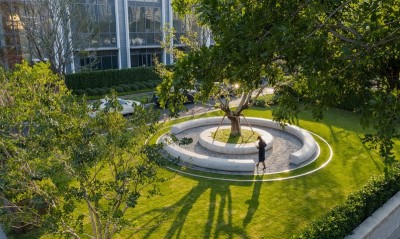
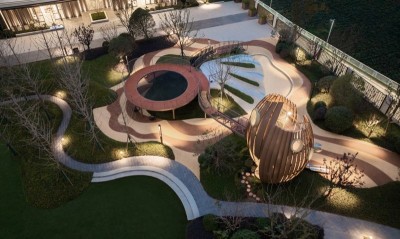
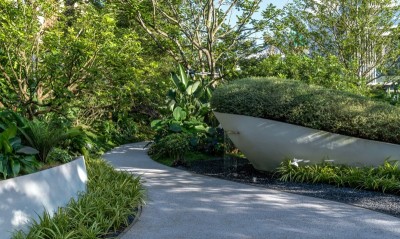
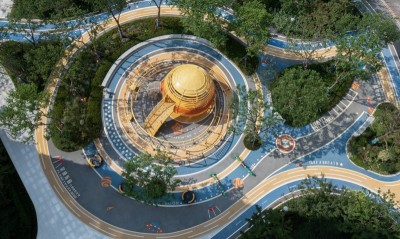
The most fascinating aspect of urban renewal projects is that they bring forgotten places back to life. The Zhanjiang Port Area One site, where this project is located, had been in use for over sixty years. The designers transformed this freight and passenger port into an urban plaza that has not only driven waterfront business development but, through a series of creative design moves, become an Instagram-famous destination. In planning terms, the plaza was built to establish a business district that, combined with the development of Nansan Island, would also launch tourism services. In terms of cultural lineage, Zhanjiang was born from the sea: docks, factory buildings, and freight tracks all record the history of Zhanjiang Port. The site sits at the southern terminus of Zhanjiang's Renmin Avenue landscape axis, surrounded mostly by older residential neighborhoods built in the last century. Street and inter-building spaces are limited, facilities are somewhat dated, and nearby residents needed an open, harmonious public space for daily social interaction. How to transform a space carrying the memories of generations into an urban plaza that continues the site's cultural lineage while creating new memories became a challenging proposition. While searching for inspiration, the designers happened to see a silk-veil dance titled Wind, in which a dancer used poetry as the basis for movement and brought the wind to life with a single piece of sheer fabric. Is Zhanjiang Port not like a dancer holding time as her veil? Taking Dancer of Time as the theme, the designers referenced operatic rhythm and comprehensively considered historical continuity, contemporary needs, and future development. Through decomposition, variation, and overlap, they formed a spatial formal structure—the Time Tower, grass sea, time ribbon, plaza signage, sea-view colonnade, city silhouette, and starlight path—creating multiple space types to serve users of all ages. The Time Tower was once an unnamed structure; no one remembered when it appeared or why, but local residents had grown accustomed to its presence. The designers decided to preserve it and convert it into the Time Tower, forming a commemorative ensemble with the time ribbon. Because the original structure was too dilapidated, the team rebuilt it on the same footprint for safety. A layered grass slope extends the urban landscape axis forward, while the tower provides visual closure. Approaching the plaza, one cannot see the sea beyond; viewed from afar, however, the narrowing perspective of Renmin Avenue merges with the vertical lines of the tower, pointing toward the sky and expanding the axial landscape from two dimensions into three. An LED screen on the tower's upper facade facing Renmin Avenue has become a new calling card for promoting Zhanjiang and strengthening the city's identity. The current display, I Love Zhanjiang, both expresses the voice of local residents and pays homage to Milton Glaser's I Love New York tourism campaign. The tower's origins remain a mystery, much like time itself in the philosophical sense.




 Editor's Pick