Text description provided by the architects
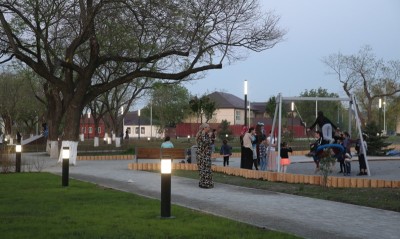
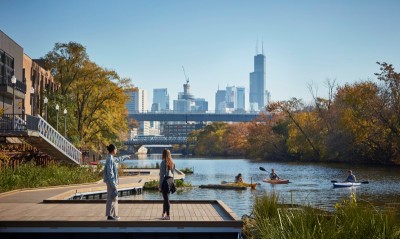
The Dasahn River Ecological Corridor in Shenzhen is a 13.7-kilometre urban river restoration led by AECOM for the Nanshan District government, tracing the river from Yangtai Mountain south through Nanshan to Shenzhen Bay. Once a broad waterway where sand boats and fishing boats sailed and residents washed clothes, the river was channelised over decades into a flood-drainage culvert; as the city boomed, pollution exceeded its assimilative capacity and the water turned black and foul, retreating from urban life. Today, with the river lined by Shenzhen University Town, Xili centre, the high-tech zone and the Shenzhen Bay headquarters area, the project's ambition is to stitch the river back into city life. AECOM listened to the city's demands, aiming to deliver a new civic face, sustainable infrastructure, revived waterfront activity and a renewed native nostalgia. Ecologically, the project treats the river as a corridor between the mountain support belt and the coastal ecological belt, prioritising flood management while stitching fragmented urban ecology. Stormwater is absorbed, stored, infiltrated and purified through low-impact developments in the riparian zone; carefully selected planting filters runoff and provides shade and habitat; existing silt shoals are retained and reshaped using hydrodynamic modelling, invasive species are phased out in batches, and native aquatic plants are introduced; varied stone channels riffles for wading birds such as kingfishers; and constructed wetlands at intervals filter urban discharge while doubling as parks. Boundaries are softened by surveying and consolidating marginal and idle land, expanding green space on both banks from 80 to 95.7 hectares, removing illegal encroachments, and linking the river to street and recreation networks. The corridor is programmed in three thematic reaches: the Scholarly Way between the university town and Changlingpi Reservoir, with academic atmosphere, activity lawns and research wetlands; the Urban Forest between Liuxian and Shennan Avenues, a clean shared water corridor with ecology trails, science education and children's exploration; and the Vital Waterfront between Shennan Avenue and Baishi Road, an open modern waterfront with dining, entertainment and an international rowing and kayaking venue linking to Shenzhen Bay. Before the project, regular visitors were mainly elderly local residents staying under two hours; after opening, roughly 40,000 people of all ages visit daily, and the river has once again become Shenzhen's shared nostalgia.




 Editor's Pick
 Latest Design