Text description provided by the architects
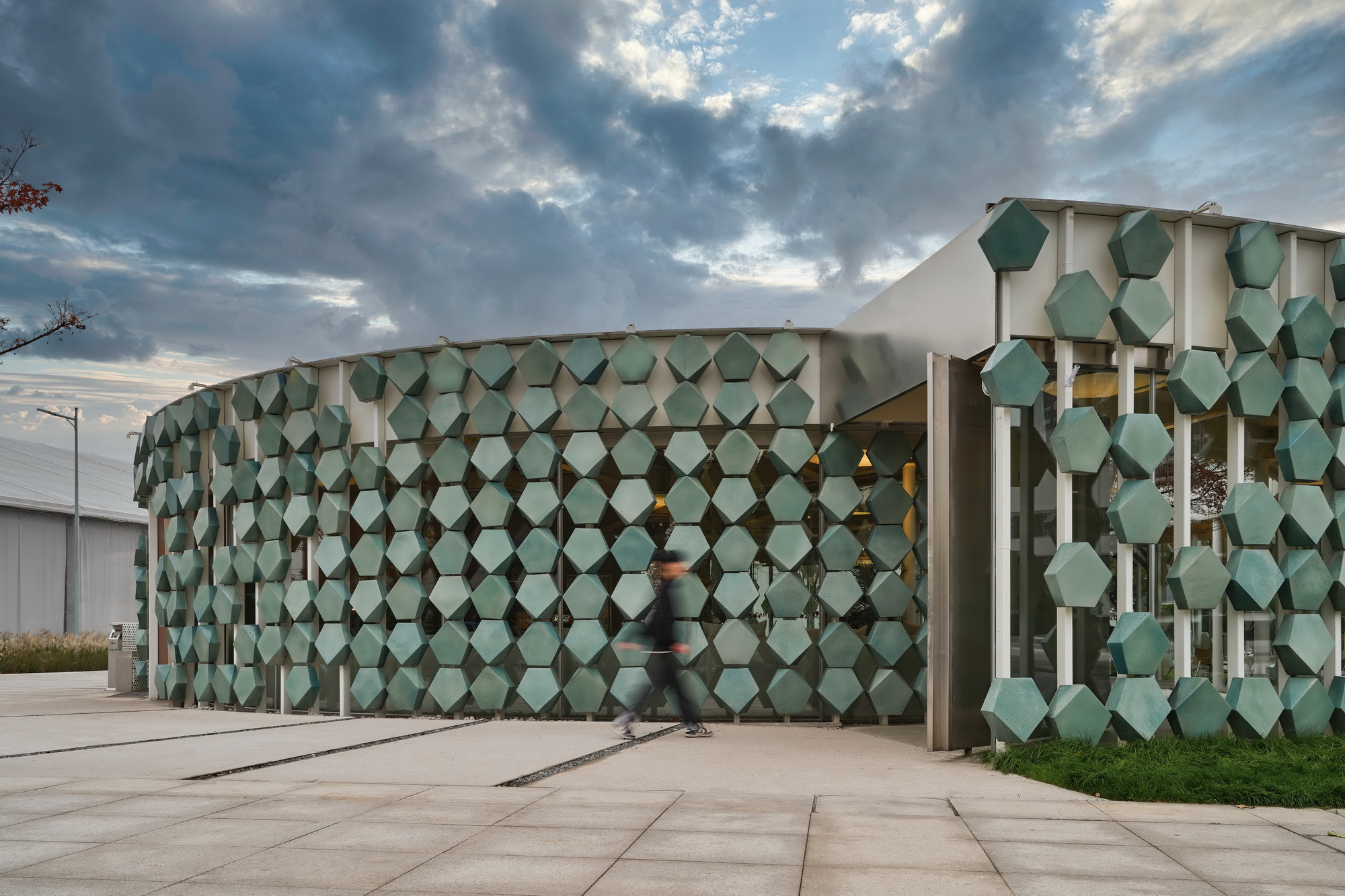
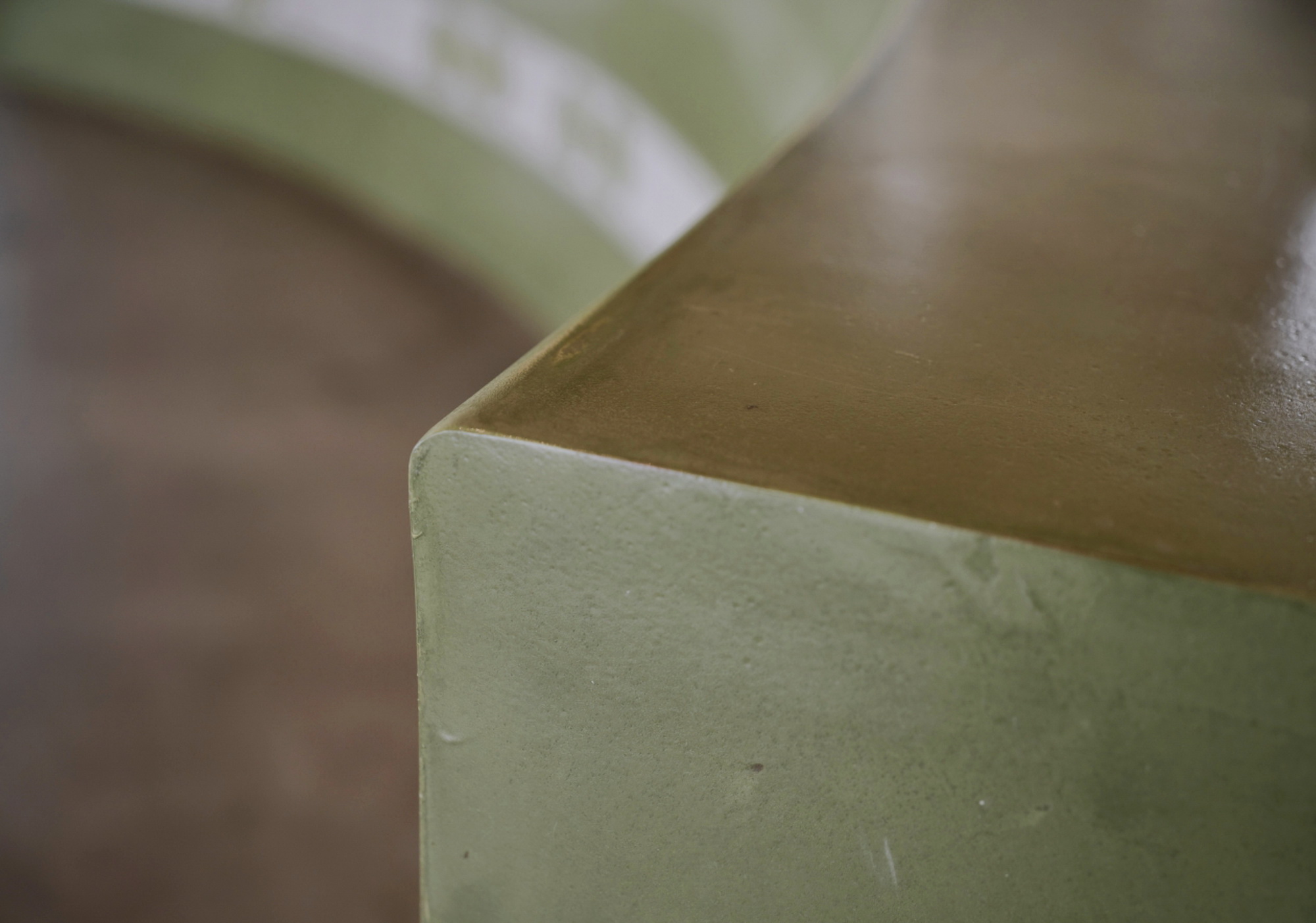
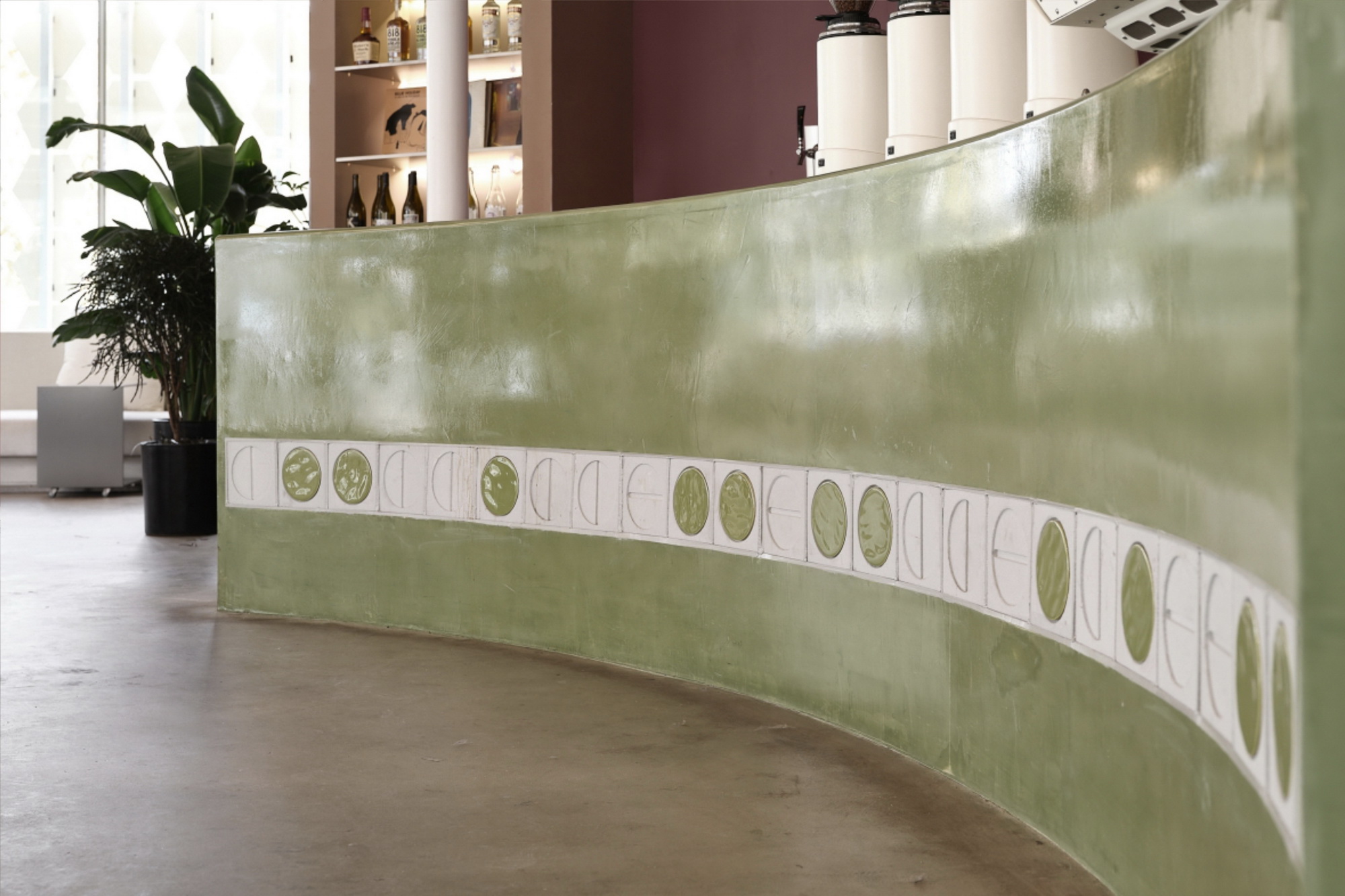
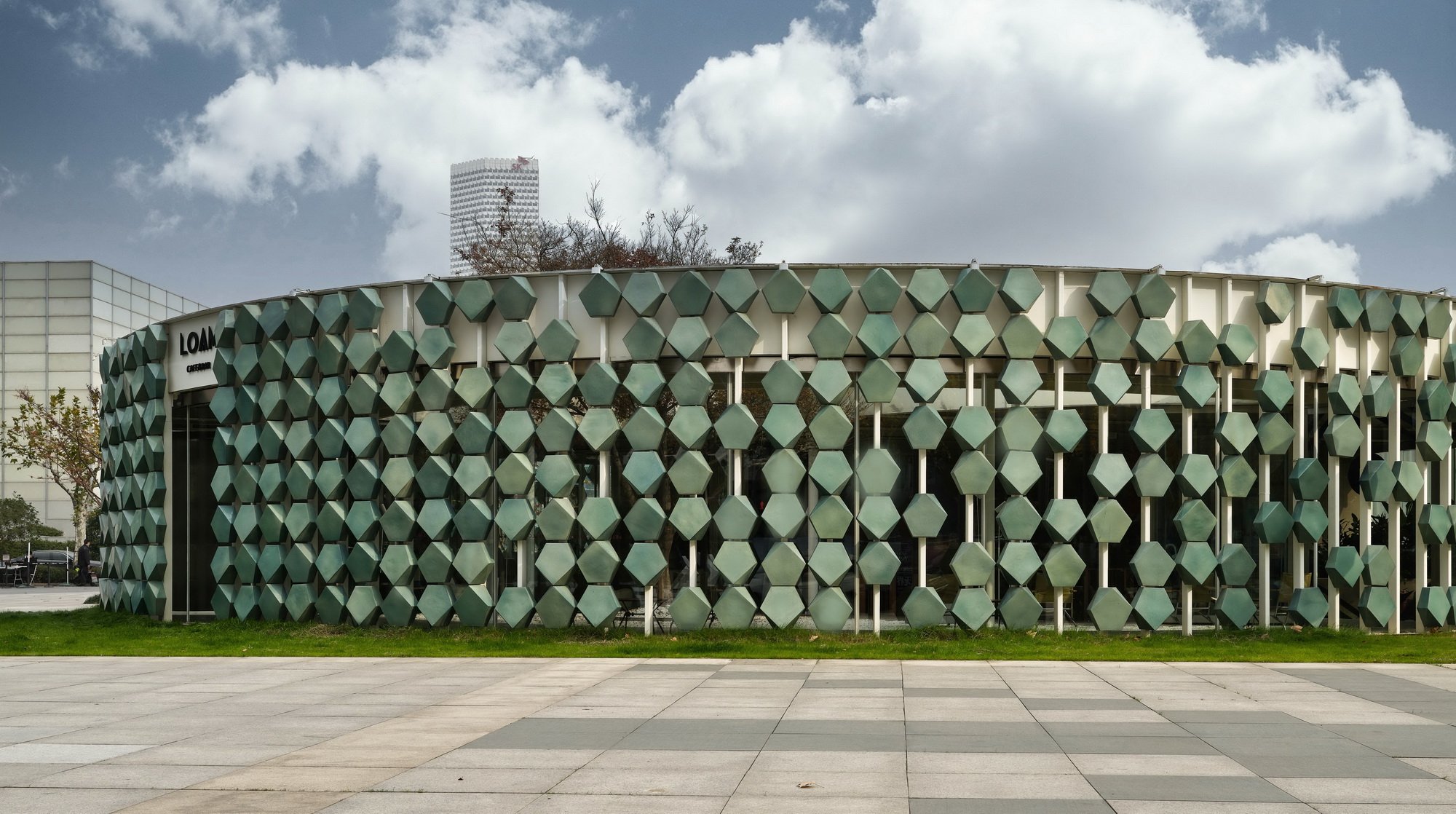
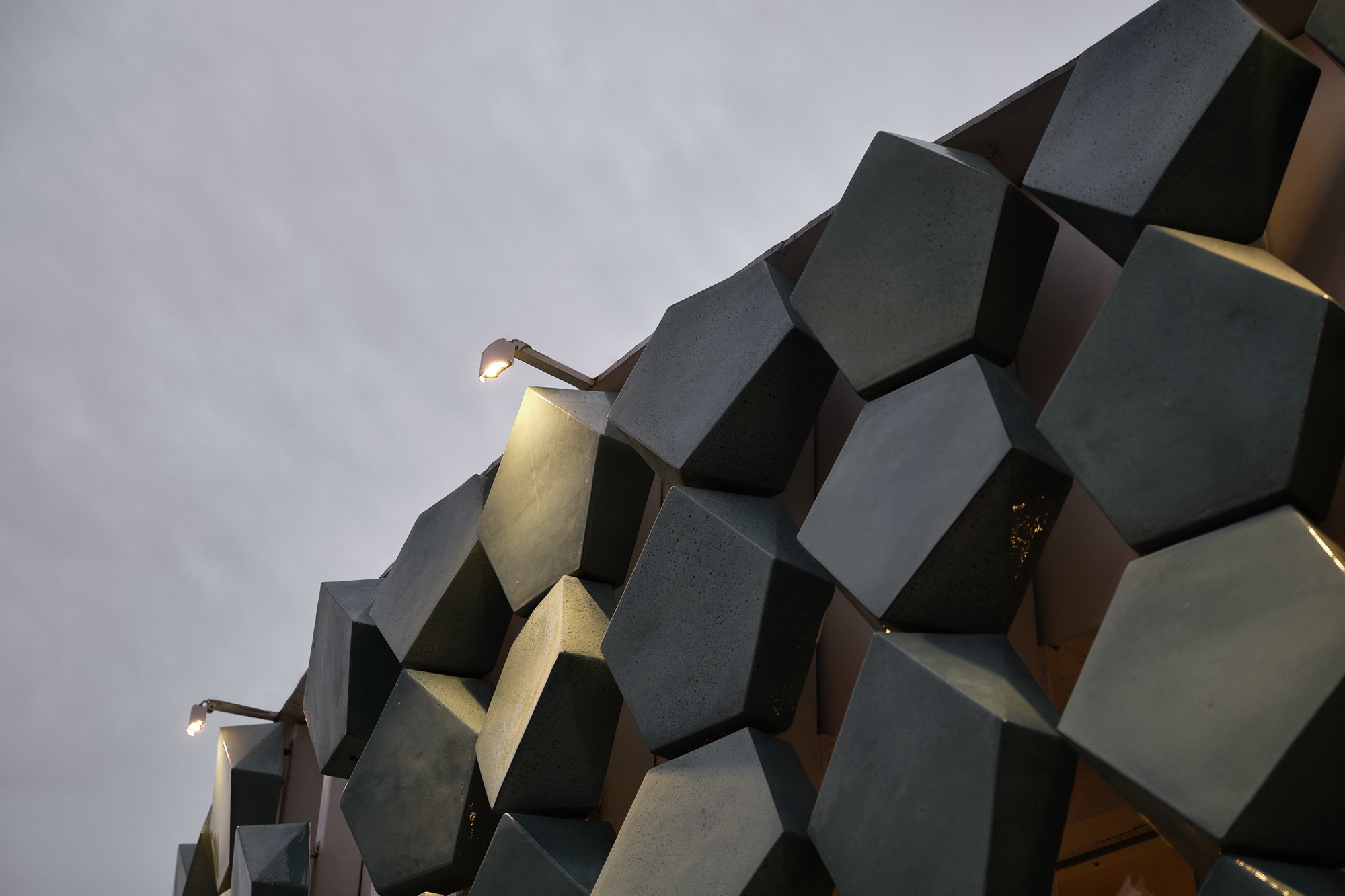
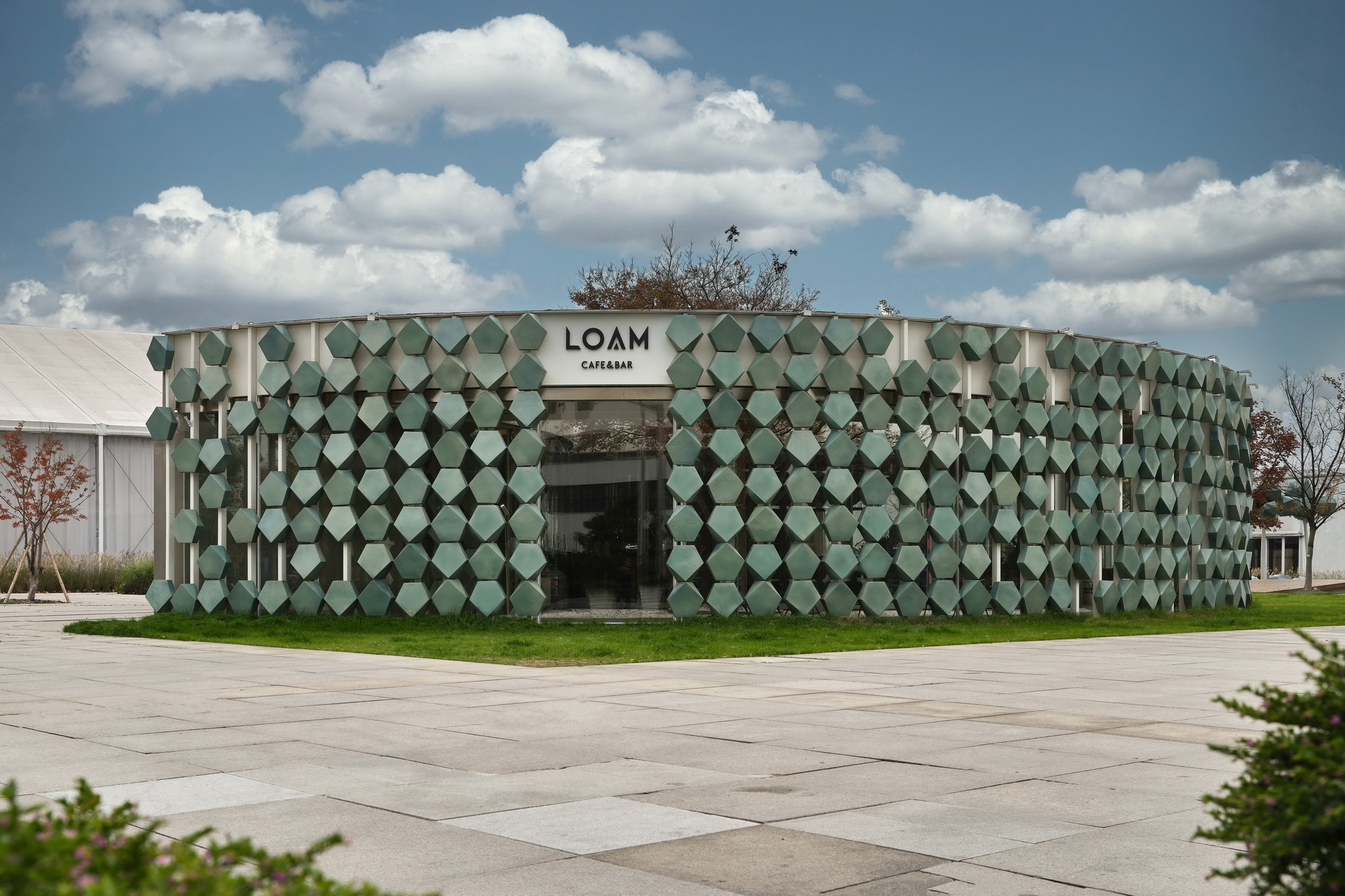
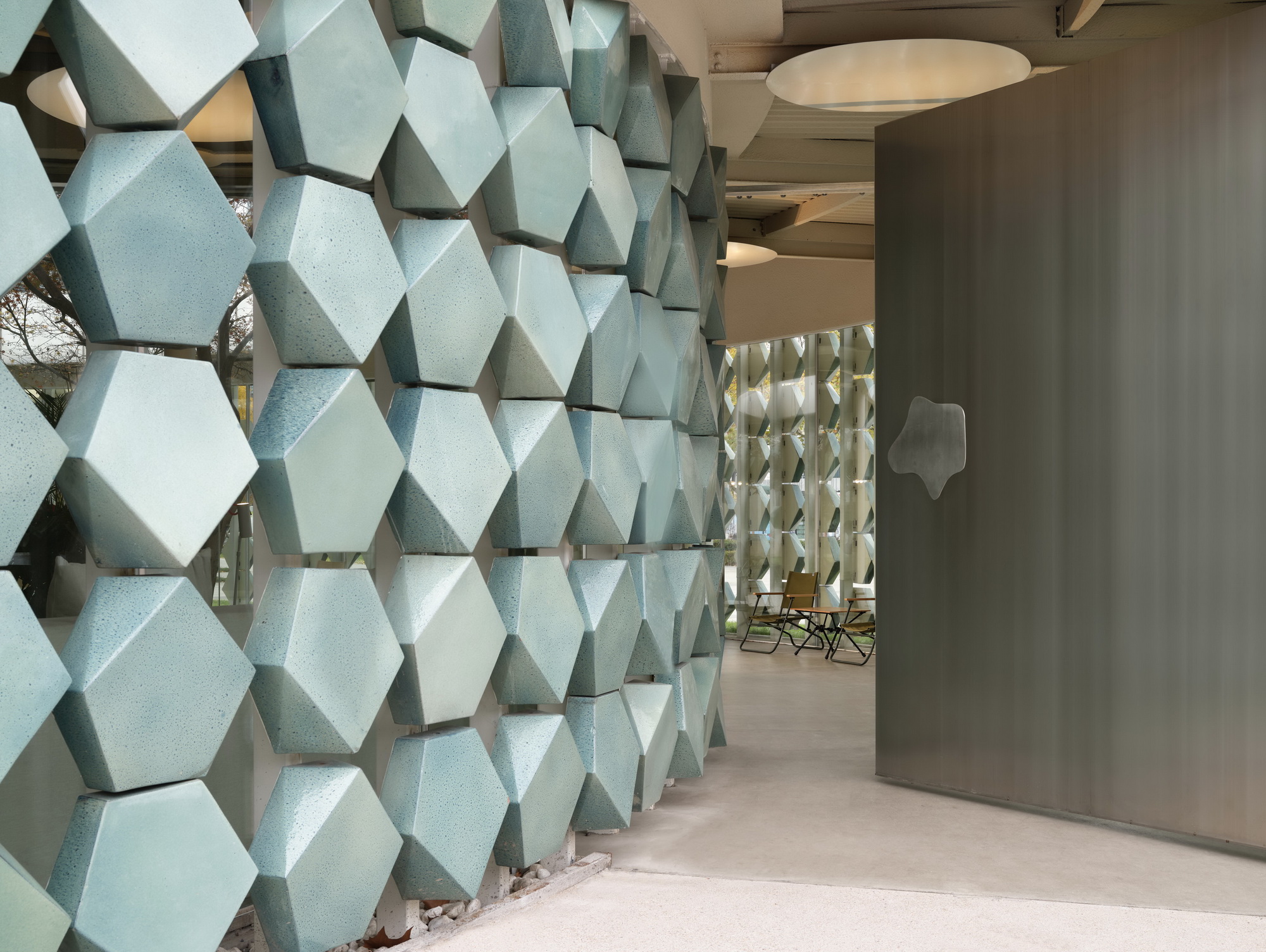
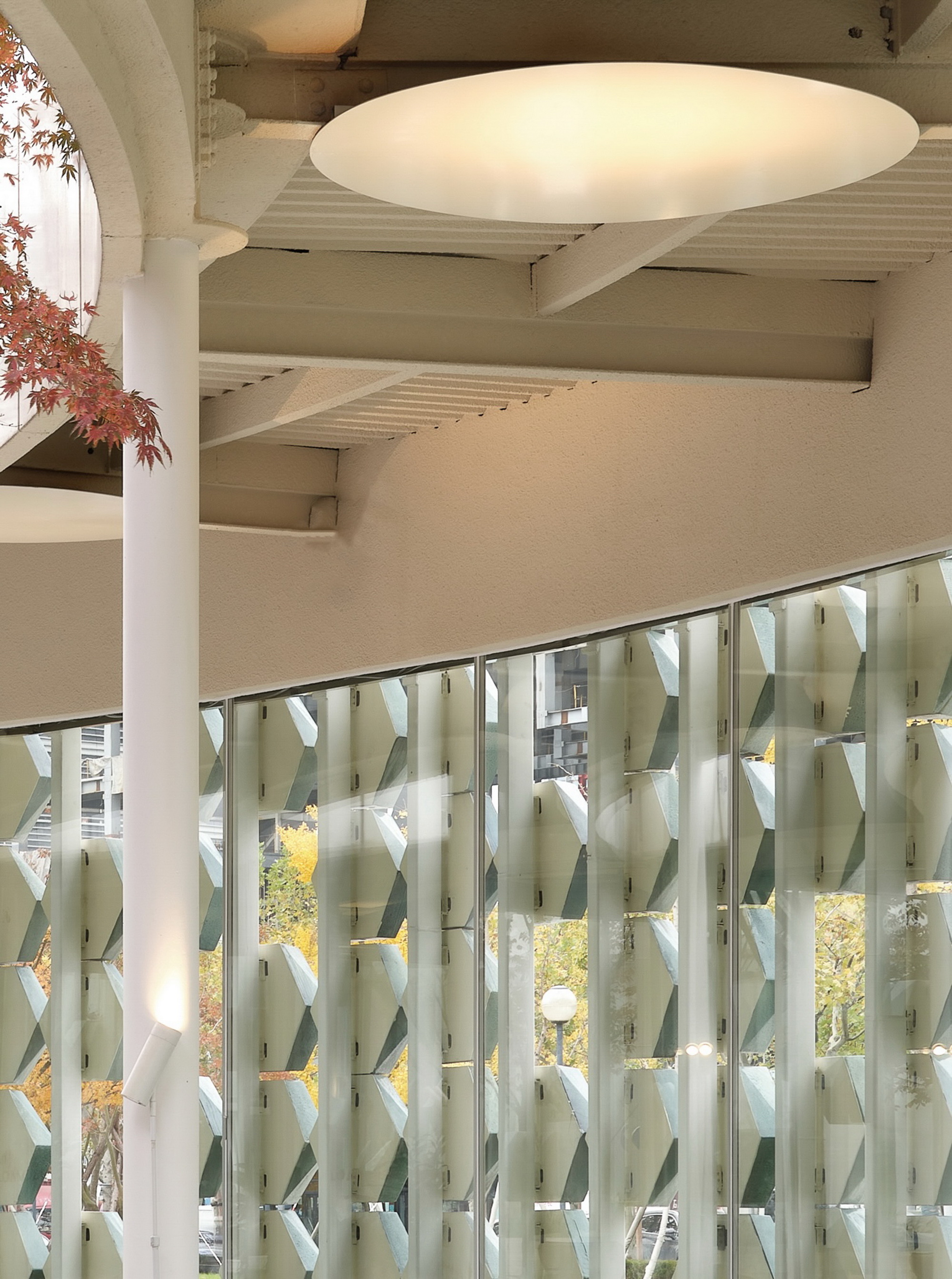
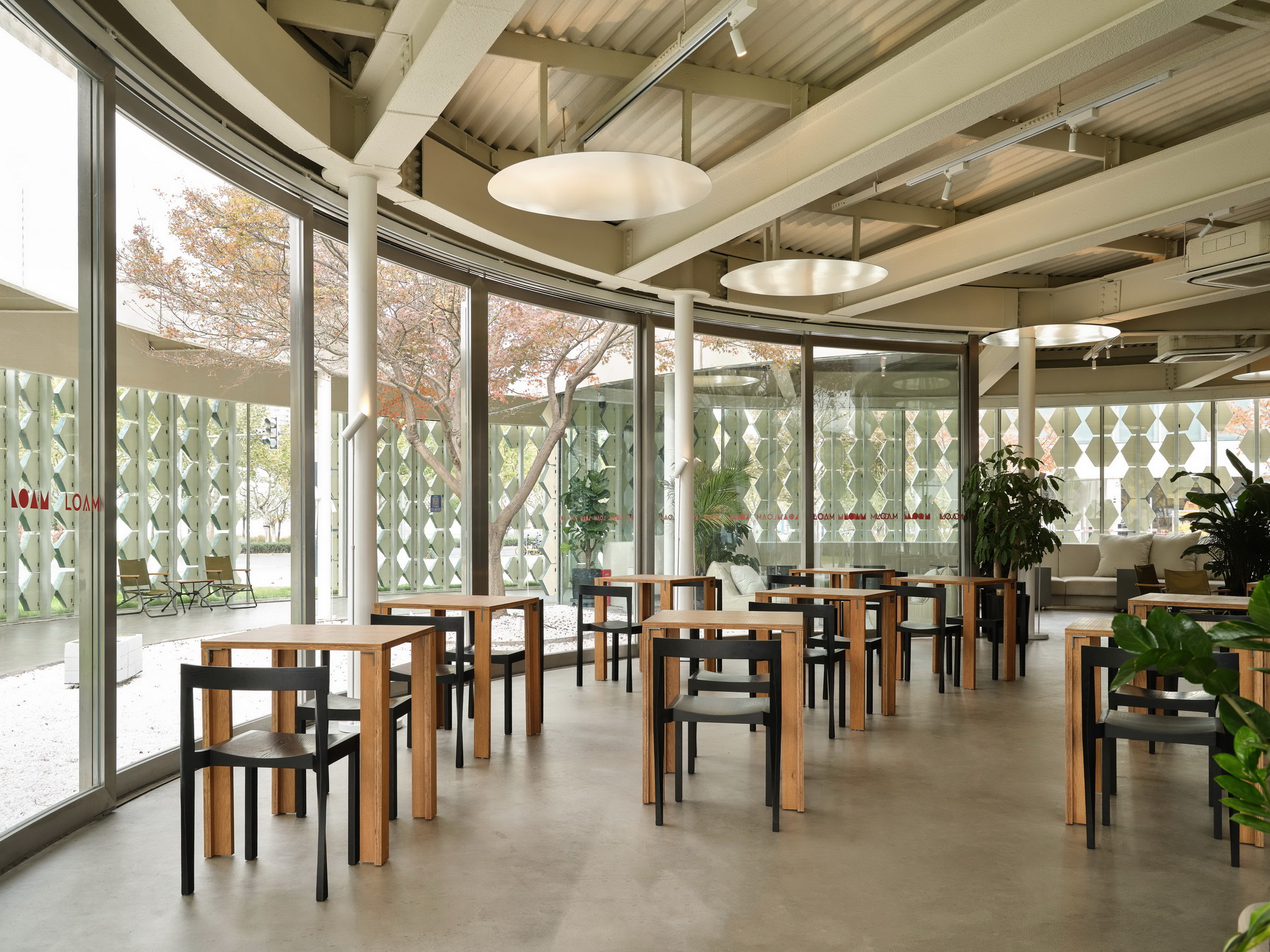
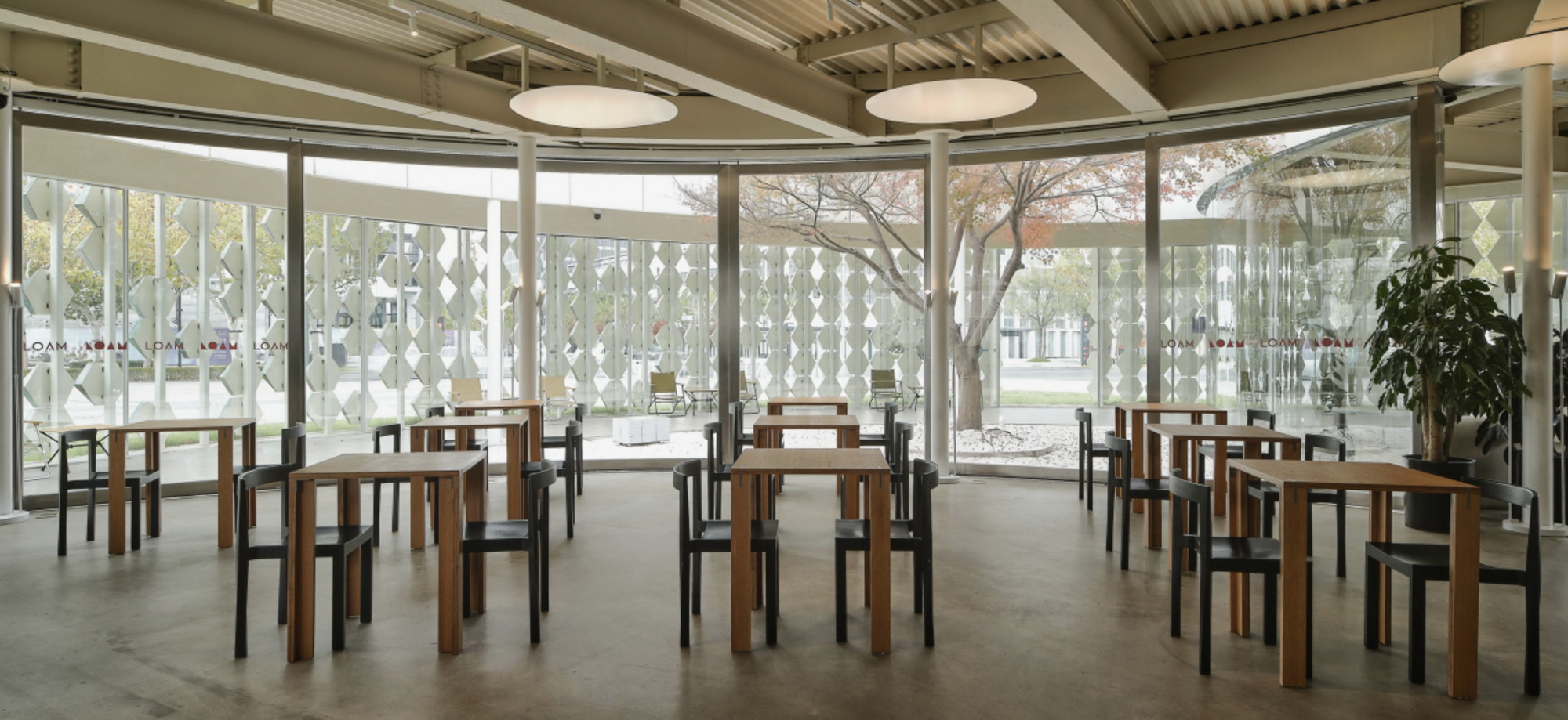
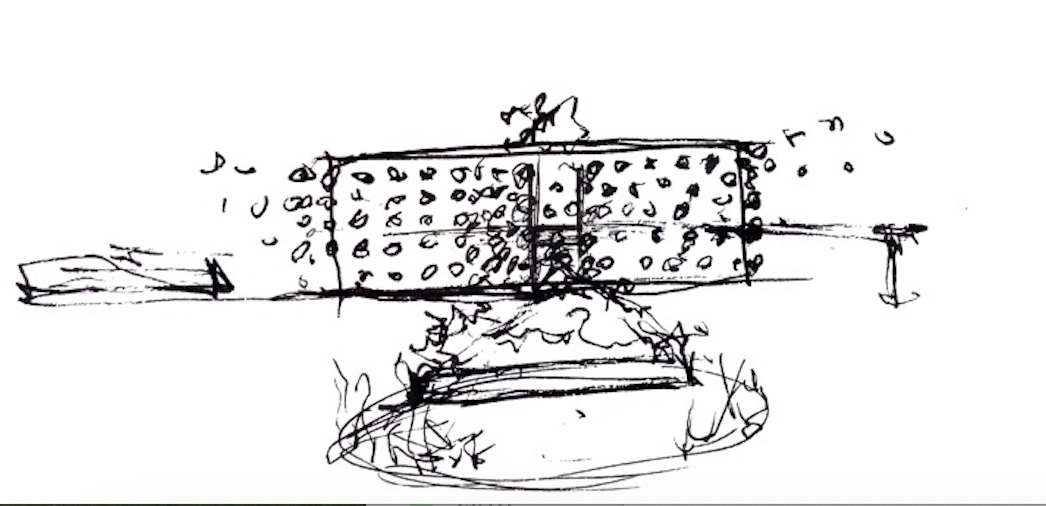
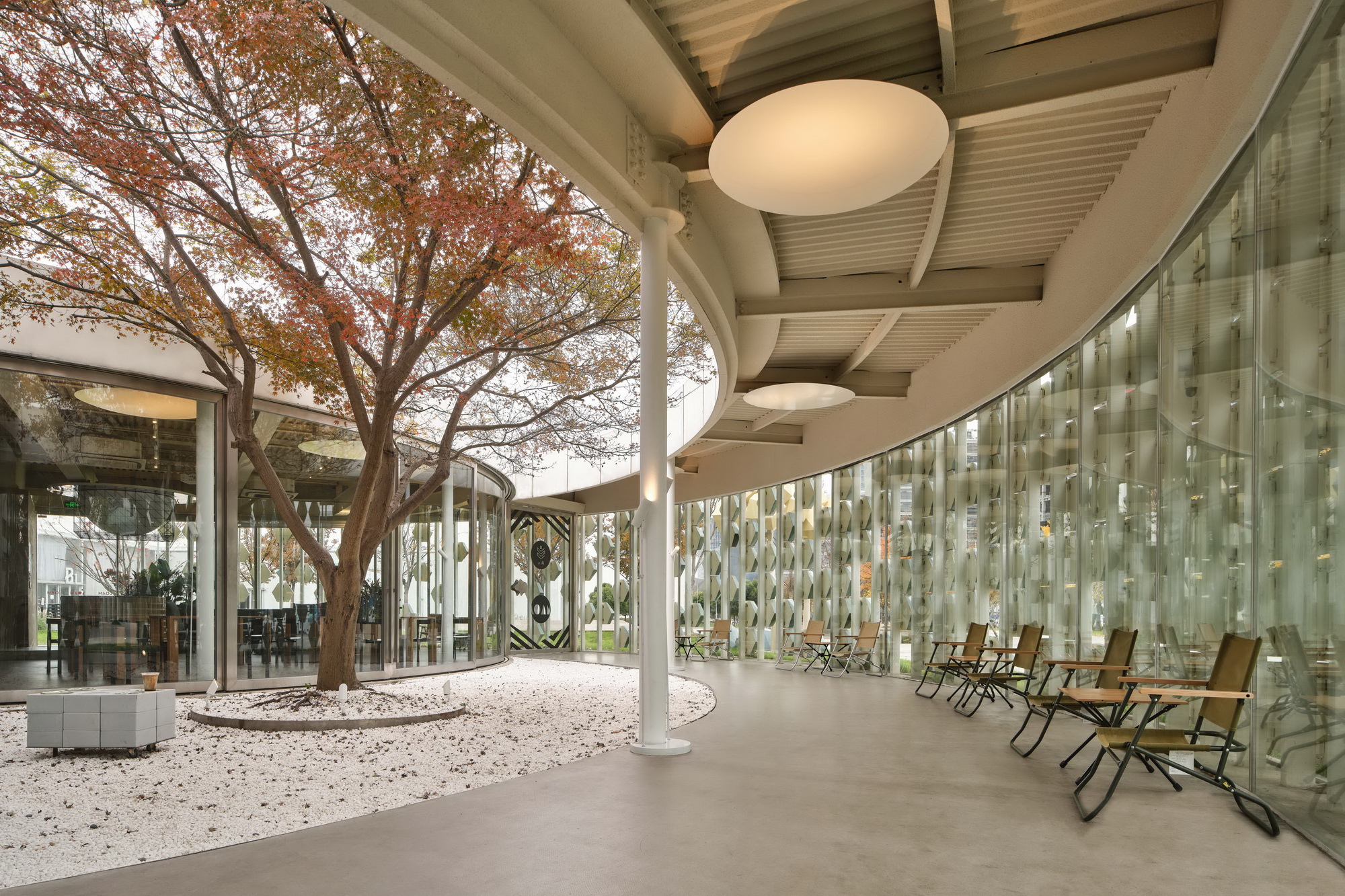
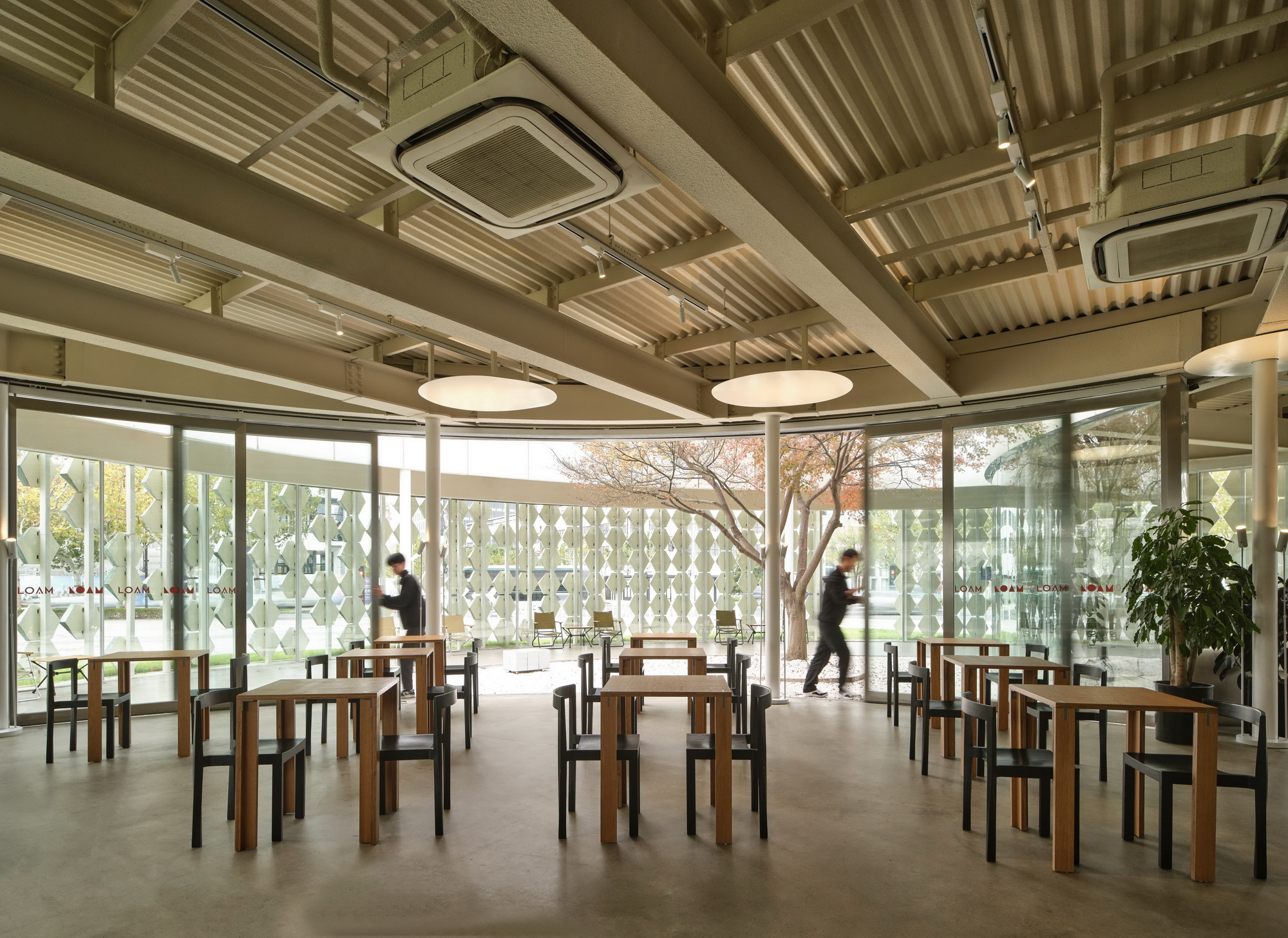
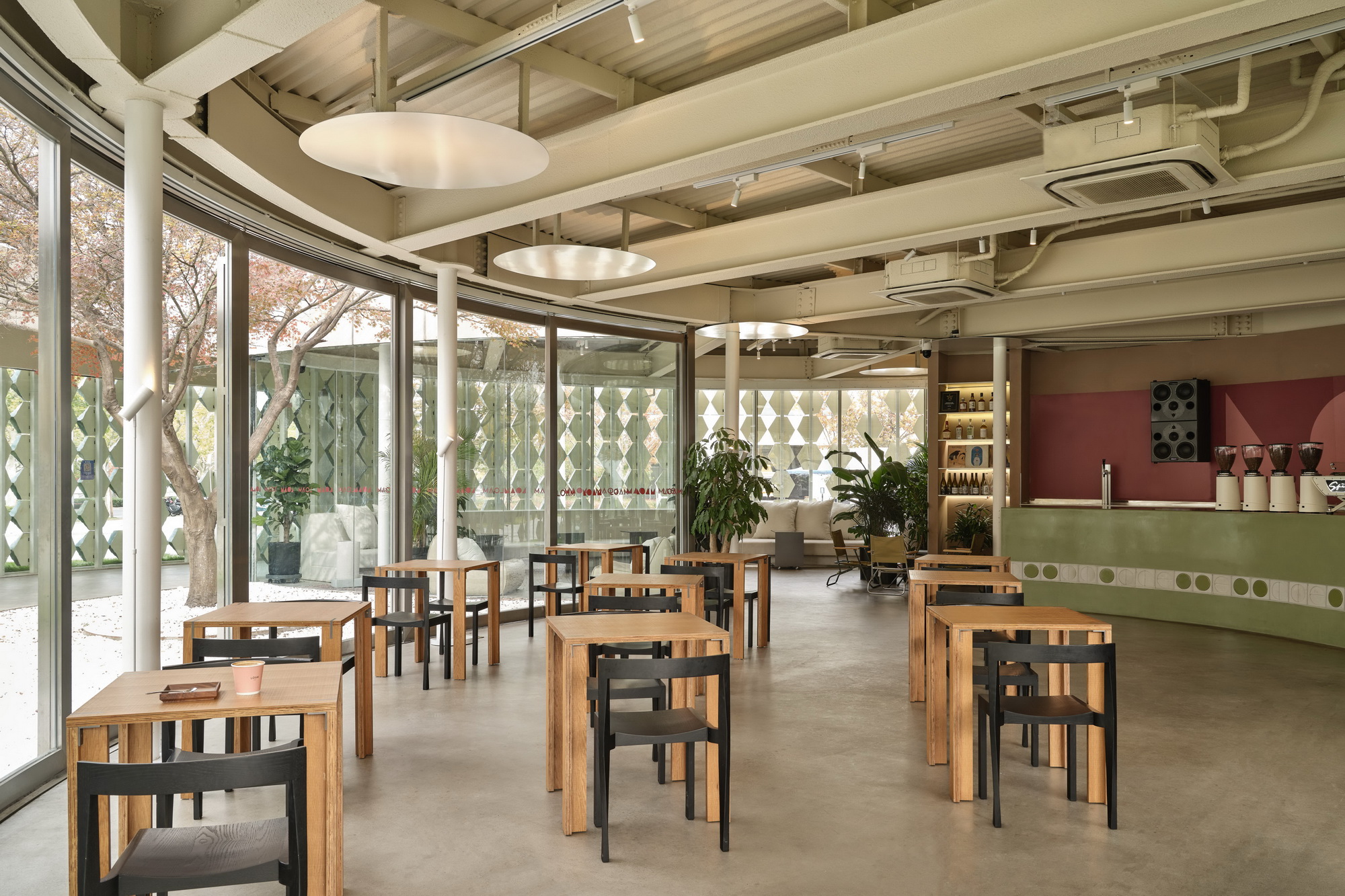
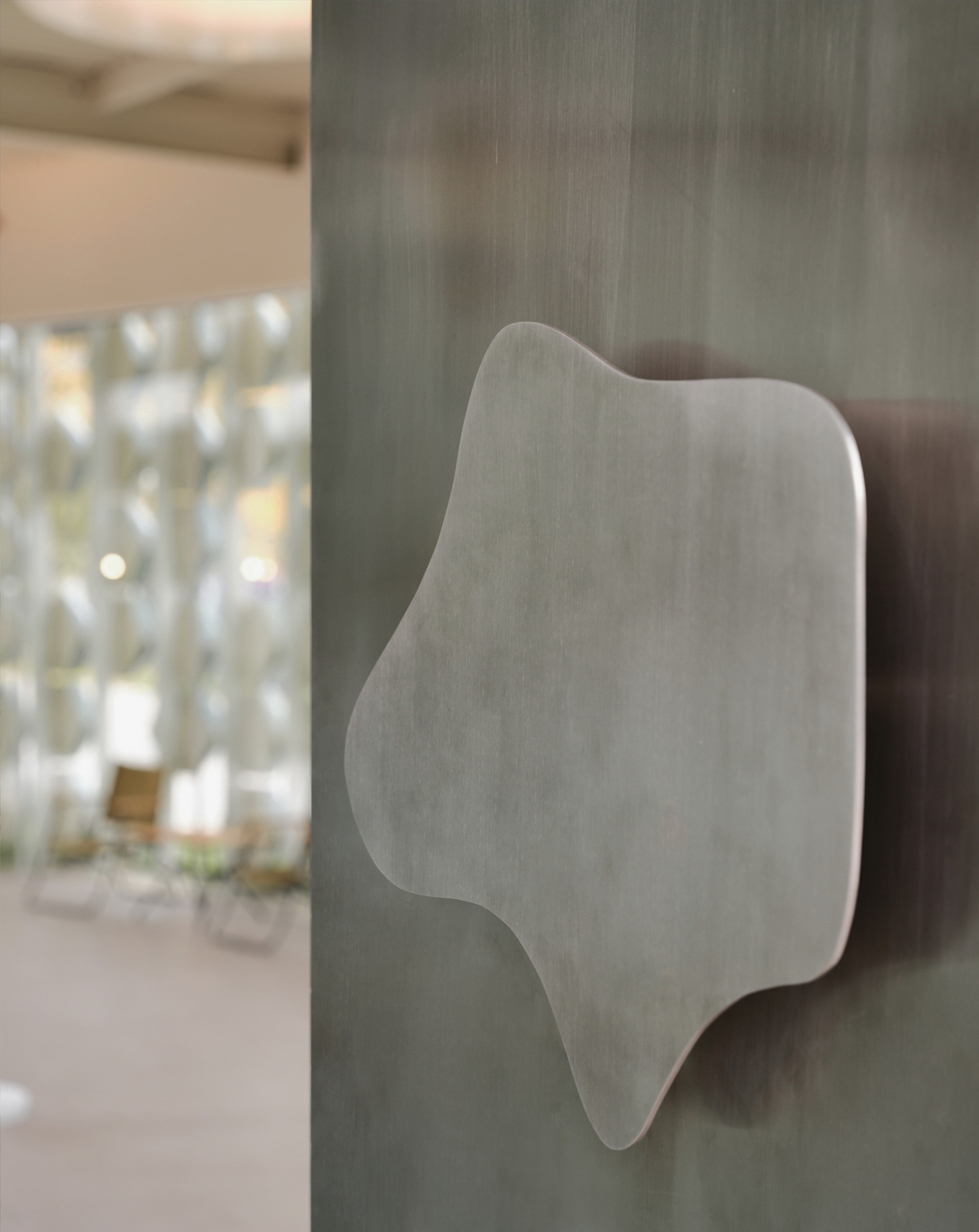
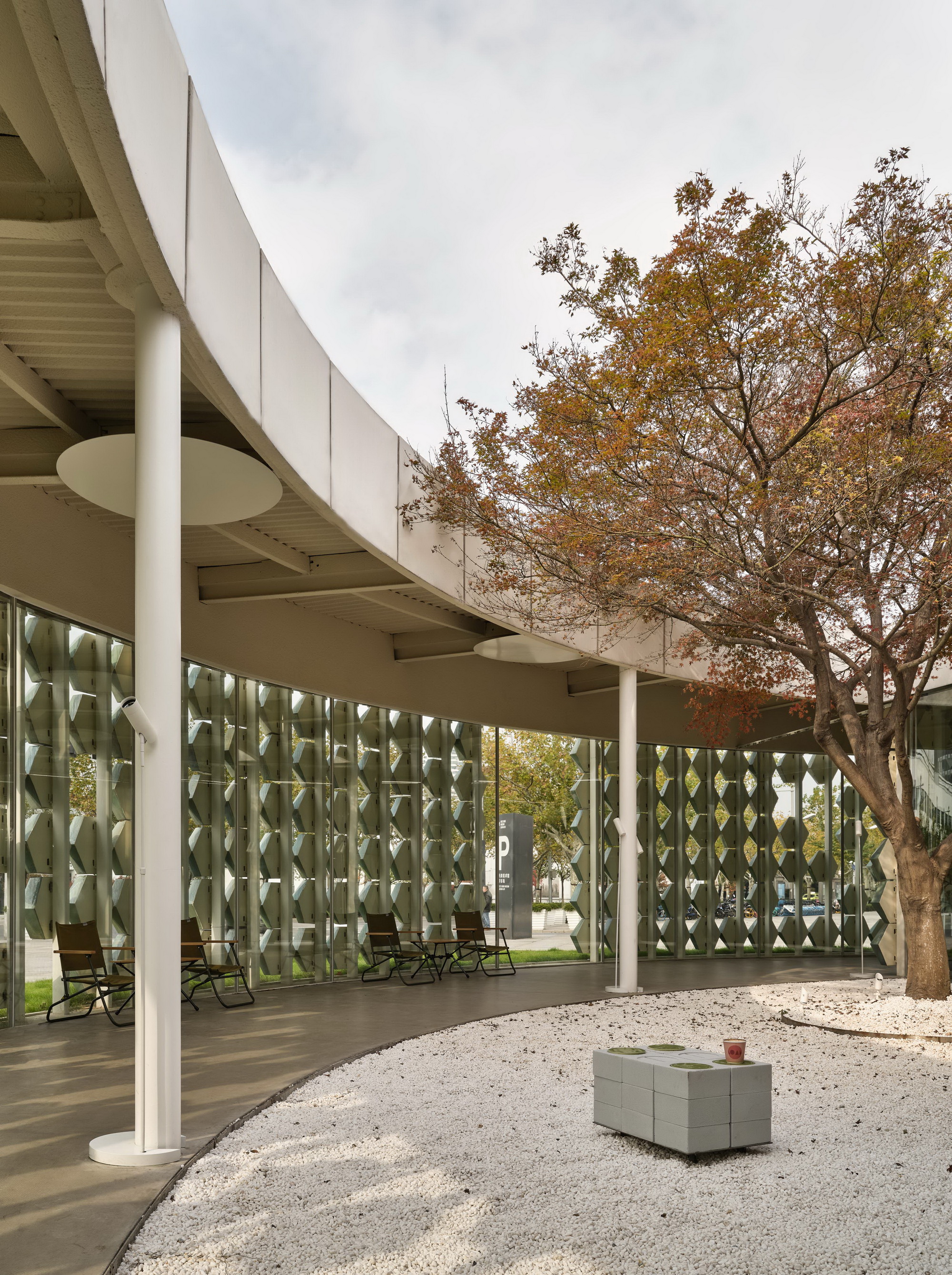
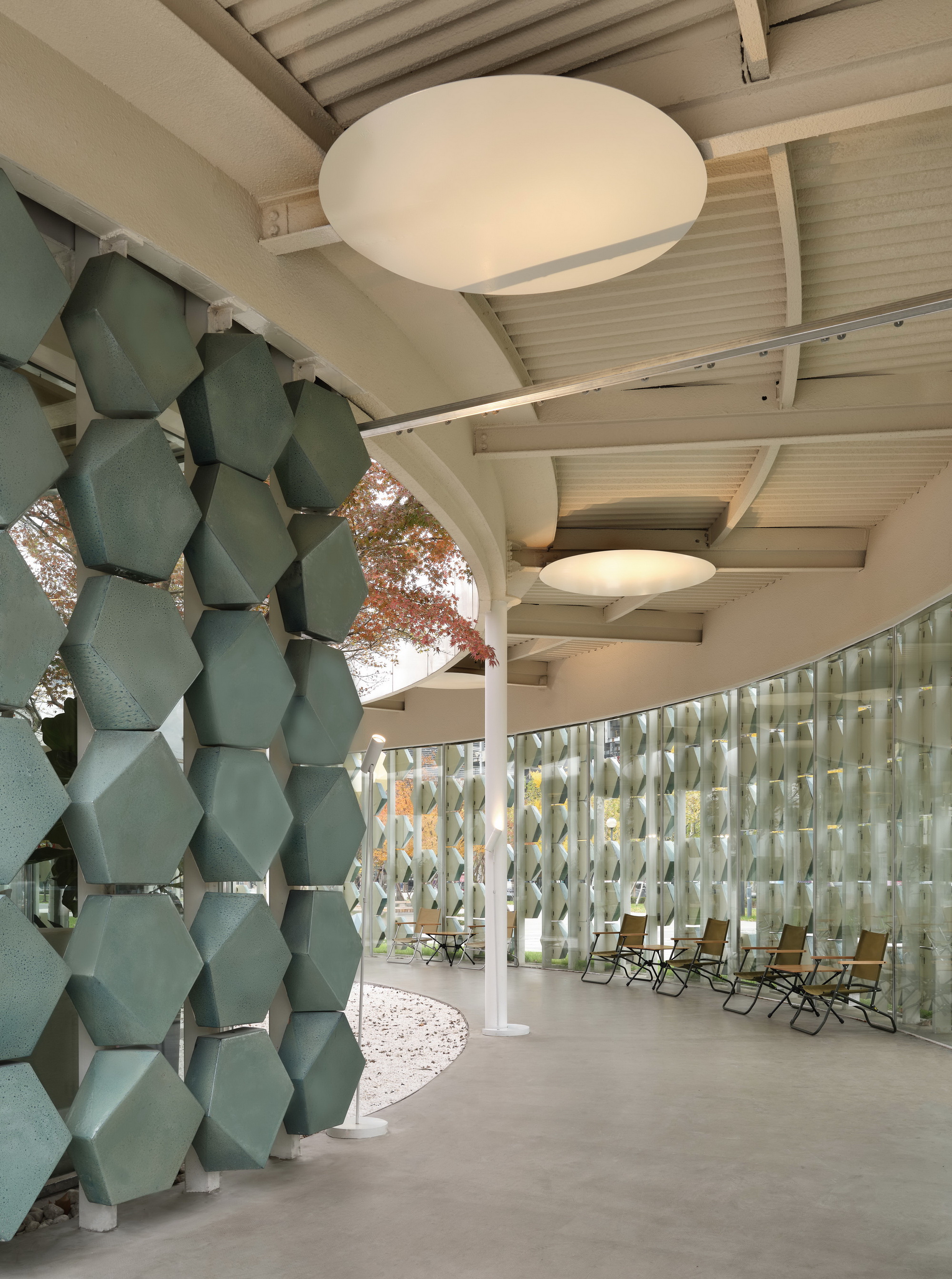
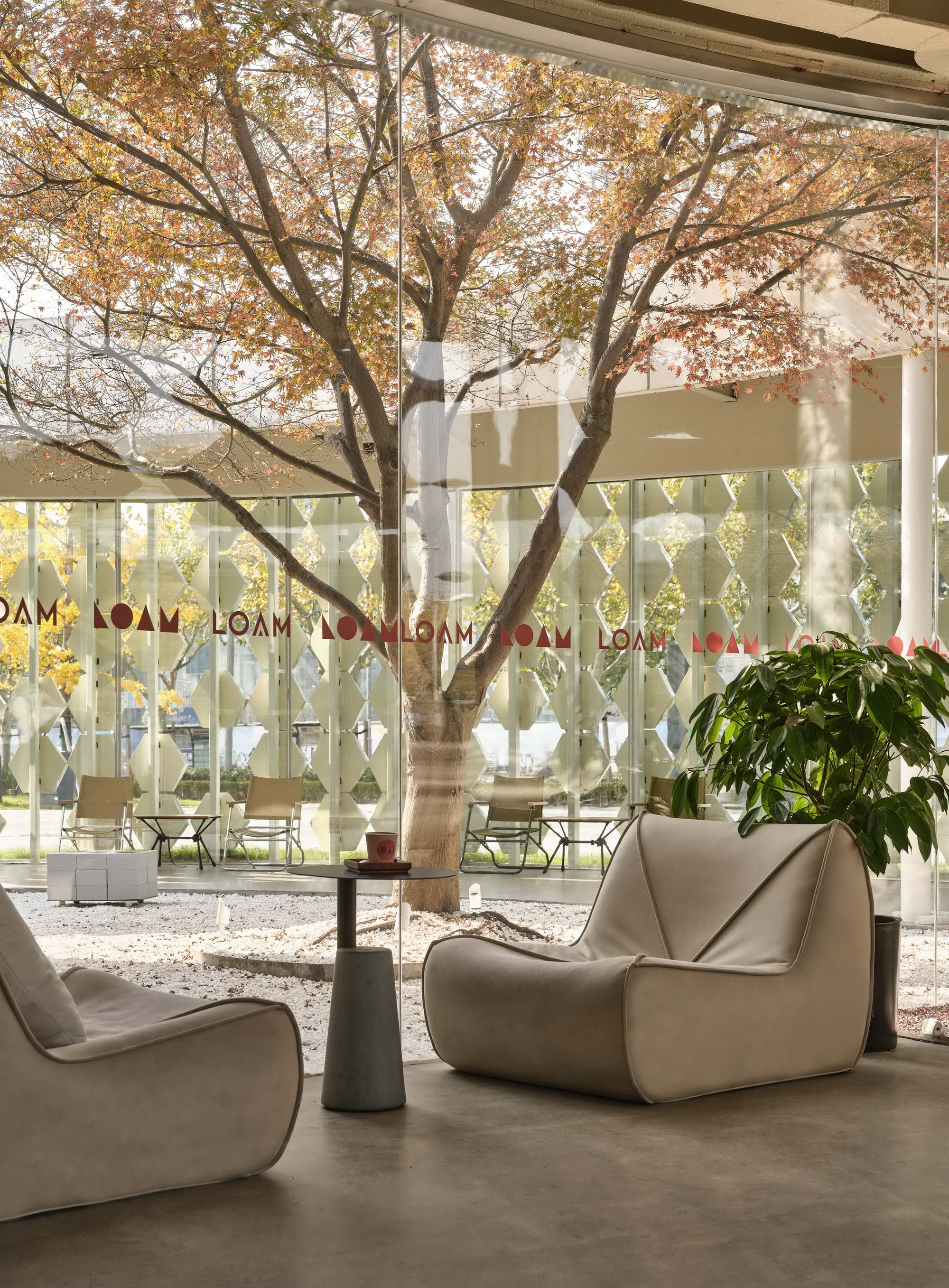
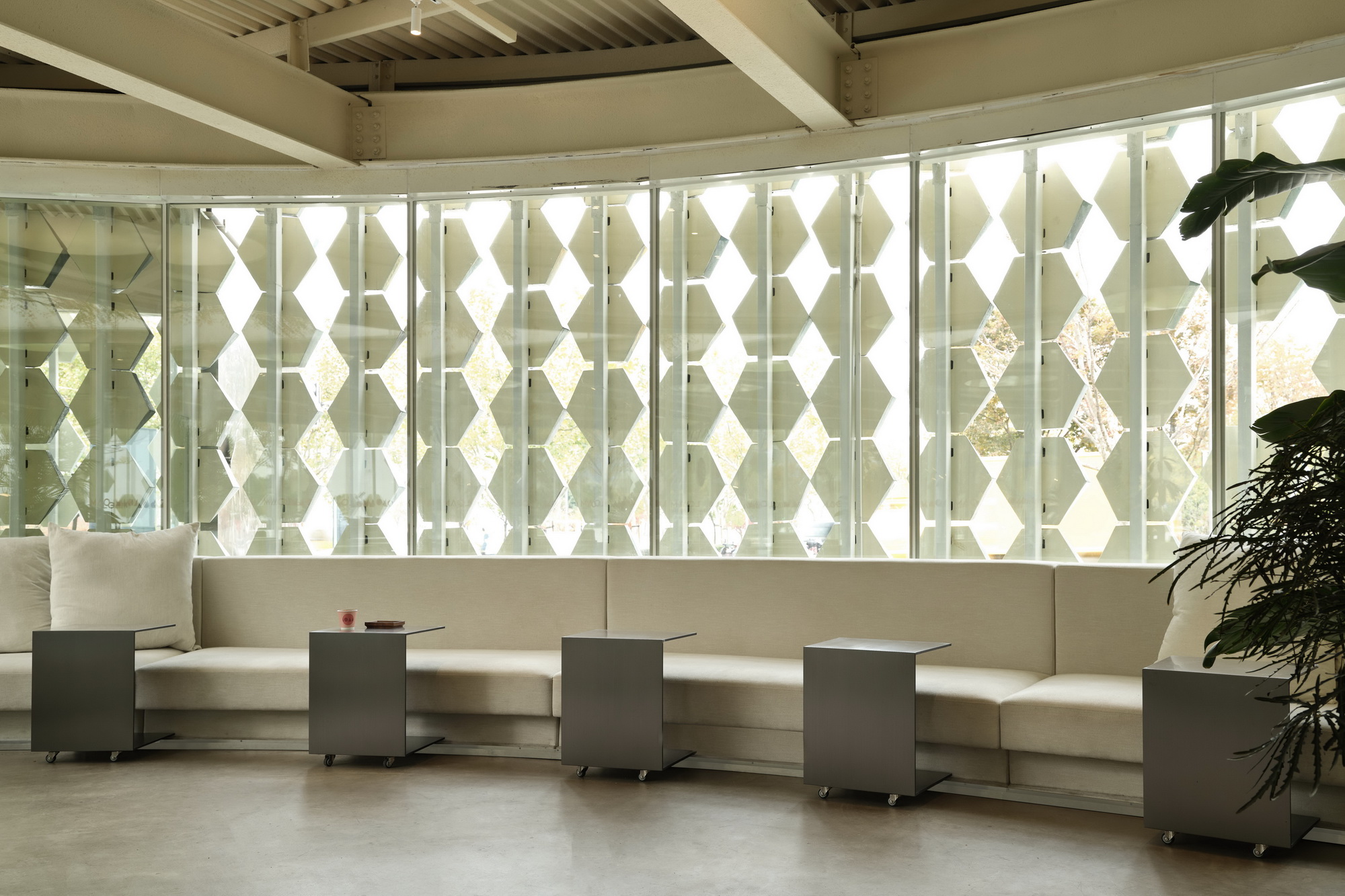
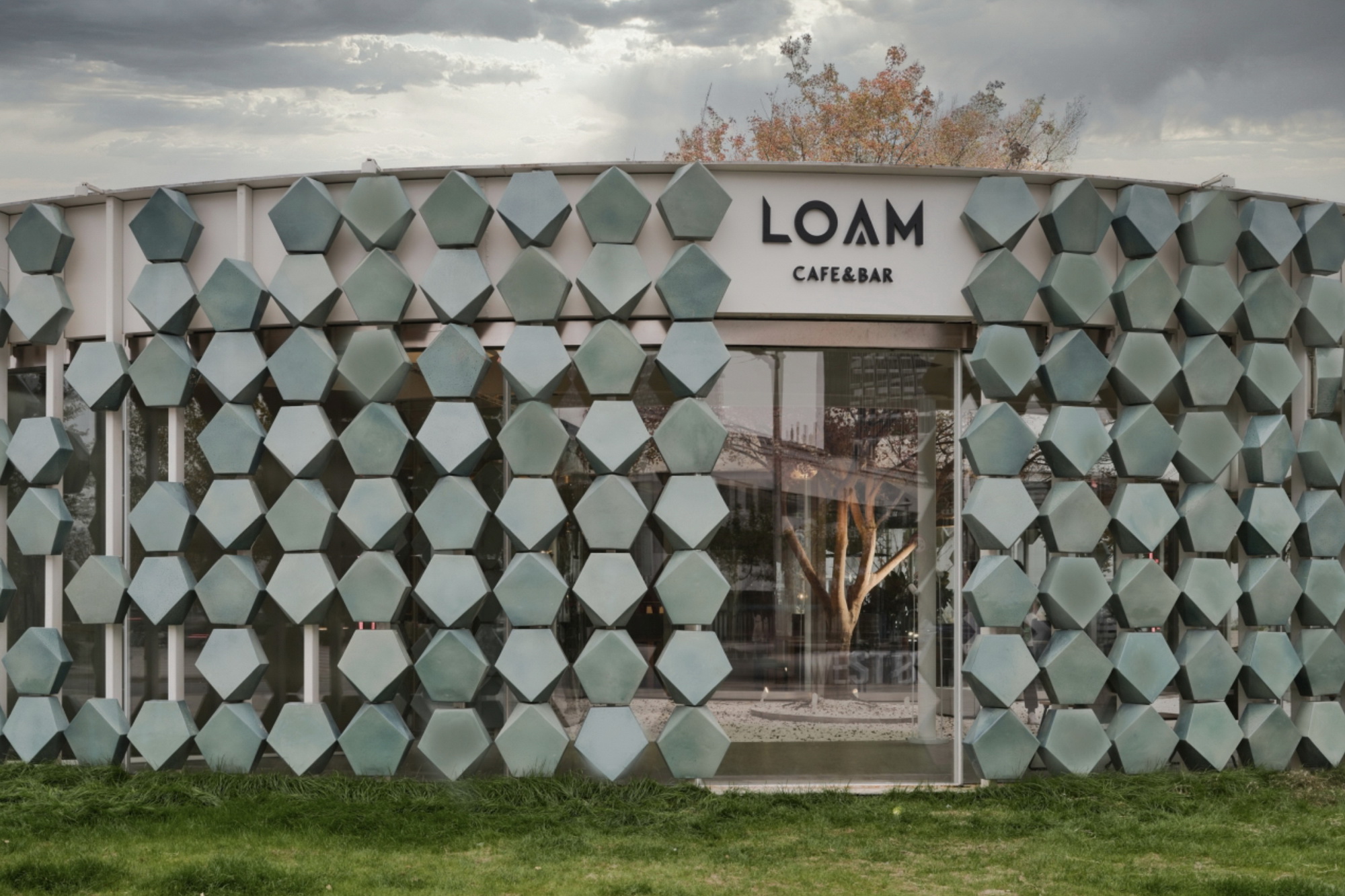
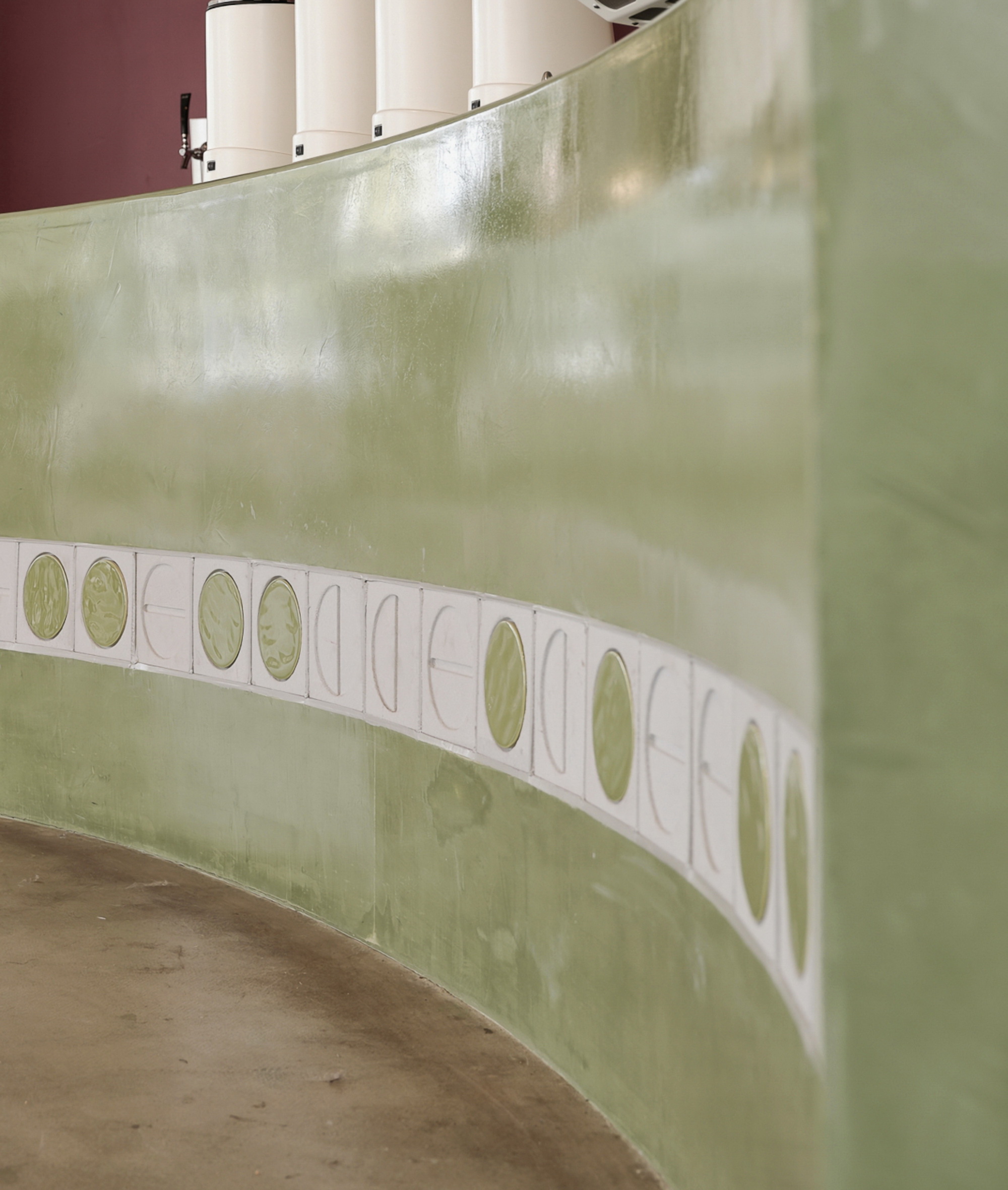
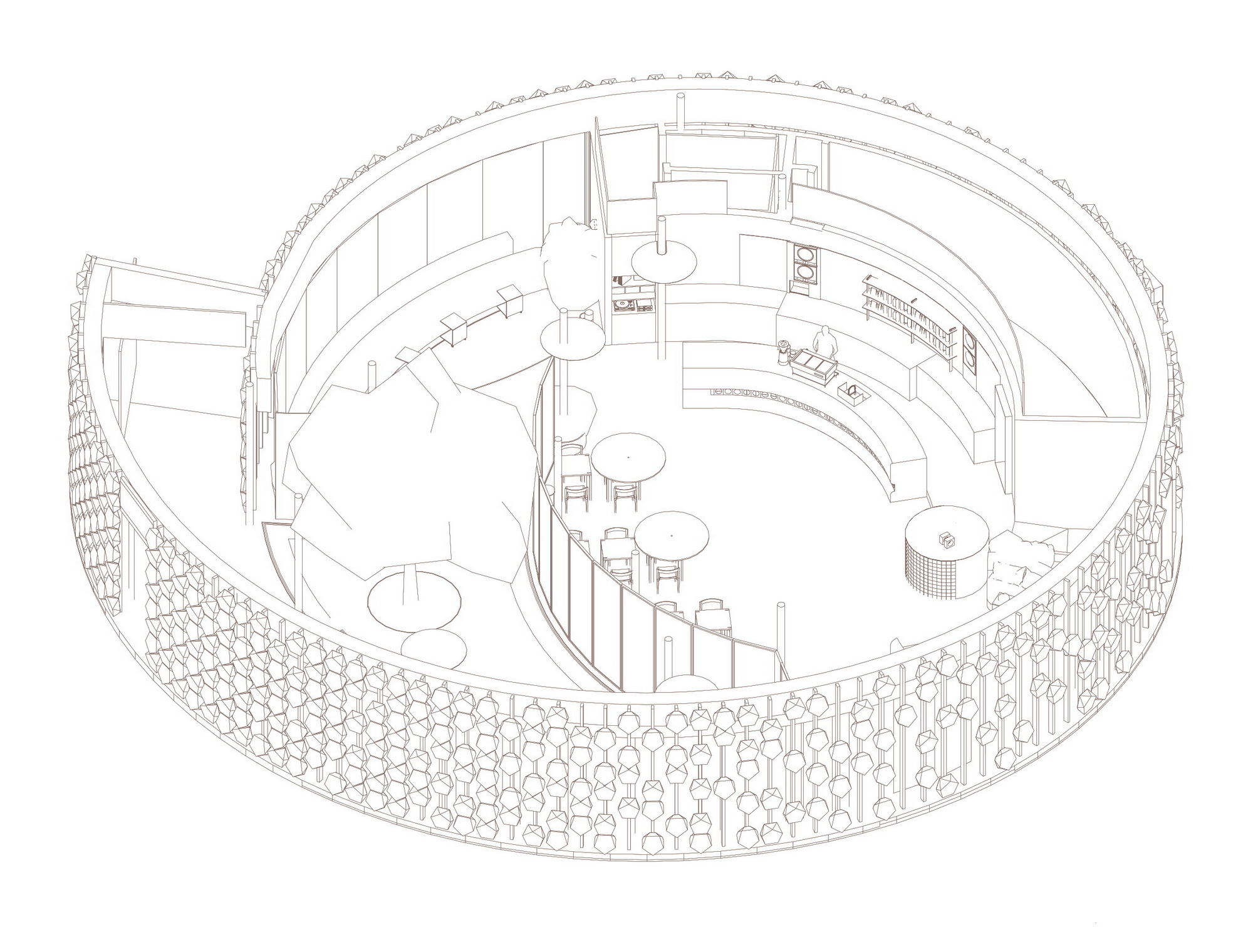
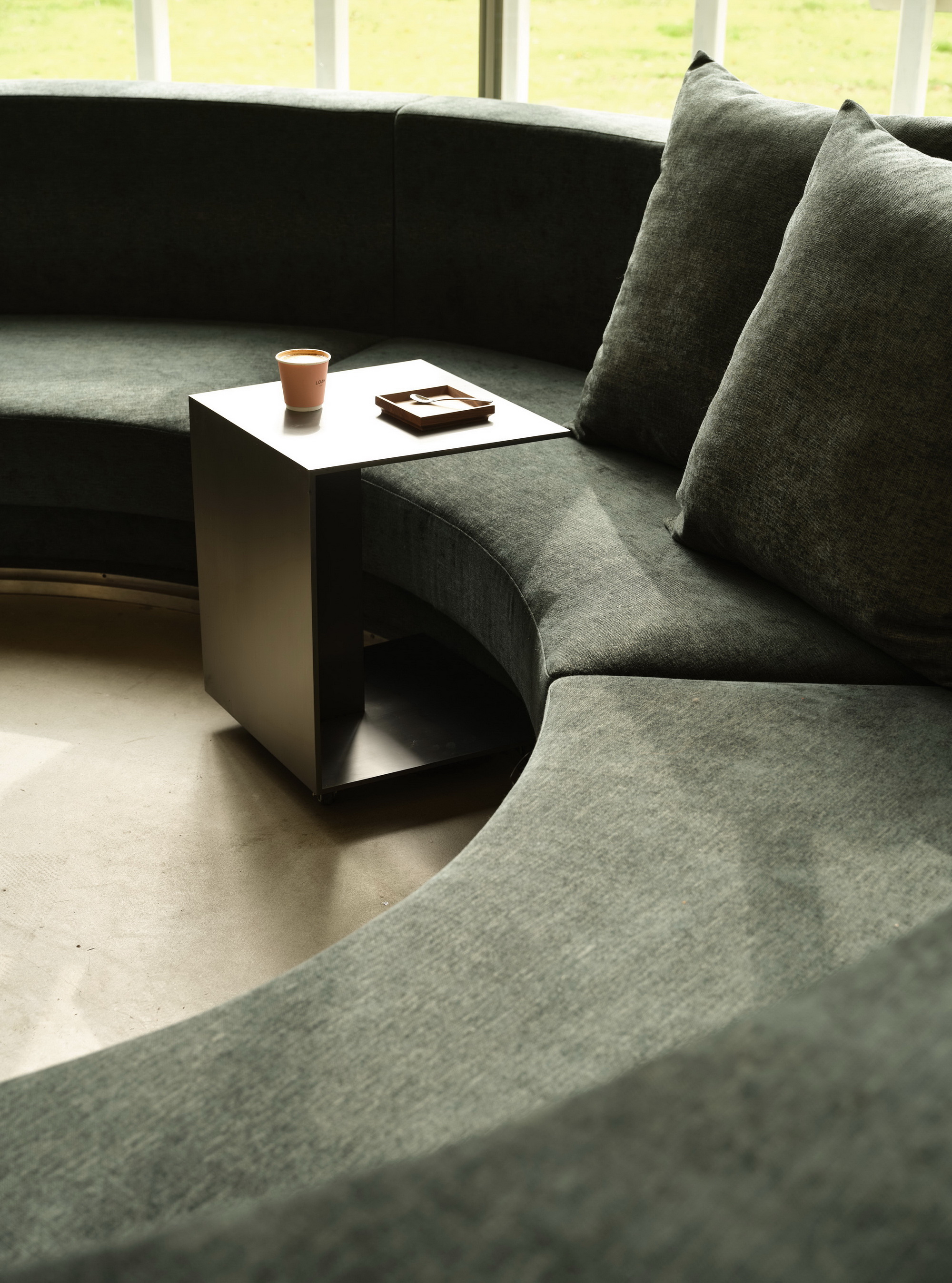
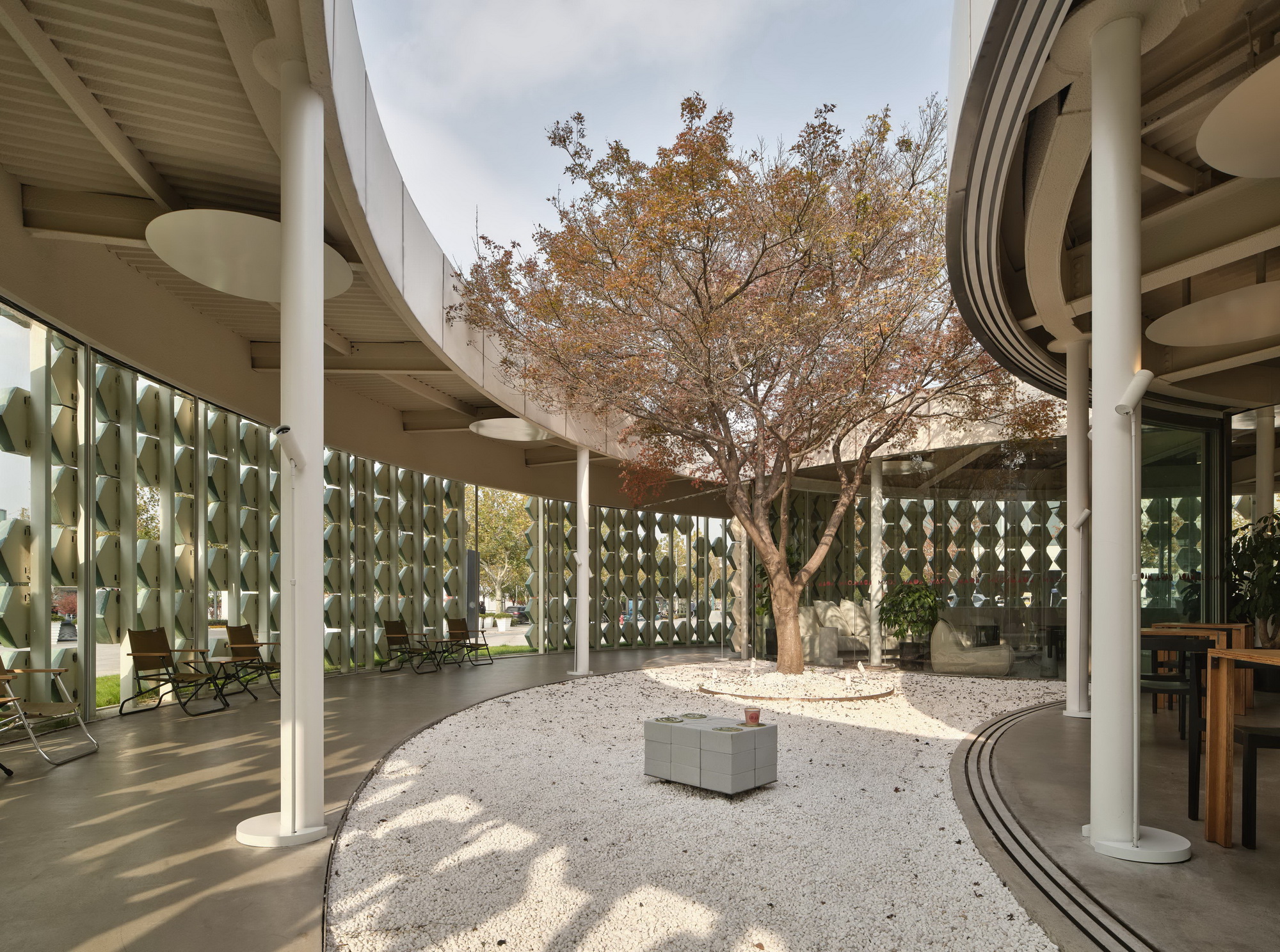
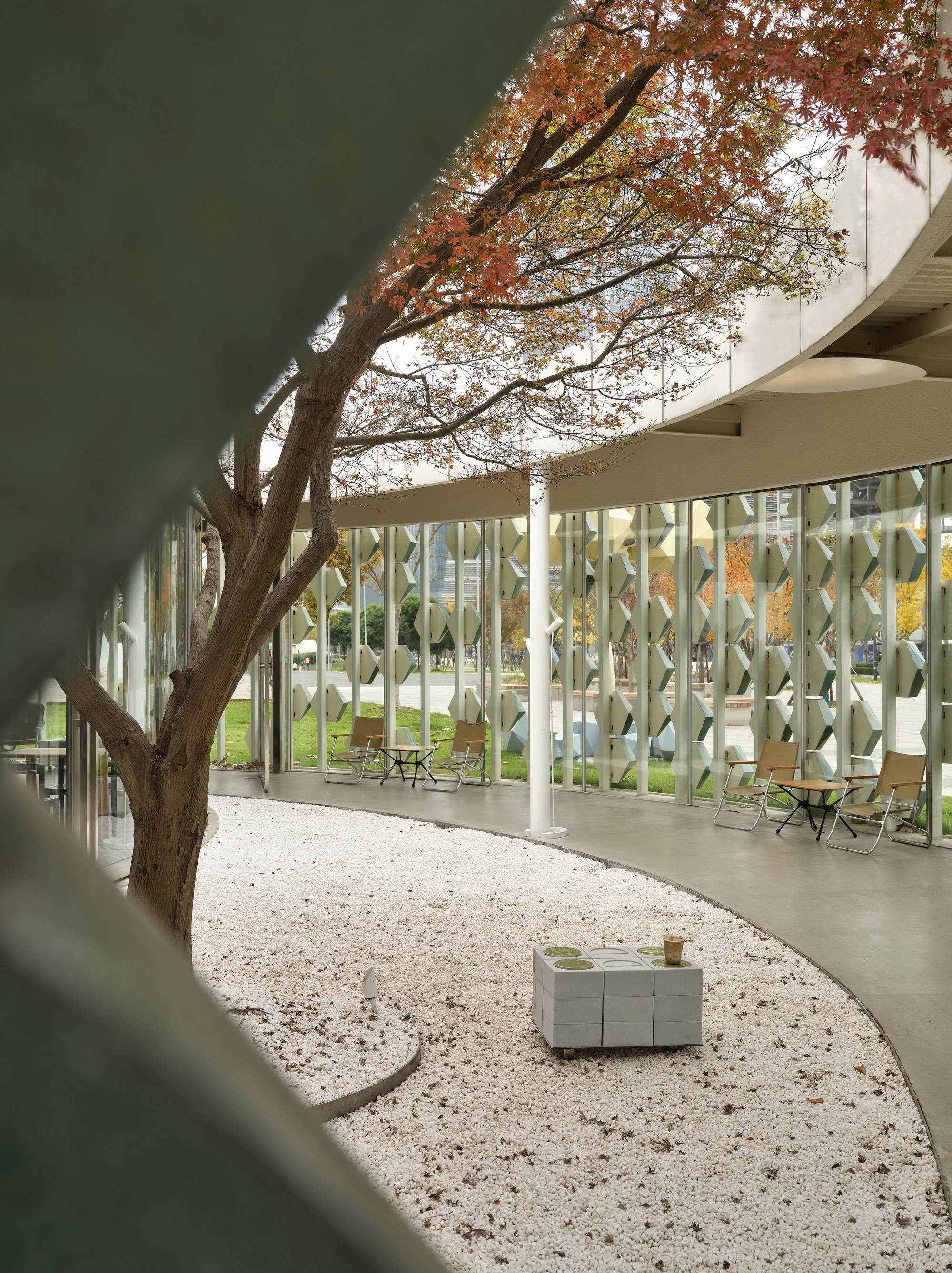
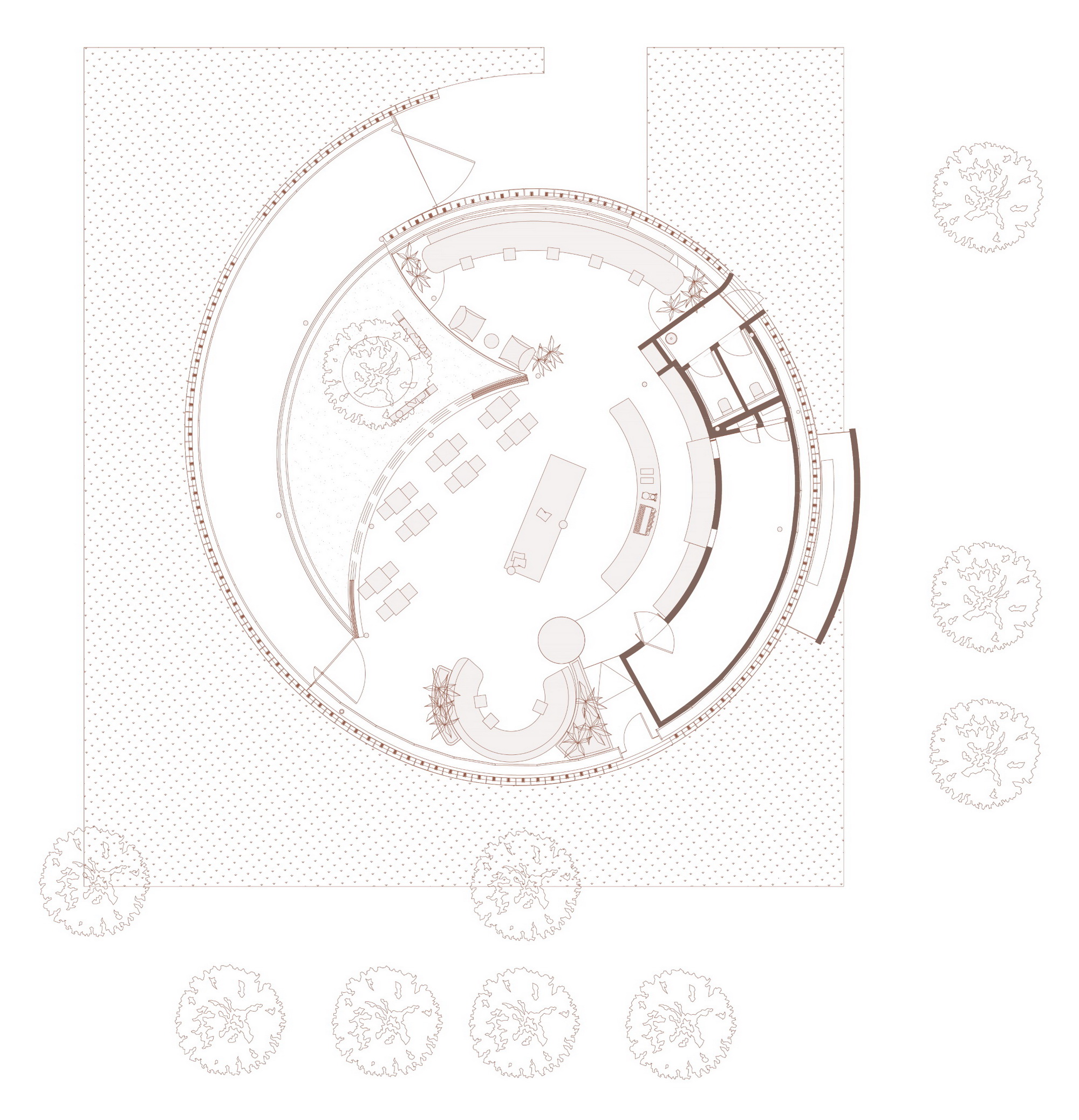
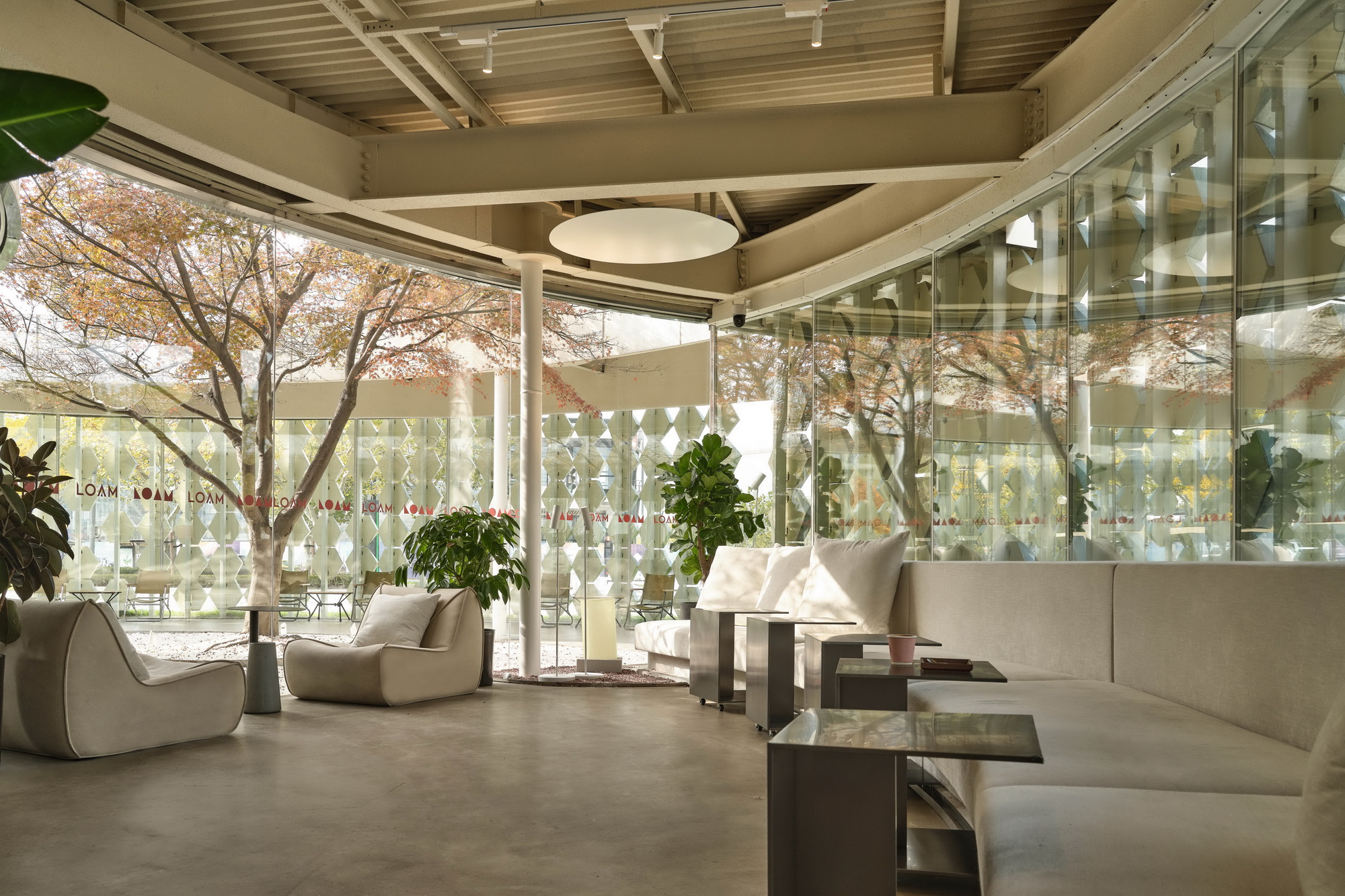
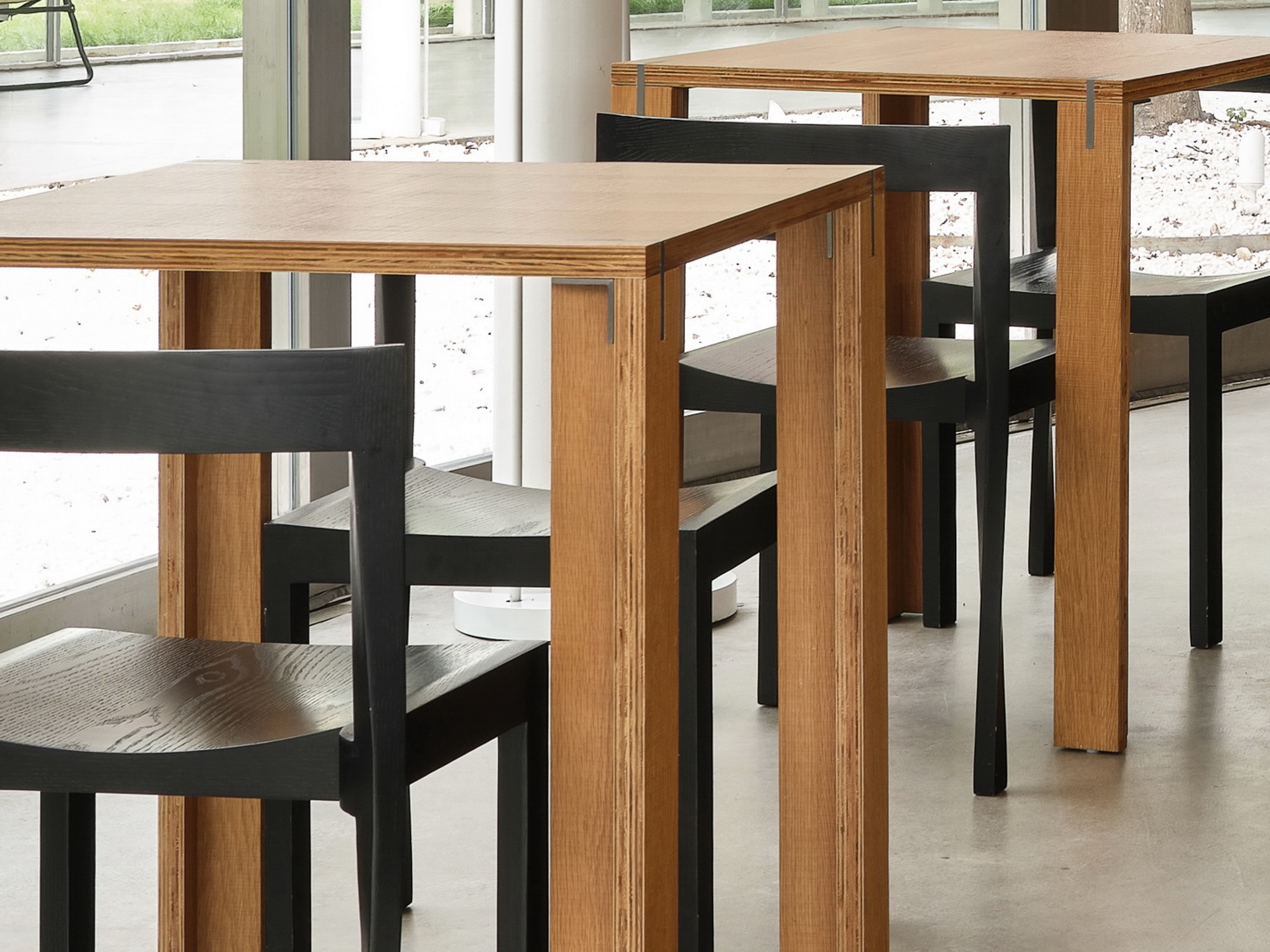
LOAM Porcelain House Café is an interior and facade renovation of a circular ceramic-tile pavilion on the West Bund in Shanghai, one of Asia's largest art districts, designed by Banhuang Architecture (Angel Gekov and the Banhuang team) for client Shanghai Ciju Enterprise Management, with lead designers Shirley Dong and Andrea Maira. The original building, by an earlier team, was a freestanding spiral volume clad in hundreds of green ceramic tiles, but only half of the facade had been installed, and the brief converted a closed exhibition space into a café and bar capable of shifting use across times of day and special events. Banhuang decided not to add new elements: instead, by redistributing the existing ceramic tiles and decreasing their density outward from the entrance, the studio completed the facade's order as a gradient that honours the original architect's intent, while letting light play across the porcelain. A green maple at the centre of the site became the generator of the design - a "journey around the tree" in which visitors pause, picnic and gather beneath it. A new lawn around the porcelain house lets it dissolve into the urban green, and a visual cut through the facade opens toward both the street corner and the maple. The journey begins at a large pivot door whose closed face mirrors the tiles into a complete wall, then passes a semi-outdoor gravel court facing the maple, and moves inside through glass doors from casual seating to curved sofas to deep, private armchairs, all oriented toward the tree. Furniture density follows tile density, which follows light. The ceiling is stretched vertically and a bespoke diffuse-light system of ceiling-pointing discs replaces ordinary downlights; modular stainless side tables run on a track, and the bar counter is made of glazed concrete to echo the porcelain. Custom round tiles tie interior and exterior, and door handles shaped from melted porcelain reinterpret the original closed pavilion as a space opened to the city. Tables in mortise-and-tenon timber and movable tables of recycled foam porcelain further express a greener, more innovative reading of porcelain.




 Editor's Pick
 Latest Design