Text description provided by the architects
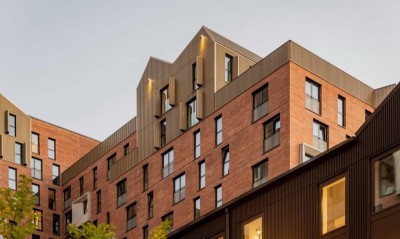
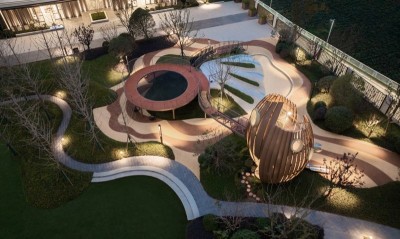
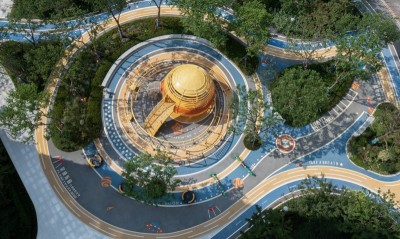
Poly Mingyue Time in Harbin is organised around the memory of a city whose veins carry the life of its factory districts: red brick acts as a lever that touches people's memories of past working lives. This is a land of iron and fire, where red bricks laid up not only factory buildings but unforgettable marks of time. Cosmopolitan Harbin was the first stop for the spread of Marxism in China and a cradle of the red revolution; its Soviet-style red architecture is the collective memory of an era. The design uses an architectural hand to stage a space where past and future collide: extremely modern lines meet red brick, and thought shuttles between two centuries while the whole landscape speaks of time, life and humanism. In the traces of passing years the team aims to restore the old factory's living scene. As the German artist Anselm Kiefer said, I am not nostalgic, I simply want to remember. The classic brick-red tone triggers recollection of the great-factory era of the industrial old city, so the design takes that register as its main key and re-stages it through a modern hand. The team extracted the site's texture, reproduced industrial memory signs, and recombined, layered and re-assembled them across the whole landscape, so that landscape and architecture speak one language; at the same time it restores the cultural temperament of the Harbin factory and the everyday memory points of the city. Carlo Scarpa observed that one must create relationships to make things vivid, and the project is themed as a poem of time and refined luxury, using red brick to divide and enclose and to build borders and relationships that let the old factory speak a new story.




 Editor's Pick