Text description provided by the architects
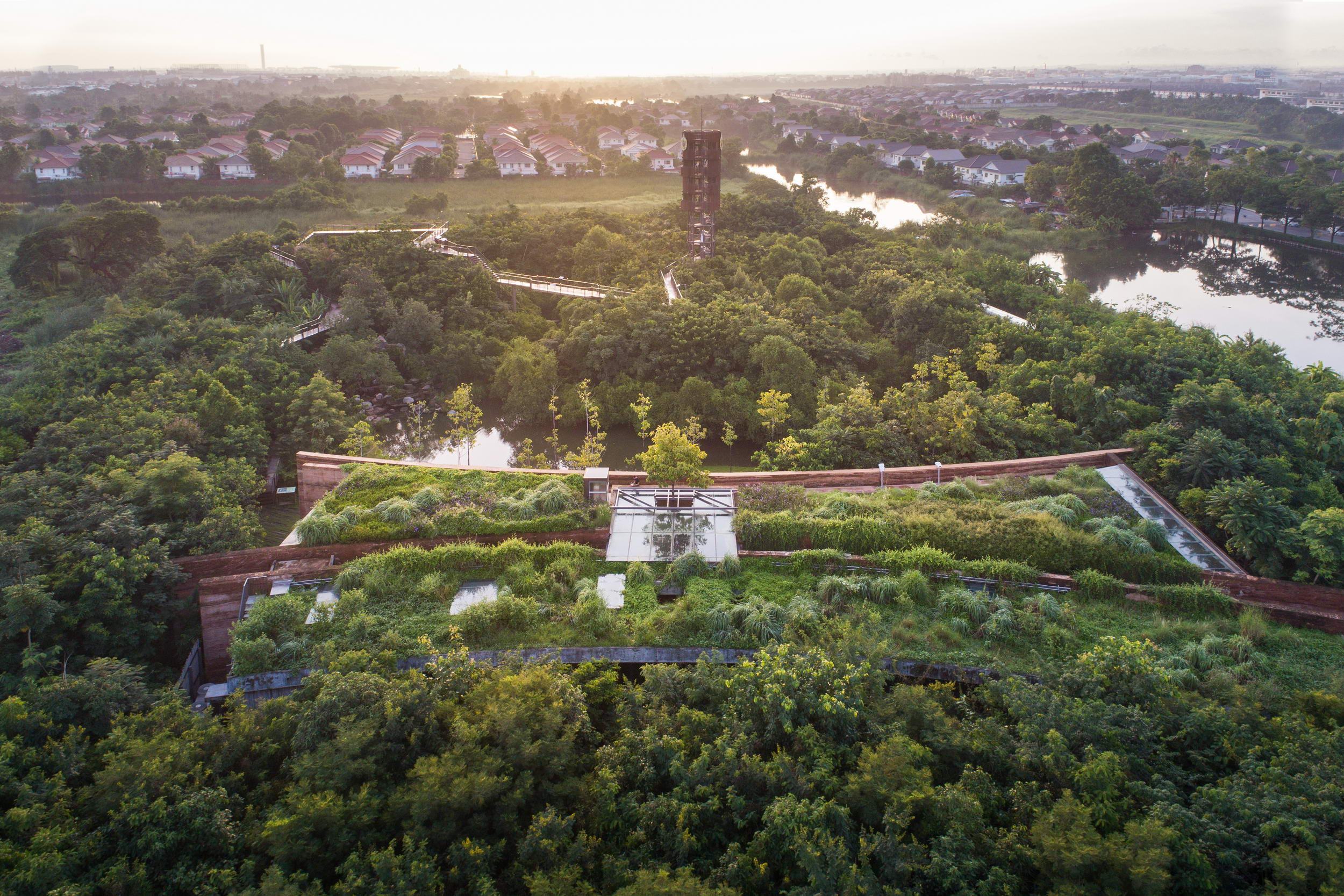
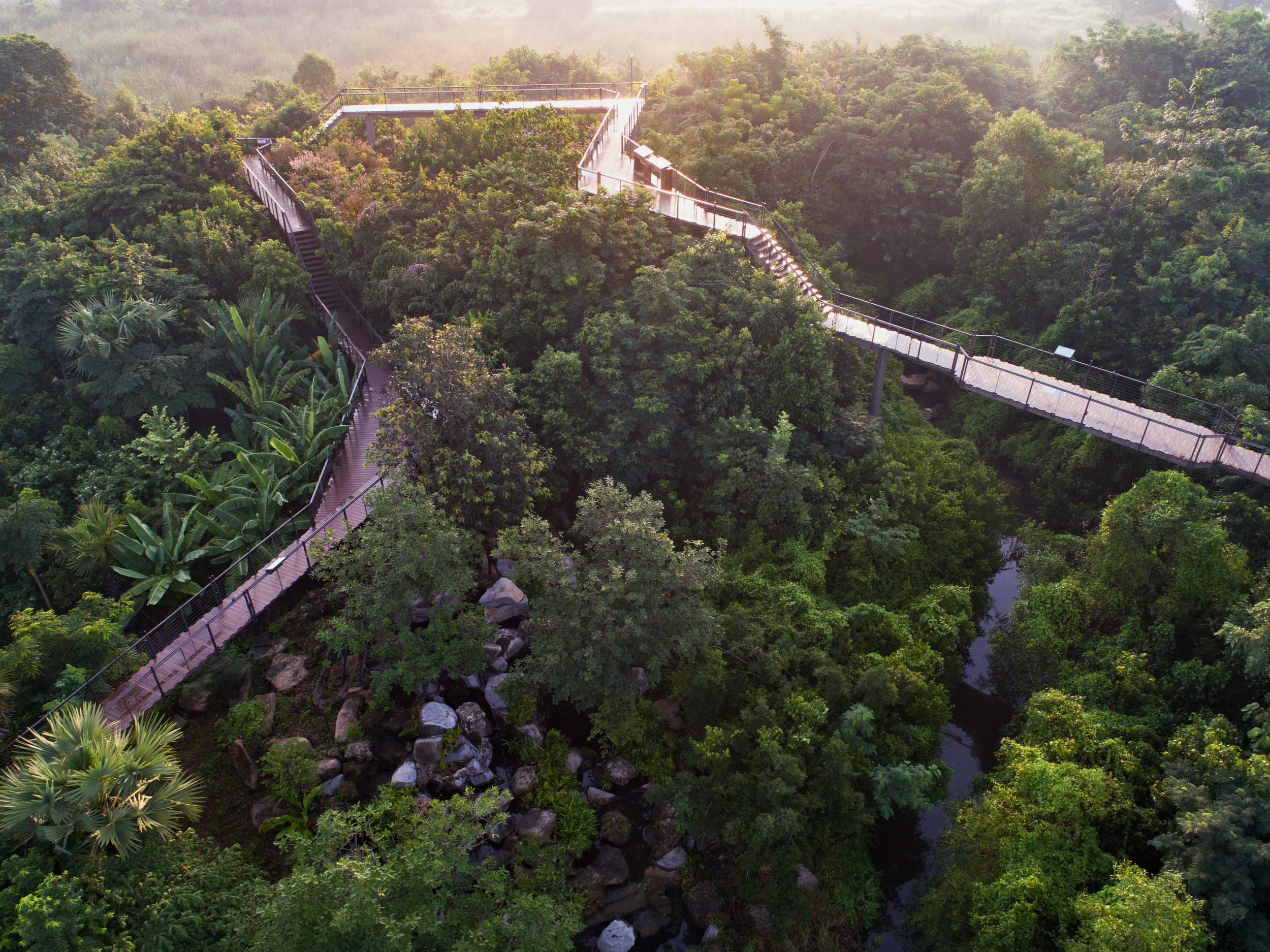
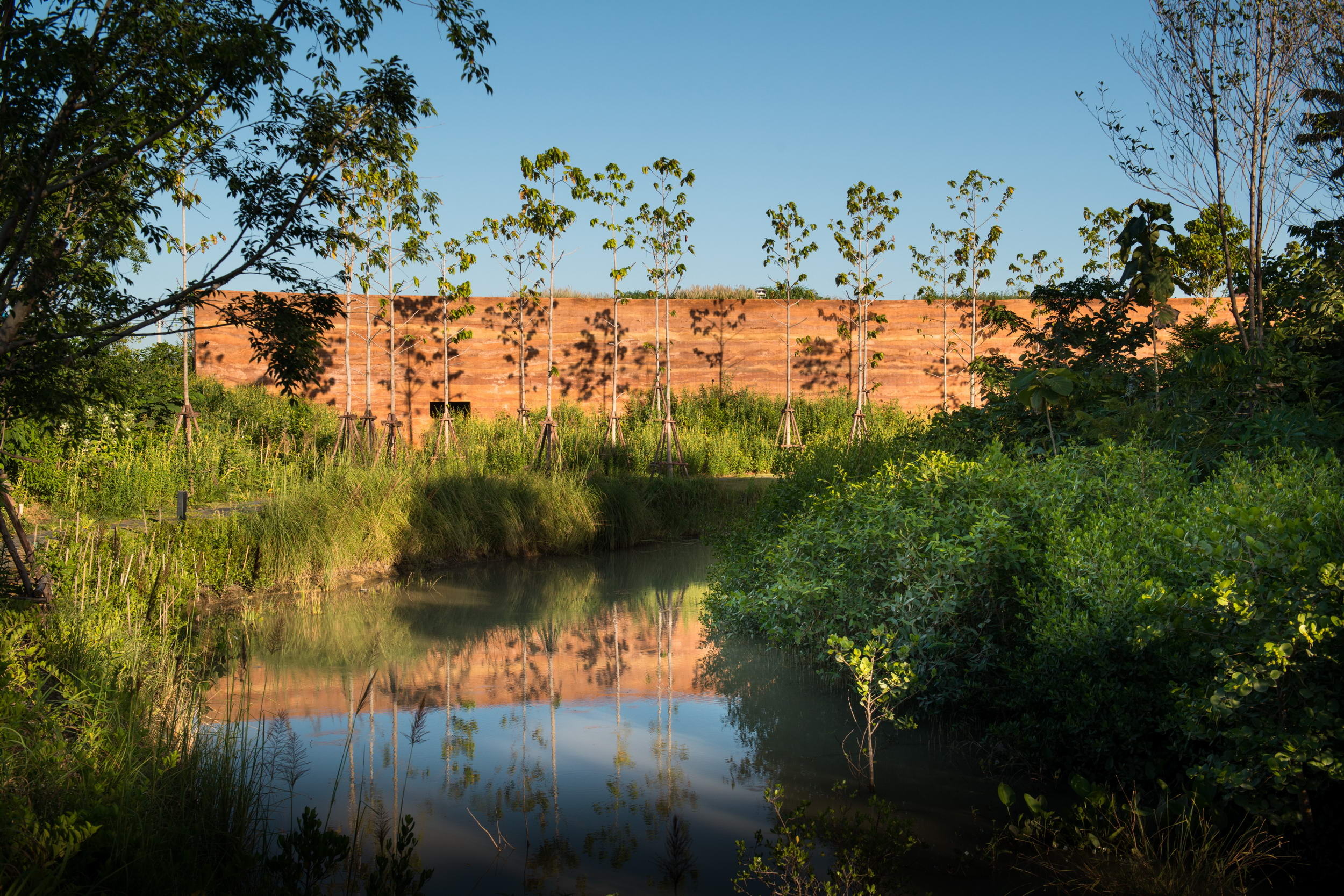
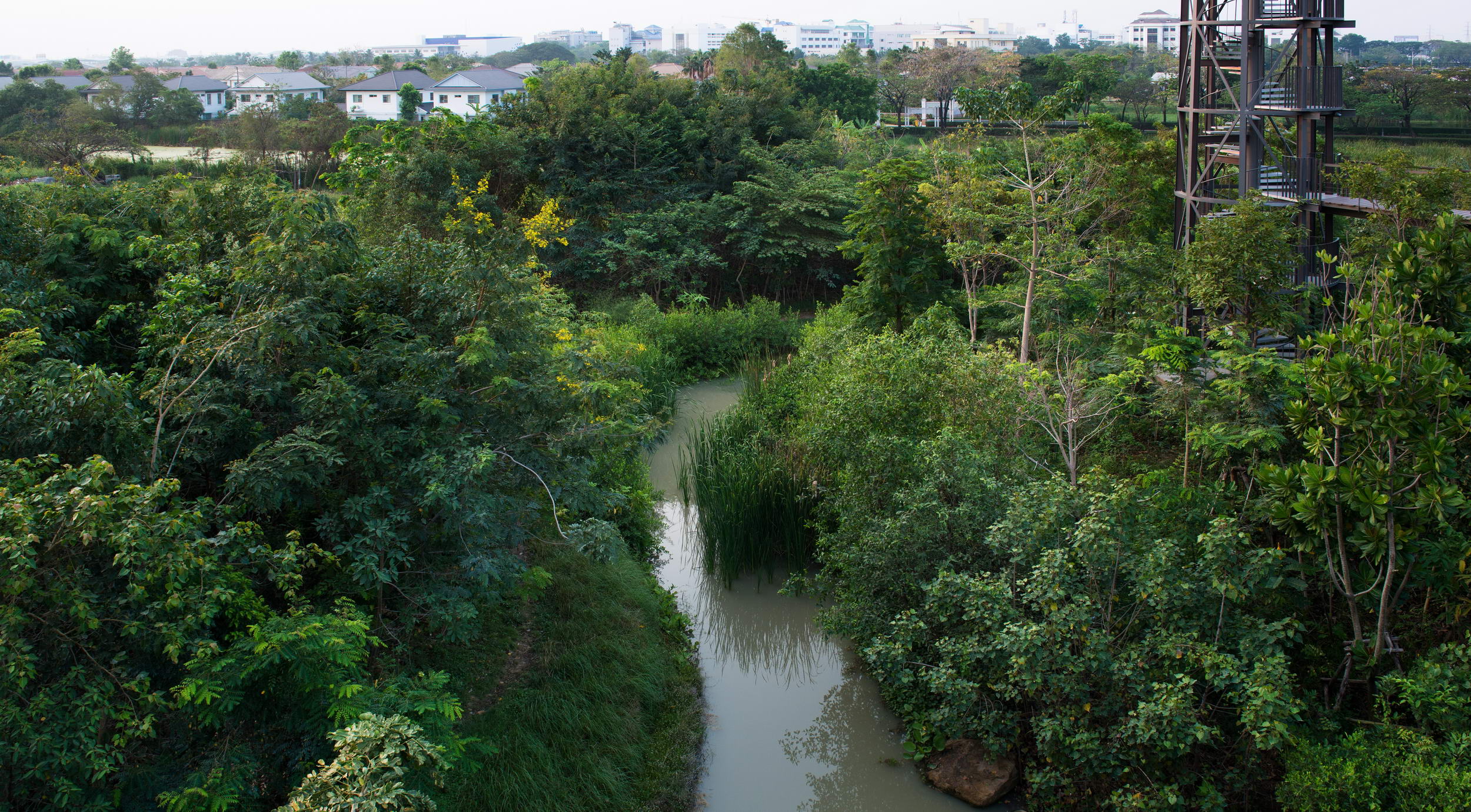
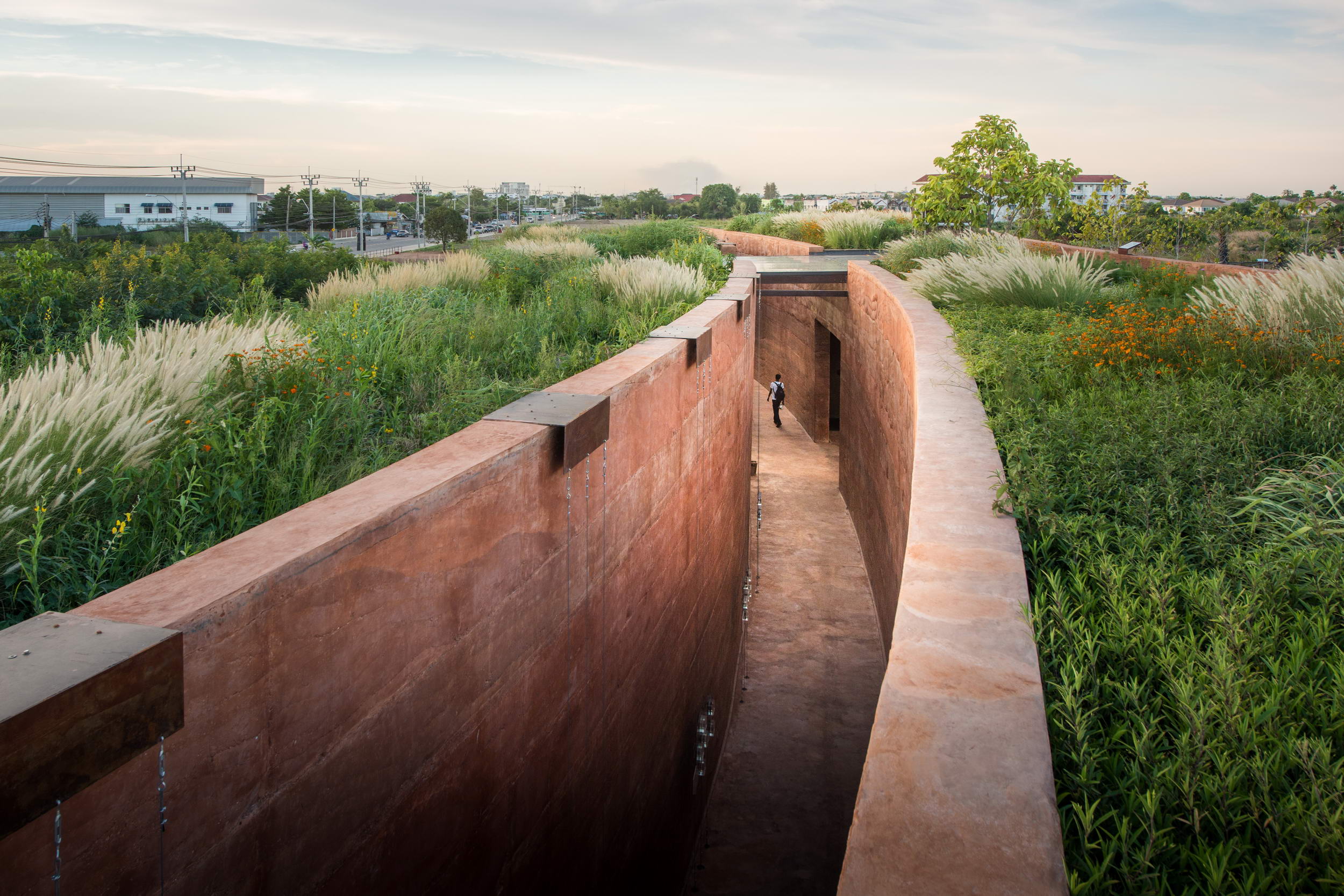
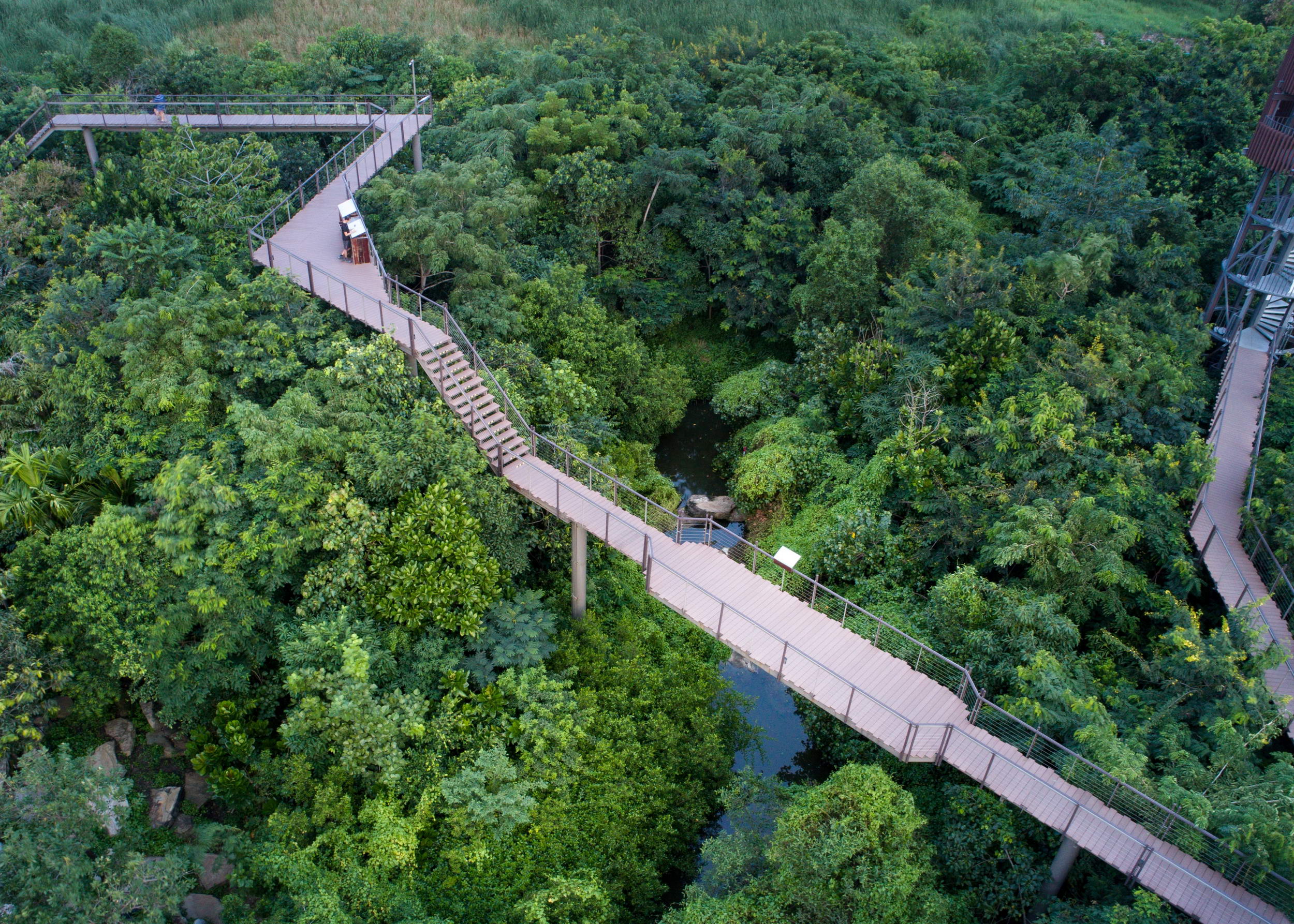
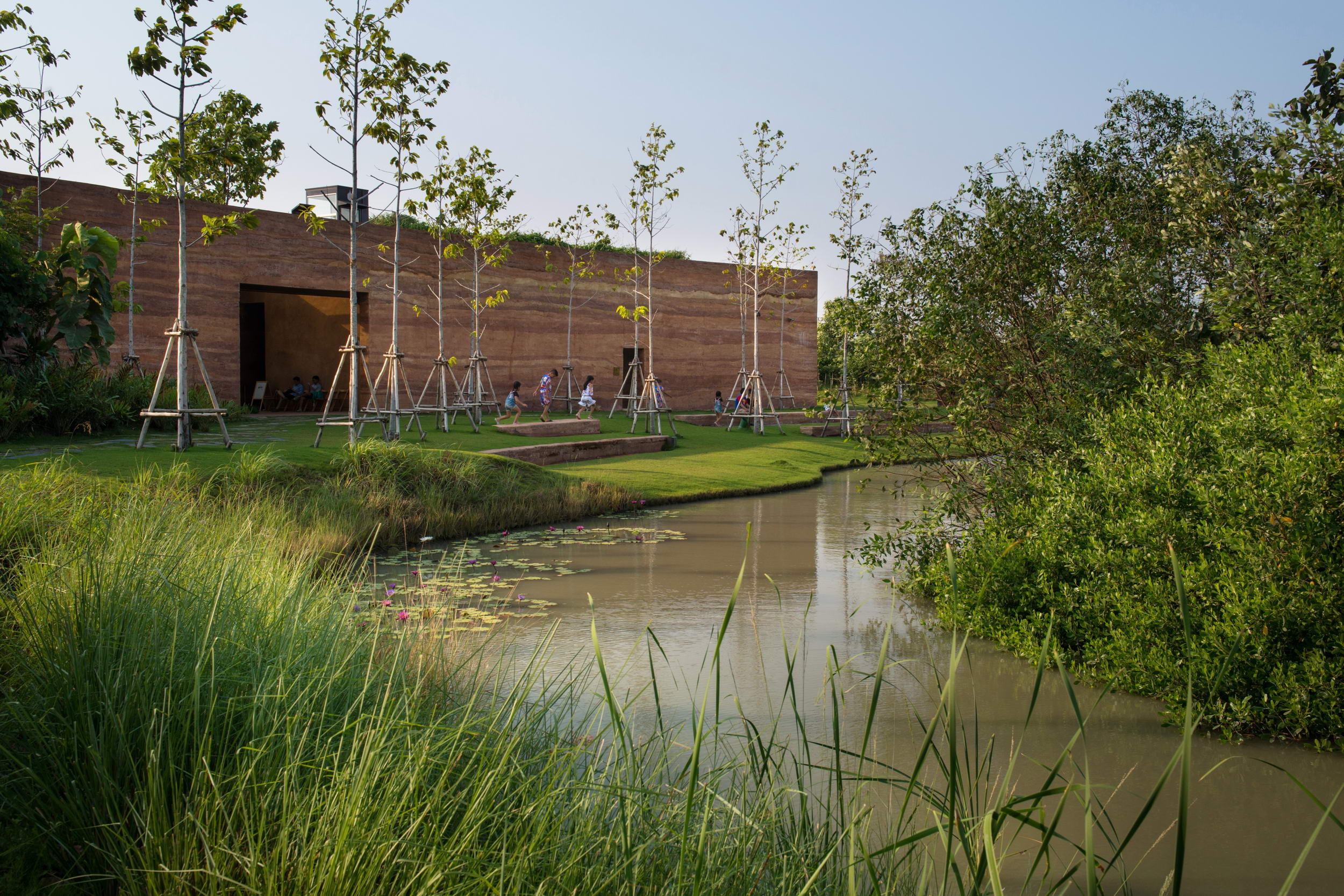
Within less than 2 hectares plot of PTT’s abandon land, this project offers a unique kind of urban park in Bangkok. Surrounded with medium density of residential and light commercial areas, this abandon site showed sign of illegal house hold garbage disposal scatter at its peripheral. At initial stage of site survey and analysis, soil and water were tested and found clay soil that slightly salinity with high brackish underground water table as site condition, which is normal for this district, but problematic for plant growth and reforestation. Therefore, the raised berm technique was chosen for planting areas to avoid filling and leveling the whole site. Besides providing condition for plant growth, these berms were meant to be sponges for absorbing moisture and water, as zero run off was intended for the project main criteria, directing ventilation of the site, while buffering outside ambient as well. Approximately 60,000 trees of more than 279 unique species were planted on approximately 75% of the overall site. The planting design intent also looked to create multiple layers of forest canopy as appear in nature, which could be created through selection of plant species with various heights with the same community. As the forest evolving to its mature stage, it induced many small animals, creating biodiversity, and establishing new ecosystem for the project. Natural forests are known to have dense canopies, comprising of branches, leaves, flowers, and fruits. The coverage of the canopy is critical to controlling the environment of the forest, revealing function of urban forest beneficial to the city, and creating forest like atmosphere. The eventual spreading canopy of trees in the forest will serve to shade visitors as they trek across the elevated skywalks and meander down from the viewing tower back to the ramped earth exhibition building. The earthwork design serves as the backbone of the site’s new ecology and accommodates many design criteria including placing berms to direct seepage flow from the built waterfall through the berms’ channels. The site has also become a new habitat for flora and fauna to establish their home and visitors to observe. However, in the early stages of succession, visitors may spend a majority of their time atop the skywalk and observation tower, which were designed to minimize disturbance of the burgeoning forest and allow close-up views of the maturing canopy. A natural wilderness that provides an educational and fun experience that could perhaps inspire urbanites to plant saplings and grow a forest in their own backyard, as King Bhumipol once stated that “planting a tree in people’s heart so they will plant and care for more tree”, is fundamental key for successful reforestation.




 Editor's Pick
 Latest Design
 Best Idea