Text description provided by the architects
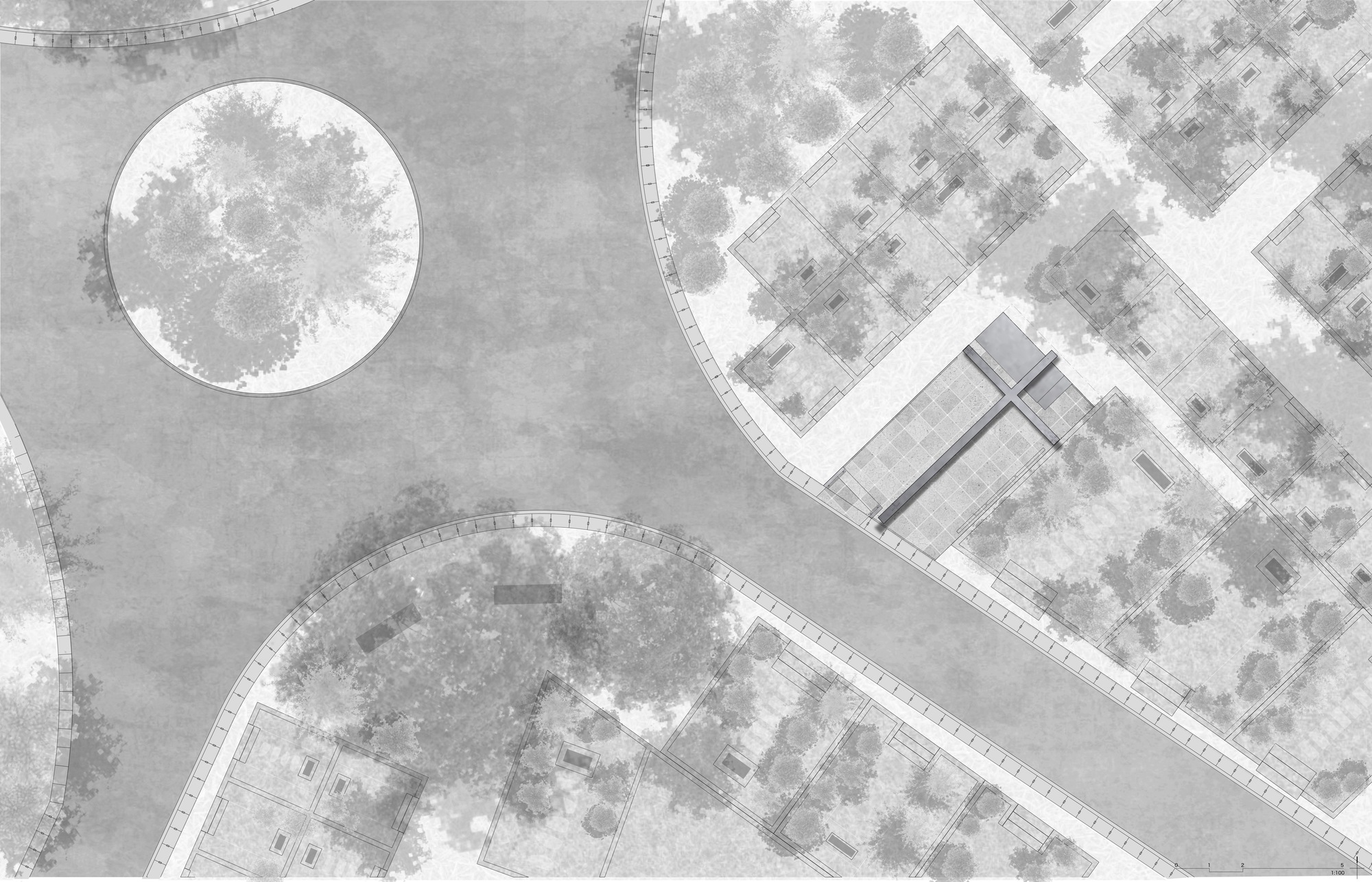
This is a renovation of a cemetery owned by a church. The site area is 30 square metres. Above ground there is a wide, flat space for funerals and other events, and the existing space below ground is used as a shared ossuary accessible only to specific staff. The concept of the grave is to feel the glory of the resurrection through the cross. Behind the cross is the sky, paradise, sunlight and moonlight. Against the sky, the cross is supported by three cruciform columns and floats horizontally in the air. The columns are installed on the existing underground structure, transferring loads vertically. The previous old structures and waterproofing were removed and redone. The platform is 650 millimetres above the ground, and the bottom of the cross is 1,850 millimetres above the platform. The maximum height of the structure is 3 metres above the ground. The floating cross gives the grave an abstract quality; from the perspective of the living onlooker, the structure of the cross is barely recognisable. On the other hand, the cross faces the deceased, who look up from below or down from above. During the day, or on a full-moon night, the cross facing paradise casts a huge shadow over the grave. The architect believes this cross will convey the gospel to everyone who comes to this church cemetery and to visitors to the park. The project is a small cemetery intervention in Kamakura by Hiroshi Nakamura, using three thin steel columns to hold a cross against the sky. It is a demonstration of how a sacred symbol can be made abstract and weightless, turning a conventional burial plot into a quiet place of theological reflection. The floating cross and its long shadow are the entire architectural gesture, allowing the sky itself to become the altarpiece.






 Editor's Pick
 Latest Design