Text description provided by the architects
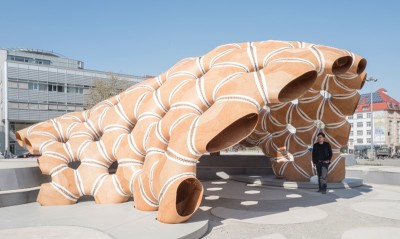
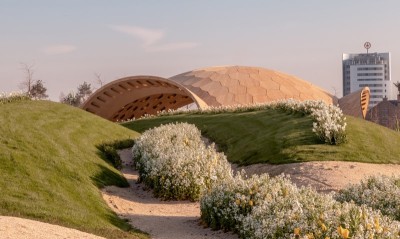
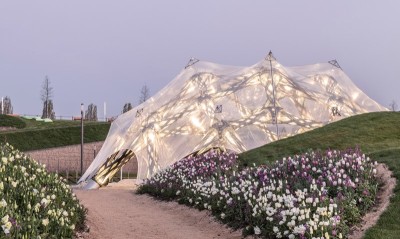
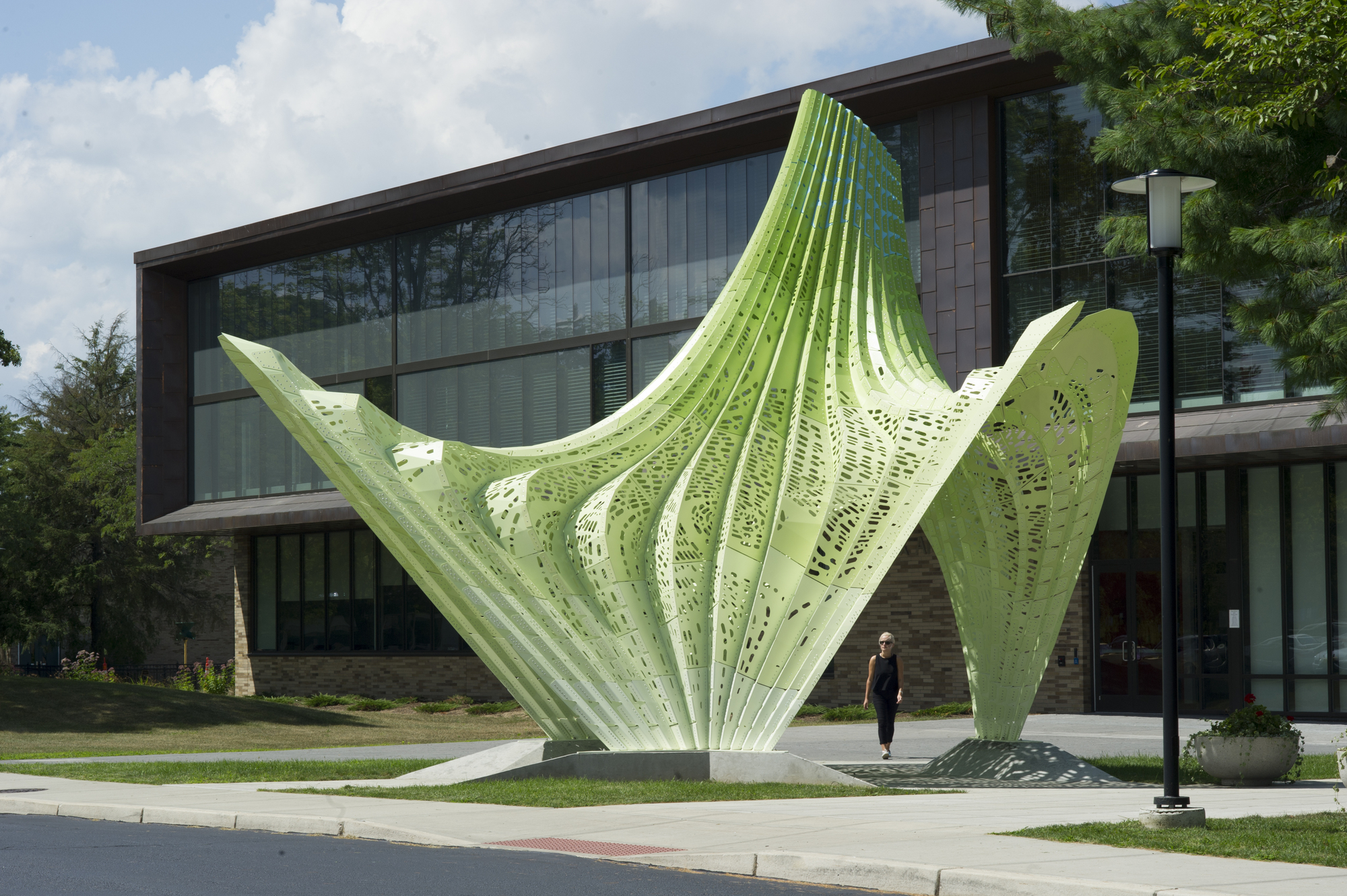
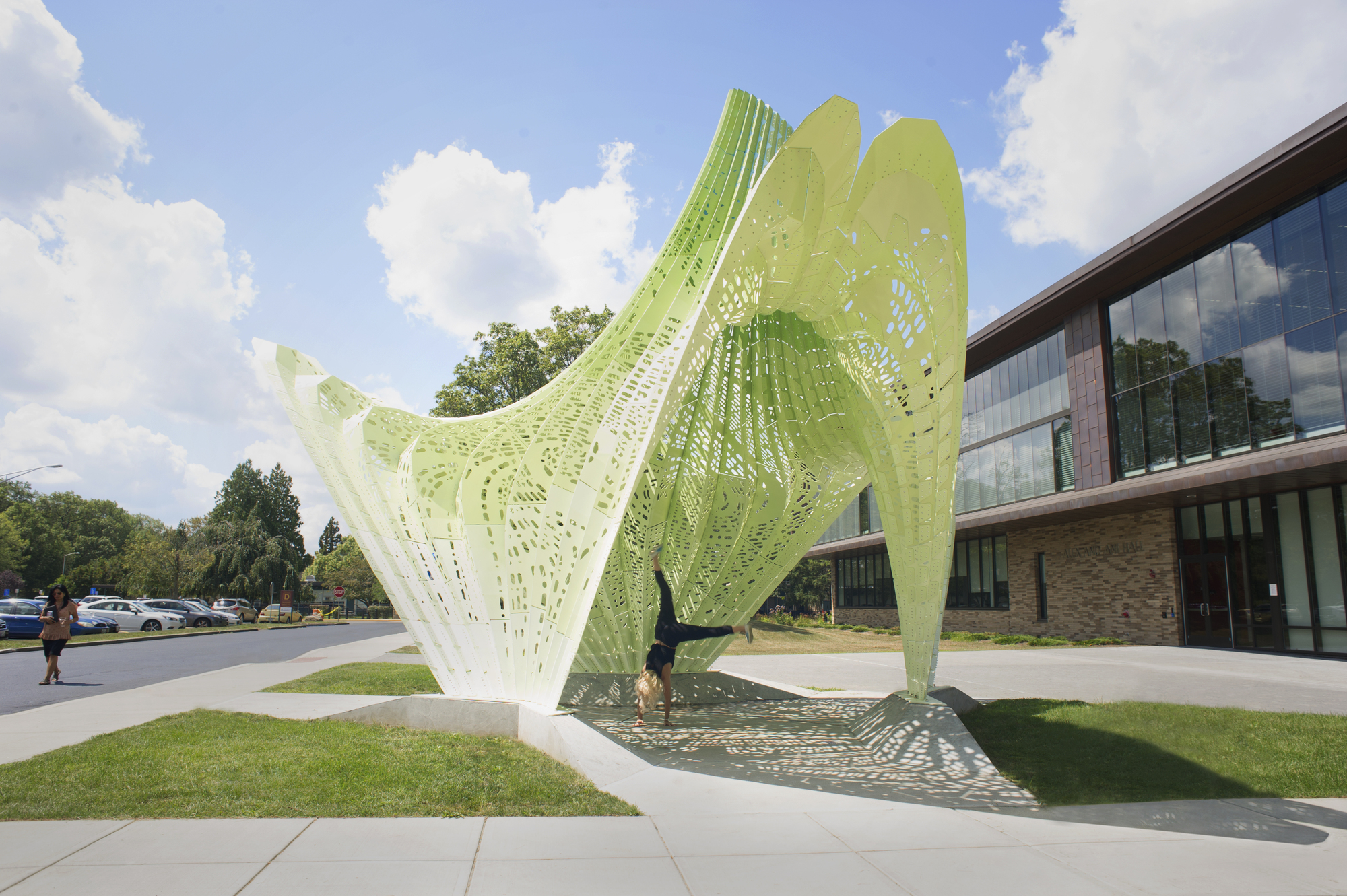
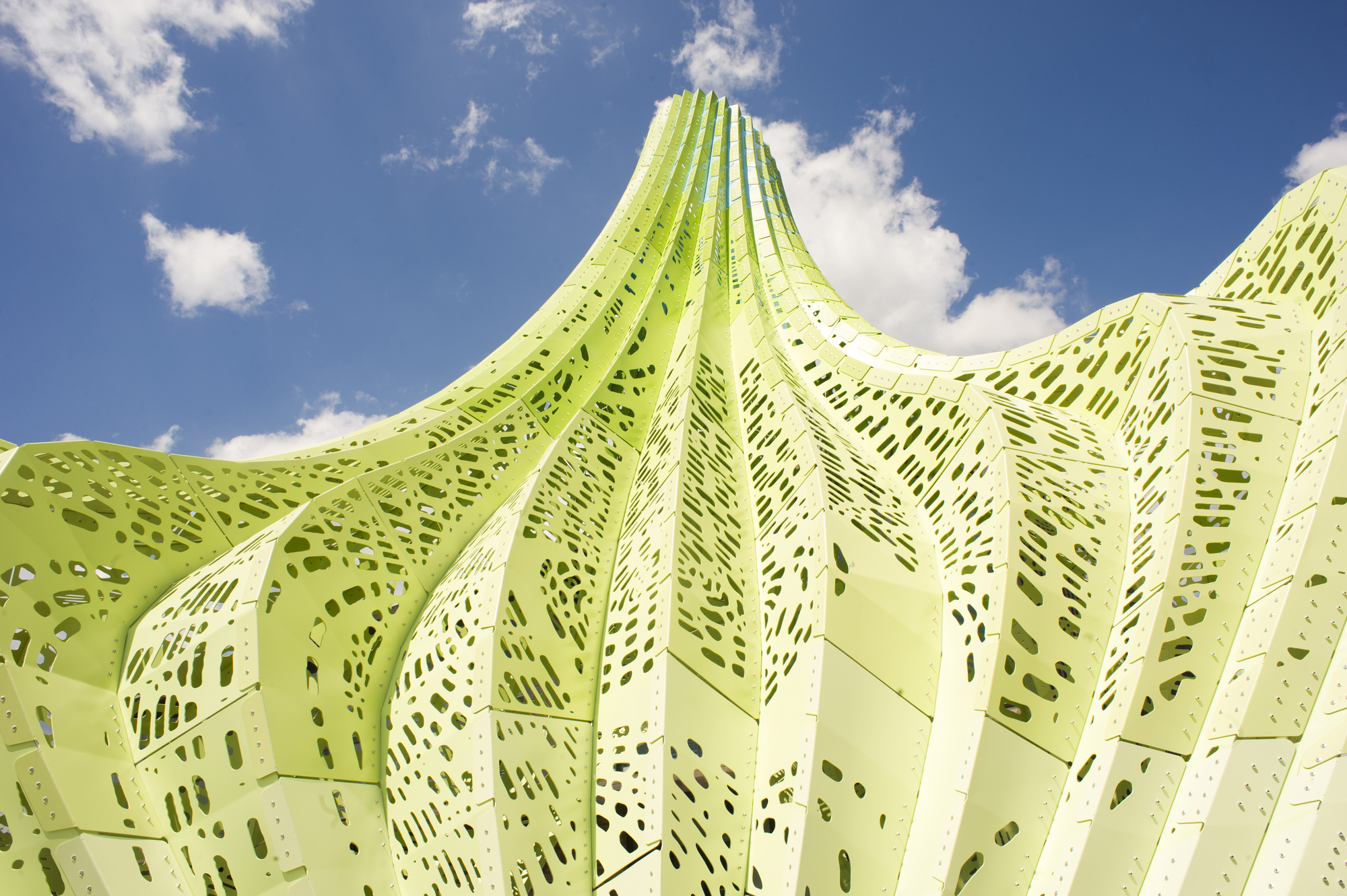
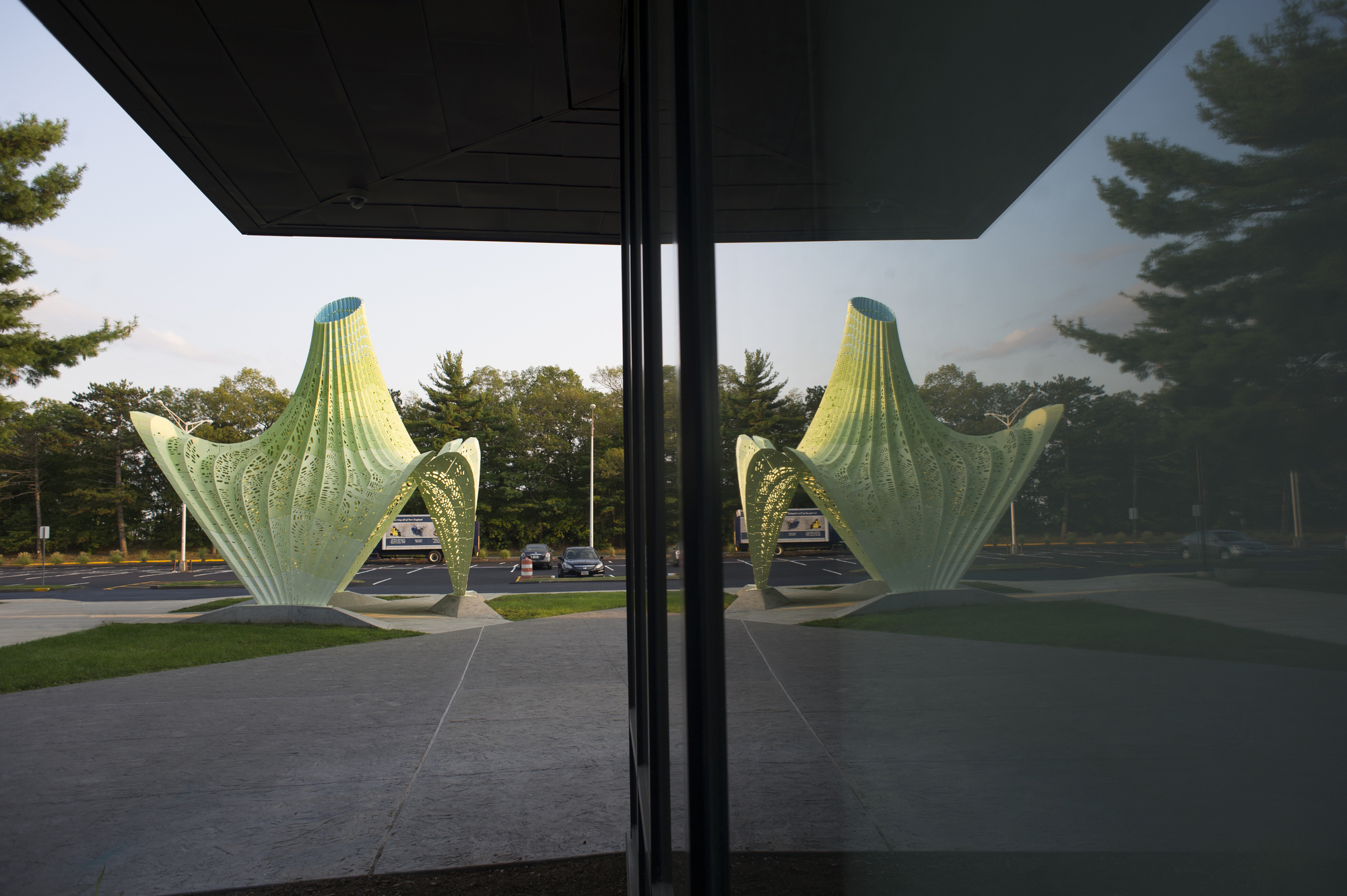
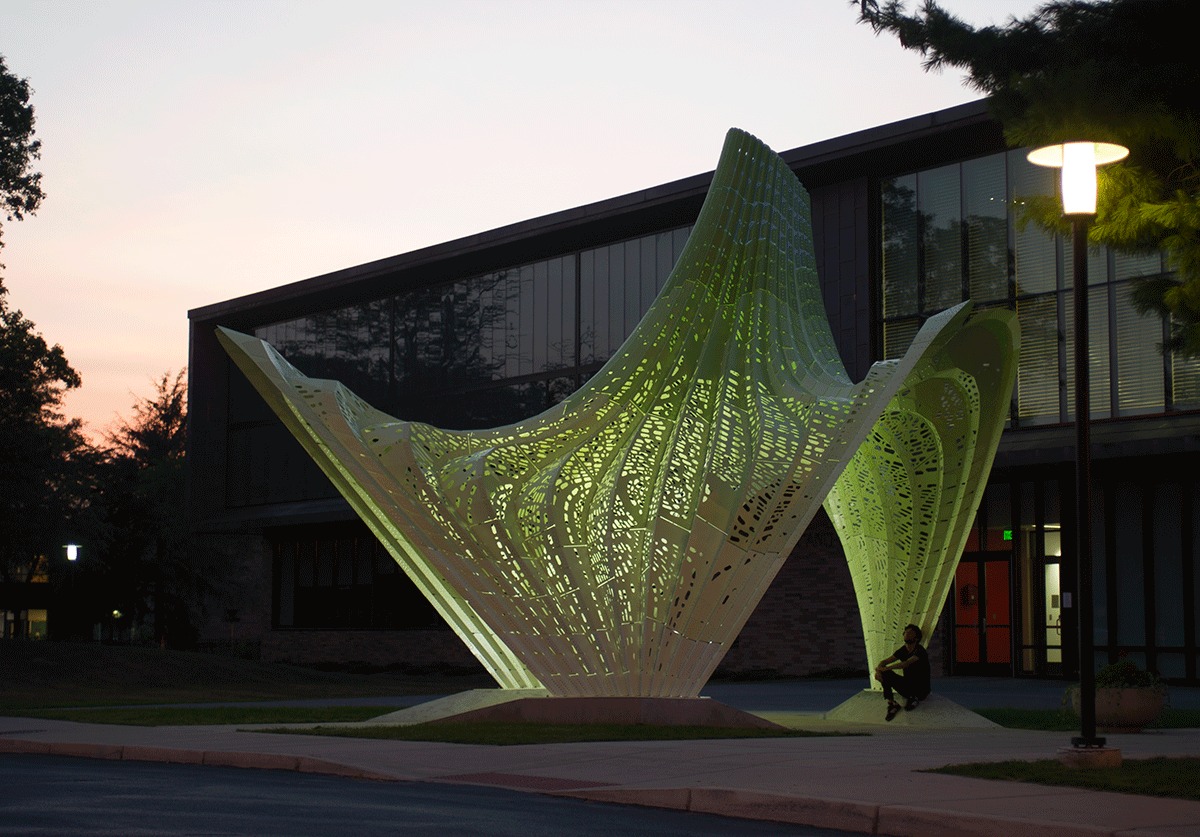
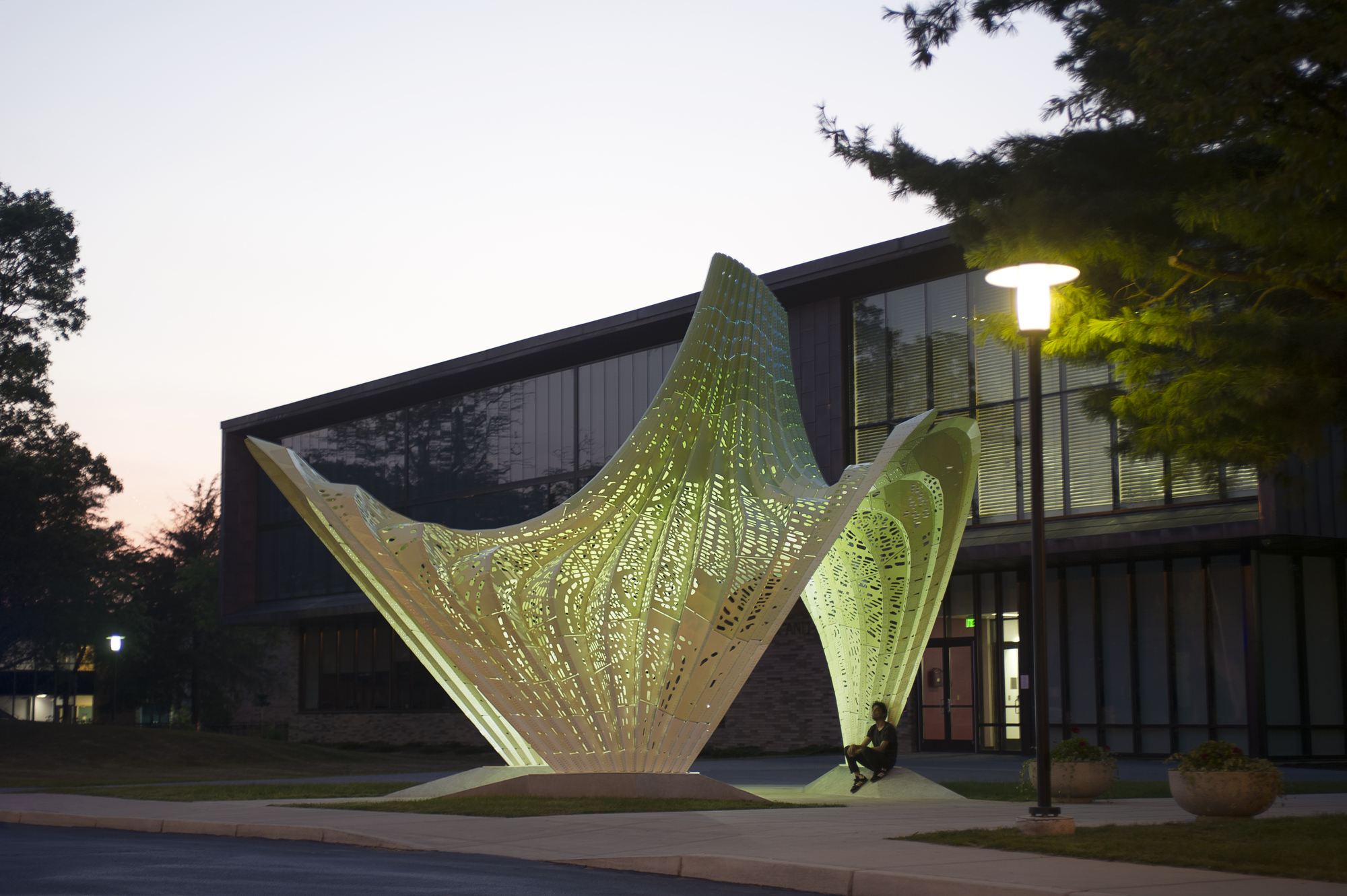
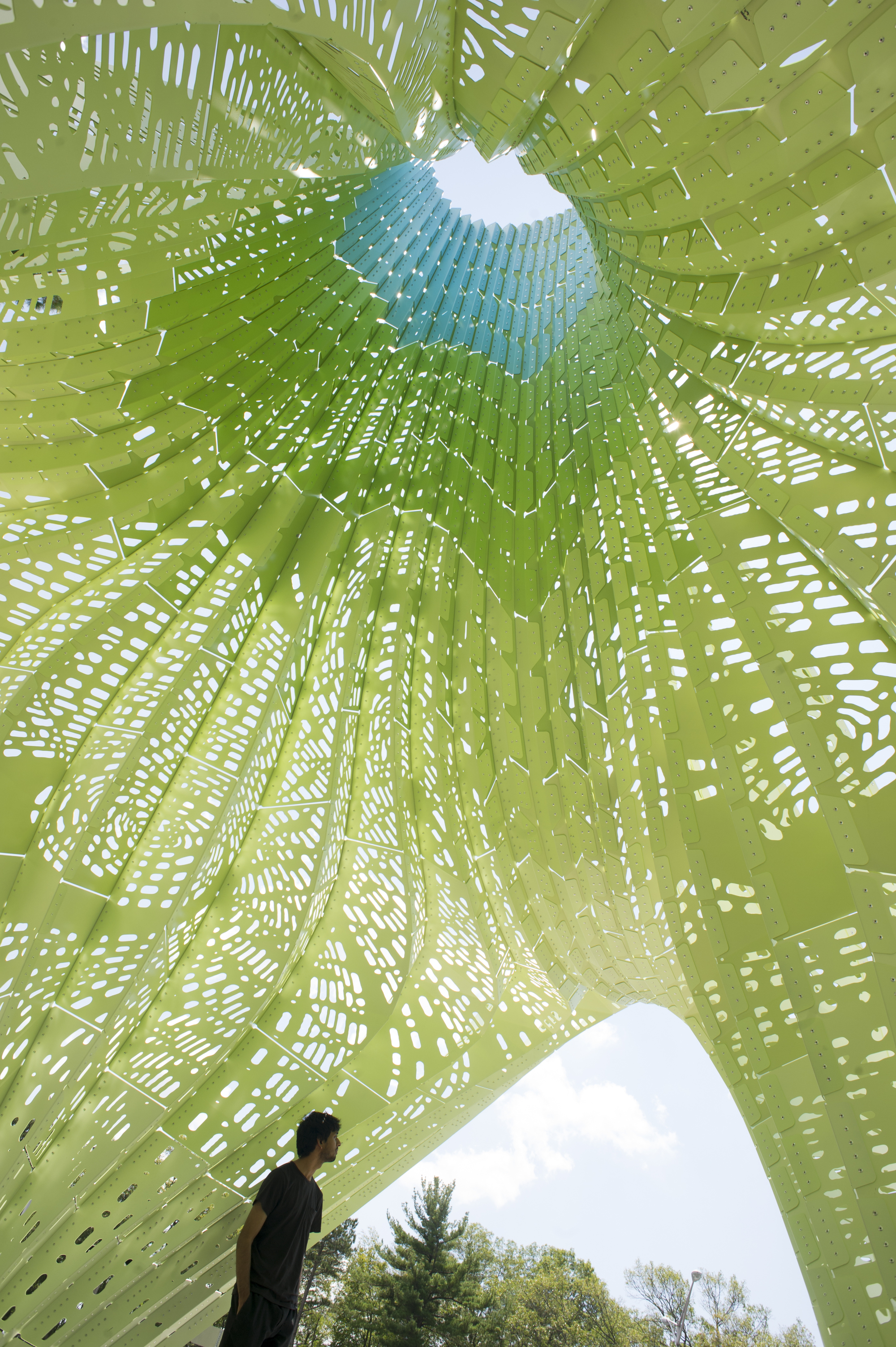
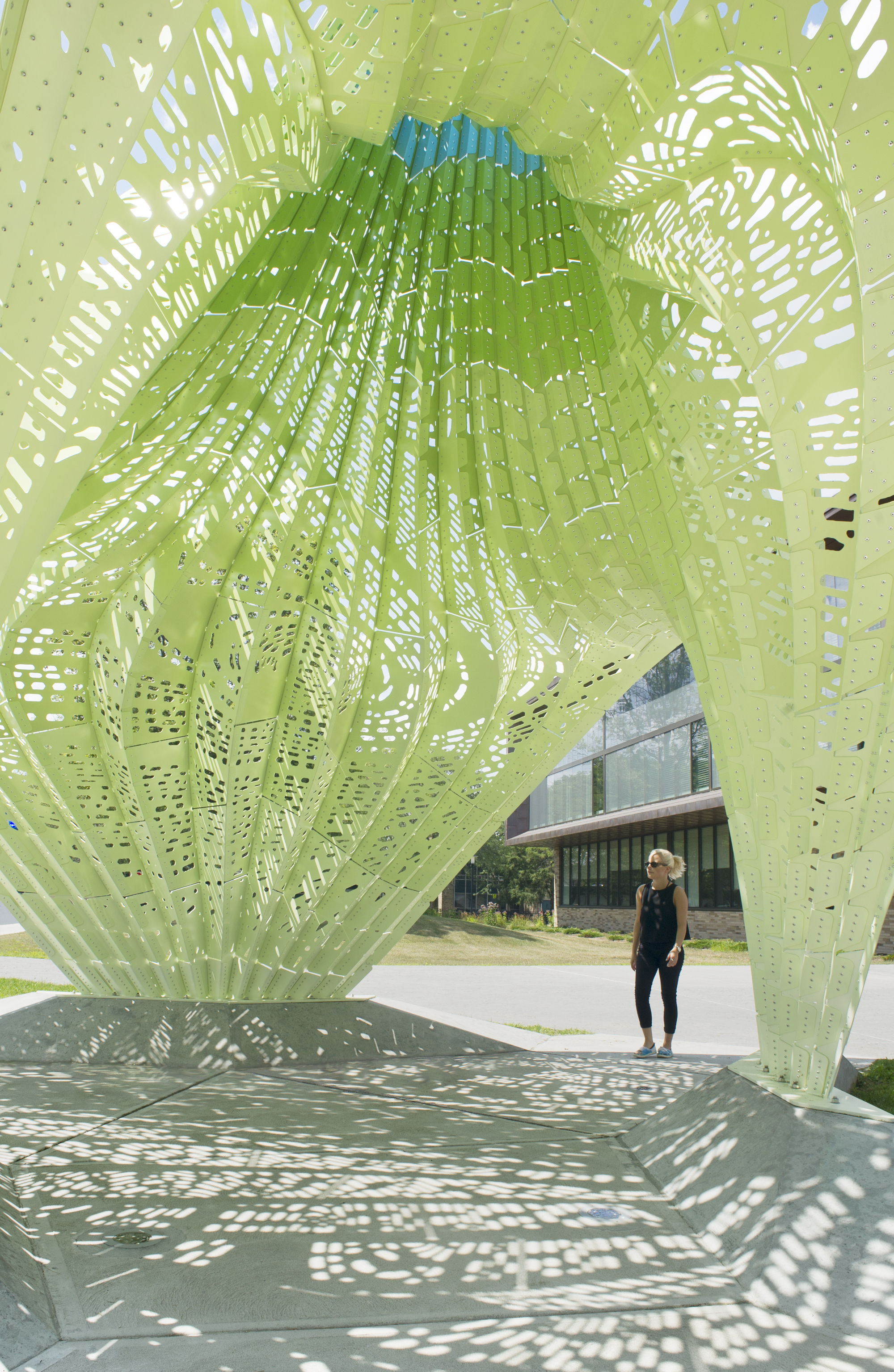
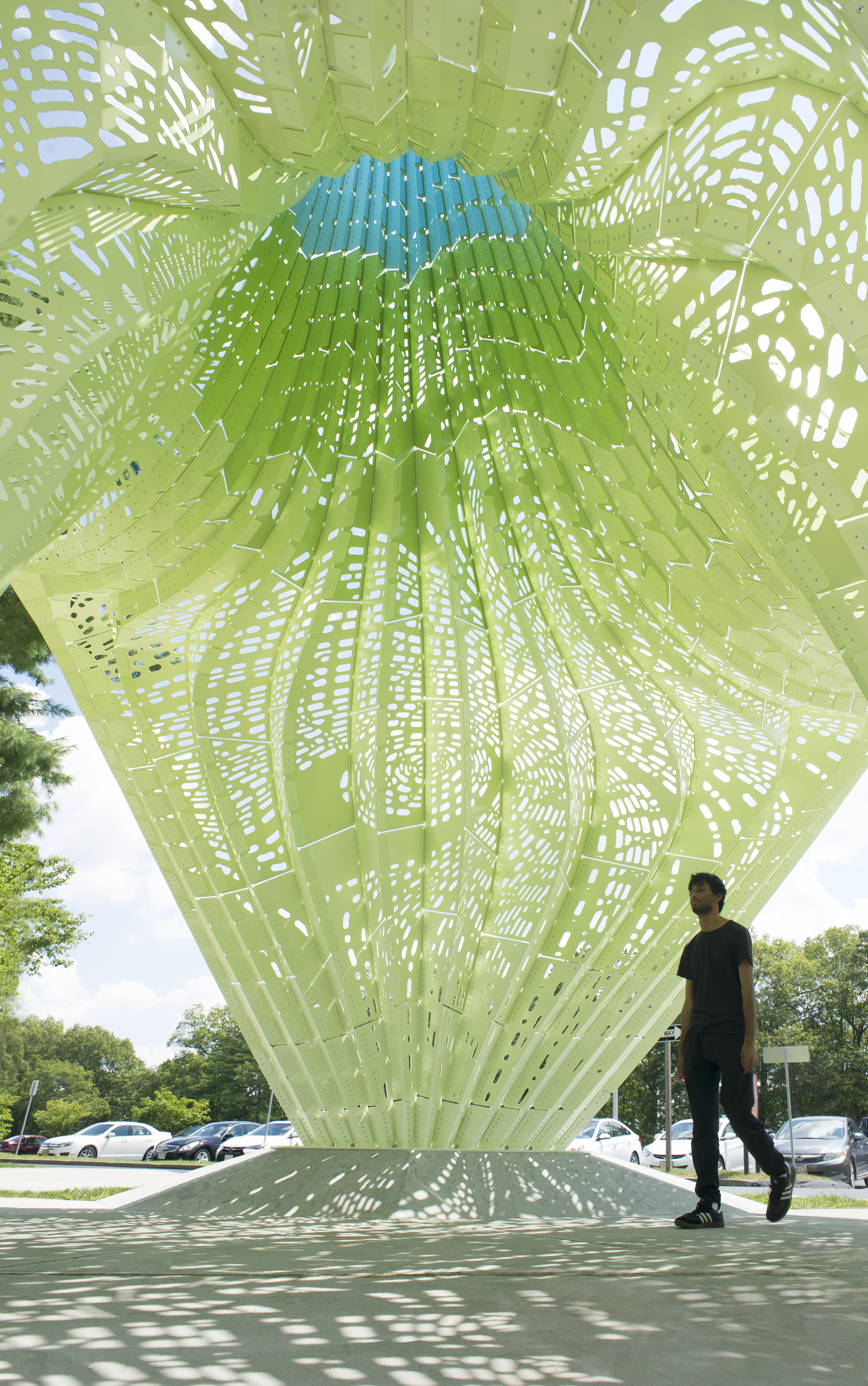
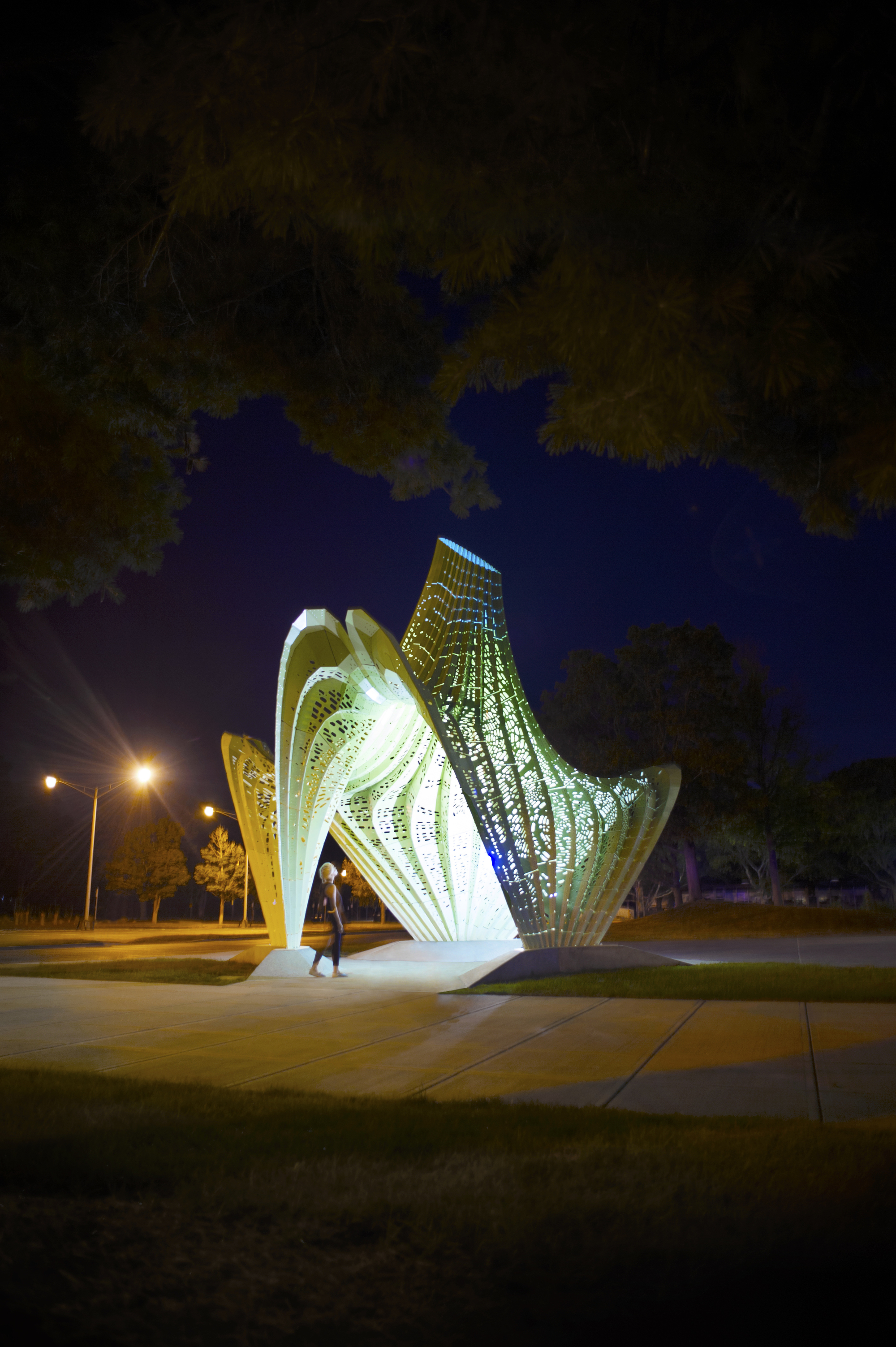
HYPARBOLE is a hyperbolic paraboloid sculpture that rises in the air at the entrance to the Rhode Island College Art Center, serving as a dramatic threshold to the campus. Amidst bright green curves, it creates a portal for creative practice and a new starting point for researchers, students, and campus visitors alike. The multifaceted nature of HYPARBOLE attracts visitors from every angle. Three distinct edges extend in different directions, visible within the site while remaining integrated with the building. Walking beneath it, one enters a whimsical, unfamiliar environment where passersby can linger beneath a single light. An attractive circular opening pierces the center at a height of 22 feet (6.7 meters). The eye is instinctively drawn to this aperture, yet inevitably wanders across the form, pattern, height, and slender proportions. The aluminum structure's geometry is hyperbolic: a three-dimensional hyperboloid can be described as a smooth, infinite surface generated by linear elements. Drawing on Felix Candela's experiments in thin-shell concrete, the three-legged structure relies on its double curvature for support. A folded base adds resistance to lateral loads, an inherent weakness of hyperbolic paraboloid planes. The ultra-thin aluminum shell fuses surface and support structure into one. Its luminosity is expressed through porosity. The shell's openings derive from simulated flow across the complex surface, producing dynamic light and shadow that reveals the structure's character by day and emits a mysterious glow by night. The university is a place of experiment and discovery, providing a fitting home for HYPARBOLE. The structure itself is the product of deliberate research, honed over years in the studio's effort to unify structure, form, and experience into a coherent material system. Following iterative development and prototyping, the final form is graceful and confident: a 22-foot high, 25-foot wide, 30-foot deep structure delicately mounted on three concrete foundations. The material is painted aluminum, assembled from 582 components.






 Editor's Pick
 Latest Design
 Best Idea