Text description provided by the architects
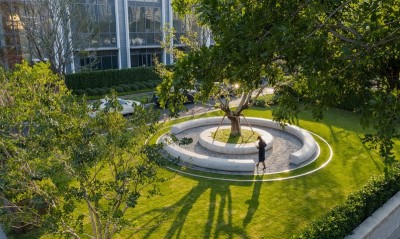
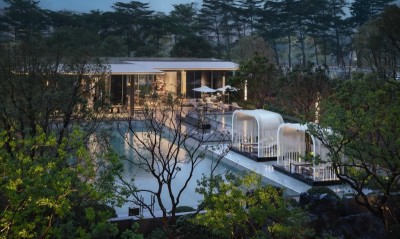
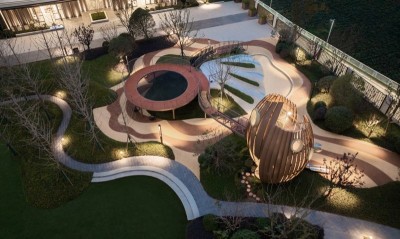
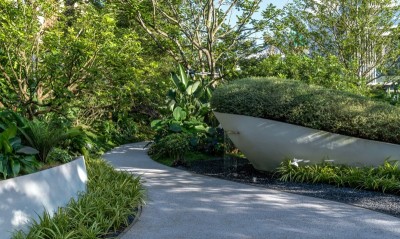
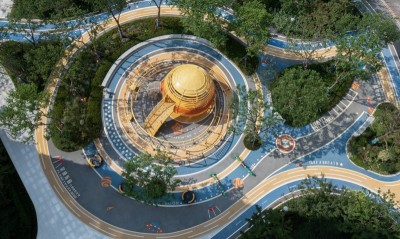
Panyu has a long history and sits at the geographic center of the Greater Bay Area; though its growth is less frenetic than Shenzhen or central Guangzhou, its living environment is exceptional. The project sits in old Panyu, on the municipal government's key one-river-two-banks and old-renewal corridor, with the inevitable aging issues of an old district, though it is close to existing parks and a municipal waterway runs along its west side. Display-district landscapes often rush to please the client, but Daguangmu Landscape, design director Gao Fang, wanted, within commercial logic and ecological principles, to slow down and think more: through folded, refracted landscape form, to reveal the site's own historical sediment and future value. As a city-park community, that reading should emerge naturally. The team deconstructs the ground-vein texture and humanist spirit of urban memory, moving from natural mountains to city life, from concrete to abstract, from deconstruction to recombination. Cities rise and fall, but a home for the heart remains, like Bai Juyi's Jiangnan, Xu Zhimo's Cambridge, or Panyu itself with its mountains, sea, fishing and countryside. An art-gallery-quality entry links the city to the art park, moments from noise yet outside time. Interwoven spaces form a dialectic of inside and outside, opening and closing, person and object, so the place has life and grows. Through day and night, light moves; sunset glow and moonlight touch the visitor's heart. Plain, honest gray stone carries both historical weight and artistic texture; solid and void, light and shadow, are touched, seen and felt. Fish swim through the gaps of a dream, wind rises, rain falls, and sea meets sky. The inner courtyard continues the deconstructed language, crisp plan lines enclosing water features, tree pits, stepping stones and booth seats.




 Editor's Pick