Text description provided by the architects
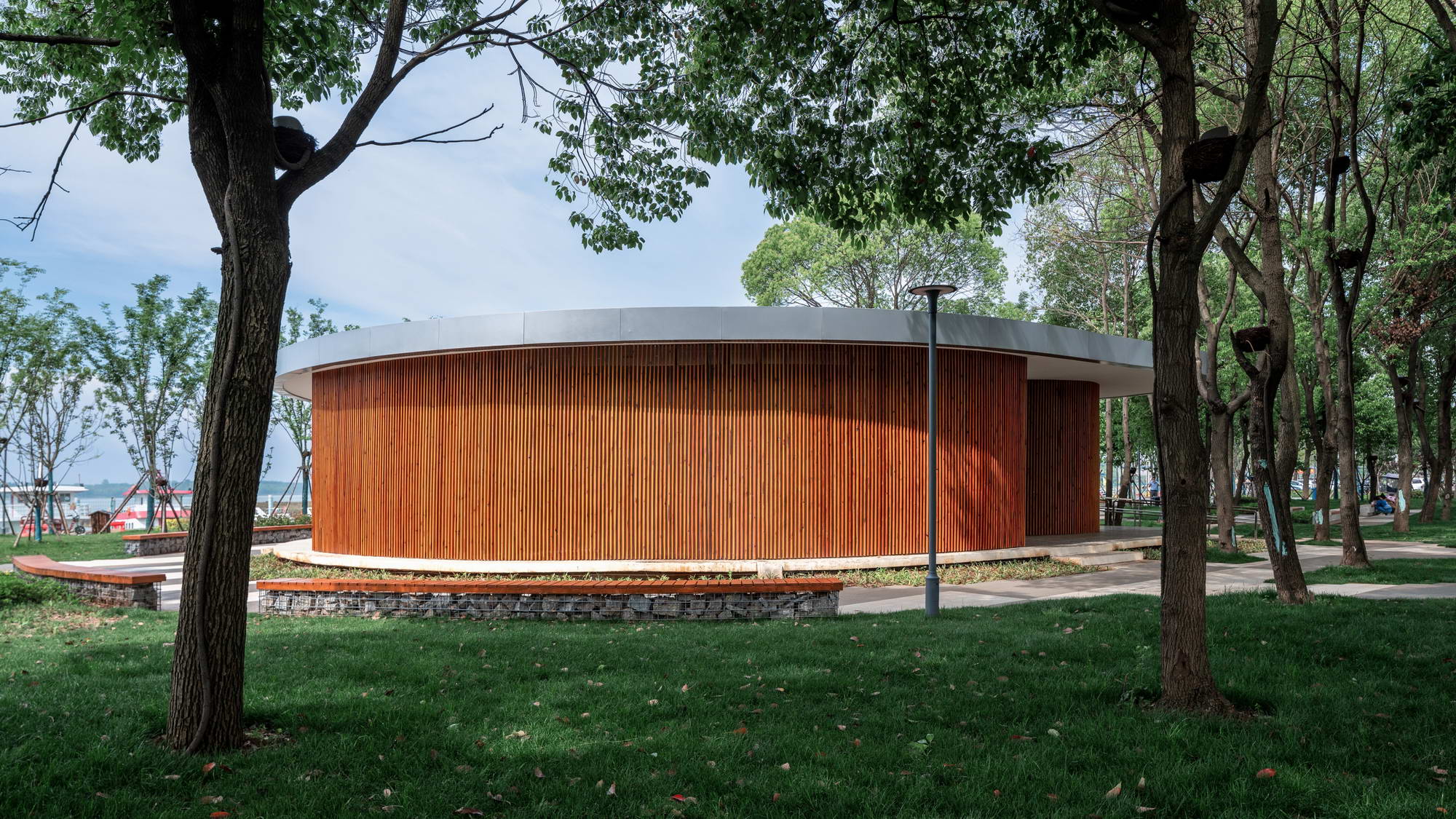
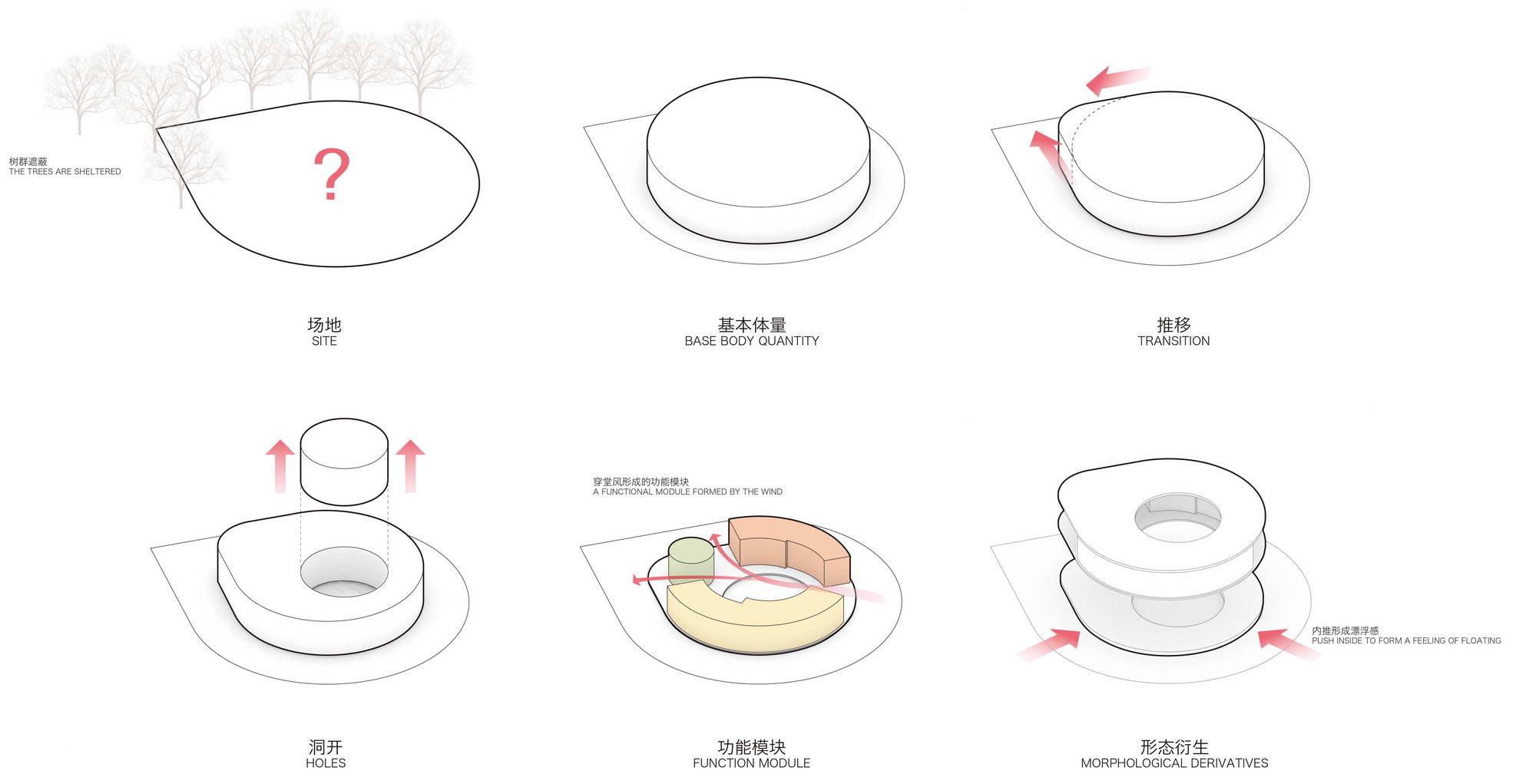
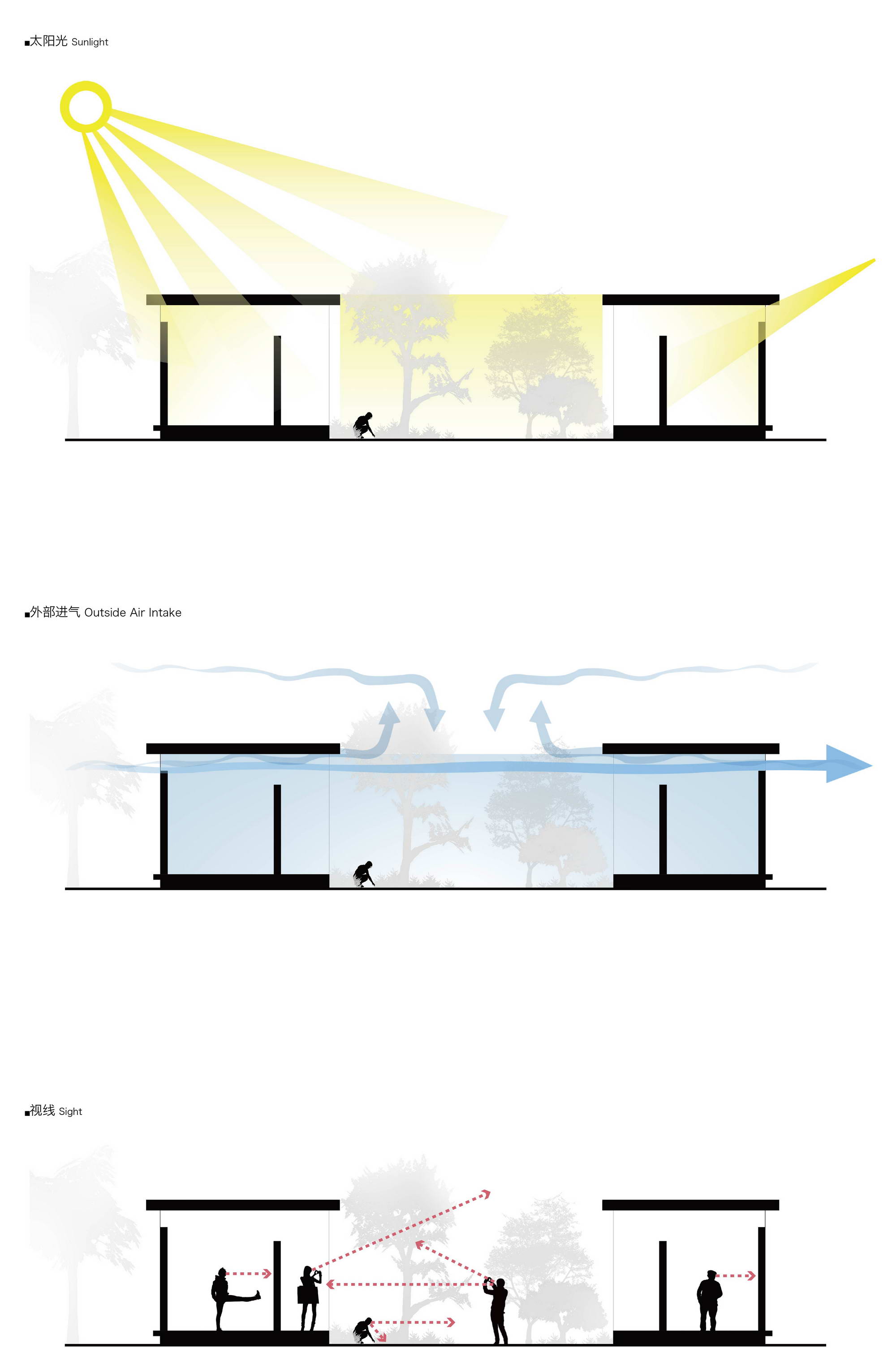
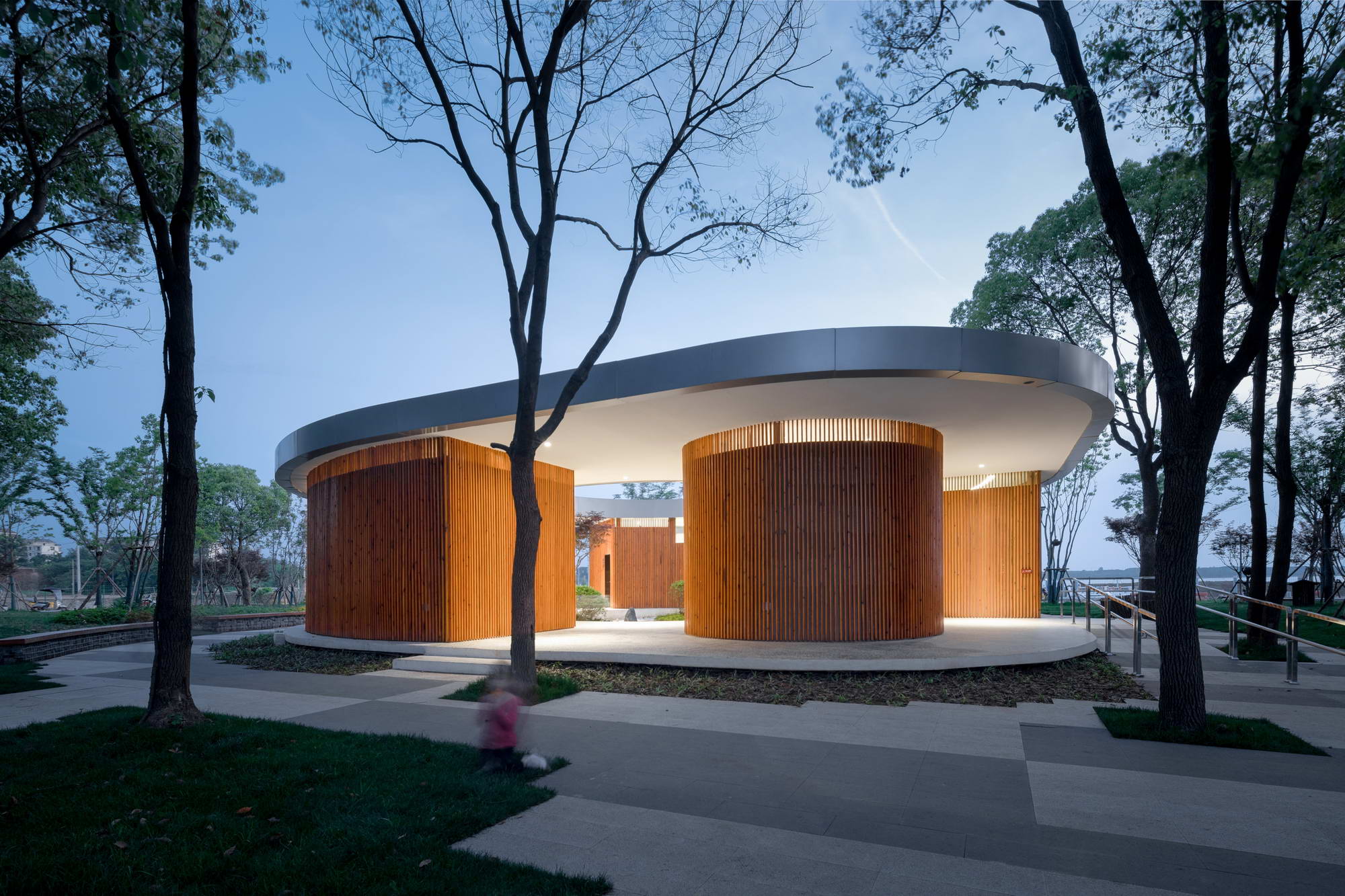
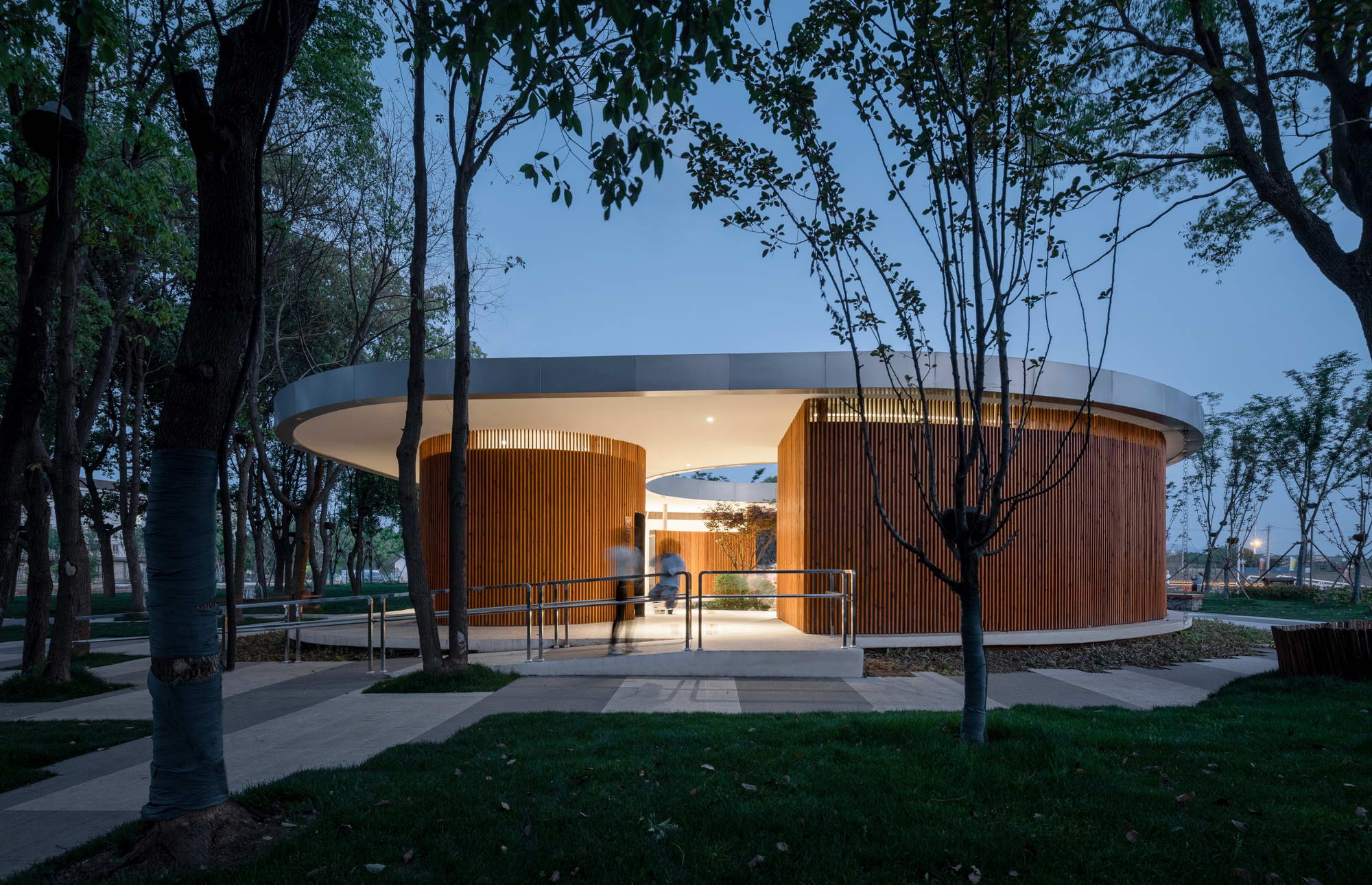
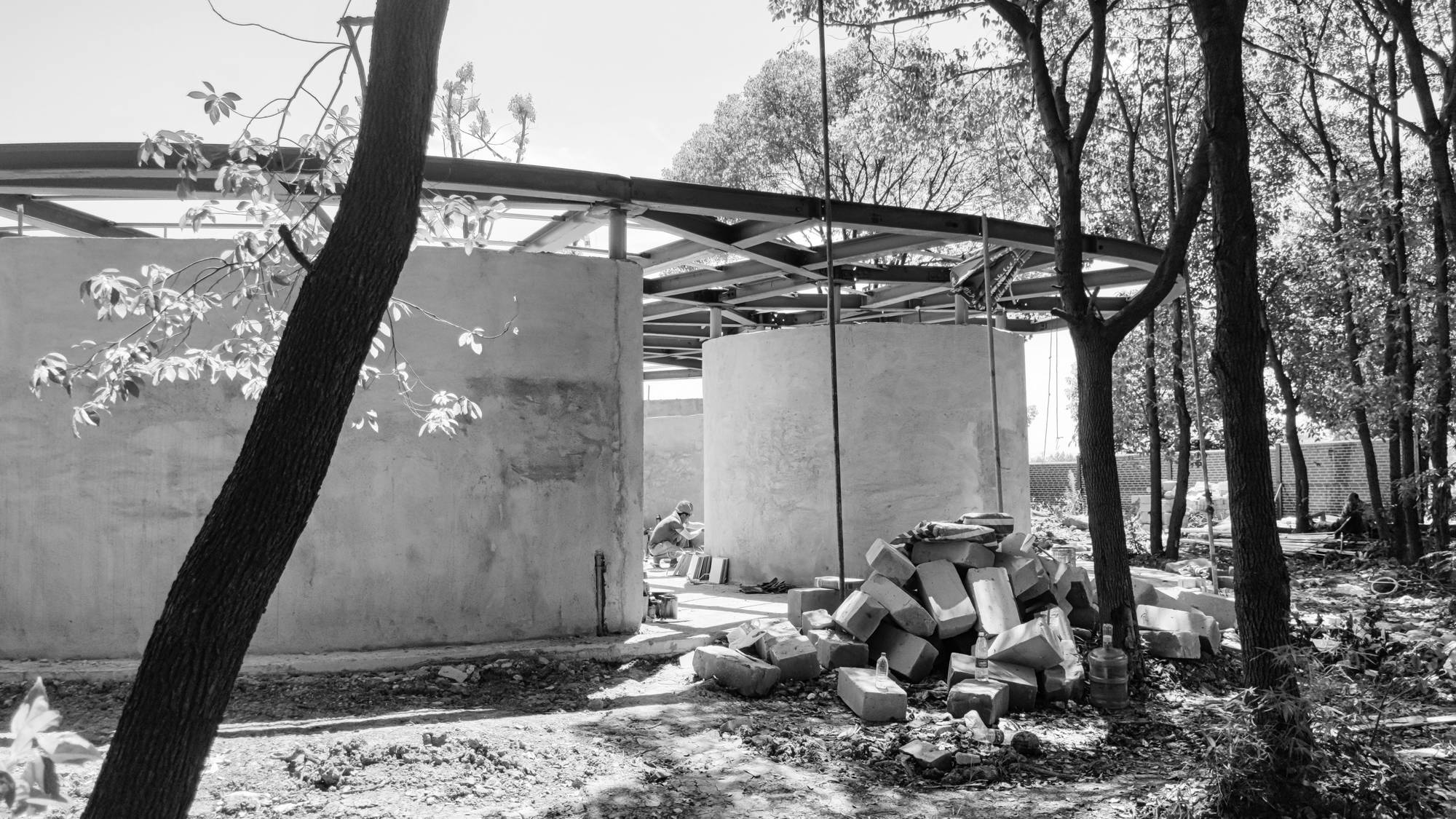
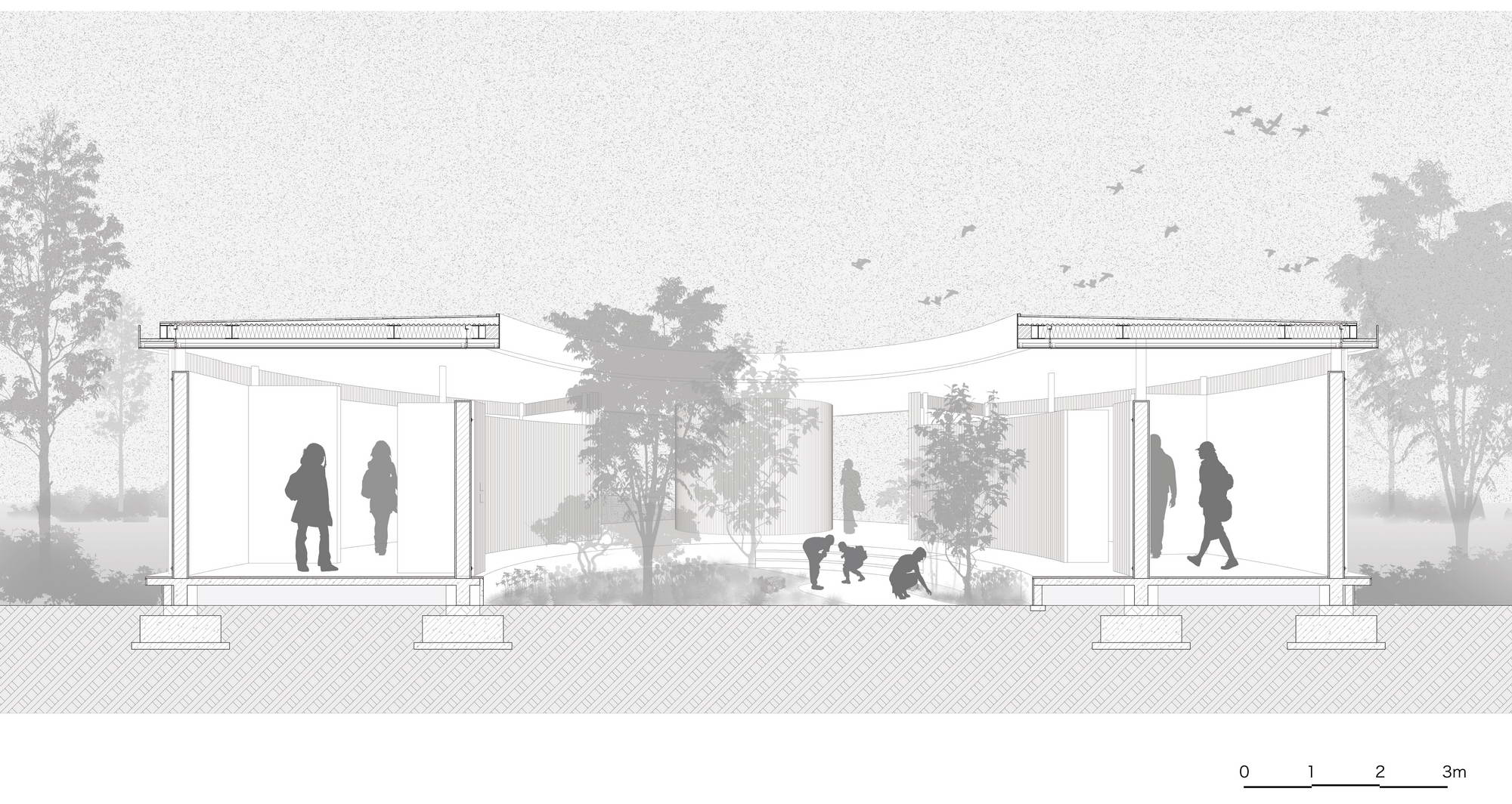
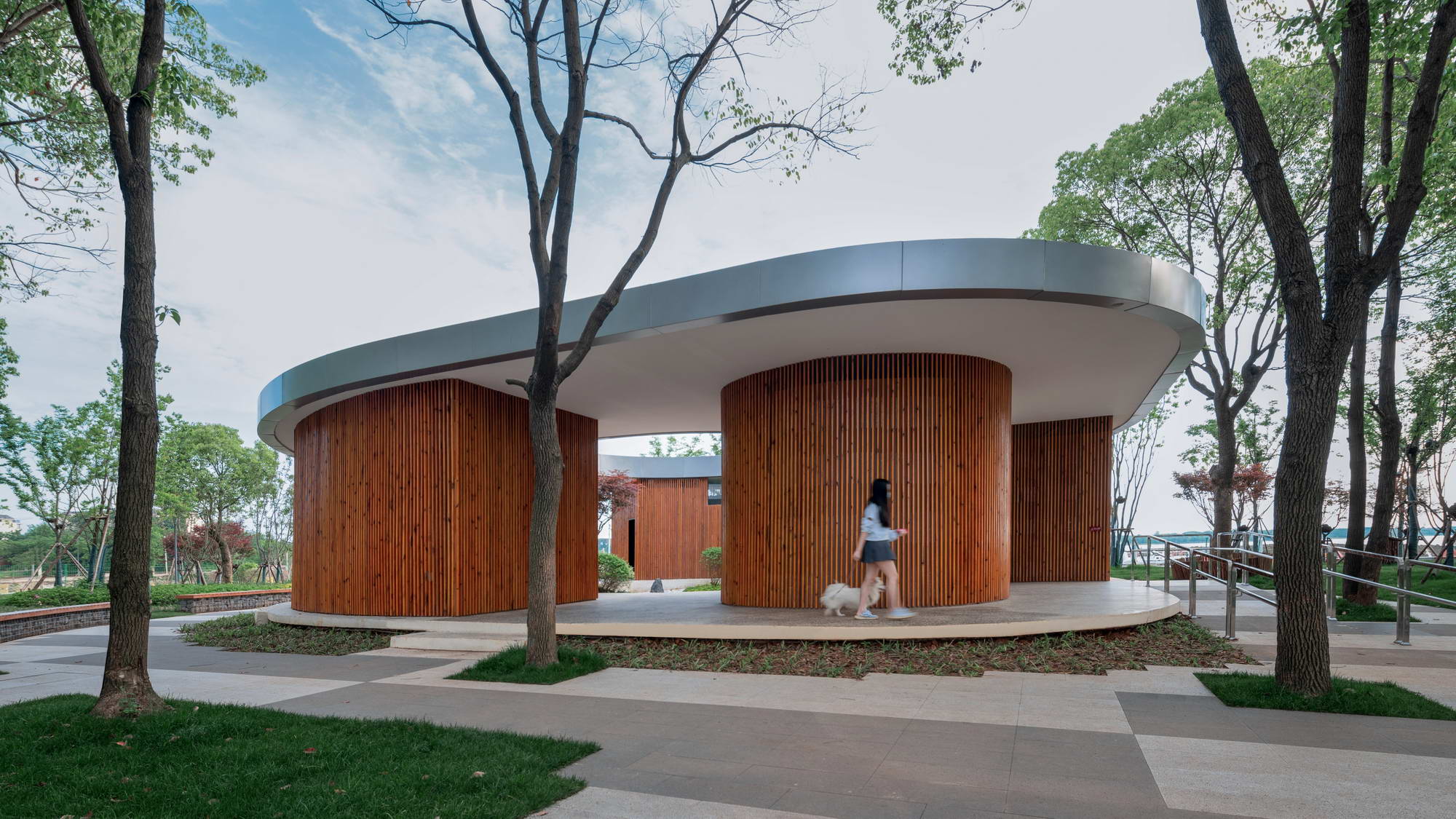
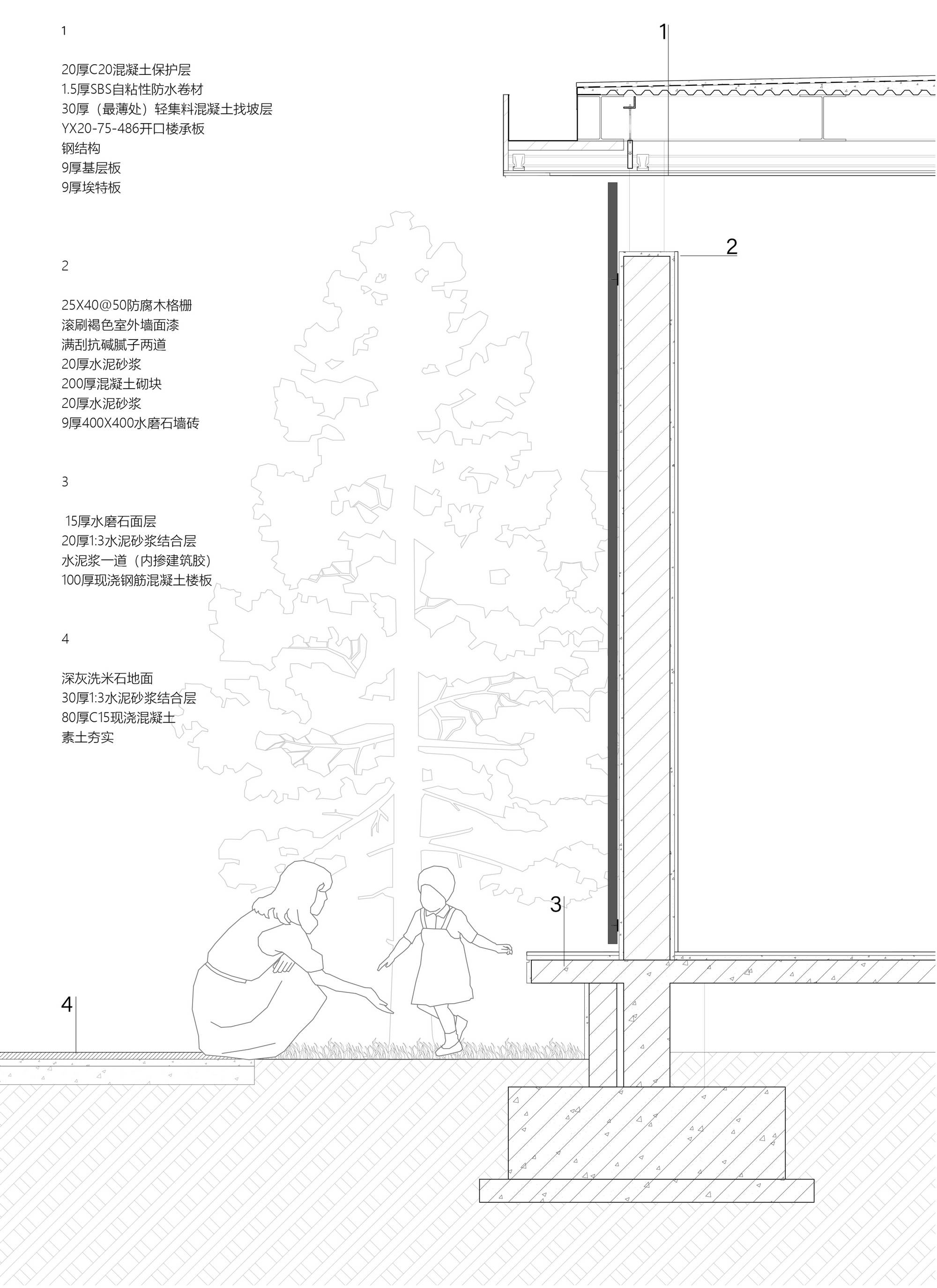
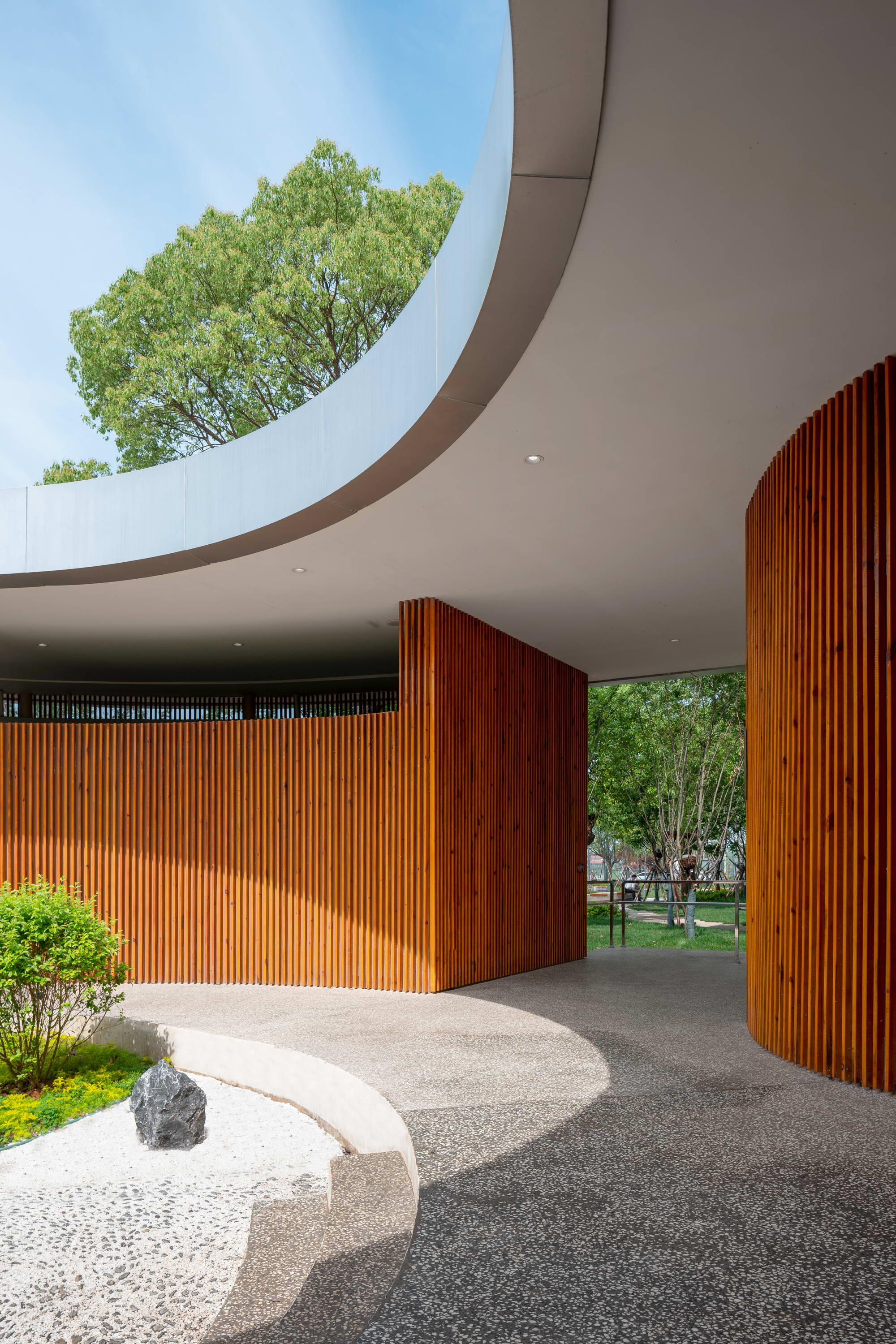
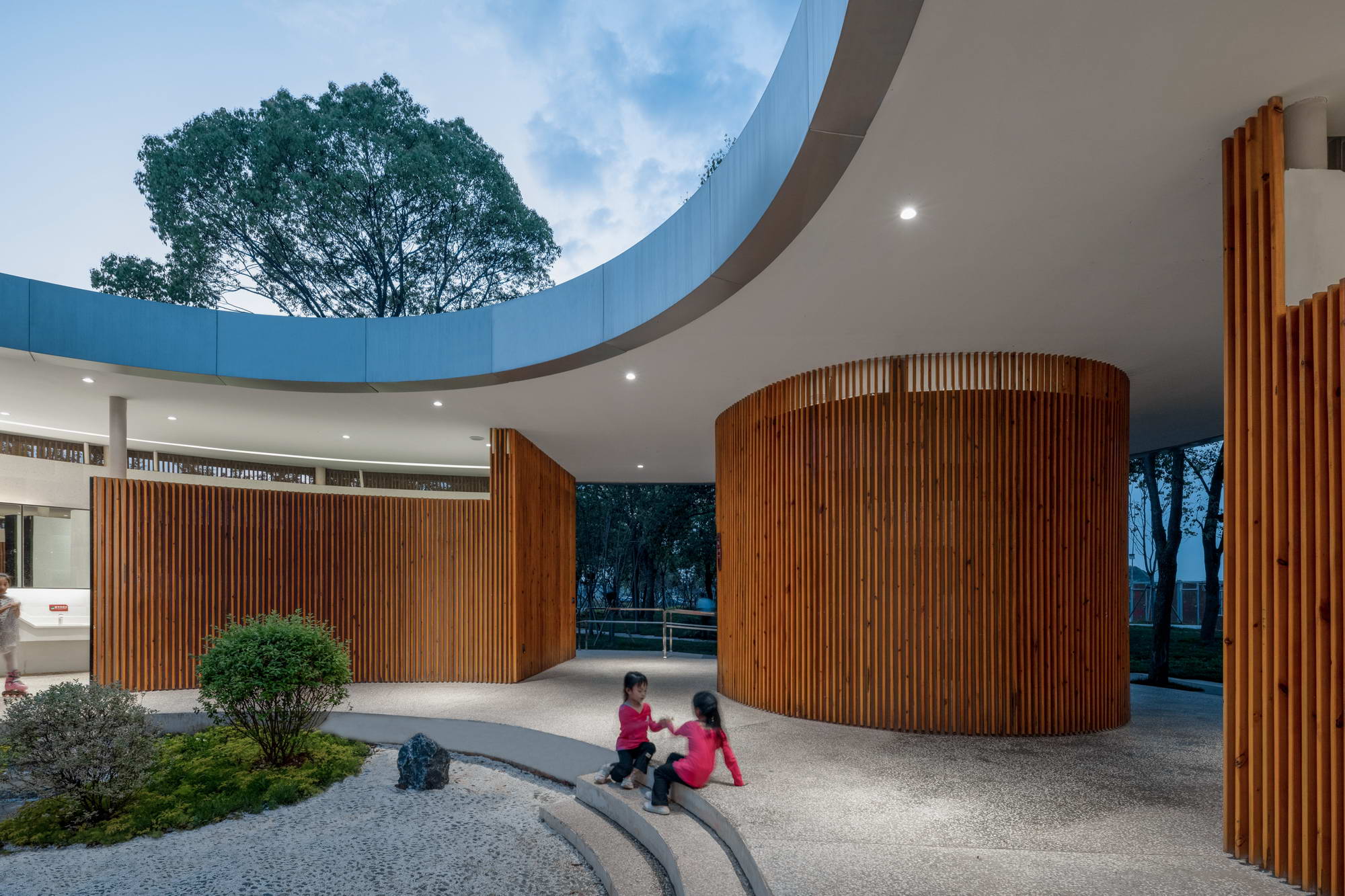
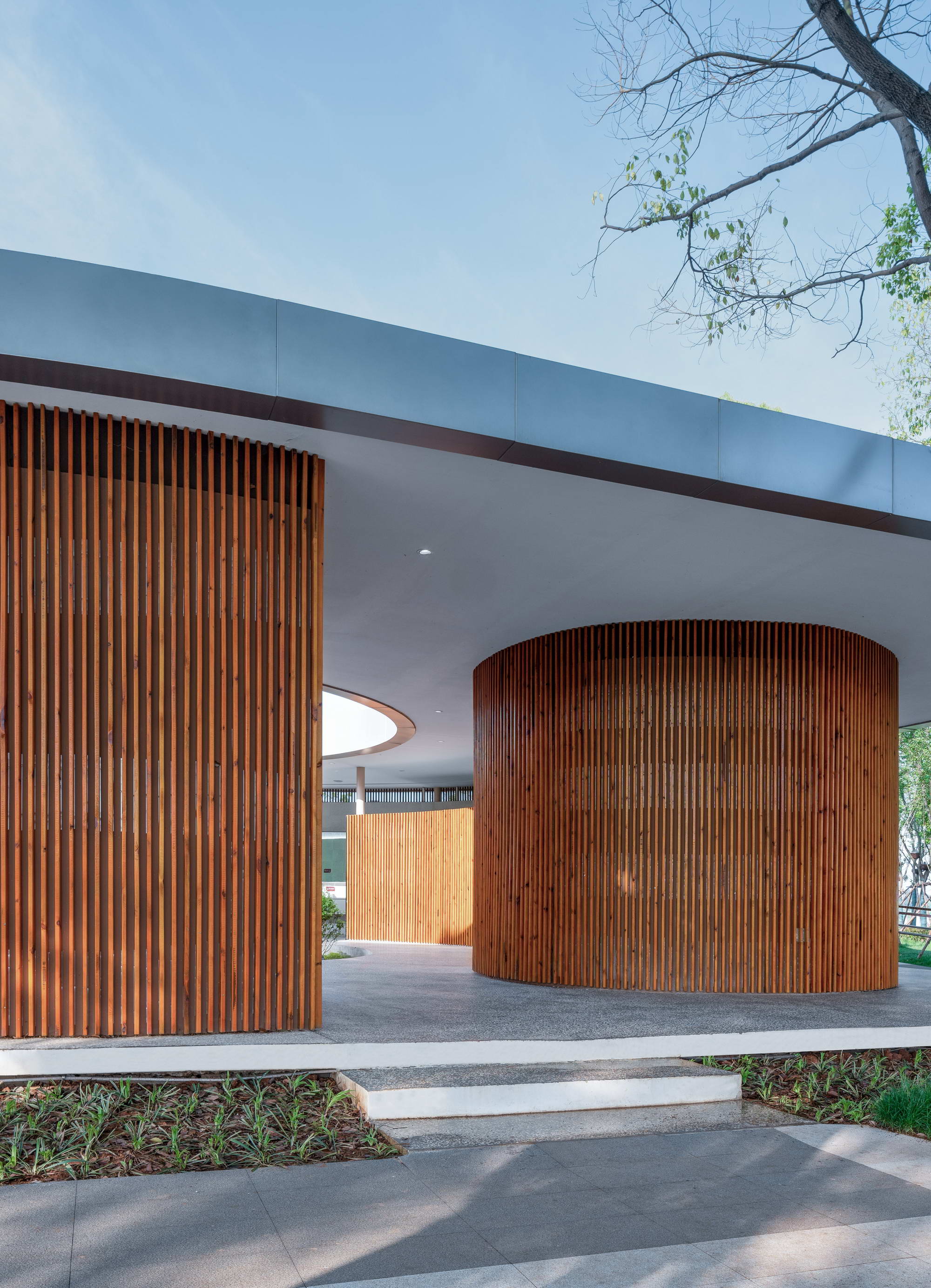
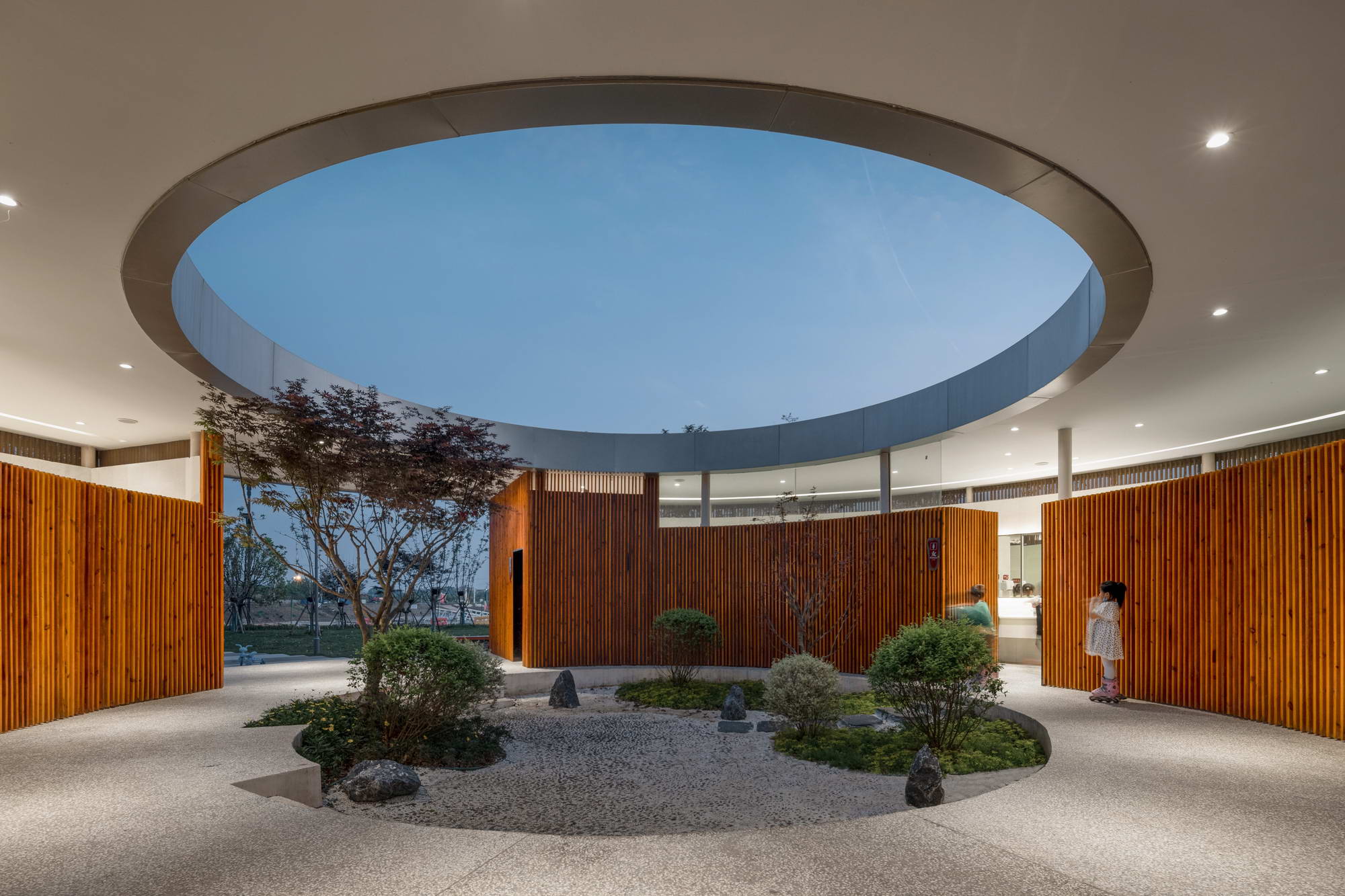
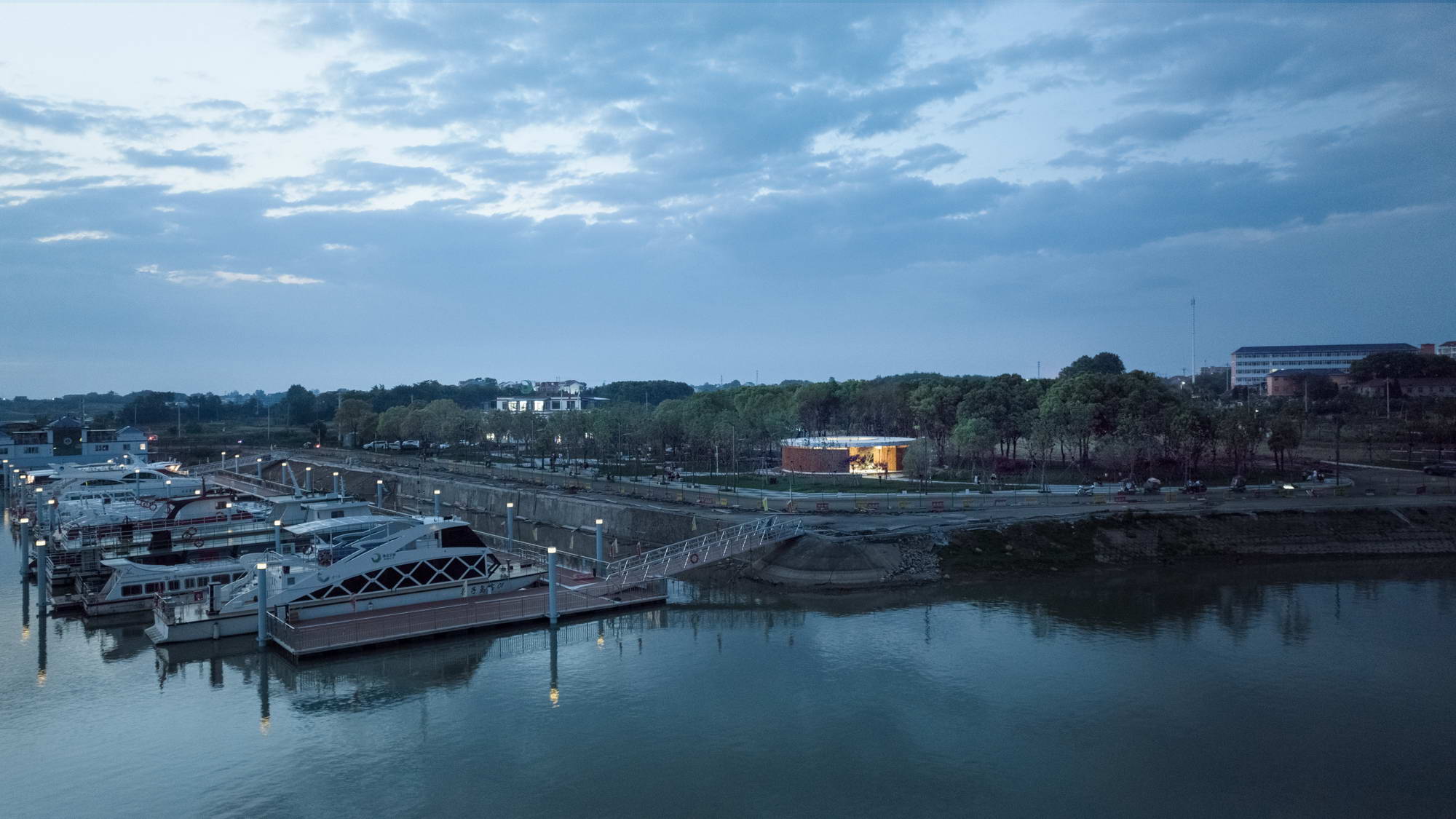
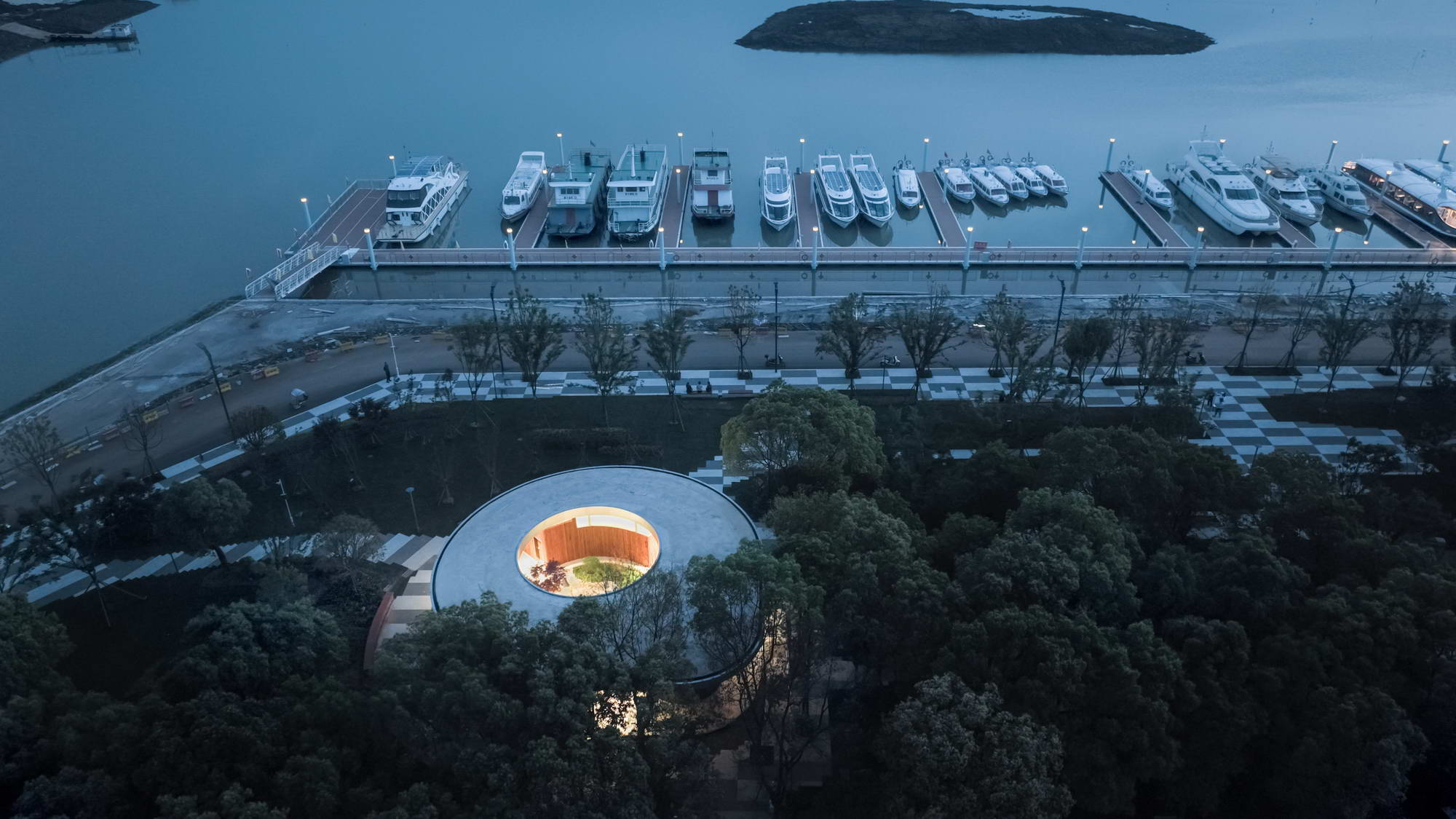
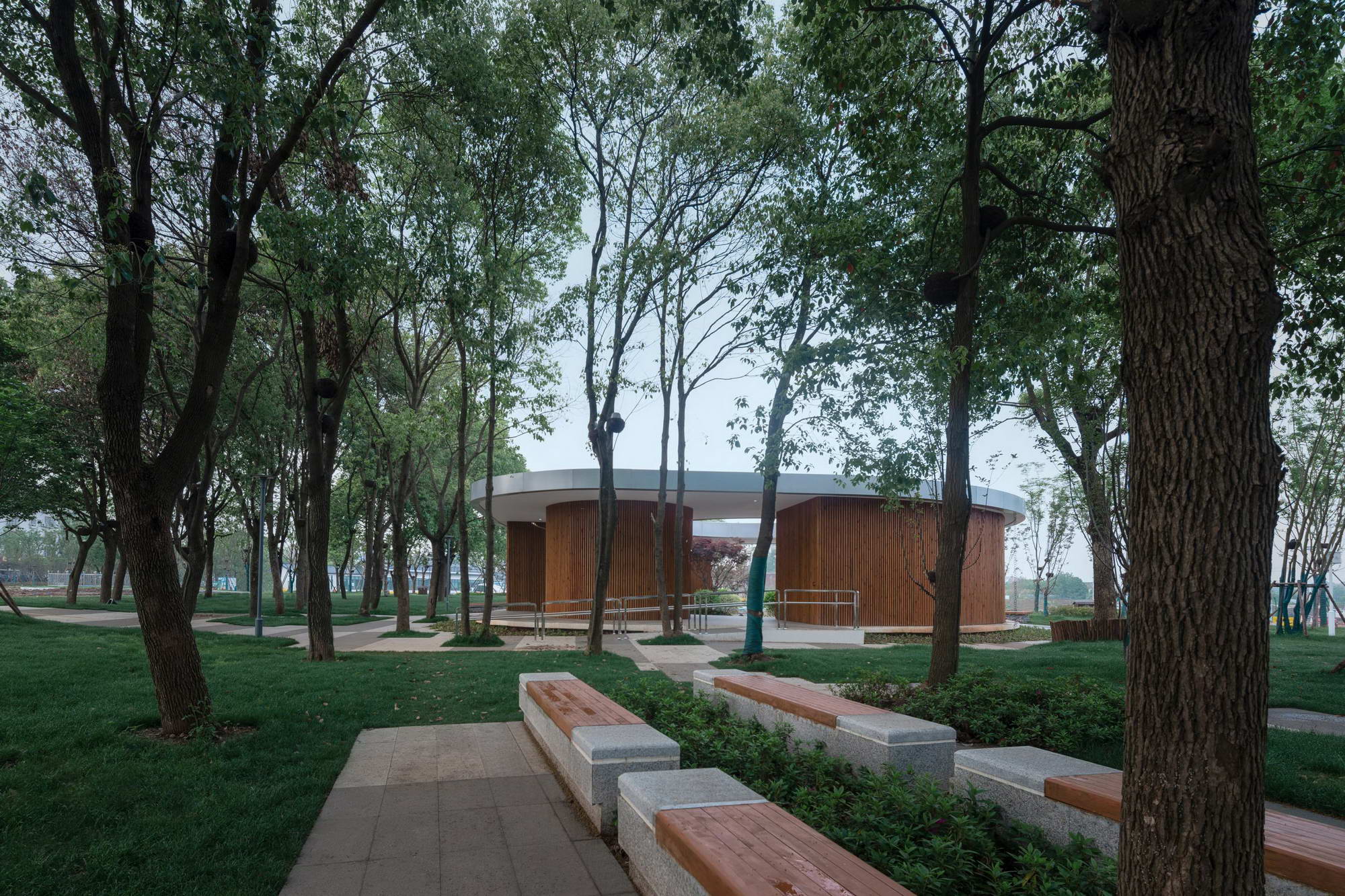
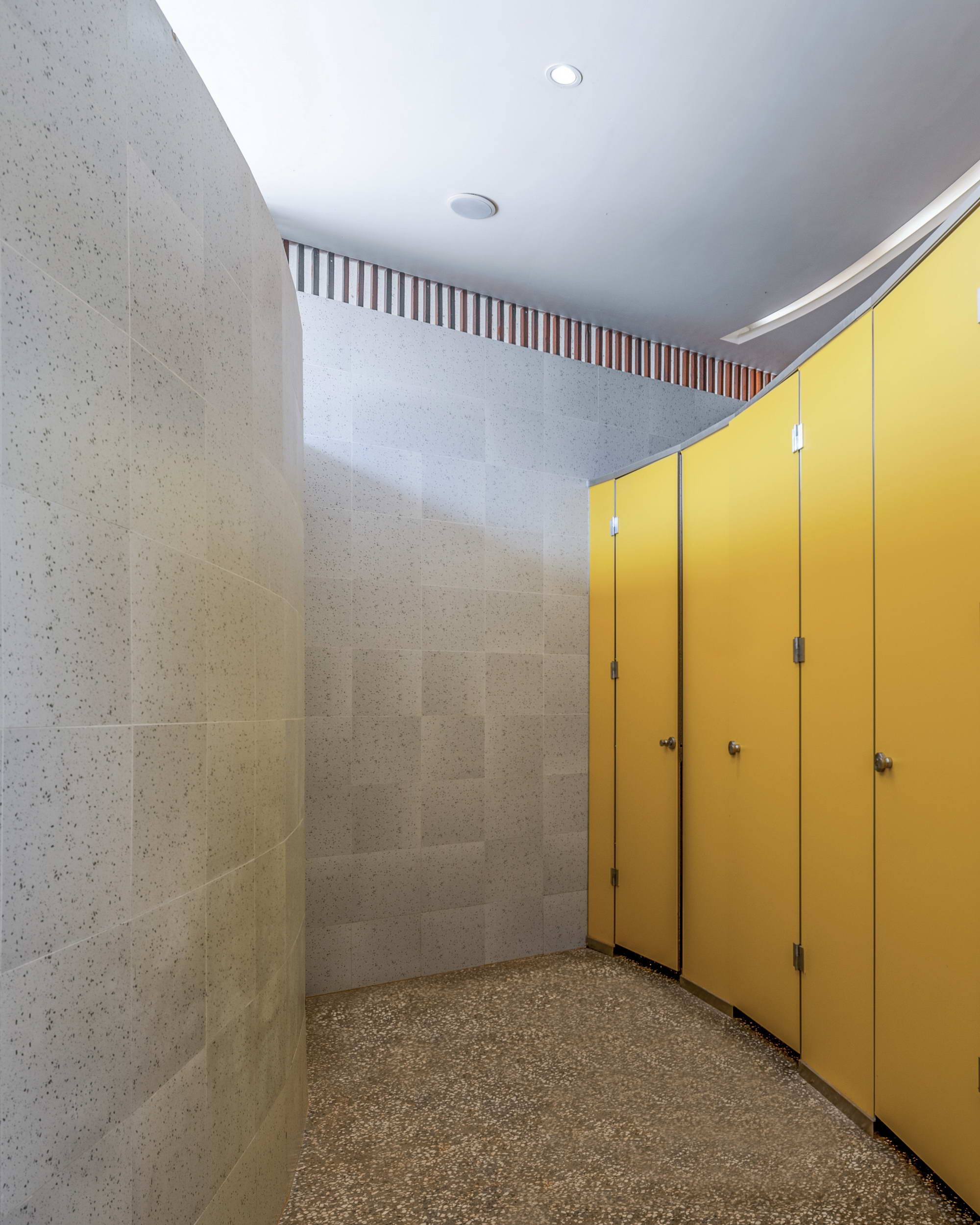
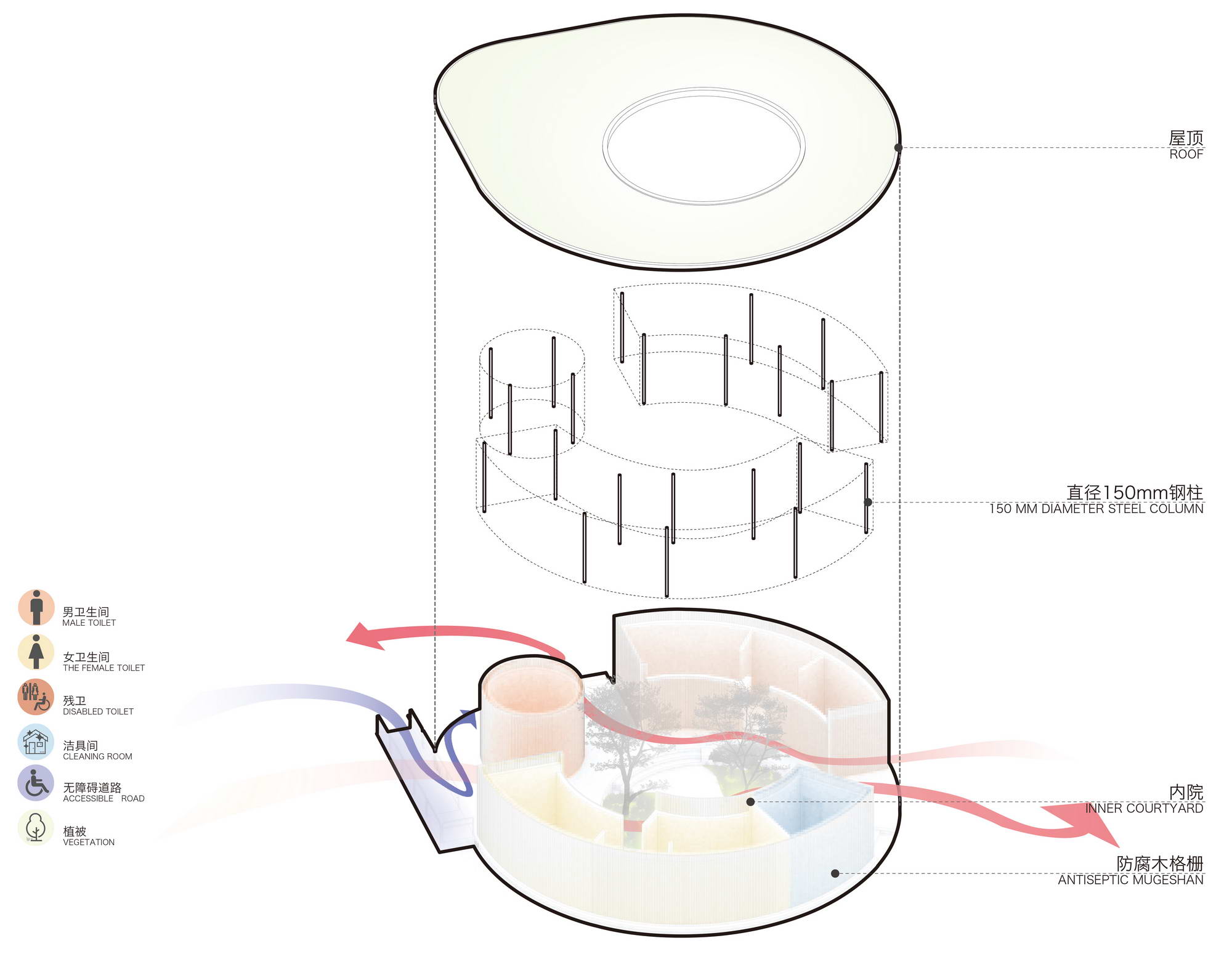
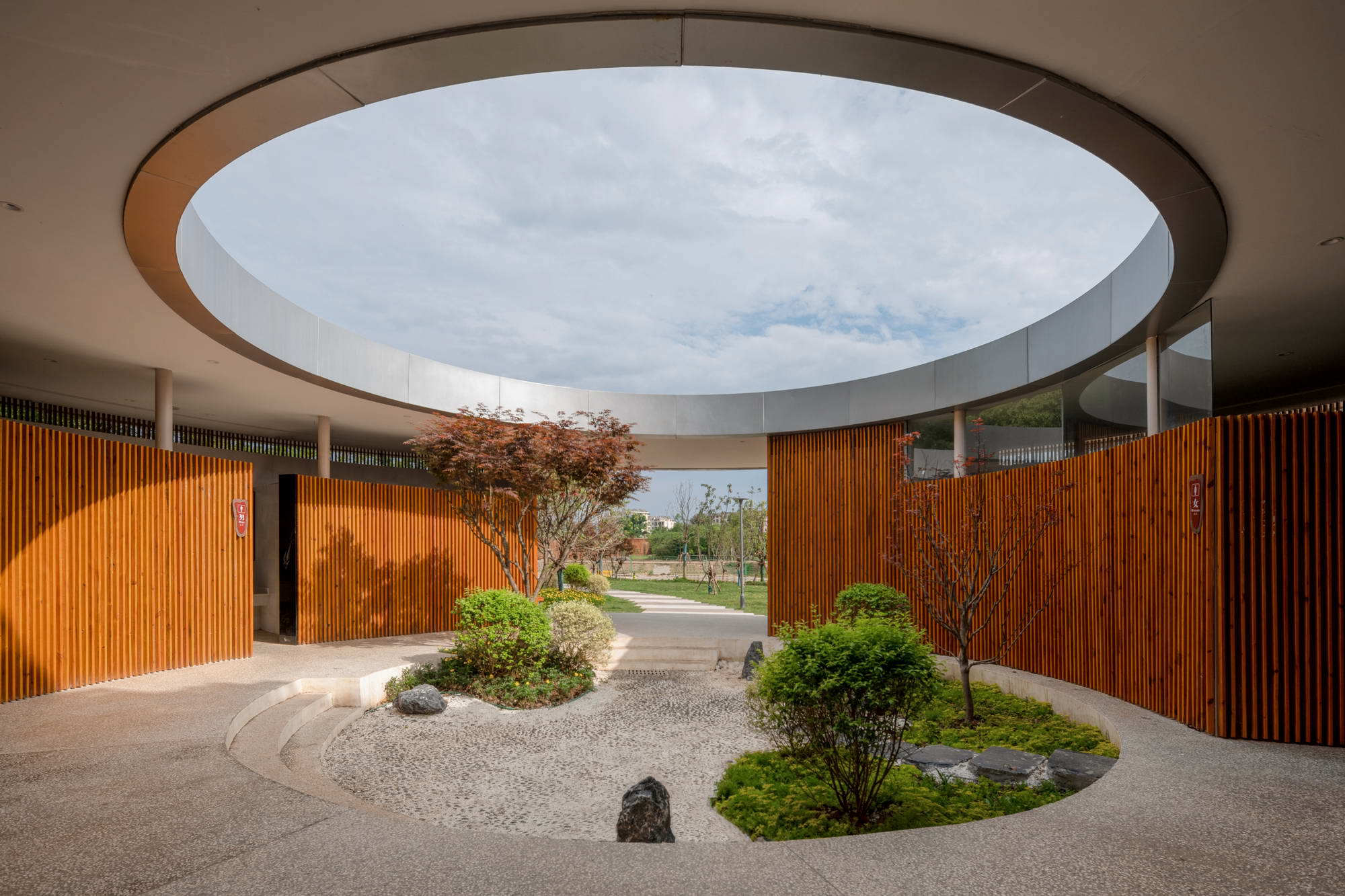
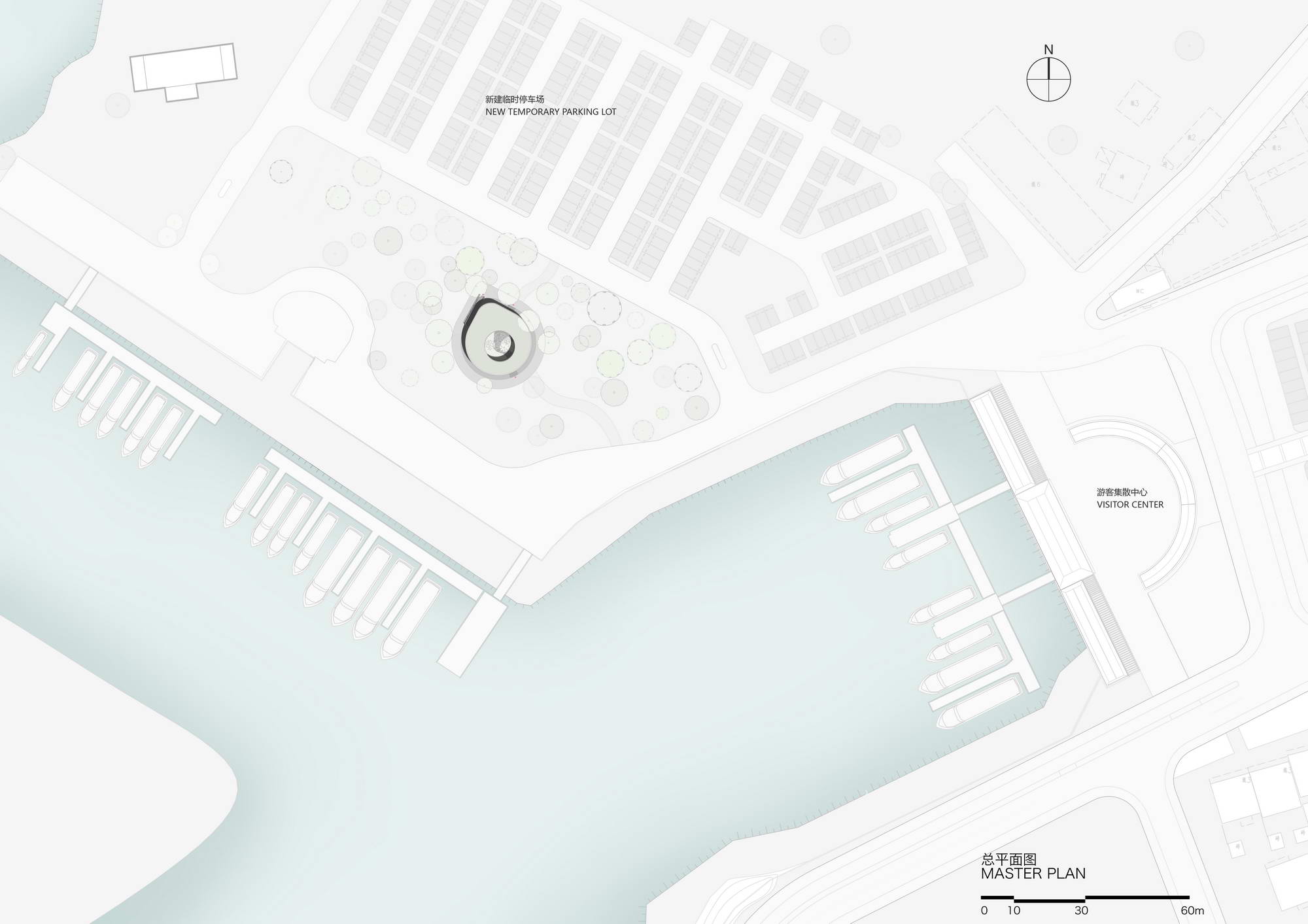
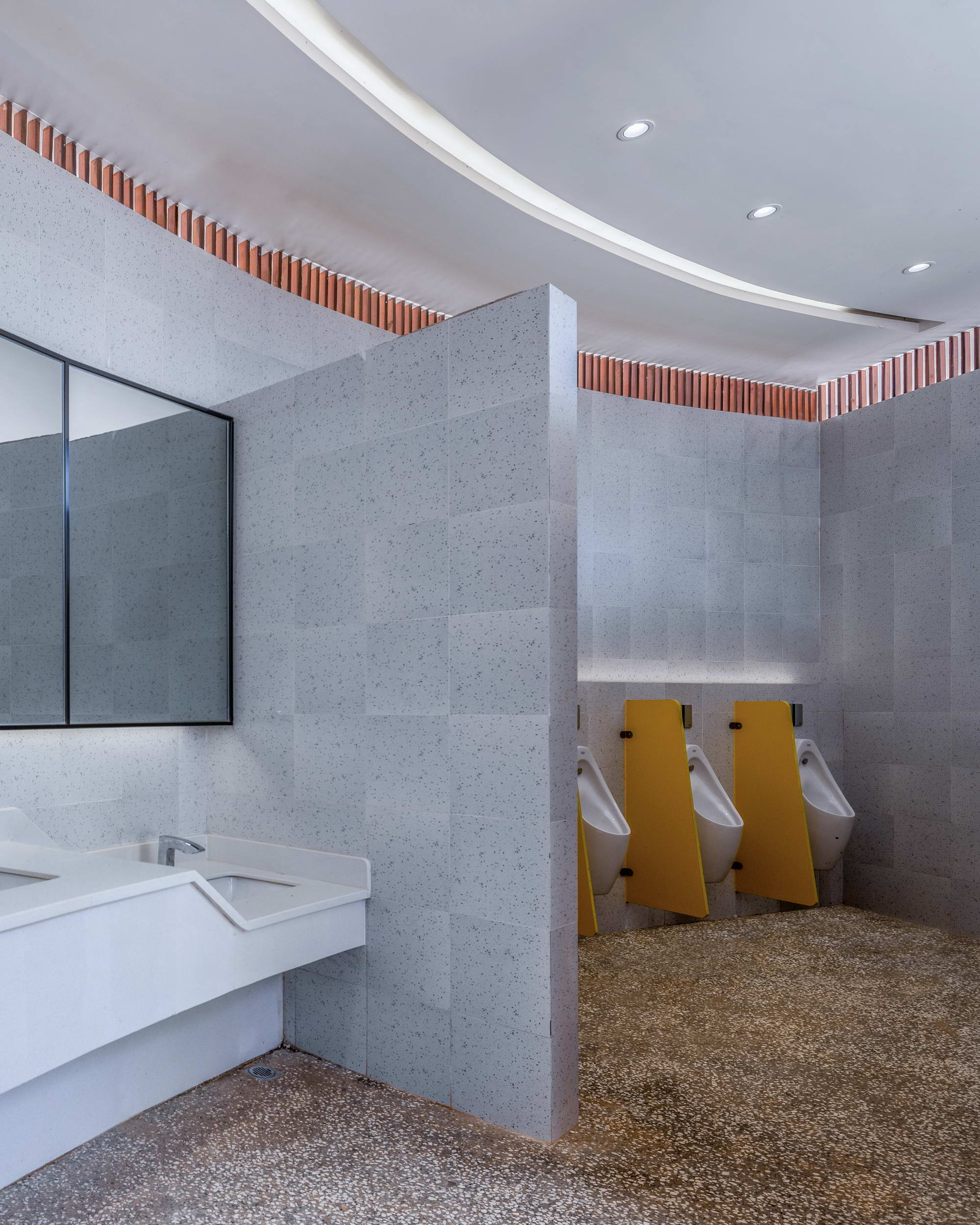
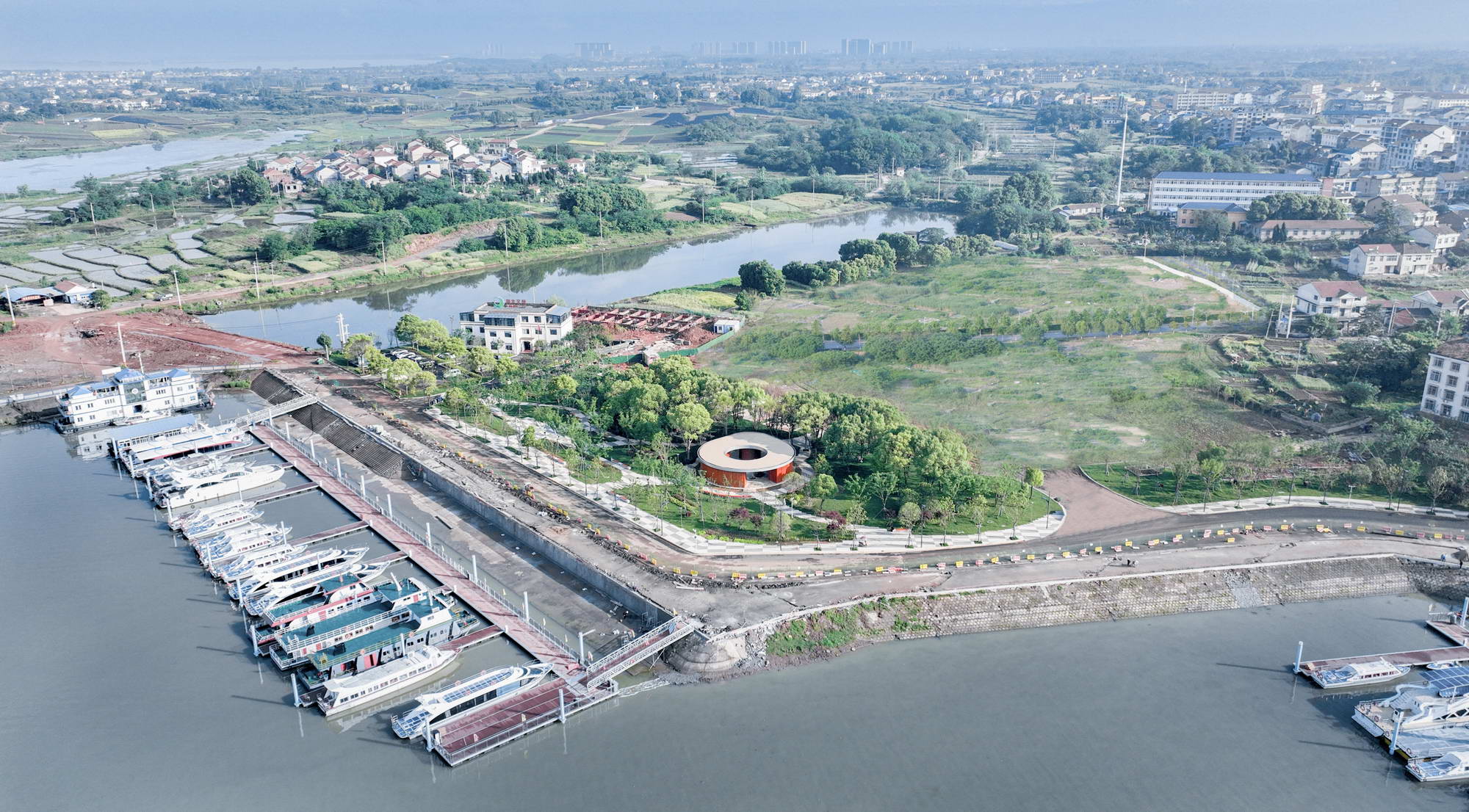
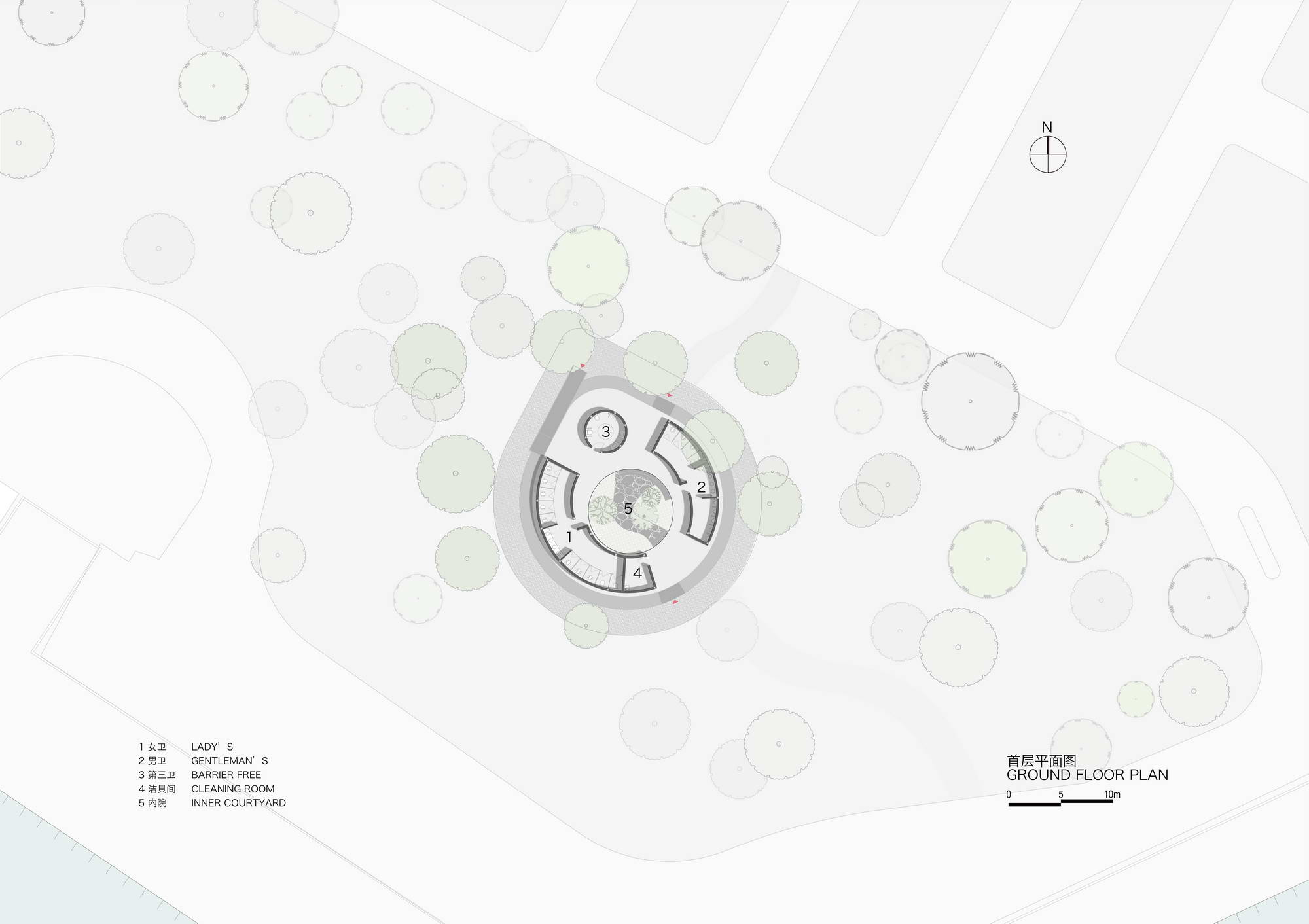
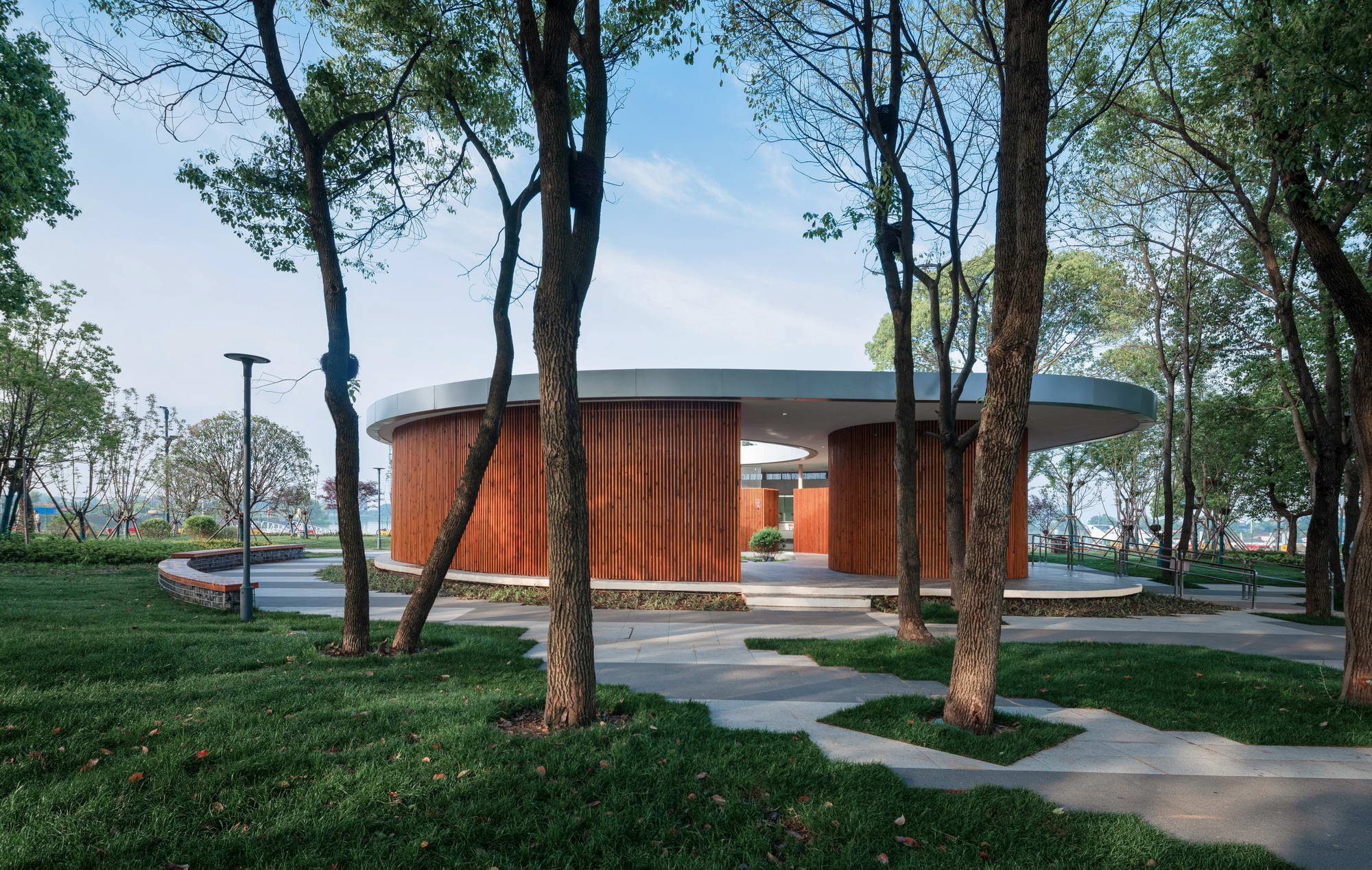
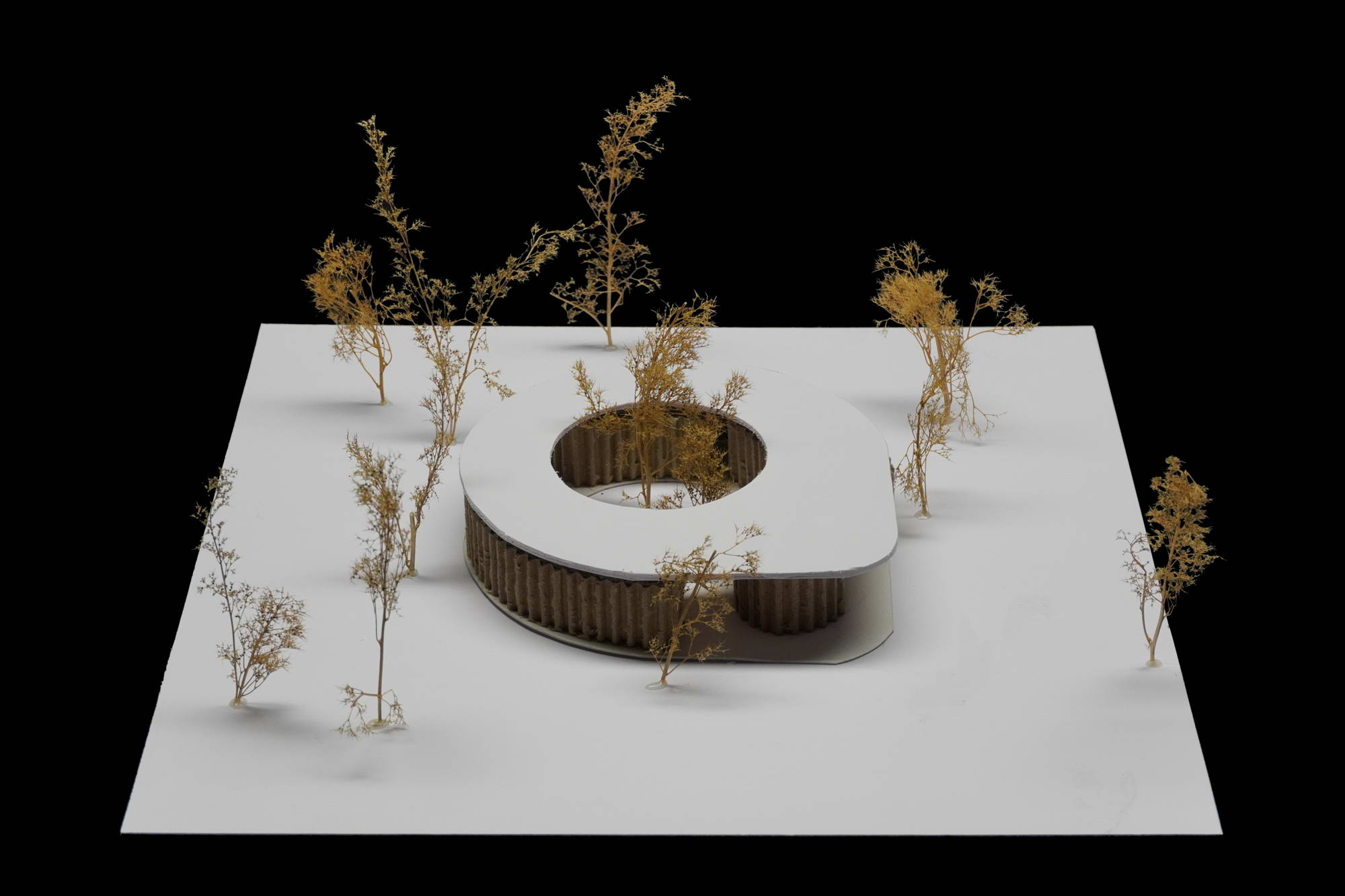
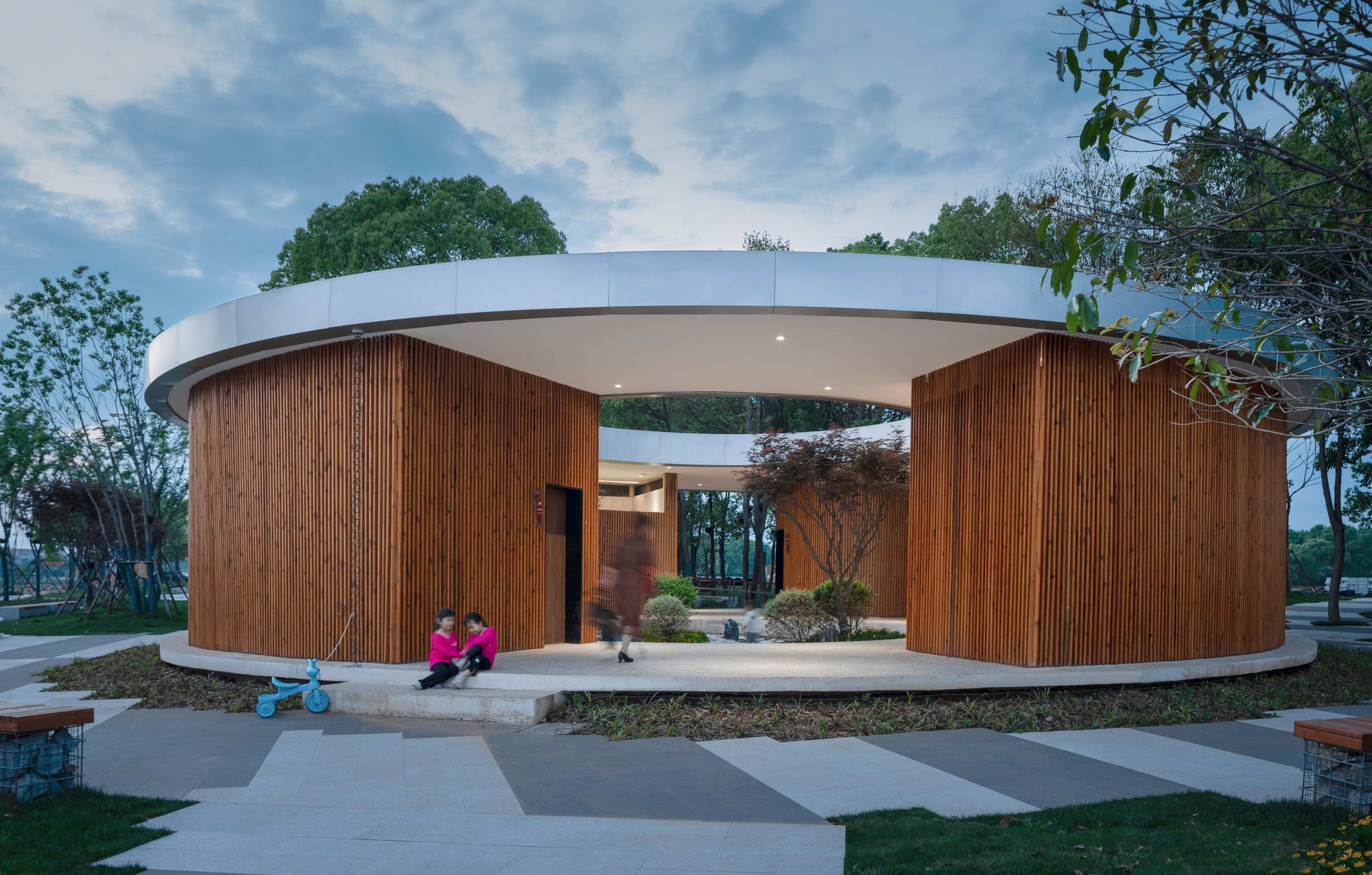
The Lakeside Post — Changling Ferry Landscape Public Toilet on Liangzi Lake, in Ezhou, Hubei, was commissioned by Hubei Tourism Investment's Liangzi Lake subsidiary as one of the first AAA-rated upgrades supporting the bid to raise Liangzi Lake Scenic Area to 5A status. Liangzi Lake is Hubei's second-largest freshwater lake, often misted over with a "vapour rising over Yunmeng" atmosphere. The site is inside a camphor grove on the east shore at the Changling ferry, next to a small town whose residents gather here in the evenings to rest and chat. The initial idea had been to bury the building entirely in the trees, hiding the restroom function; the designers decided instead that a toilet need not be an object of disgust, but can be a medium for relaxation and pleasure. The restroom volume is therefore partly exposed on the forest side, made easy to identify, and treated as a passage between the wood and a small garden. The building is ring-shaped, with strong internal accessibility, and encloses a planted courtyard for viewing and lingering; because most people look upward, the annular circulation is paired with high, irregular windows so that the interior is exceptionally ventilated and shaded in the lakeside wind. For fast construction, the building uses a prefabricated steel structure; the ground is raised to give lightness, and timber louvres on the exterior walls make the windows effectively "disappear" into the facade while blending the building with the grove. The annular high windows keep the interior well lit even without artificial light; in the morning, sunlight falls in dappled patches like lake mist, and the lake itself appears through gaps in the trees. The surprising result is that people willingly come, pass through, play and linger, naturally forgetting that this is a restroom — quietly changing local and tourist preconceptions about public toilets. Designed by Cai Kekun, Cen Zixin and intern Liu Luyao, with structural engineering by Xie Jianye and MEP by Wang Ruochen and He Qi, the project is presented as a return to plain architecture: using the most ordinary means to explore the relationship among building, people and environment, and to shift perceptions of a conventional building type.







 Editor's Pick
 Latest Design
 Best Idea