Text description provided by the architects
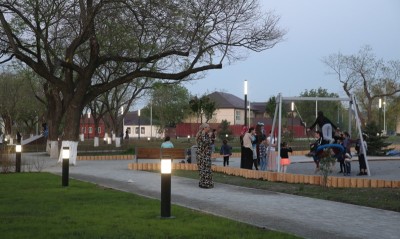
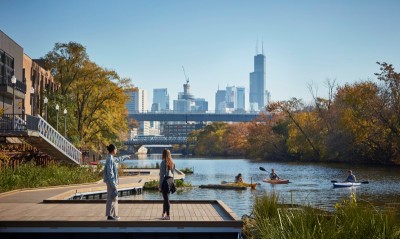
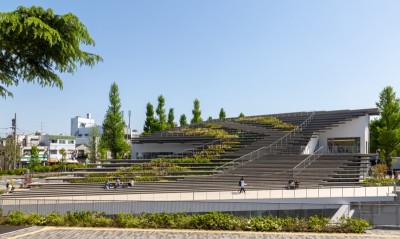
The Feng River (Culture and Education Park section) Wetland Ecological Park is a 4-kilometre riverside landscape belt on the west bank of the Feng River, between the Xibao Expressway and Keji Sixth Road in the Xixian New Area of Xi'an. With an average riverbank width of 100 metres and a total area of about 880,000 square metres, it forms the eastern gateway to the Xixian International Culture and Education Park. The Feng River is the principal water artery running through the southern part of Xixian, the boundary between the historic city of Xi'an and the new international district, and a carrier of cultural heritage reaching back to the Western Zhou, while also standing for the city's future. The project, led by GVL Landparse International Group, reframes a routine municipal park as a tourist destination under the concept of 'grand park, micro-tourism'. The starting point is a hard question: municipal landscapes can deliver shade, flowers, pavilions and birdsong, and citizens are delighted at first, but without a revenue model such beauty cannot be sustained; after an operating period, maintenance gaps allow weeds and rubbish to return. The design team's chairman Peng Tao argues that the assignment is not merely a municipal landscape brief but a question of how to import visitor flows and generate fiscal feedback for the park operator, viewed from the whole operating logic of the Culture and Education Park. Since August 2014, the 14-square-kilometre park has been built under an international urban-design guideline, and a demonstration area was needed to provide high-end services for the international community, attract footfall and support investment. A beautiful, ecological park alone could not answer how a new district would be energised or how long-term maintenance would be funded. By treating the single-function municipal green space as a self-sustaining tourism product, the 'grand park, micro-tourism' model resolves both the city's ecological dual-renewal task and the construction of tourism products, while the parallel idea of 'small life, new model' endows regional citizens with a new lifestyle and puts the 'innovative urban development model' of Xixian into practice. The shared, visitor-and-resident logic allows a capital-cost municipal landscape to become revenue-generating through operations, turning the green edge into a lived urban destination rather than a one-off civic ornament.




 Editor's Pick
 Latest Design