Text description provided by the architects
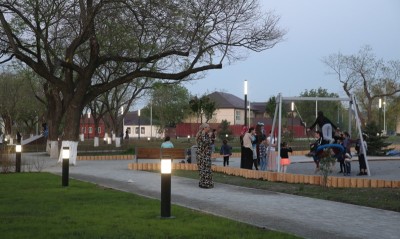
Xiaohe Park in Hangzhou is a 49,387-square-meter adaptive reuse of the former Xiaohe oil depot on the Grand Canal, developed by the Hangzhou Canal Comprehensive Protection and Development Construction Group. When it opened in autumn, the park dominated local social feeds alongside the city's osmanthus, becoming a new cultural landmark along the canal through its nostalgic industrial character, its oil-tank lanterns, and the dreamlike starfield inside them. The large oil tanks, once a milestone of Hangzhou's old industrial production, have been transformed into giant lanterns by the design team. The red-brick walls have been reborn as undulating, semi-perforated art screens that read as hollowed-out red bricks from a distance, and the original oil-depot lettering has been abstracted into signage motifs scattered across the park in steel and the depot's original color palette. Old machine parts from the oil depot have been reclaimed as touchable urban furniture: vintage dashboard needles still frozen at the depot's final output readings, miniature steering wheels around the tree ring, and pet-tethering points shaped like valves. A cultural strip along the lawn edge traces the history of the Xiaohe oil depot, drawing streams of schoolchildren and elderly visitors. Near the canal, the large lawn holds oil-drum-shaped furniture that doubles as seating and as play elements where children hide and seek. Elements extracted from the old machinery have evolved into distinctive play equipment, so that children's laughter overlaps with grandparents' memories, producing a story of rebirth along the canal. Retired workers from the depot have been seen sitting on the repurposed machinery benches, watching children play on the lawn and reading the historical panels, an encounter that captures the emotional resonance of fusing industrial heritage with everyday life. The park preserves the old industrial elements, activates them through art, and converts them into playable, climbable, touchable furniture, giving the canal a new generation of listeners and custodians of its story. Project details are limited in the source material.




 Editor's Pick
 Latest Design
 Best Idea