Text description provided by the architects
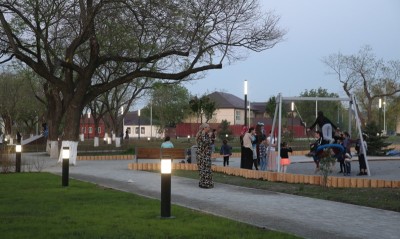
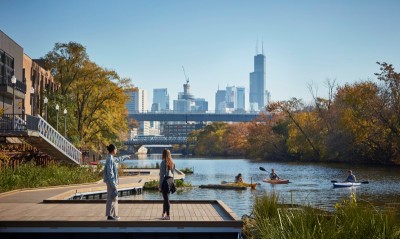
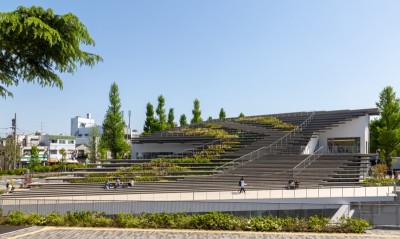
The Chizhou Moat Heritage Park is a sponge-city demonstration project in Anhui, designed by Top-Us (Beijing) Architecture Landscape Design, managed by Zhao Wen and Liu Qiang for the Chizhou Key Urban Construction Project Office. Chizhou was one of China's first sponge-city pilot cities; despite abundant rivers, rapid urbanisation produced waterlogging, saturated development and a heavily polluted canal. The 3.5-hectare park, with another 4.7 hectares of contributing catchment, sits at the lowest point of a dense old-city district on a combined-sewer system, its water body a pond left from an abandoned moat and one of Chizhou's ten black-and-odorous streams, fed by scattered sewage and bordered by hospital fences, dormitories and illegal structures. The design's ambition was to turn a derelict urban enclave into everyday, accessible nature, reactivating negative space into a participatory waterside park and, through sponge-city and black-water-channel treatment, converting the foul water into an artificial wetland held at Class IV water quality year-round. The main entrance on Qiupu West Road is open and low-key, using single trees, a logo wall and cascade water to draw citizens down to a floating plaza; a ring-like boardwalk floats over the water, retained metasequoia and new planting screening the noisy city. On the narrow east side, removed illegal structures opened a secondary entrance with terraced planting whose substrate is engineered to first-treat road runoff. The north entrance to the Xinhua Bookstore dormitory is retained, and a small fragment of residents' vegetable plots is kept so that everyday civic life continues. On the west, a vertical retaining wall against the hospital is broken by emergent plants and green islands, with a waterside walkway winding through planting and a white corridor that shifts by day and glows by night. The whole water strategy is catchment-based, combining source, mid-stream and end-of-pipe controls and preferring green measures over grey ones to reach eighty-five percent annual runoff control and over eighty-four percent pollutant reduction (by CODcr). Interceptor sewers and combined-sewer overflow storage eliminate dry-weather discharge; rain gardens and bioretention strips manage surface runoff; constructed wetlands and an internal ecological loop maintain Class IV water; and drainage channels carry a thirty-year storm. Since completion in October 2018, the park has become a daily waterside destination, a habitat for wild ducks and egrets, and a site for urban ecology education.




 Editor's Pick
 Latest Design