Text description provided by the architects
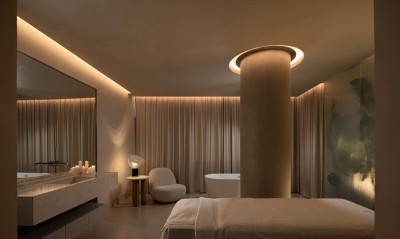
Beauty does not exist within objects, but rather in the shadows and contrasts that arise between objects. ——Junichirô Tanizaki In Praise of Shadow This project is a tea room space created by DCDSAA for the Zhengshantang brand, with the hope of creating a spiritual place to sip tea and let go, so that the experience of drinking tea can become more silent, and one can enjoy the pristine experience brought about purely by drinking tea. Endowed with great mountains and lofty peaks, Orchid Pavilion has flourishing branches and high bamboo bushes all around, together with a clear winding brook engirdled, which can thereby serve the guests by floating the wine glasses on top for their drinking. ——Wang Xizhi PrefacetotheAnthologyofOrchidPavilion A poem from PrefacetotheAnthologyofOrchidPavilion expresses the refined sentiments of ancient people who sat by the railing, enjoying the flowing water and wine, and expressing their innermost feelings. Today, we observe the charm of tea space, which is not a traditional tea room. The winding corridor captures the subtle atmosphere between space and inner thoughts in the ambiance of “a winding path leading to a secluded place,” purging distracting thoughts and enjoying the unique tranquility and elegance. Upon entering the lobby, the space is characterized by simple and soft lines, with distinct levels, and an open layout that allows for more possibilities. The designer’s initial intention in creating the space was to minimize the design and weaken the structural differences inherent in the space, making the entire space more coherent and natural, and creating a new dimension of the Positive Mountain Hall brand impression - a new-style tea space with Oriental aesthetic conception. We attempt to deeply explore the contemporary expression of tea culture, using a youthful design language to extract and present the beauty of “Oriental artistic conception” in the modern Zen spirit of Chinese tea aesthetics, creating a space for tea tasting and relaxation. Upon closer inspection, one will notice the texture of the walls, which is presented through traditional handcraft techniques, soft and elegant, adding a touch of literati atmosphere to the space. Even rough, mottled, and textured walls do not appear abrupt in the space, thanks to the exquisite contrast between roughness and delicacy, presenting a space experience with a strong contemporary vibe. The East values elegance and charm, and the traces left by time on objects and spaces can make people feel incredibly at ease and intimate. It carries memories and emotions, which is precisely what we understand as the aesthetics of tea culture. Tea represents intention, while space represents environment. A flower arrangement, a tea table - while enjoying tea, we convey the beauty of the relationship between people and nature, people and people, and people and art. Whether savoring tea alone or drinking with friends, leaving a blank space in our mundane daily lives allows us to appreciate the wonders created in silence. The presence of light creates a relationship between light and shadow within the interior of a building. From the arrangement of lighting, to the texture of materials, and the distribution of architectural space, the relationship between space and light is handled to form the unique temperament of the space. New and old are a dialectical relationship, and many of Xin Su Yan’s designs are also seeking the way of "using old things in new ways and creating new works with ancient methods", allowing tradition and modernity to engage in dialogue, inherit and innovate. Project name: Zhengshantang Tea Room Project location:Hongqiao Innovation Center-Shanghai-China




 Editor's Pick