Text description provided by the architects
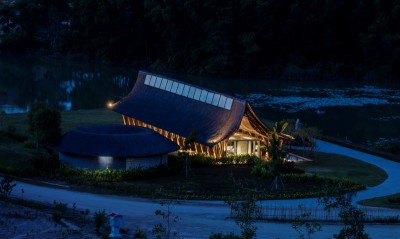
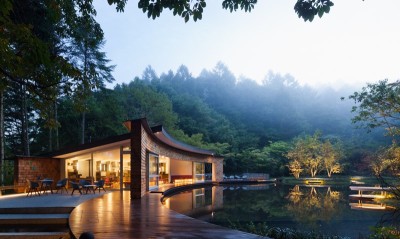
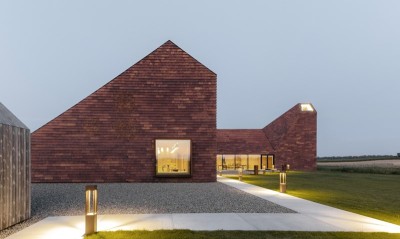
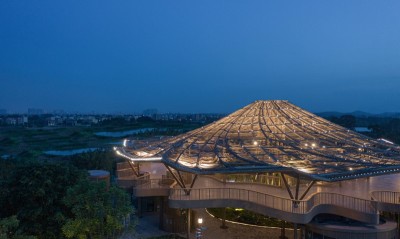
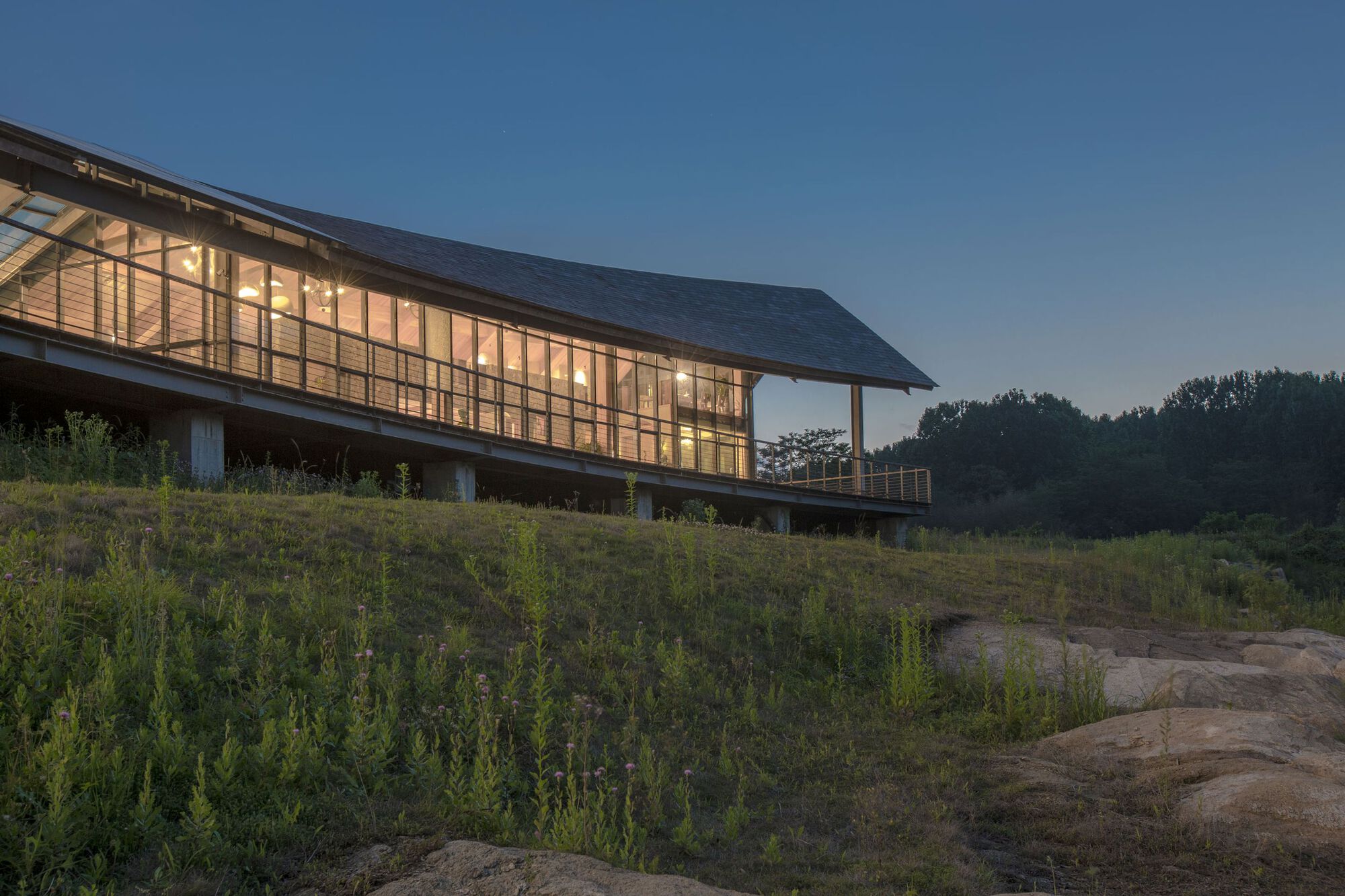
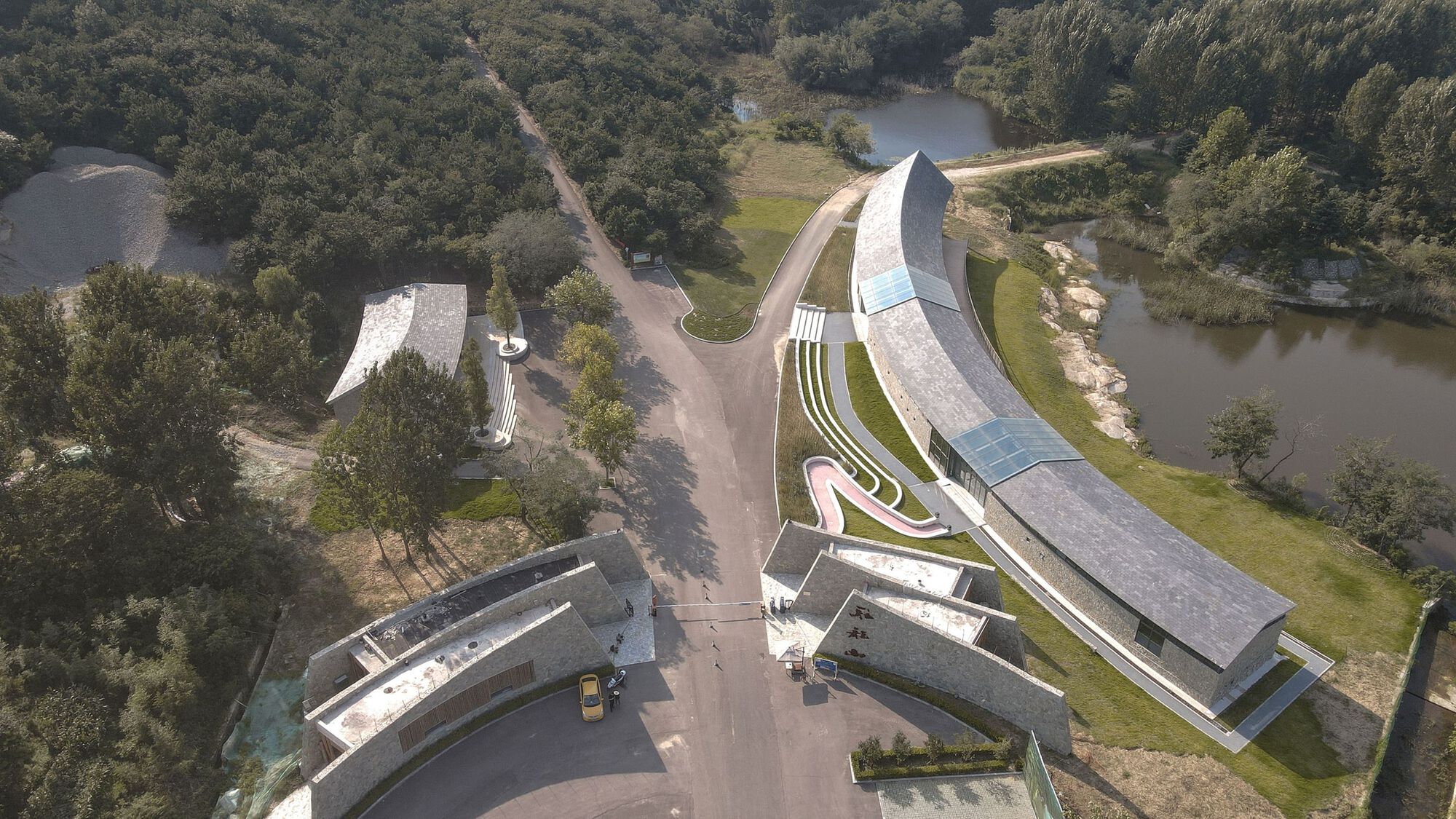
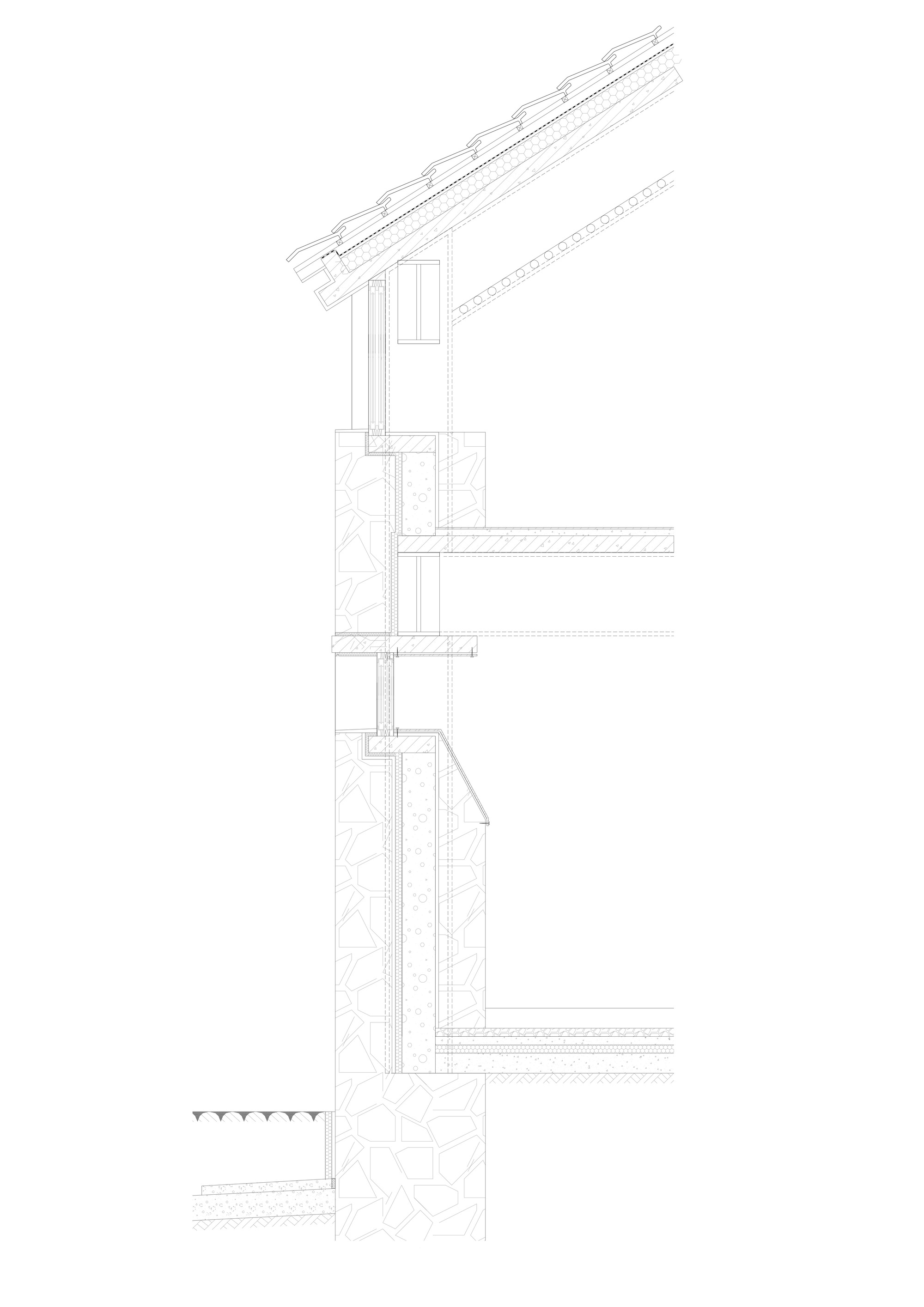
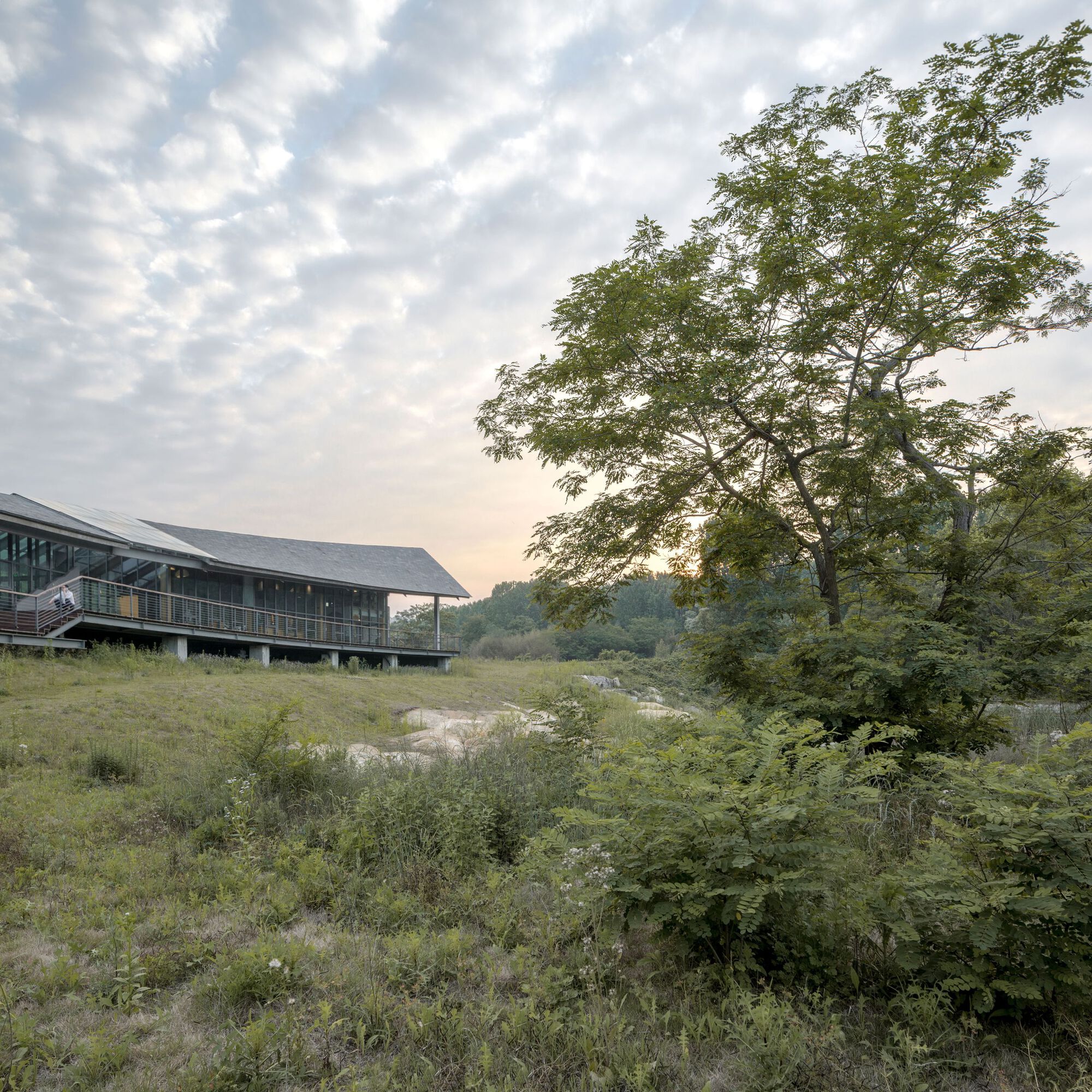
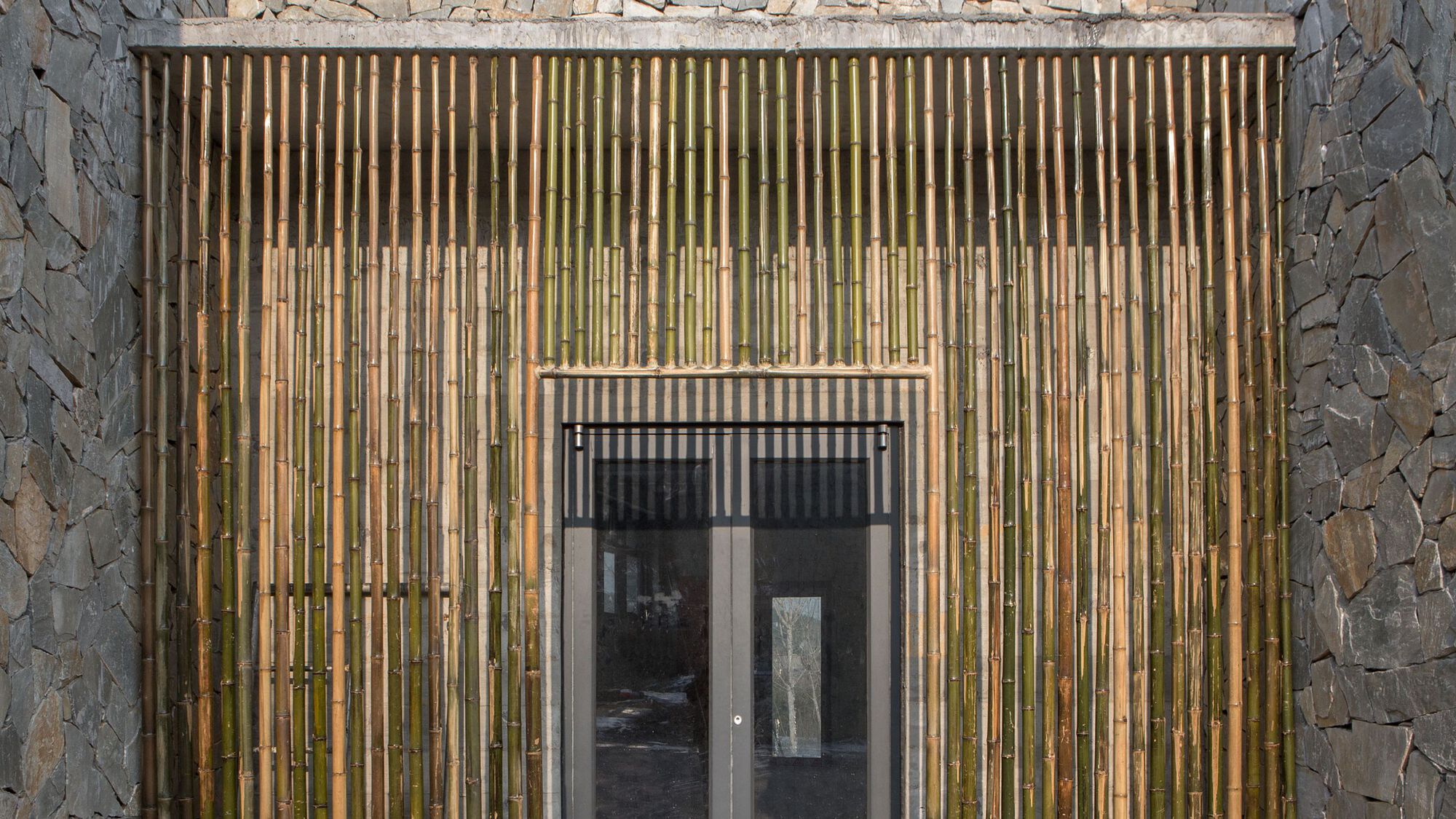
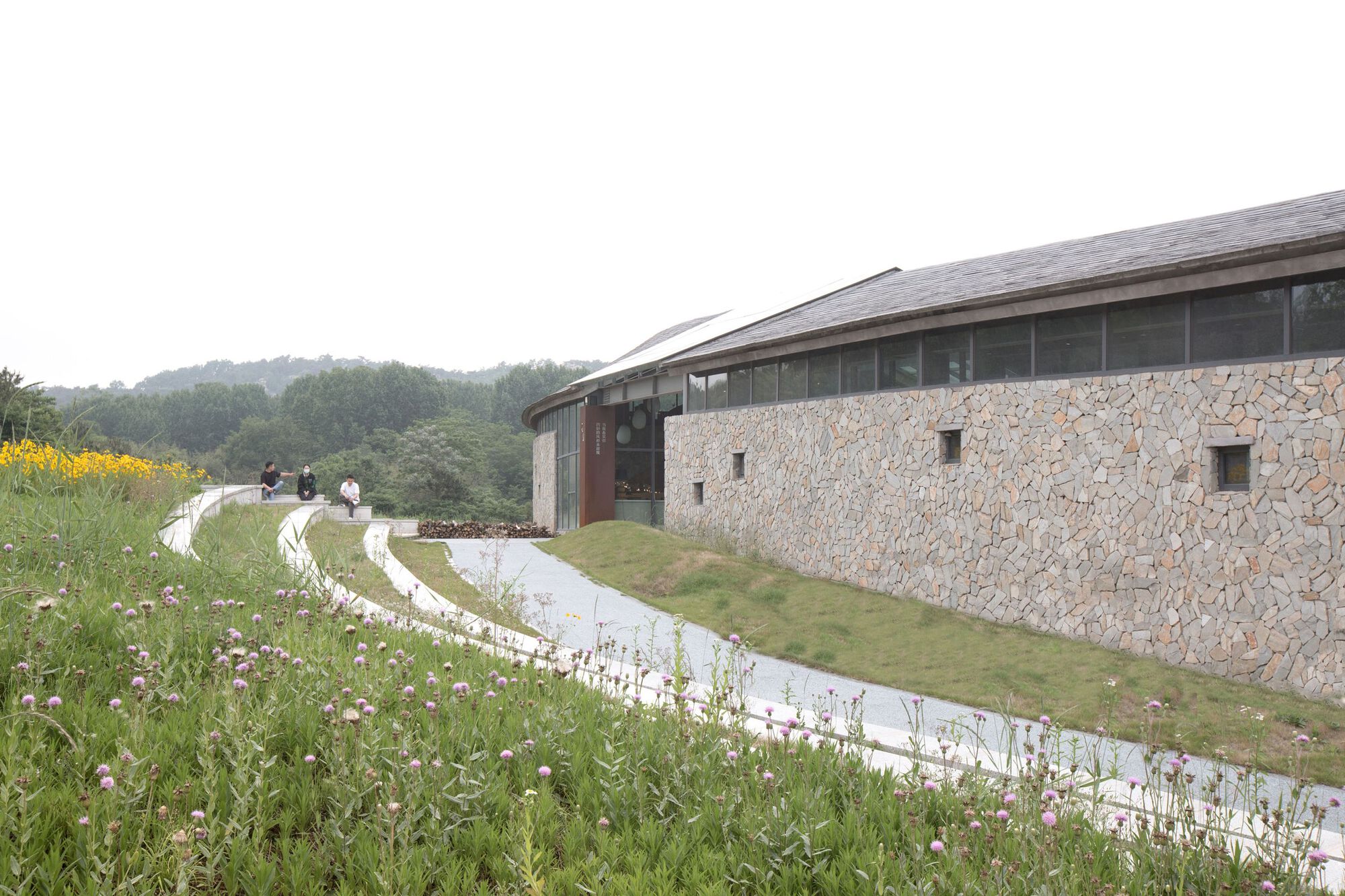
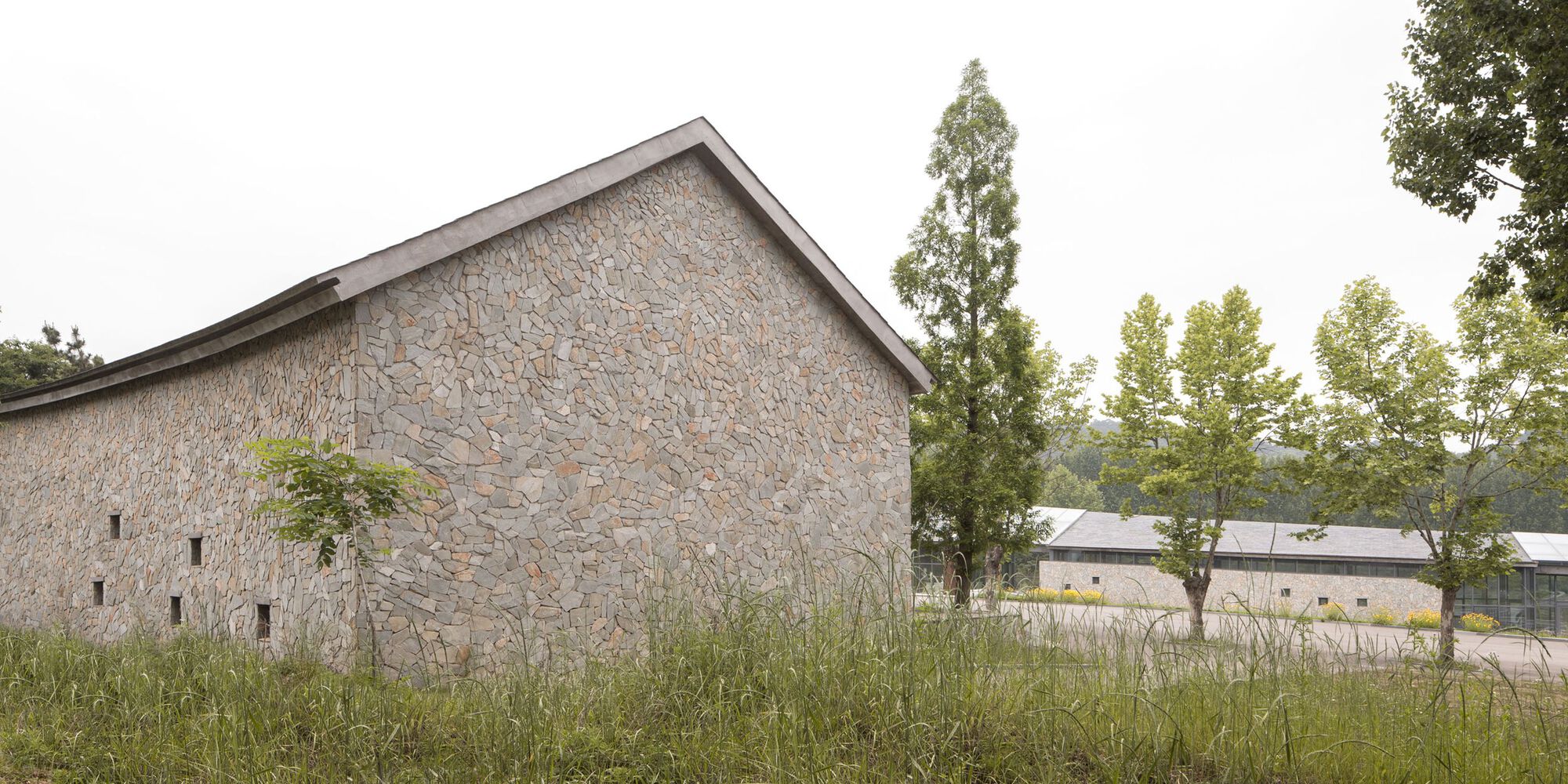
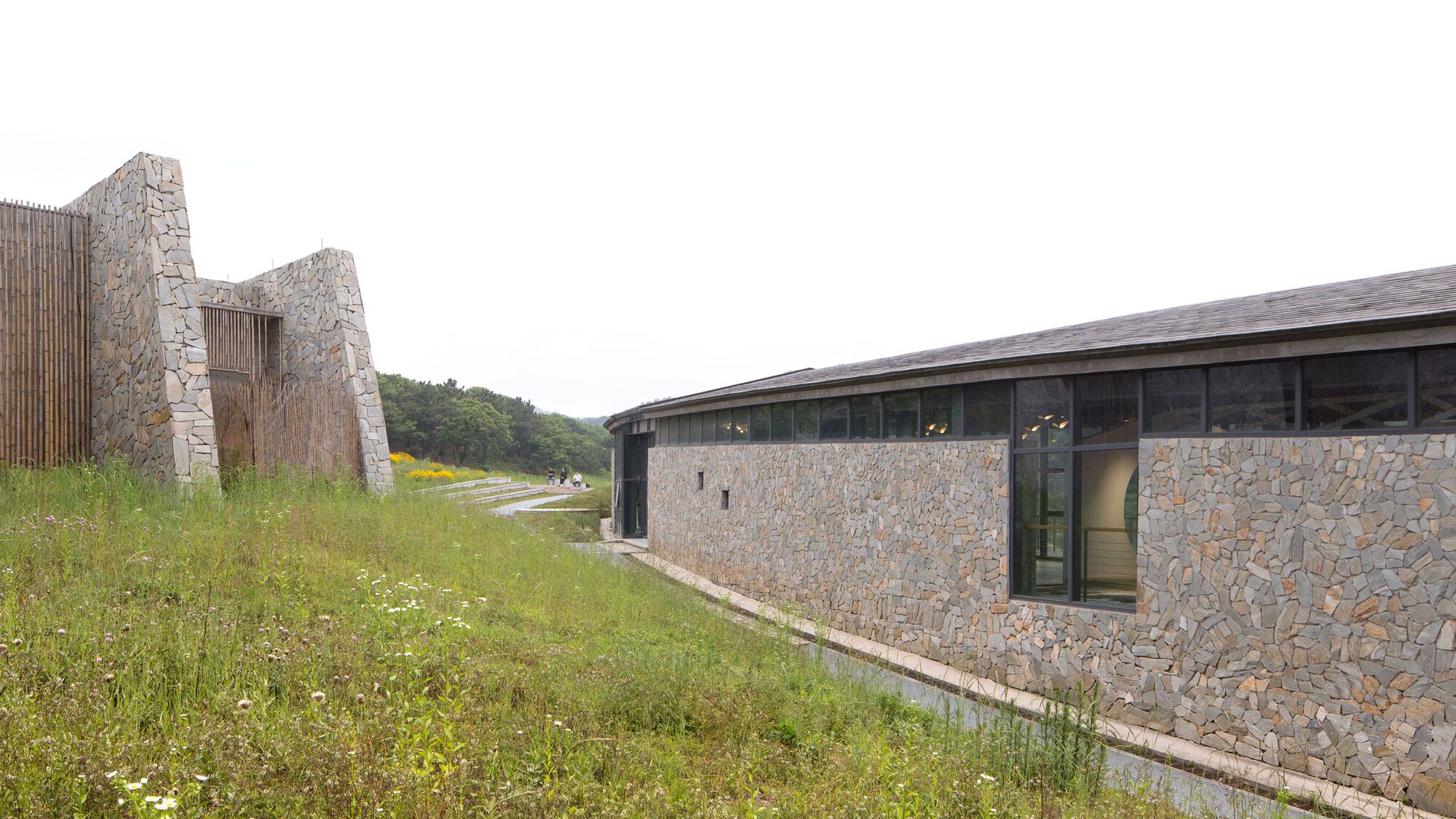
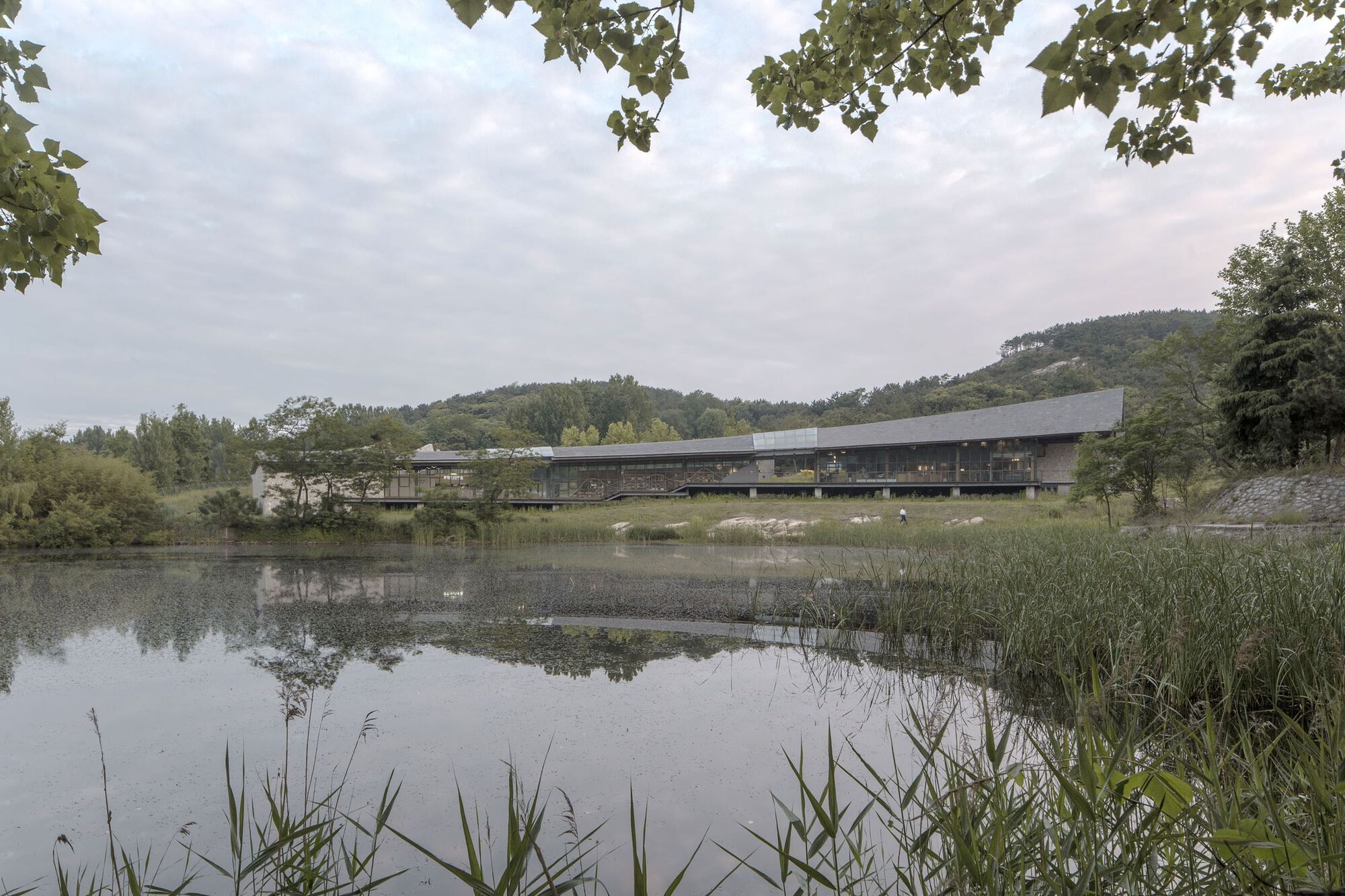
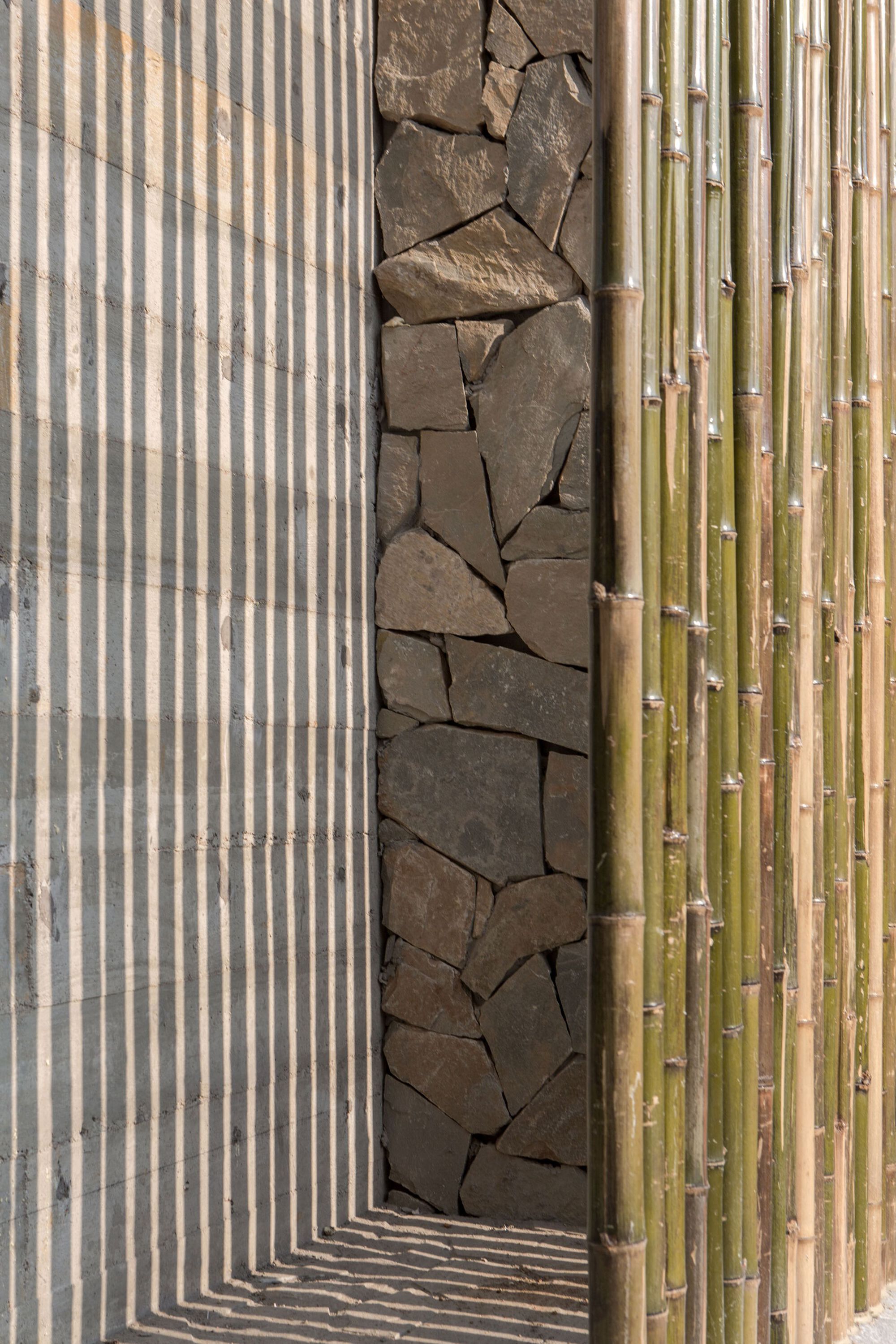
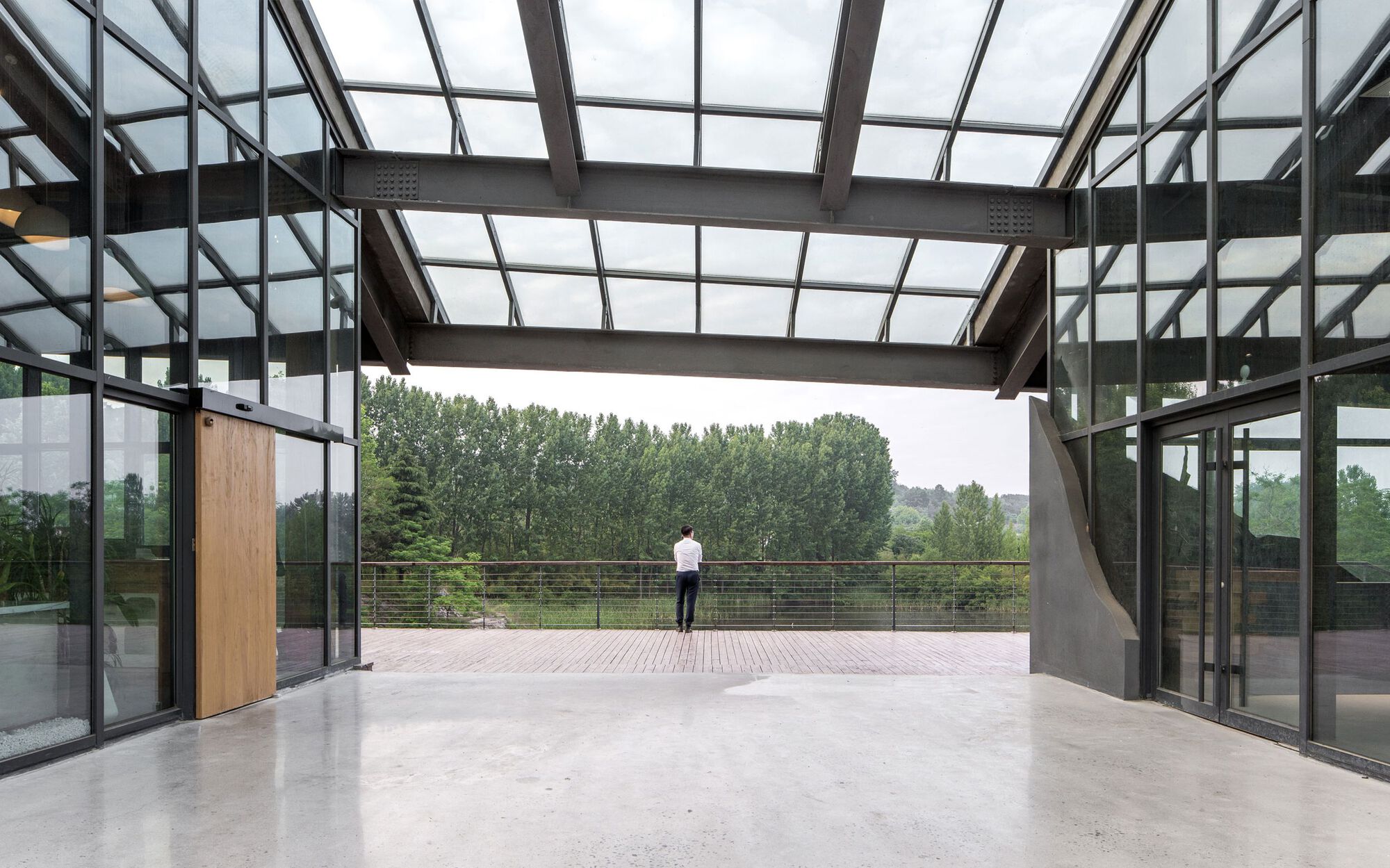
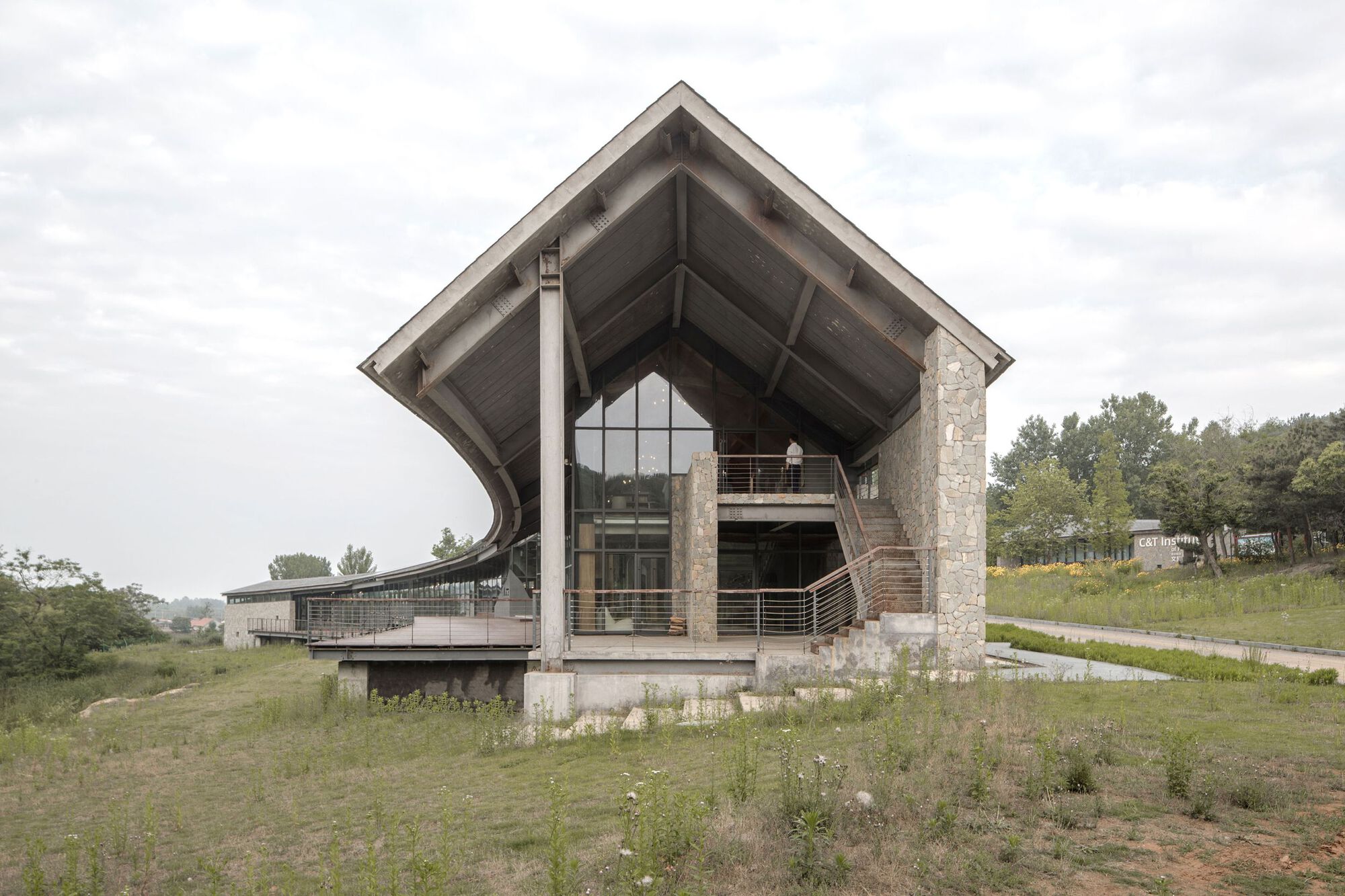
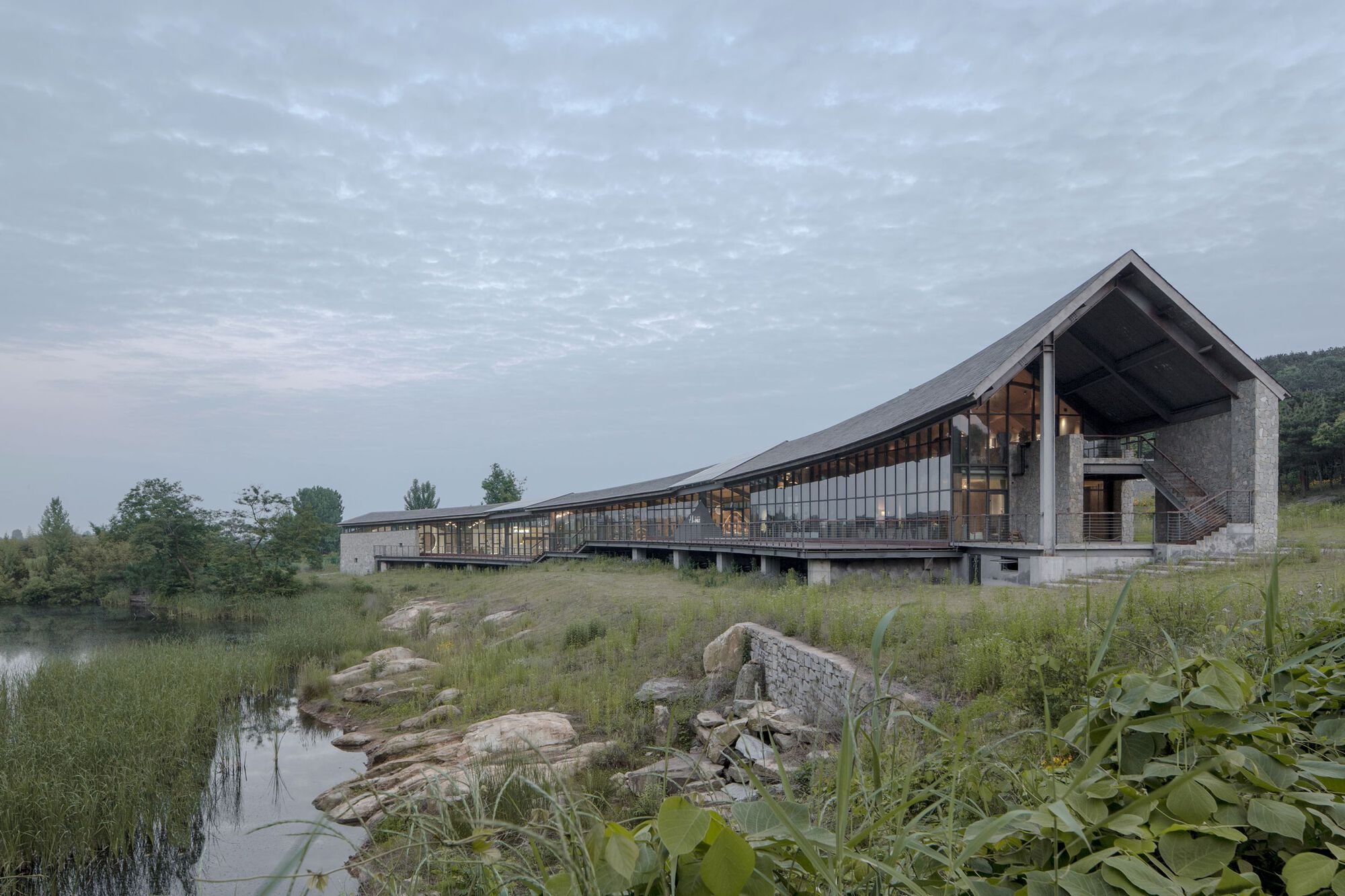
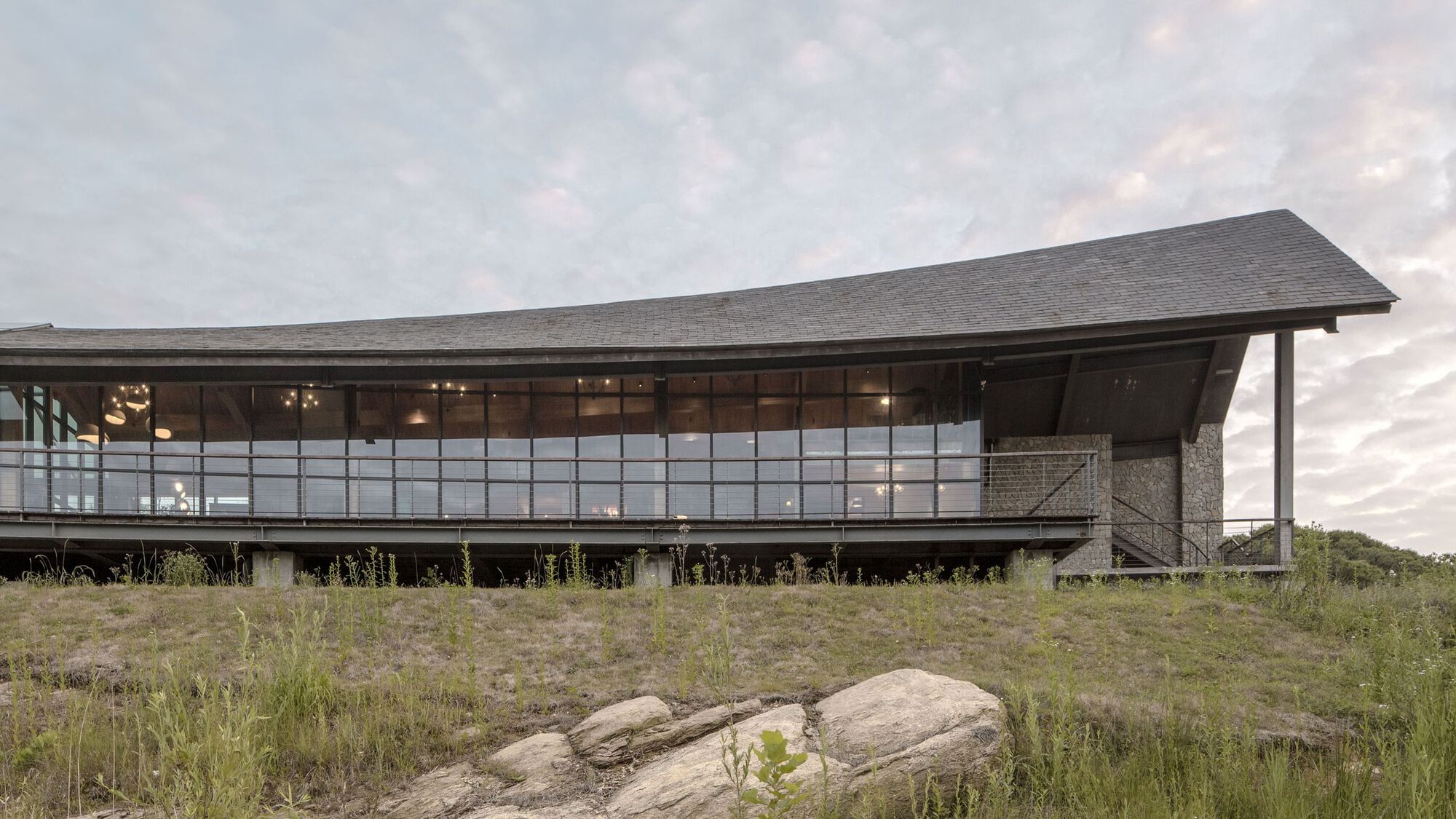
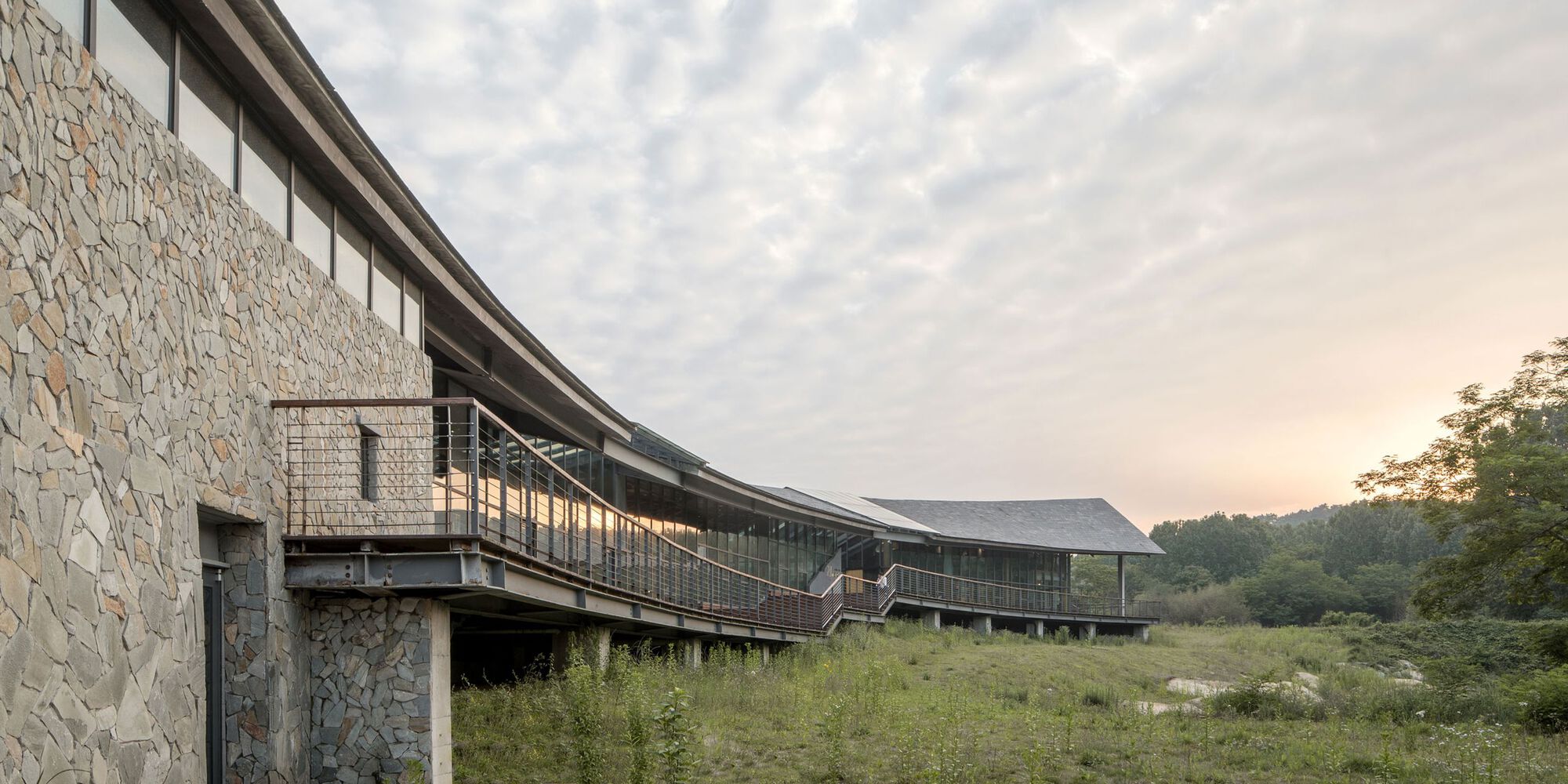
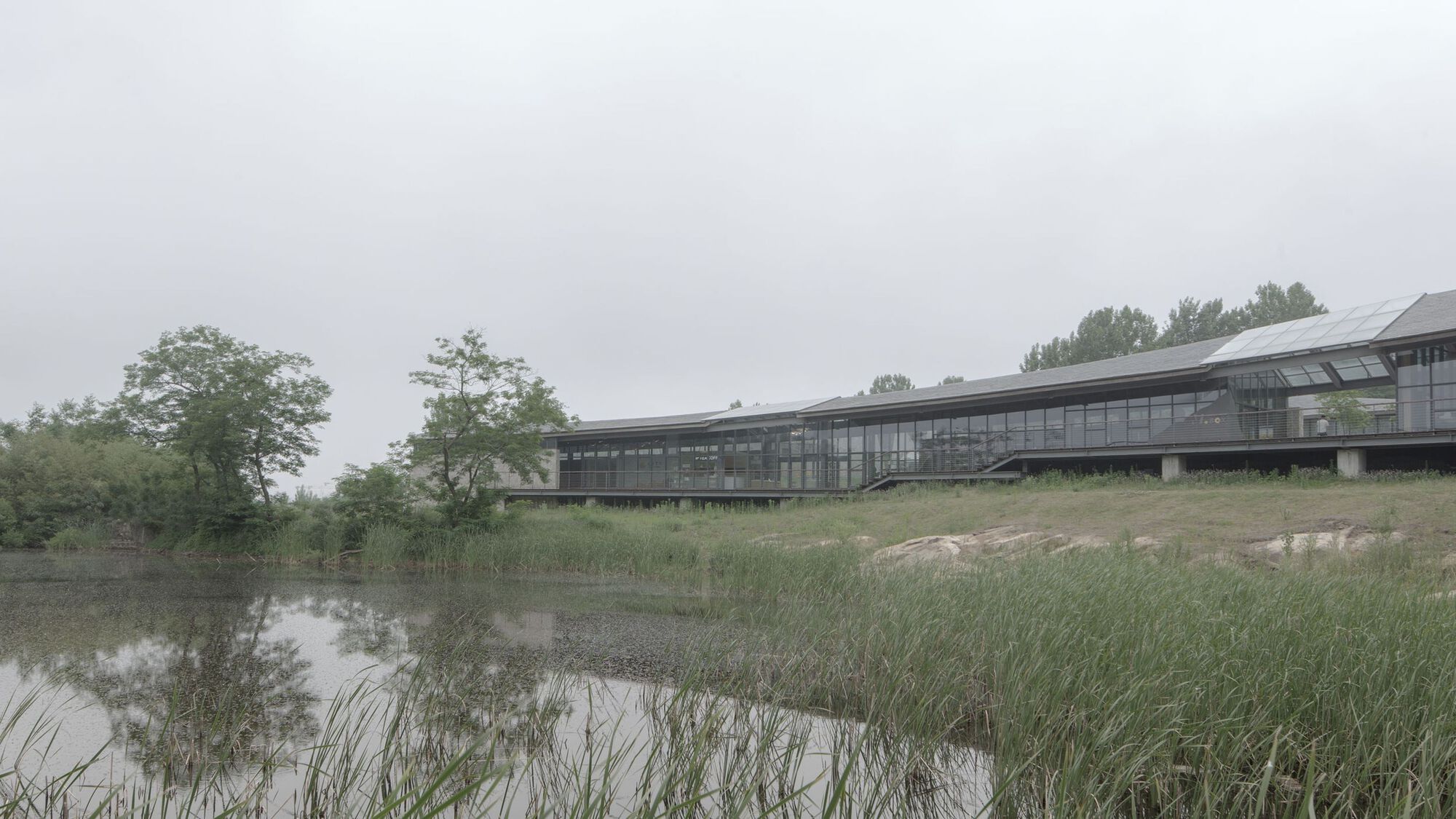
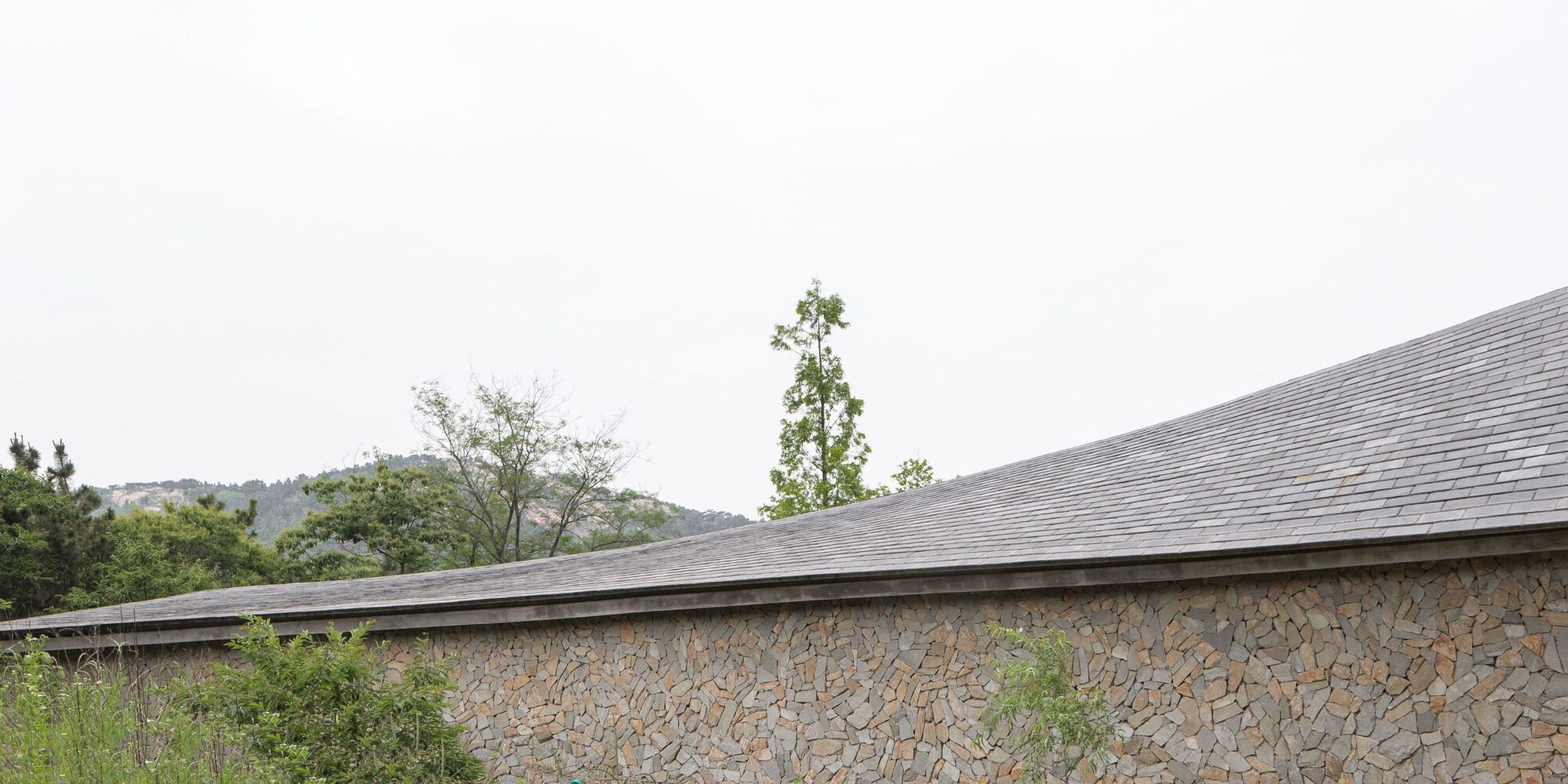
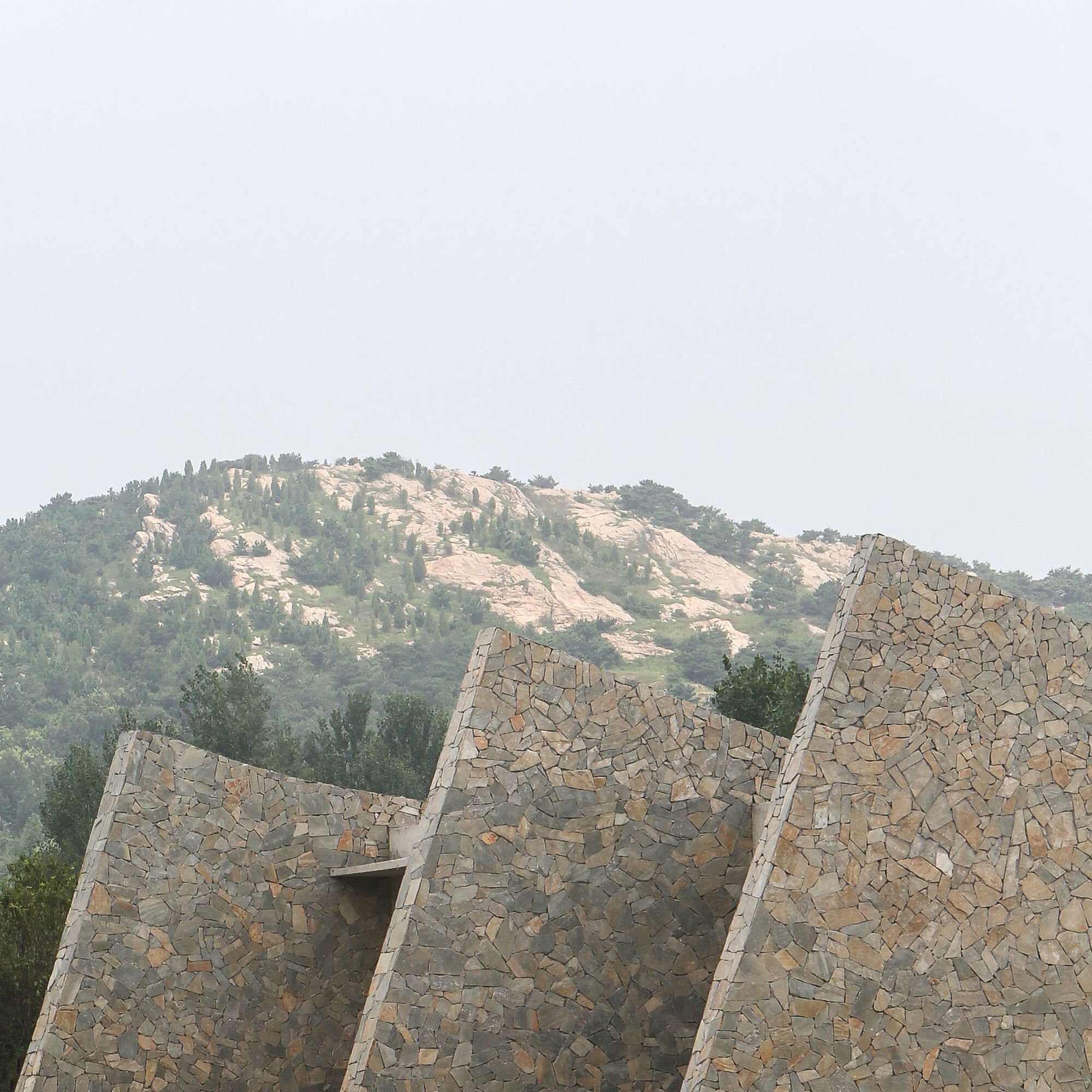
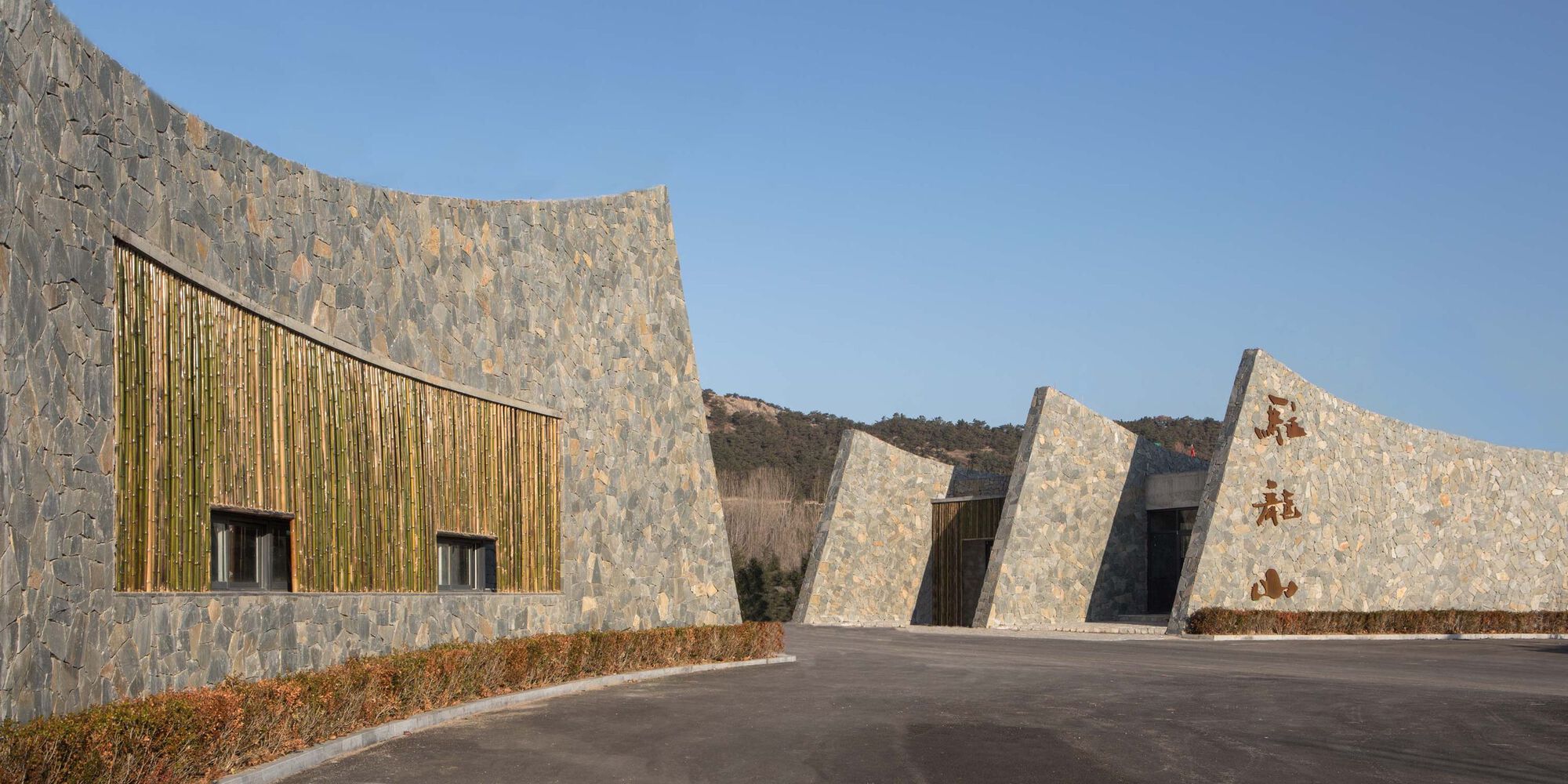
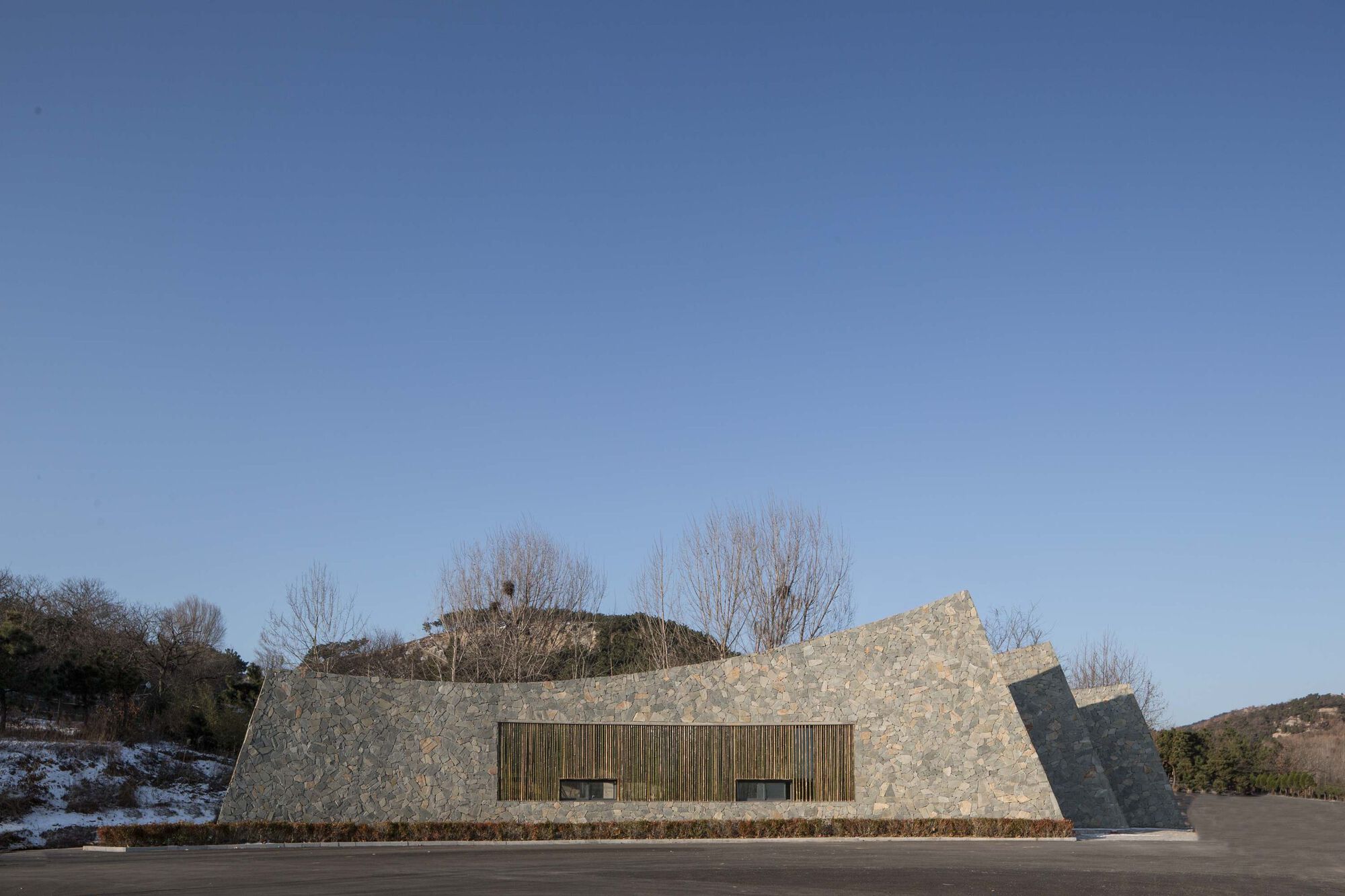
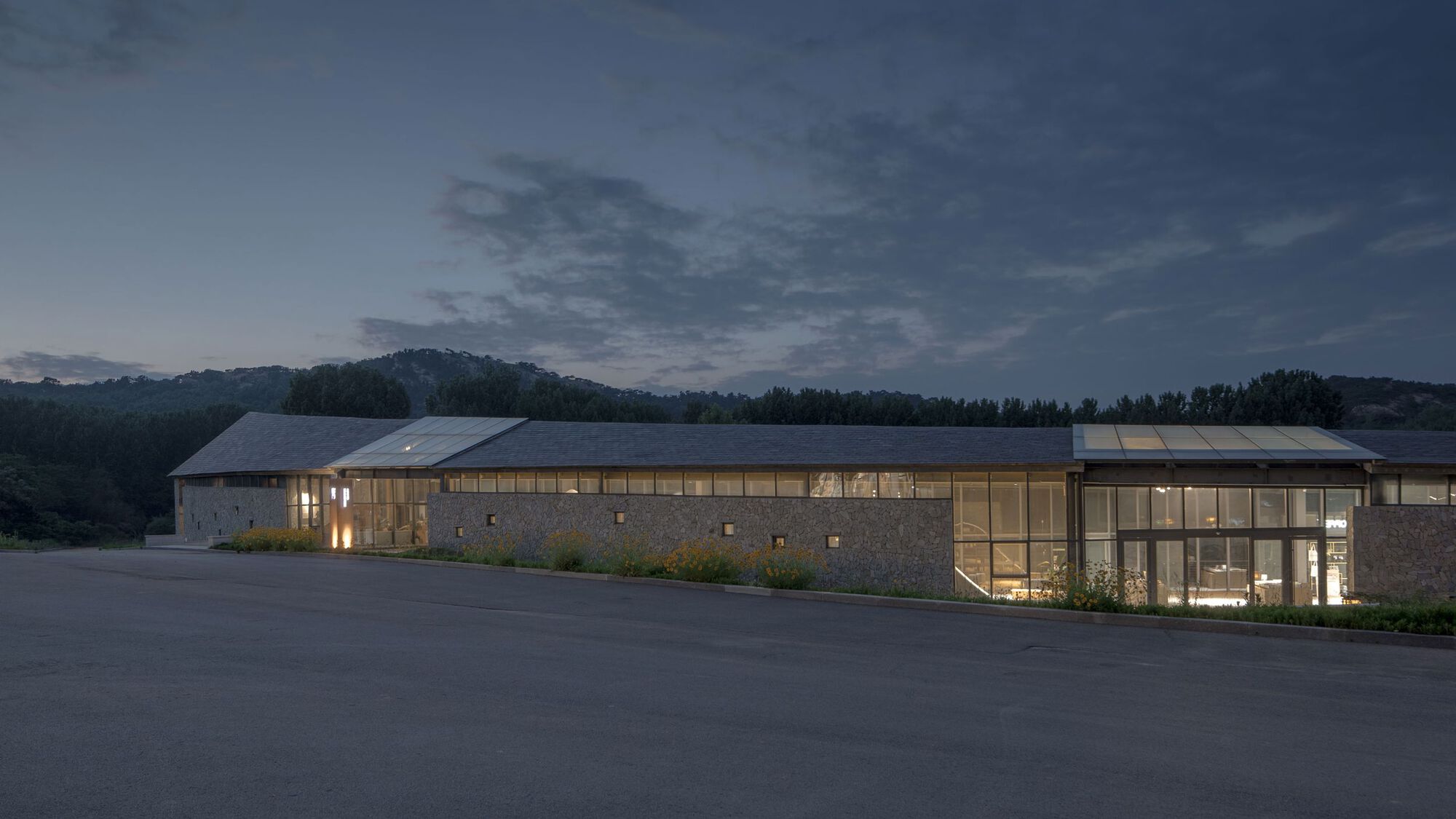
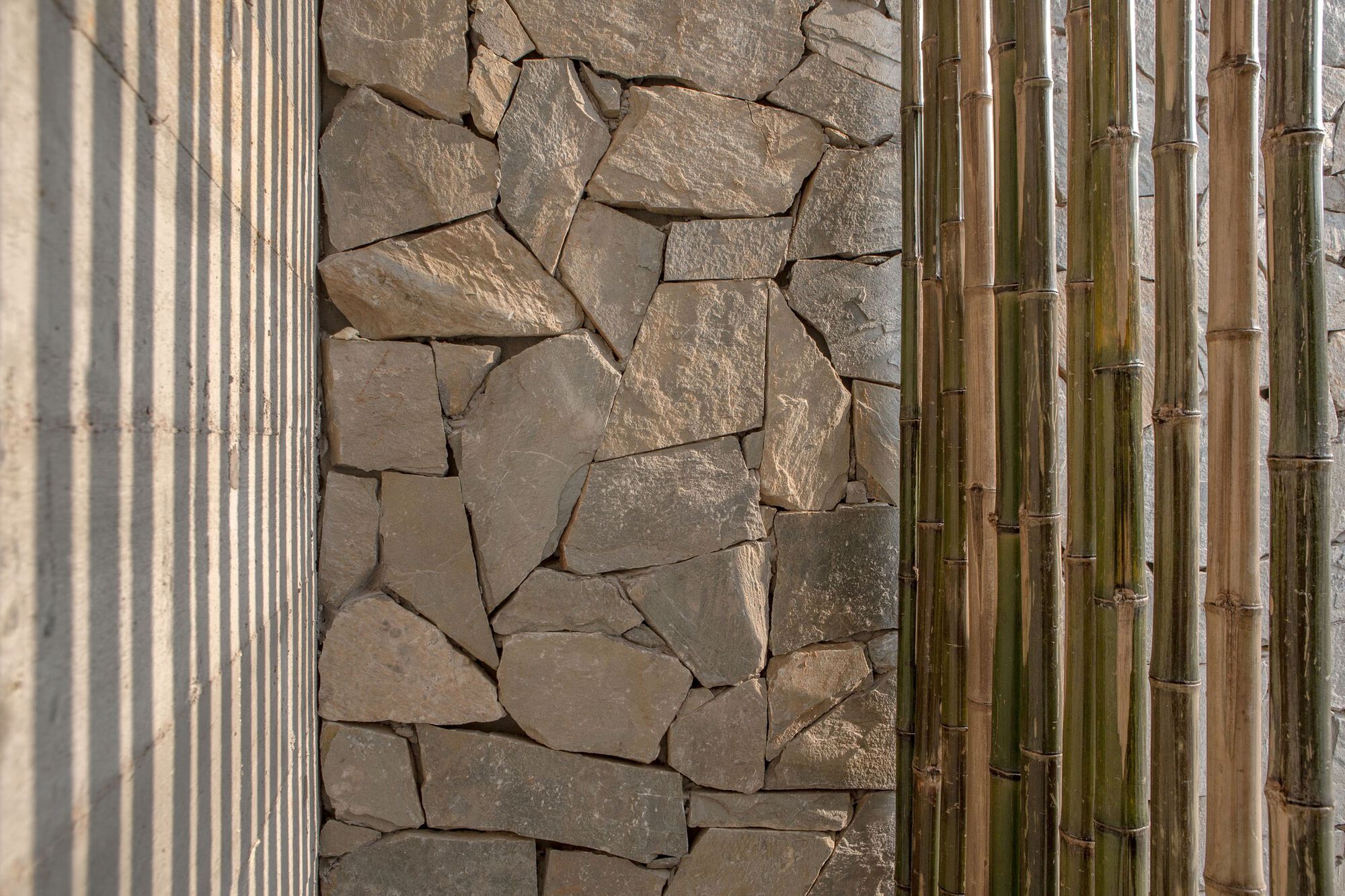
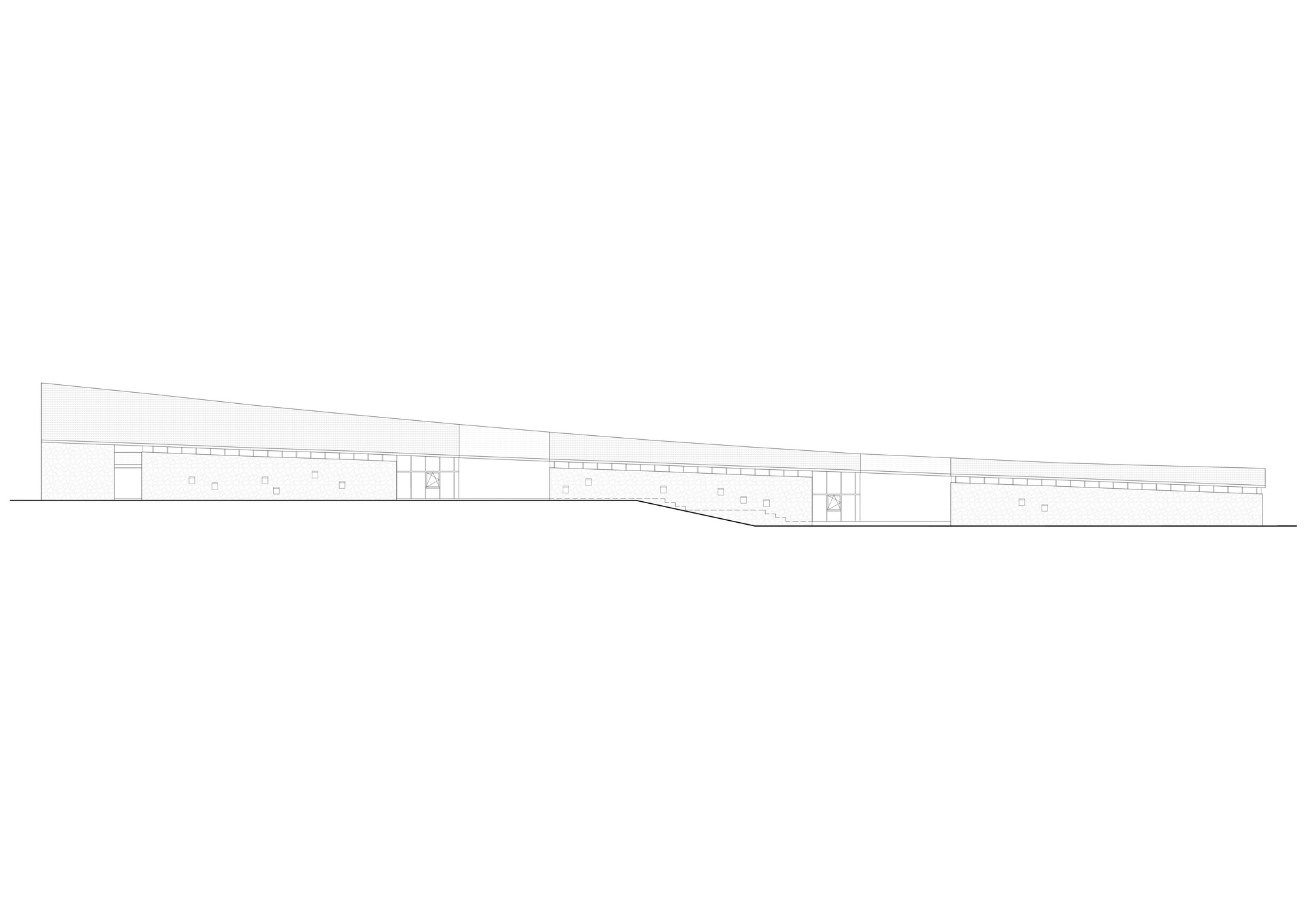
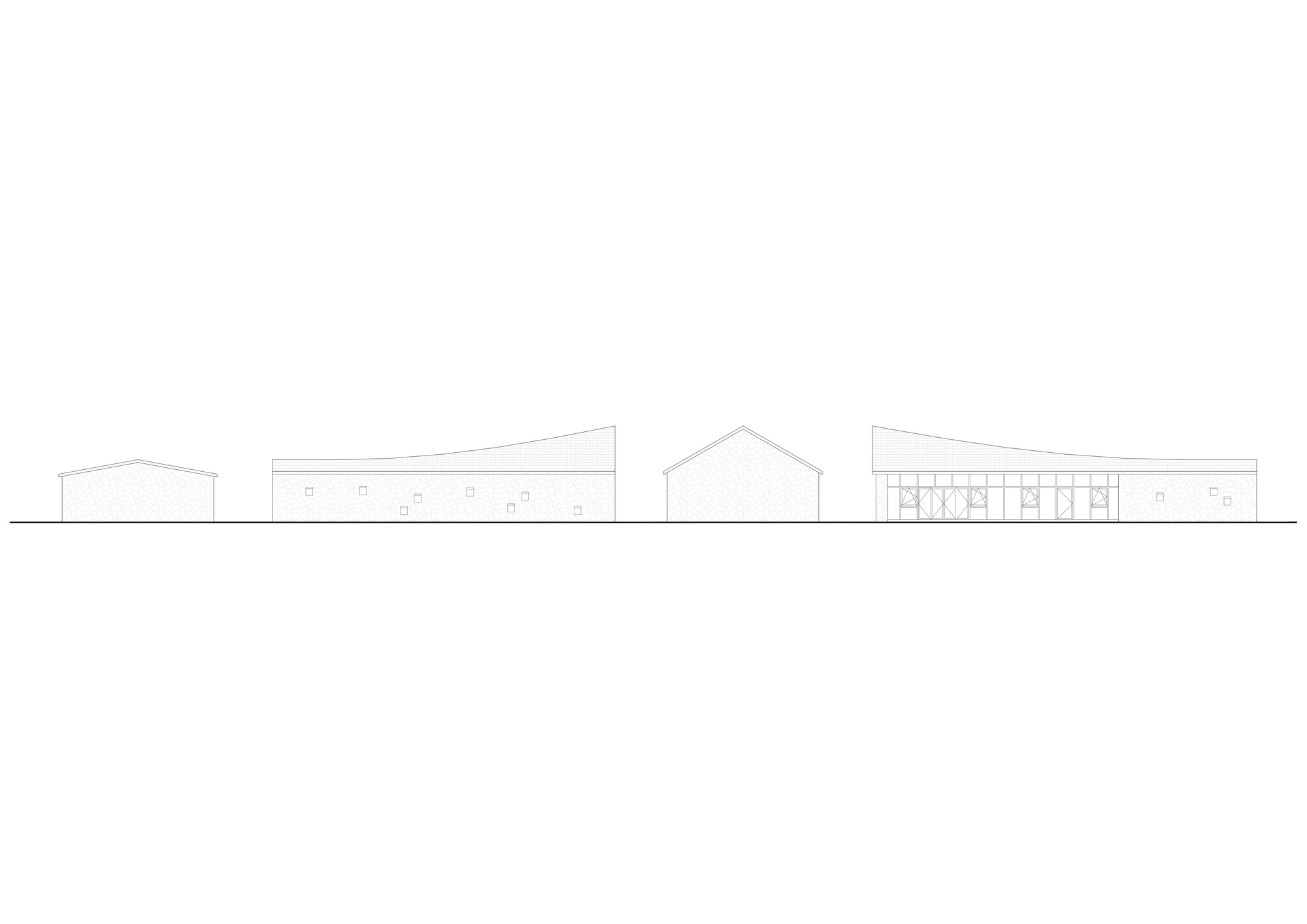
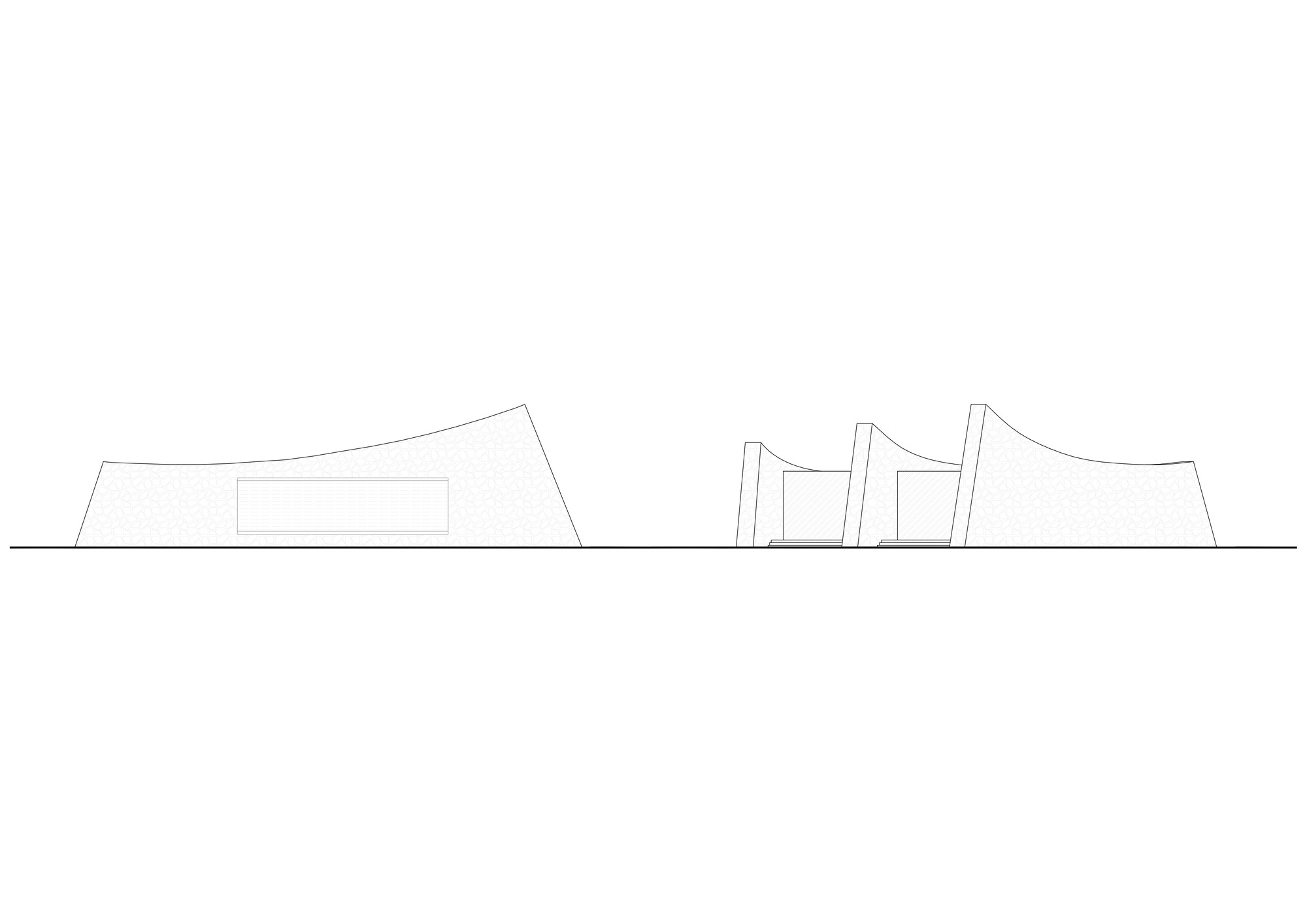
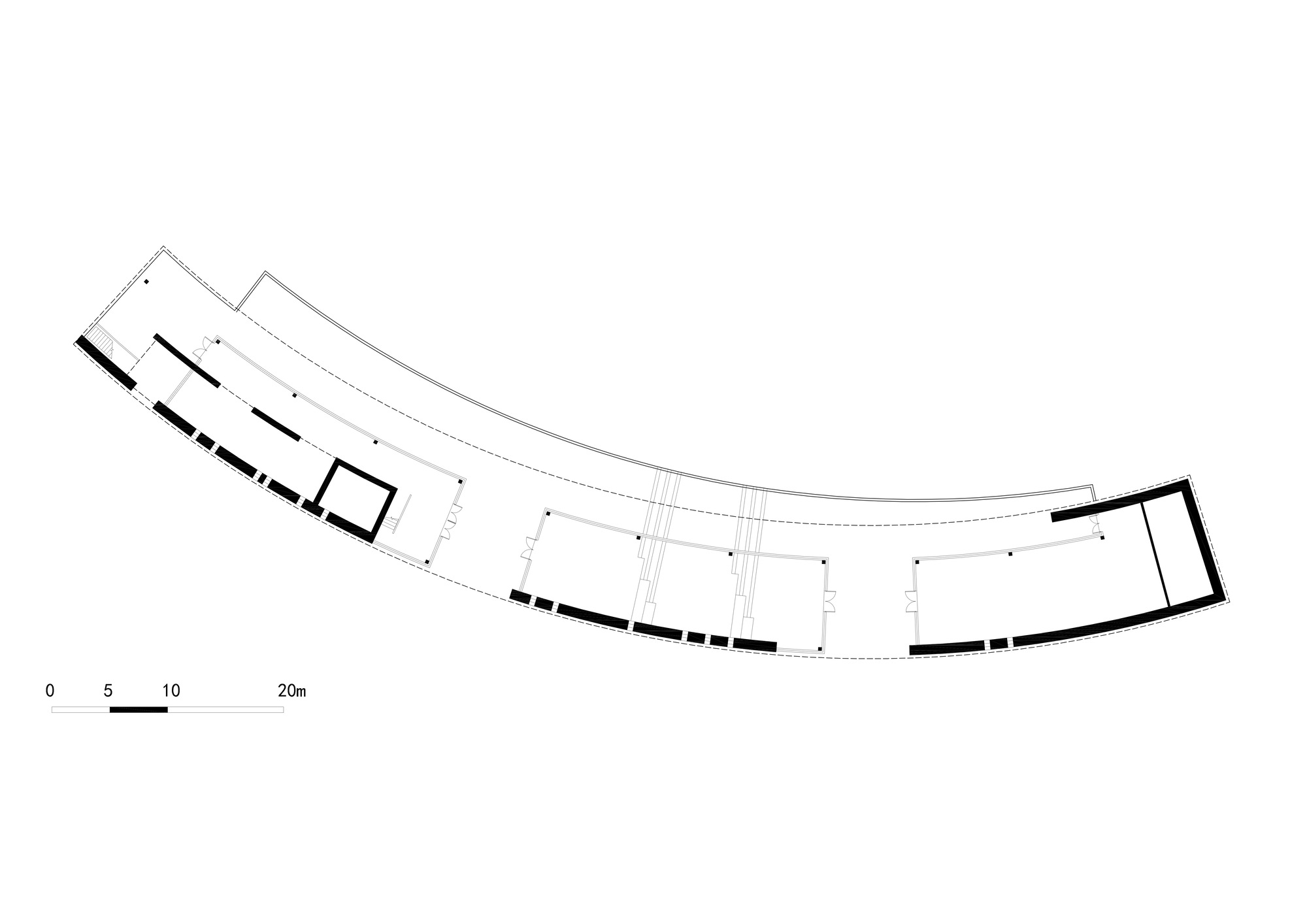
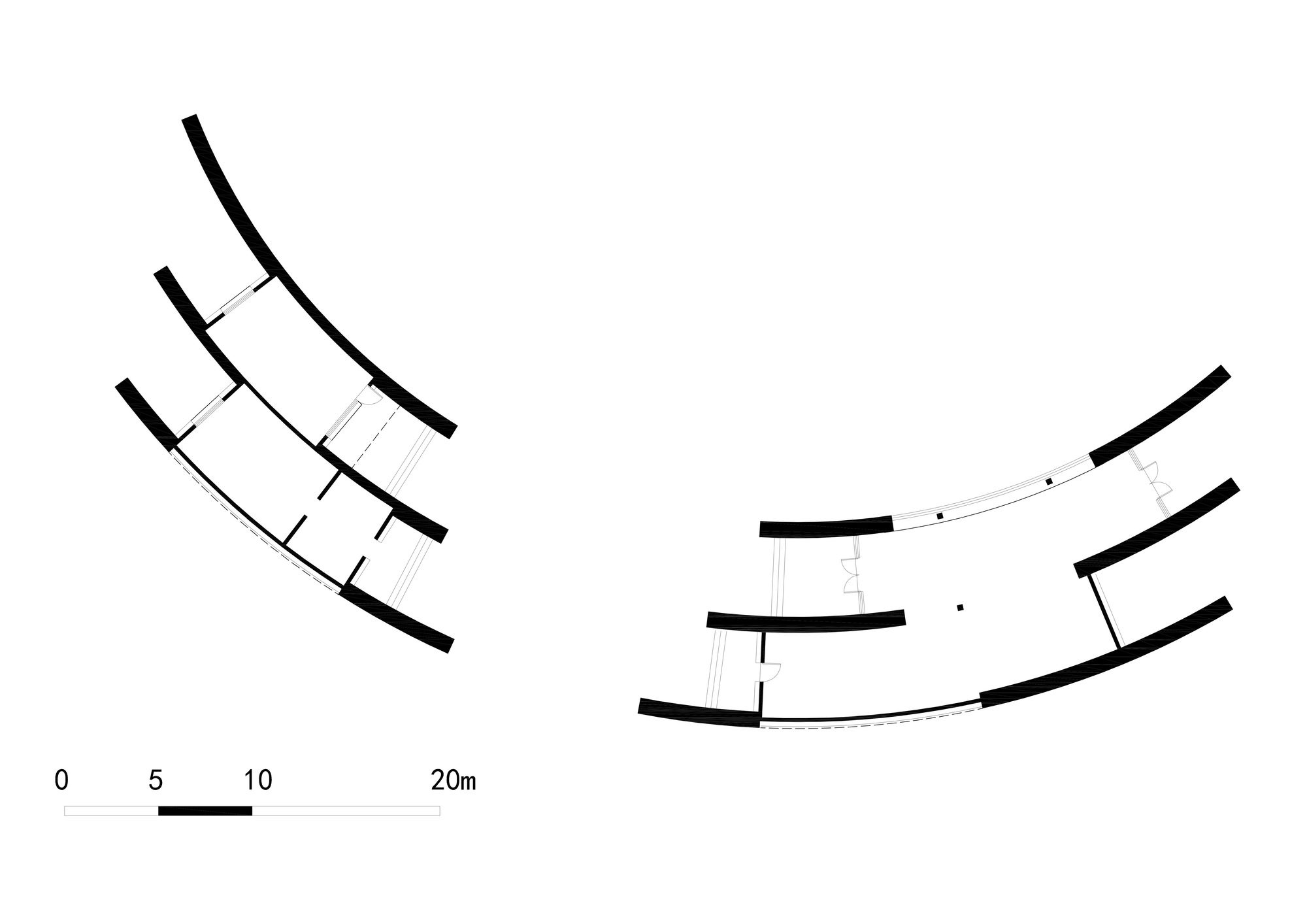
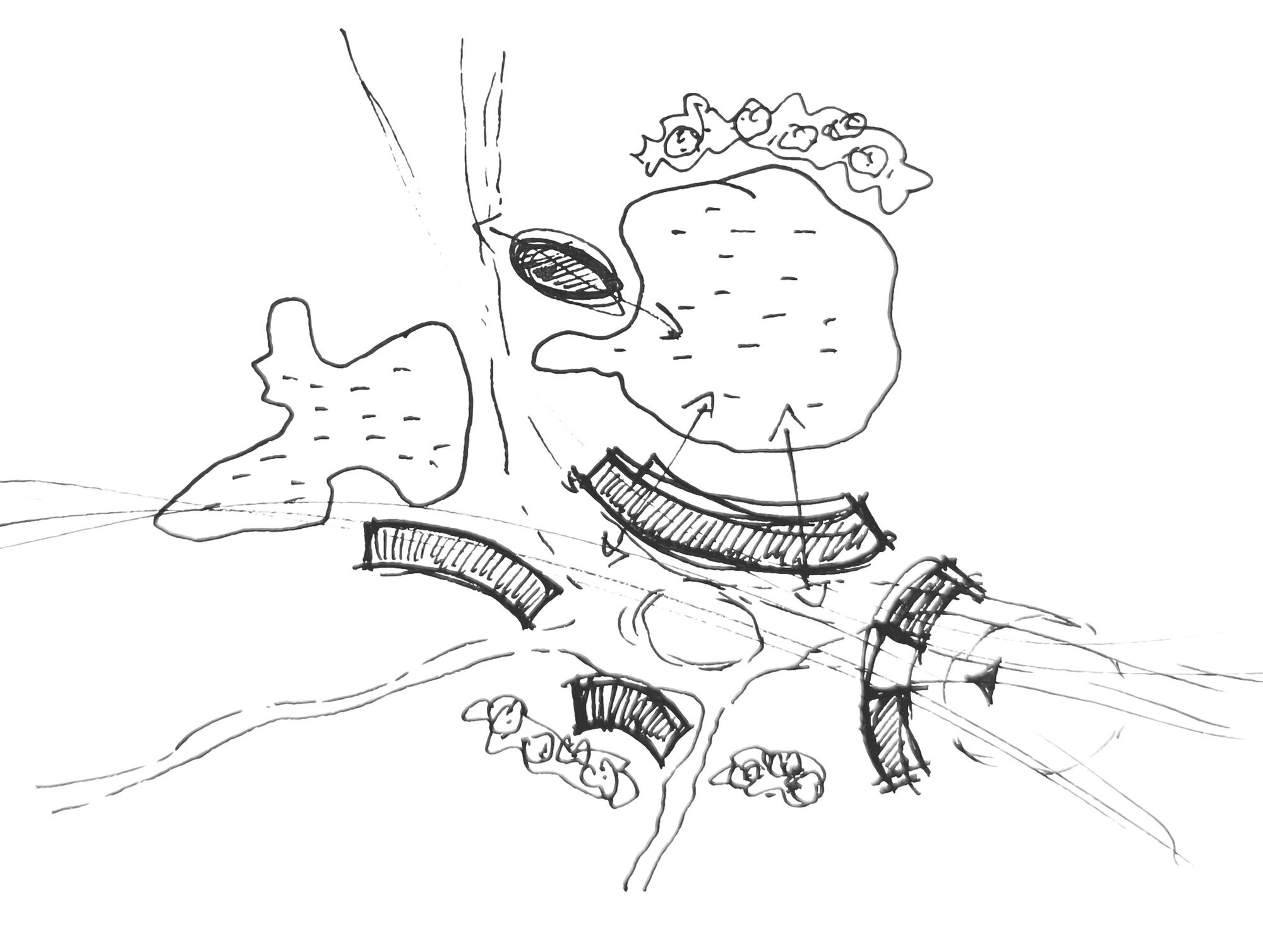
The Zhulong Mountain Visitor Centre is a 3,000-square-metre gateway complex for the Zhulong Mountain nature tourism zone in Rizhao, designed by Aurelien Chen and Wu Yixia of China Construction Design's Urban and Rural Landscape Research Institute, with designers Ma Jing and Wang Manyu, for the client Rizhao Fada Group. The entrance path axis frames a view of the mountain, then splits: one branch climbs uphill, the other descends gently to two small ponds ringed by trees. To make the buildings fit the natural site, the architects split the 3,000-square-metre programme into five architectural elements arranged around a small plaza. The design language is deliberately slender and pure: each element is low on the side facing the entrance and grows taller toward the mountain, grounding itself in mass on the lower side and lifting into geometry on the higher side, evoking the traditional Chinese idea, shared with Daoist philosophy, that humans are tightly bound to heaven and earth. Curved buildings converse with one another, and solid blocks alternate with open voids that leave blank space as a picture frame for the mountain. The entrance gate itself combines functions: a ticket booth on one side and security on the other, acting as both building and sculpture. It is composed of three curved walls in the manner of urban public space, defining the external public square and rooting themselves in the earth while pointing to the sky like peaks, symbolising the Daoist triad of heaven, earth and human. There is no monumental gate; the blank space itself becomes the frame for distant mountain views, and the continuous walls recall the defensive walls of old cities and palaces, creating a processional sequence in which visitors discover each building along the way. Materials reinforce this: rubble stone cladding expresses the link to the ground and blends the gate with local architecture; board-formed concrete expresses the irregularity of natural elements and can be built by non-specialist workers; and screens of natural bamboo poles set a subtle layer between heavy concrete or stone and transparent glass.
















 Editor's Pick
 Latest Design
 Best Idea