Text description provided by the architects
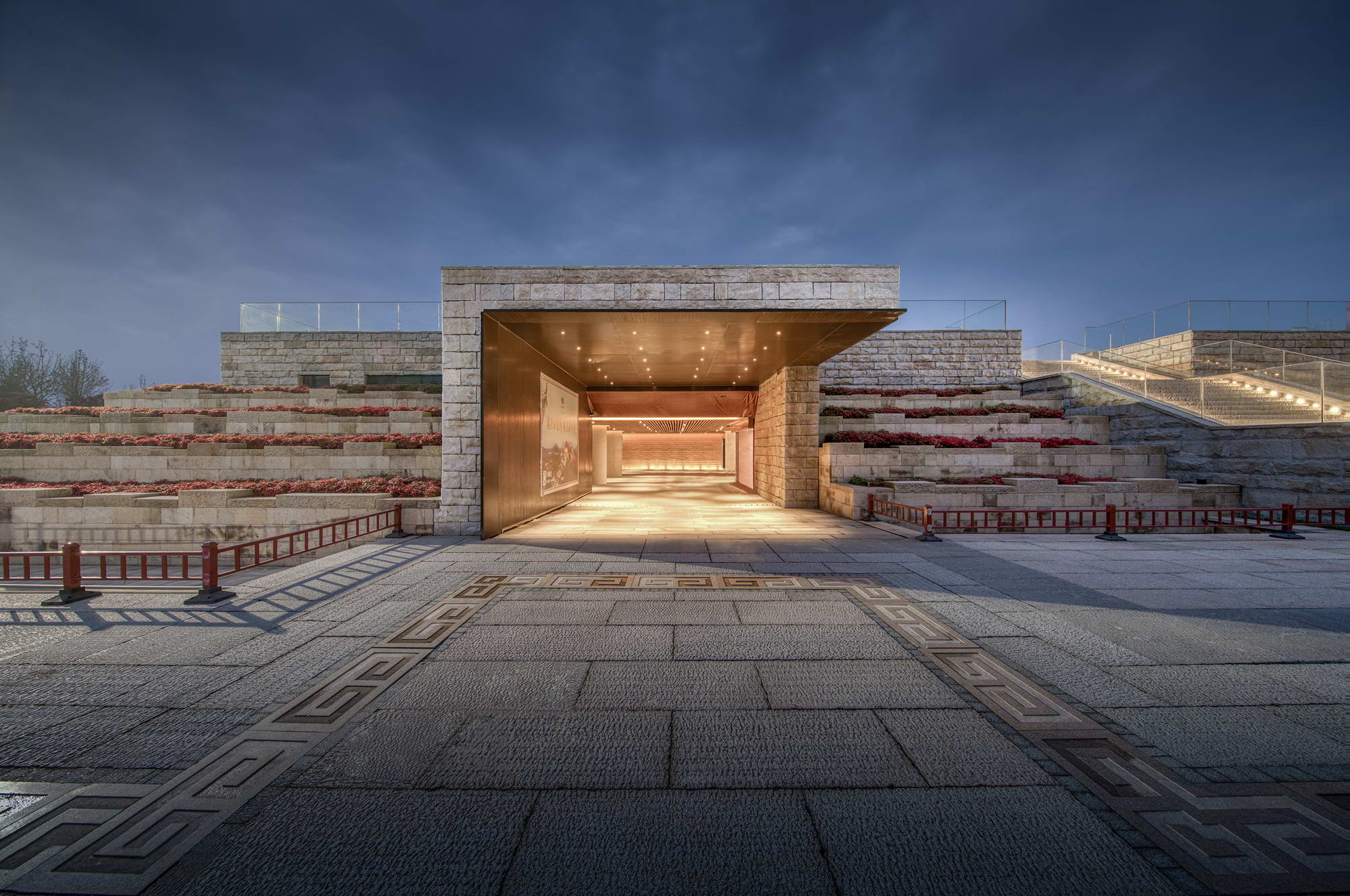
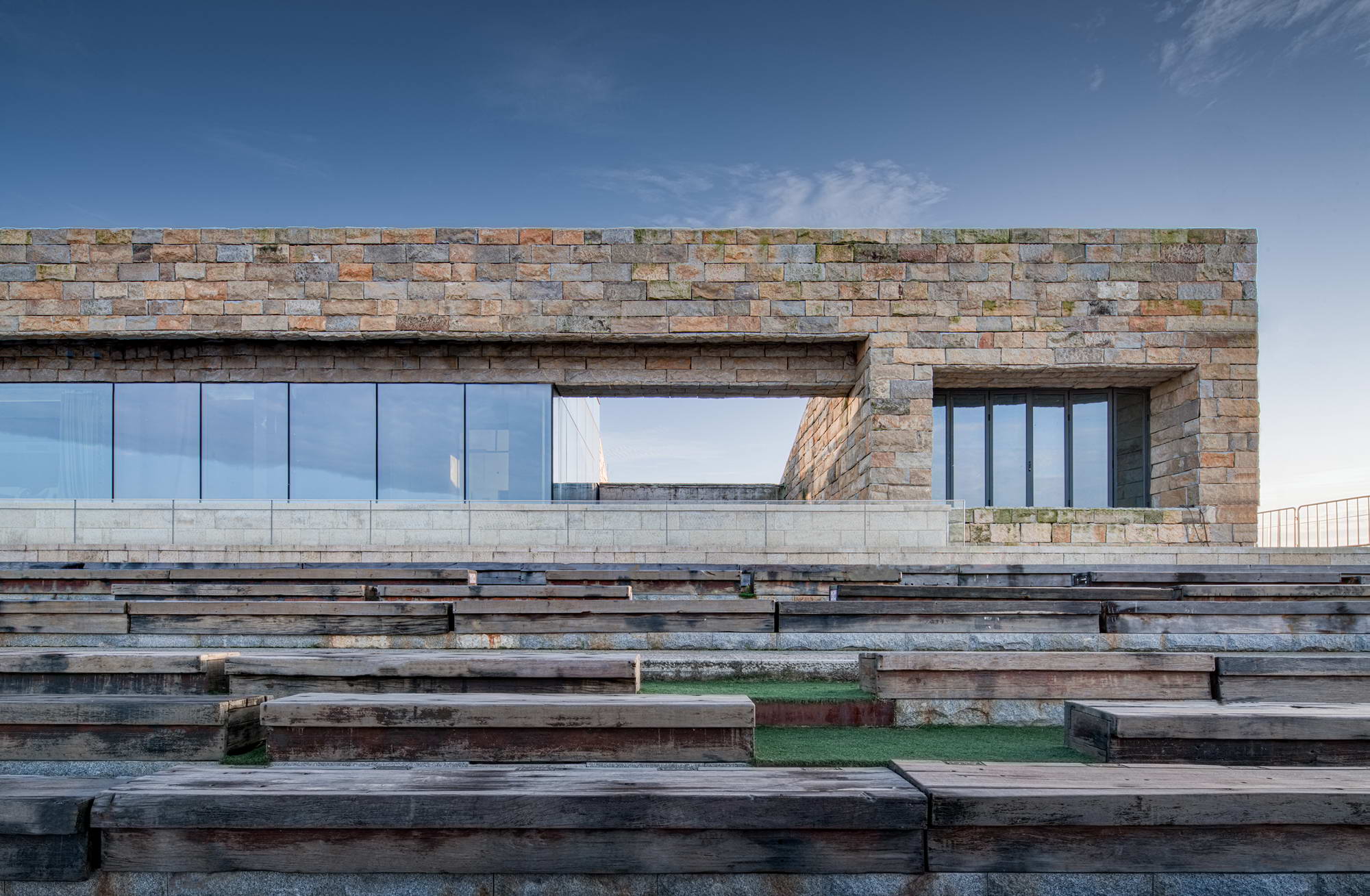
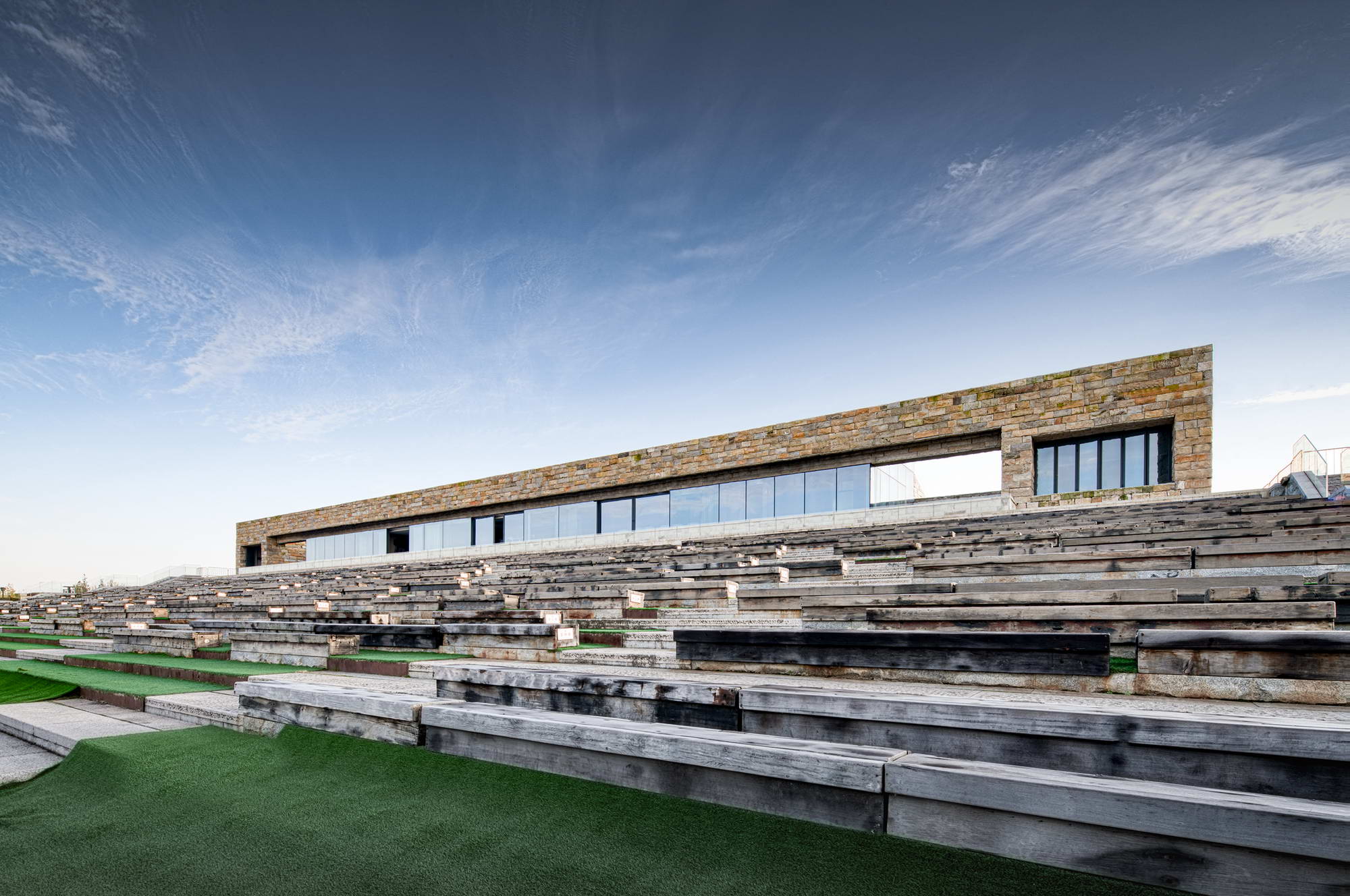
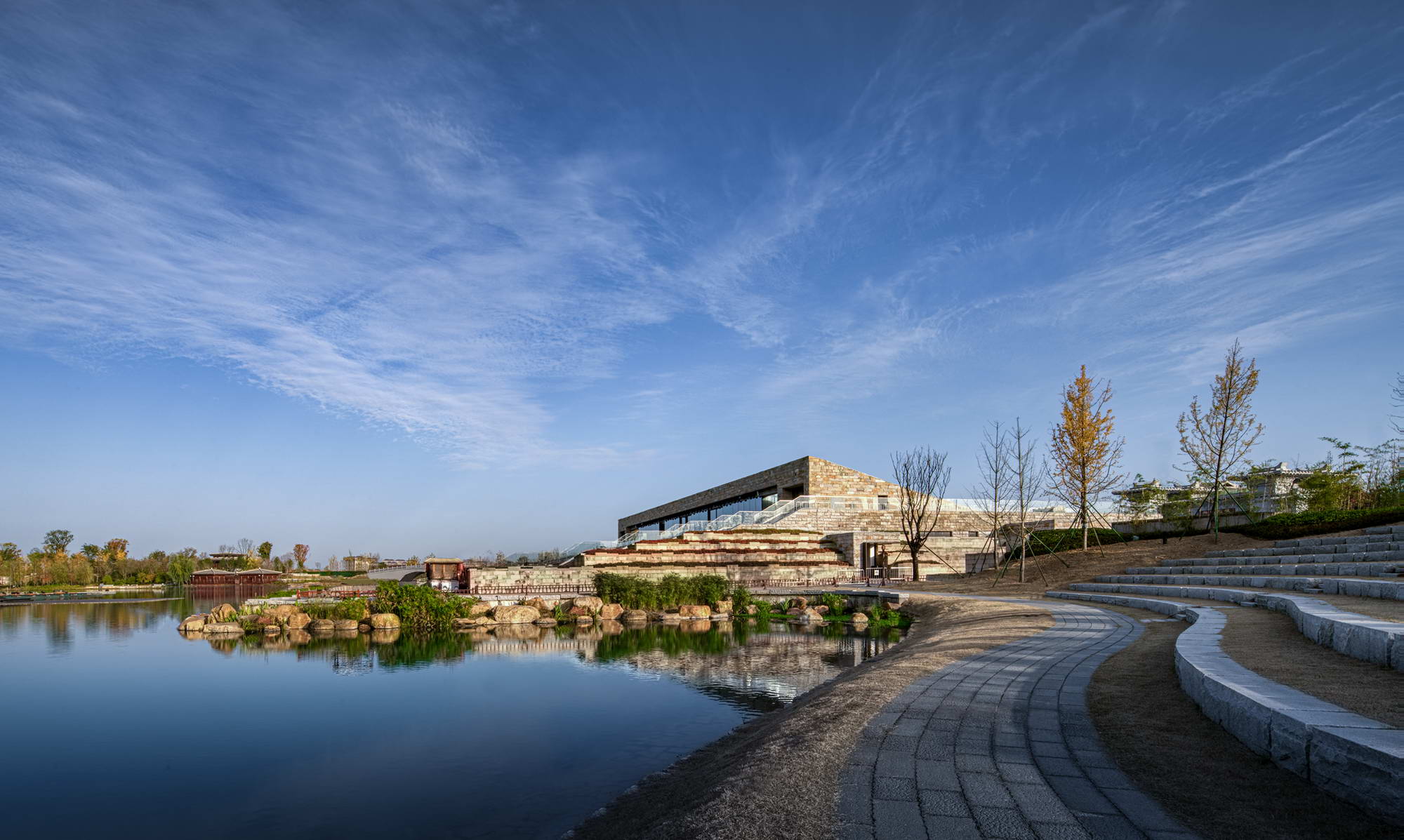
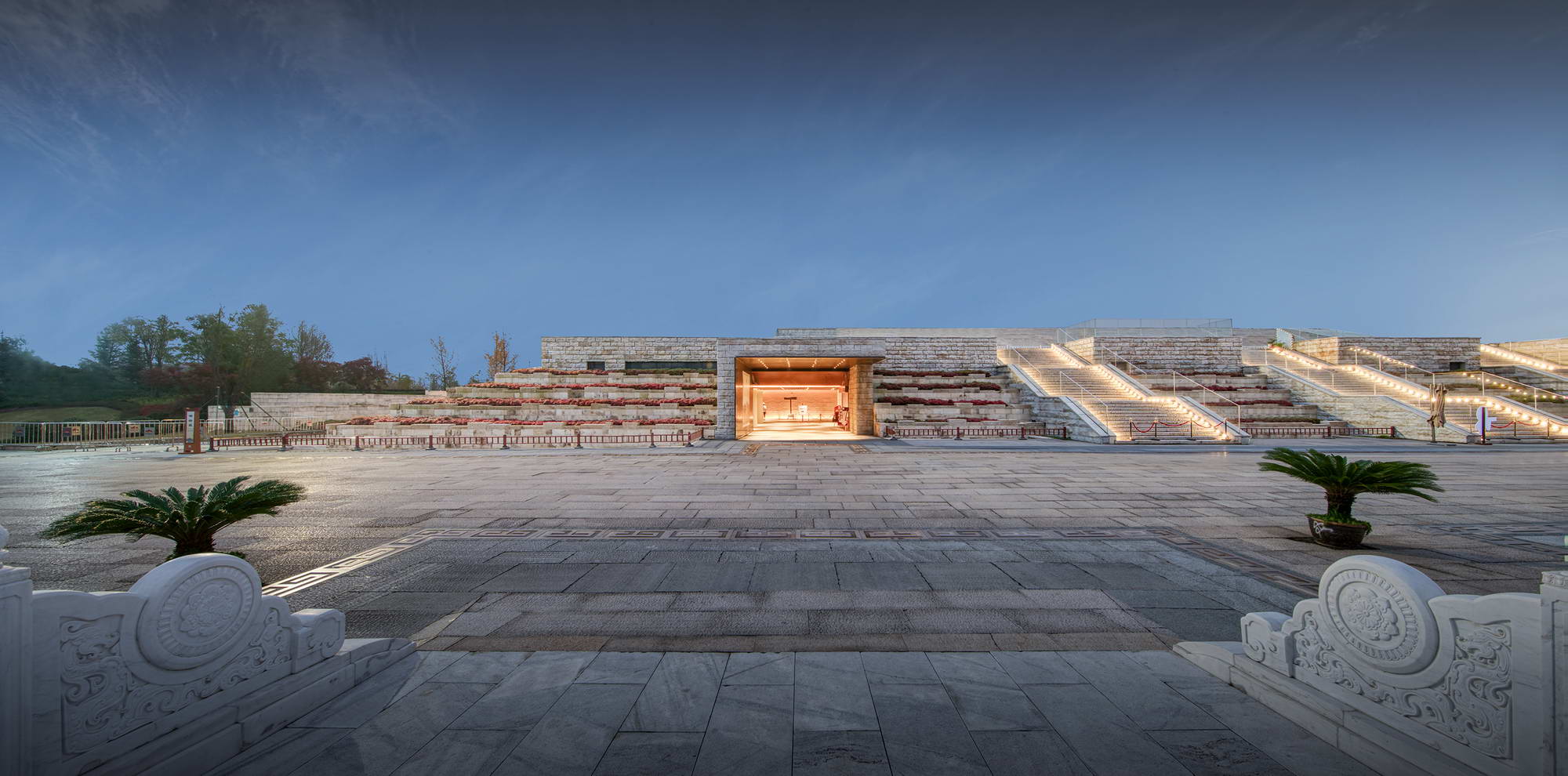
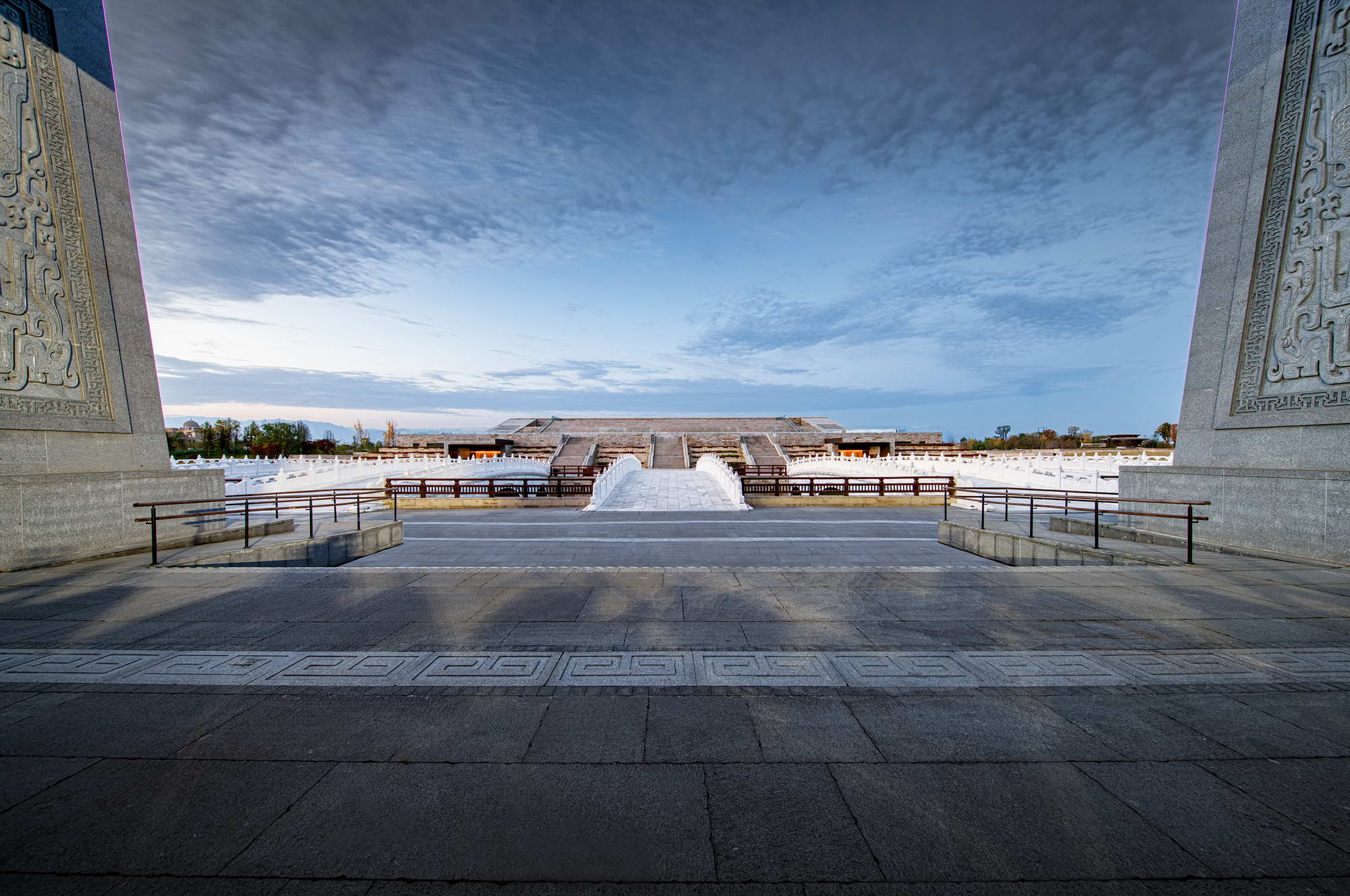
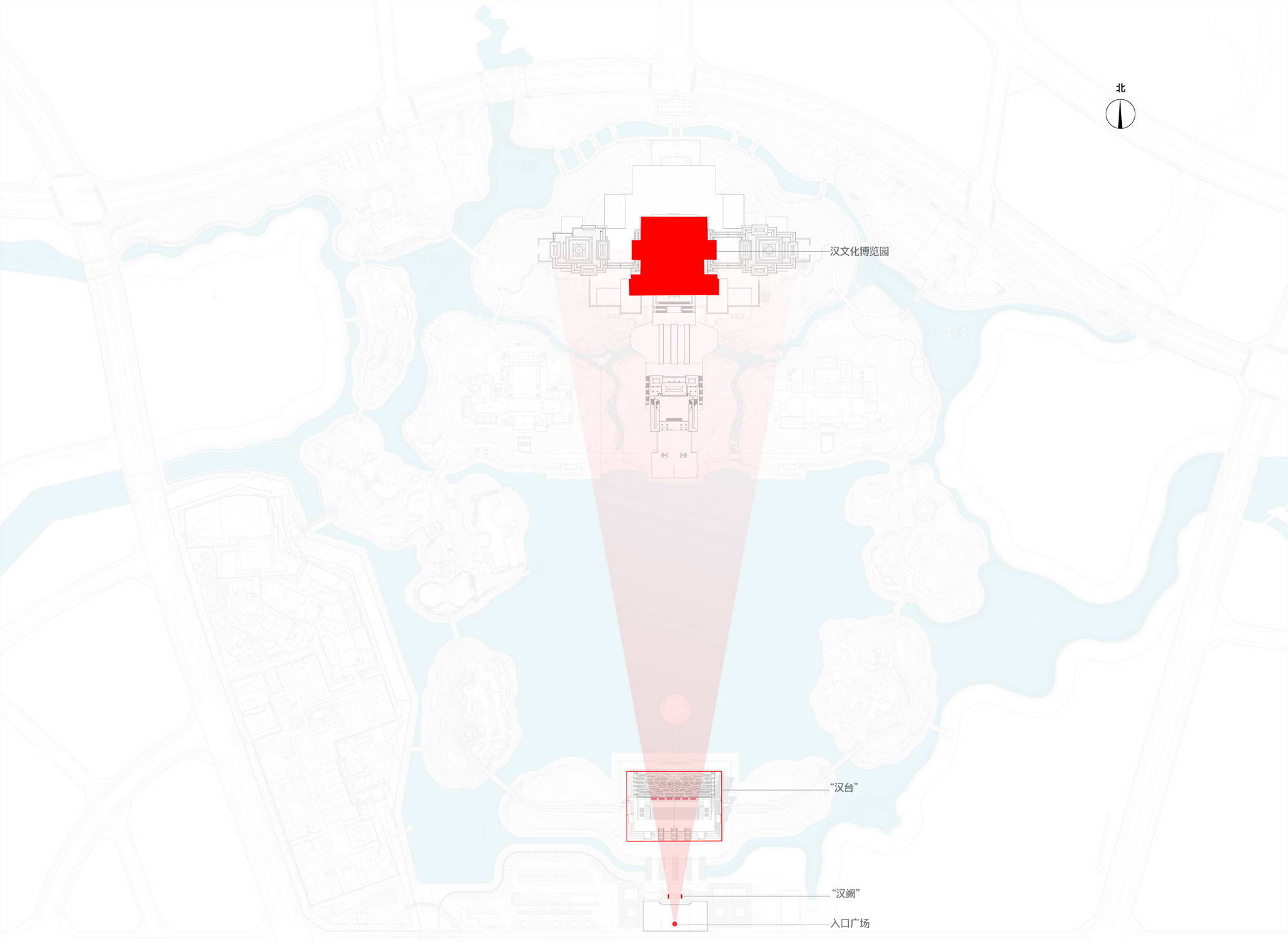
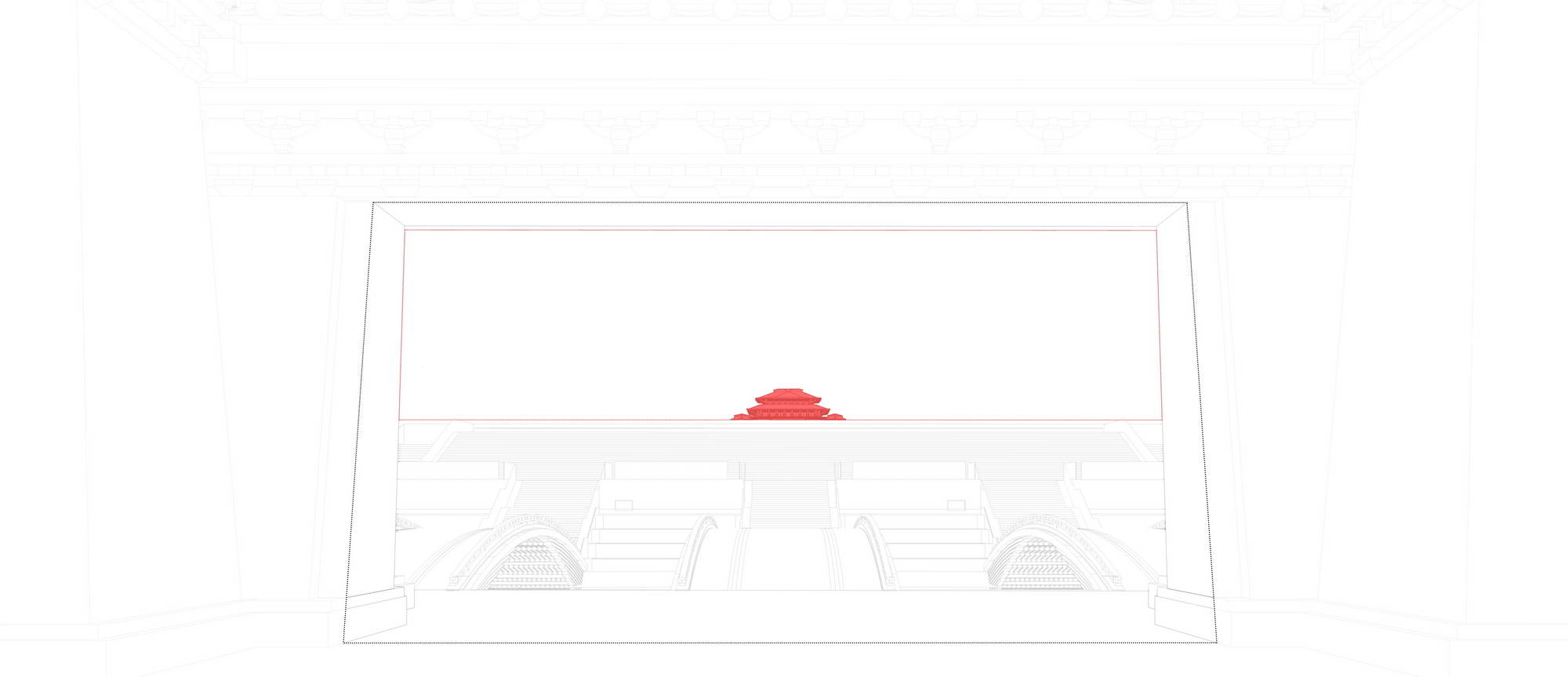
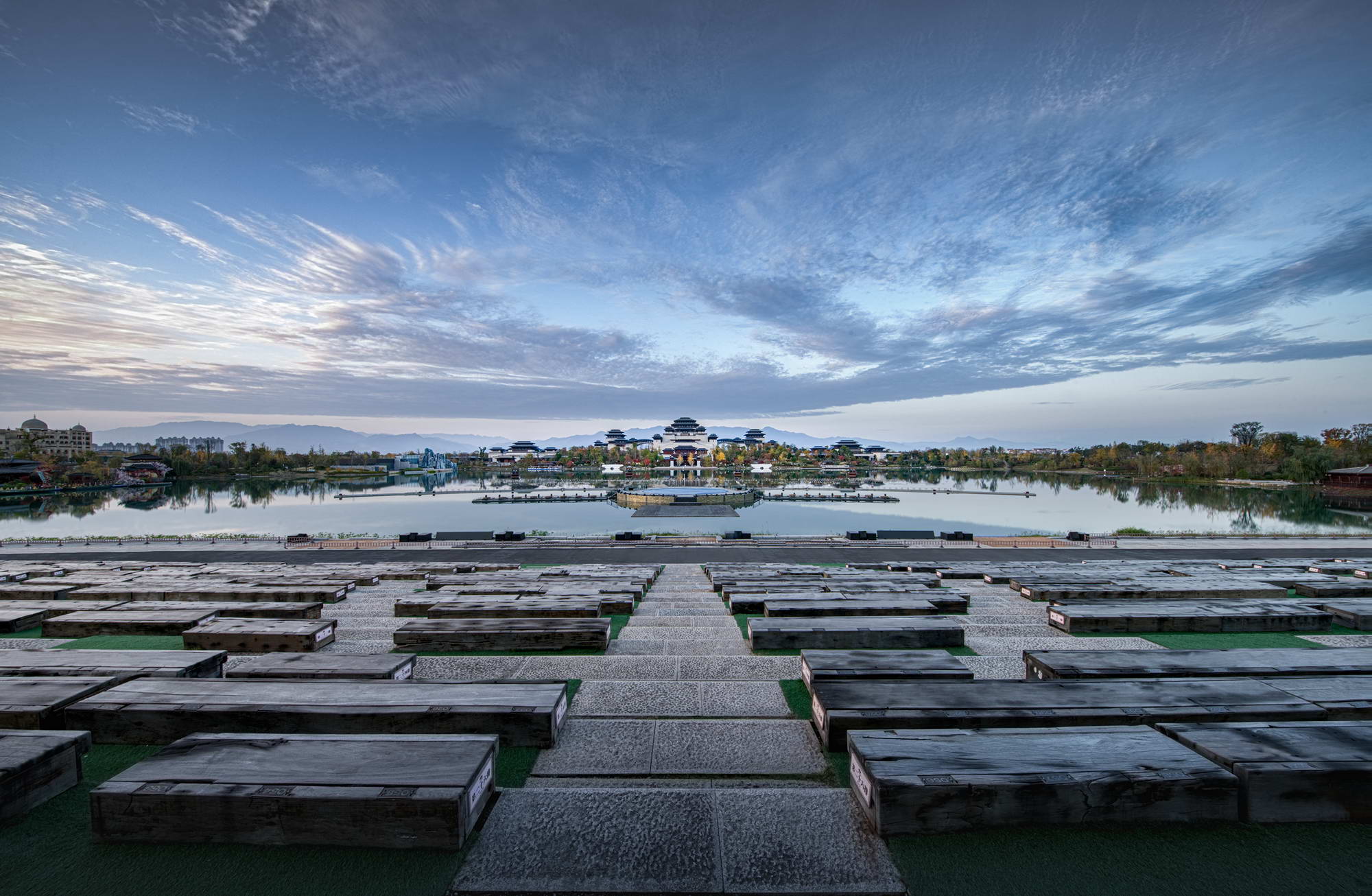
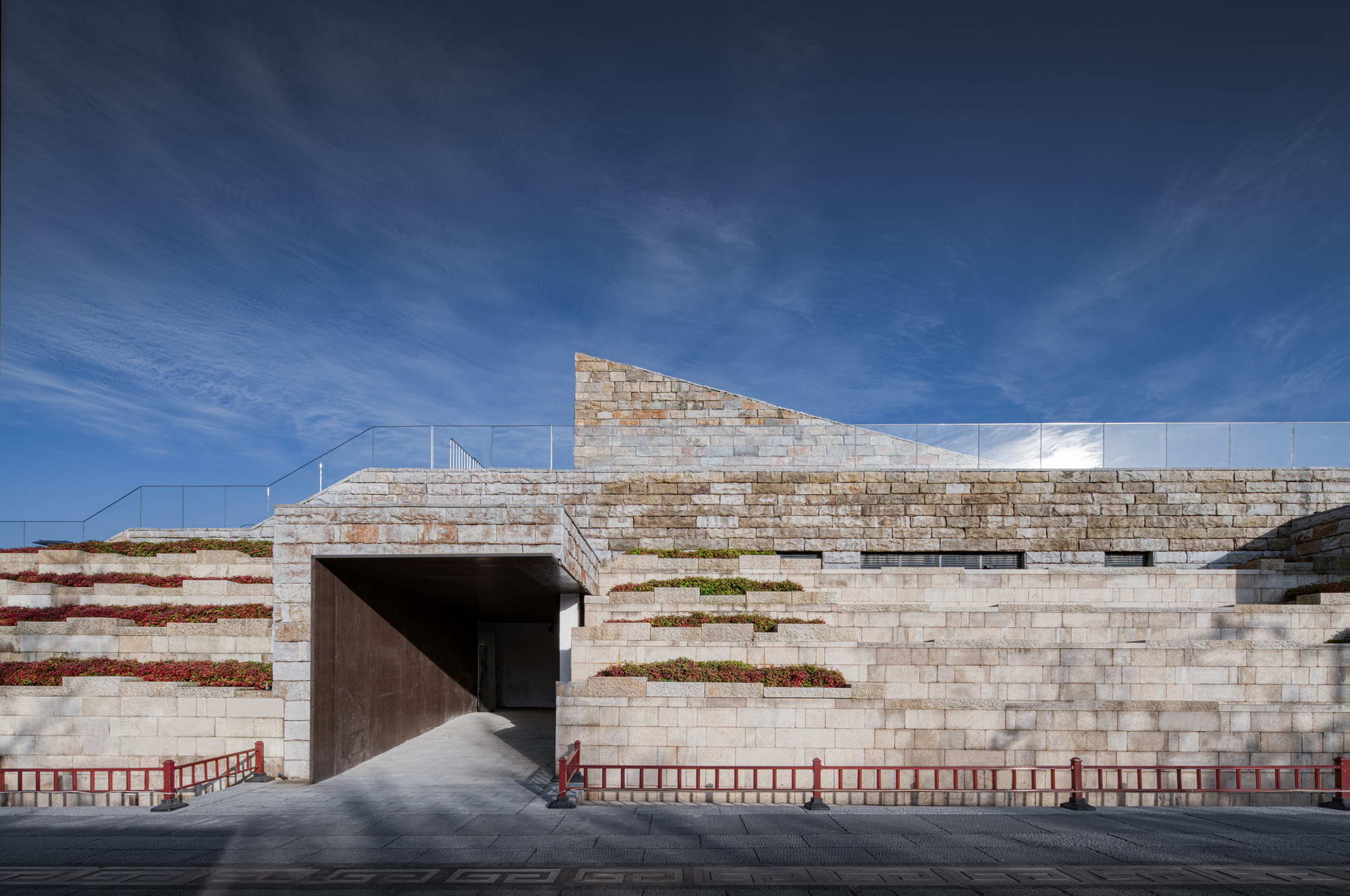
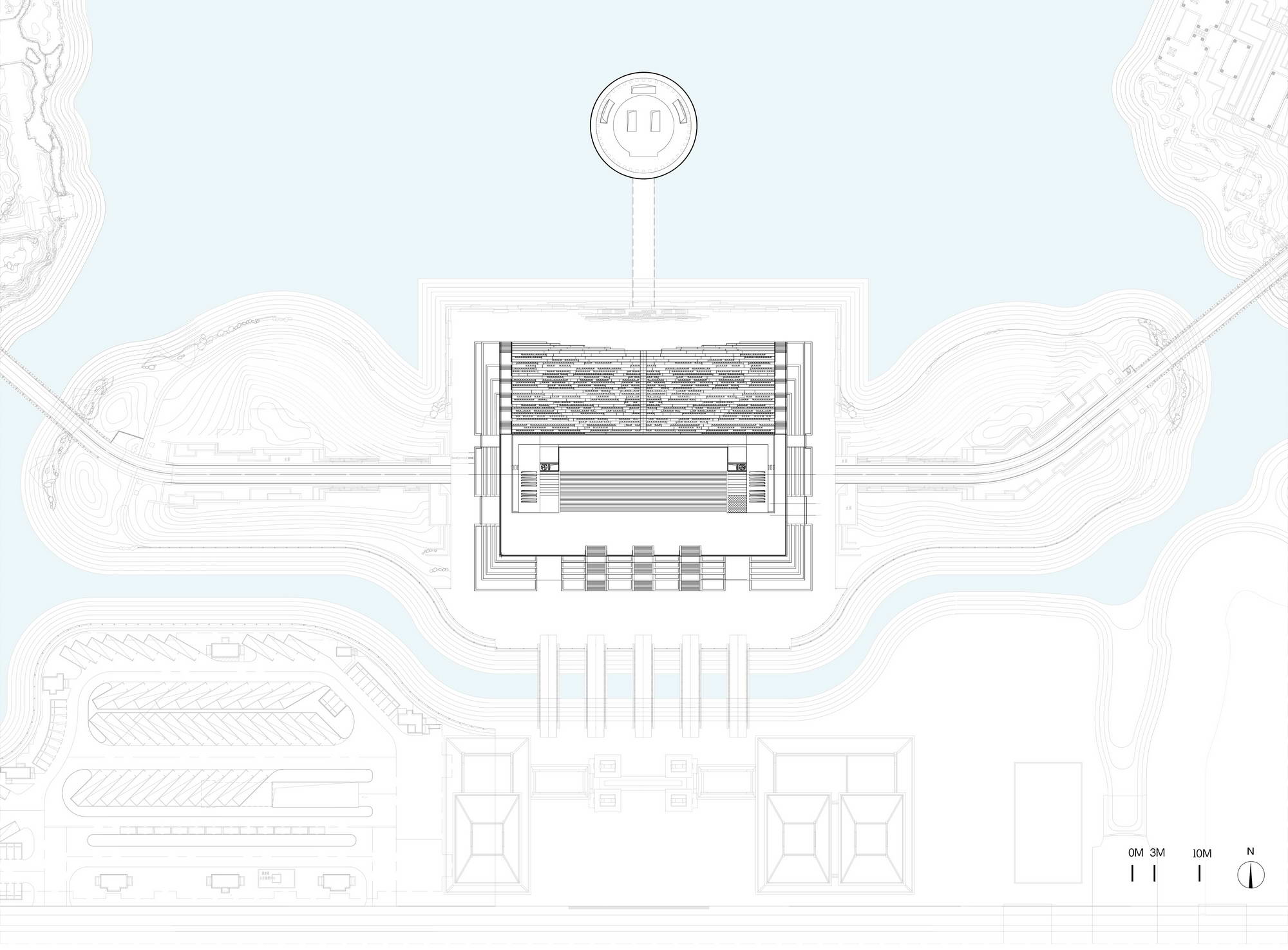
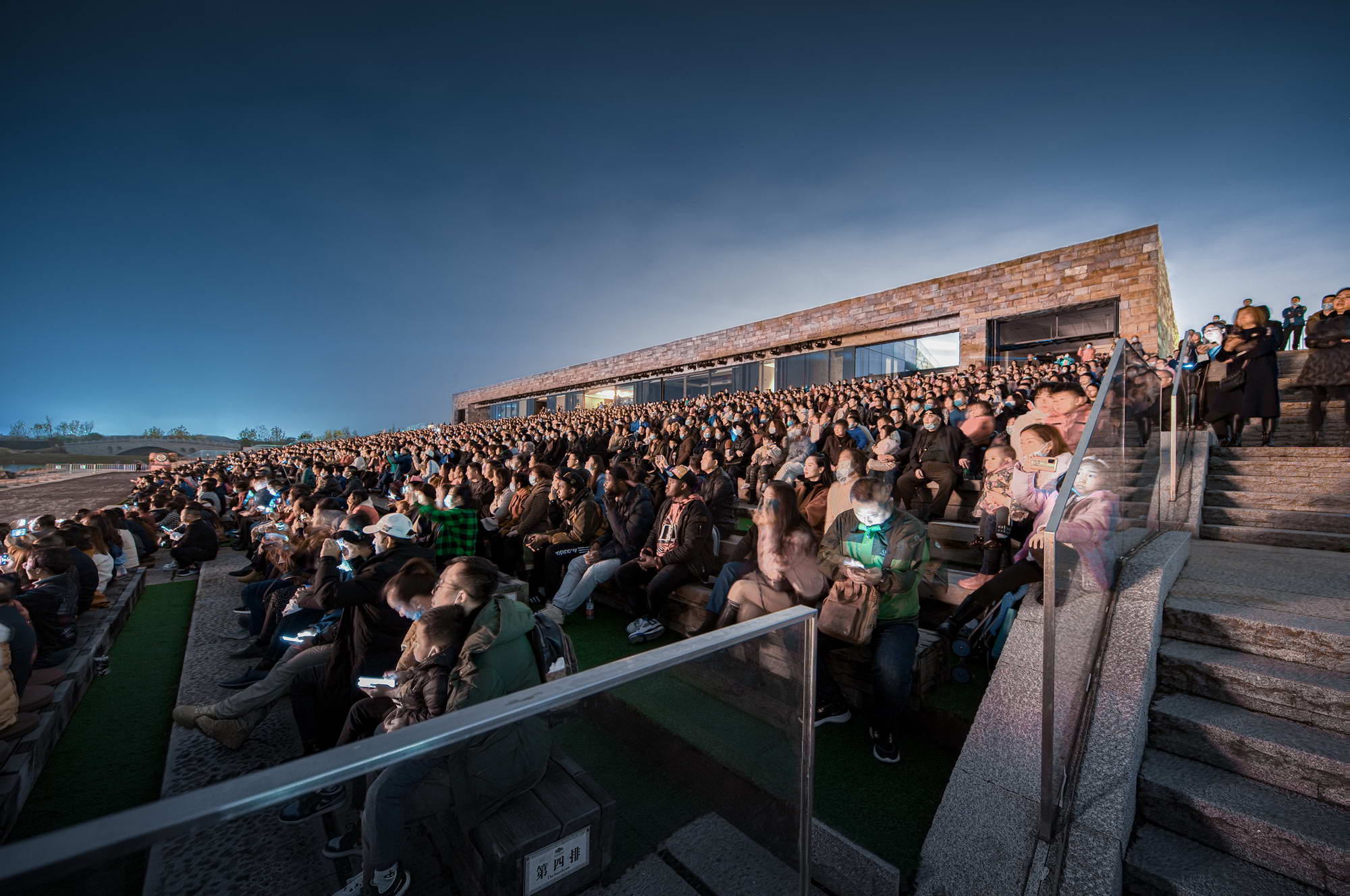
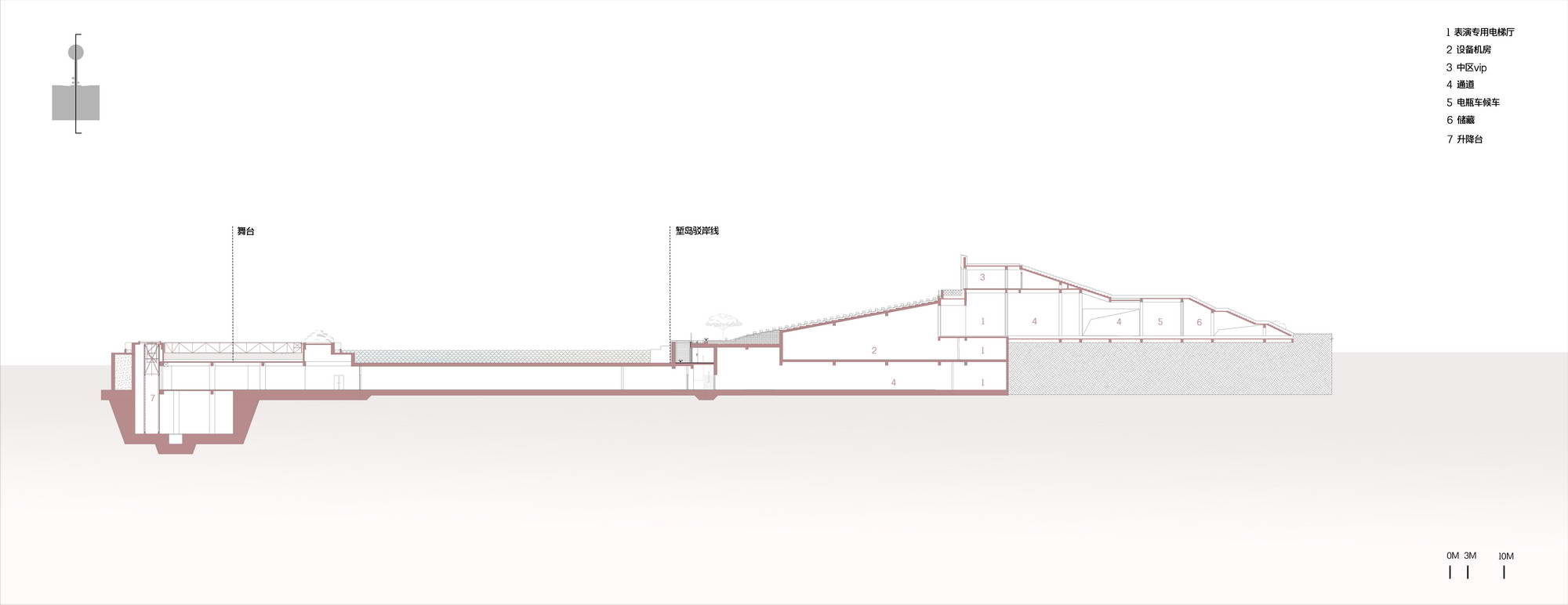
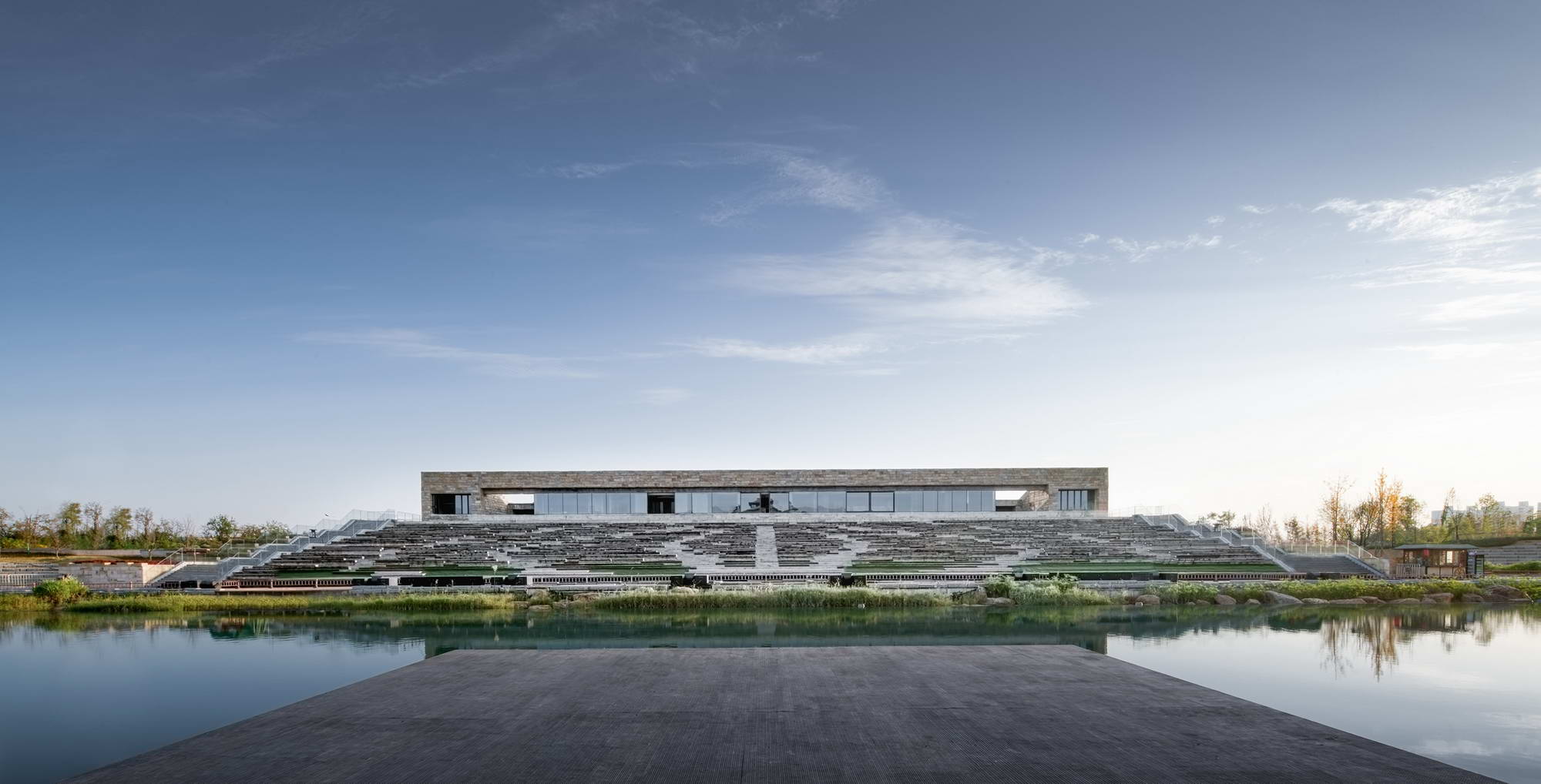
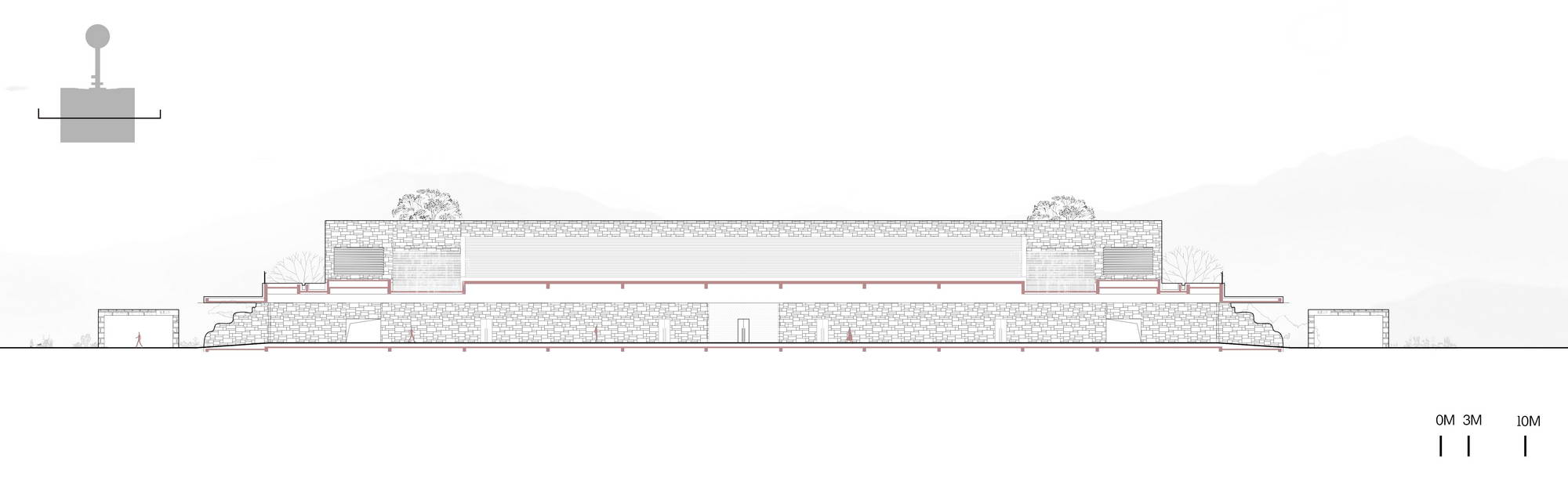
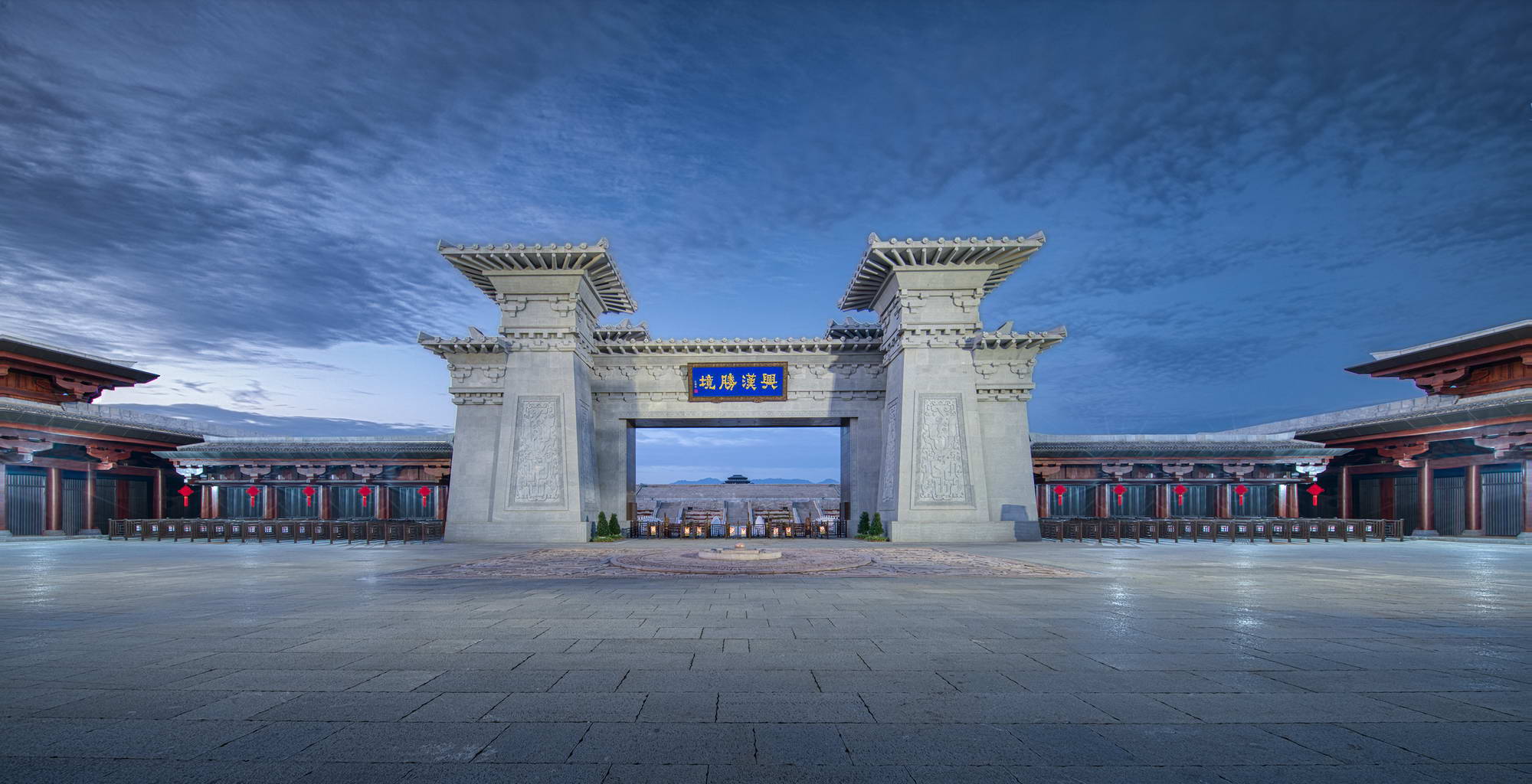
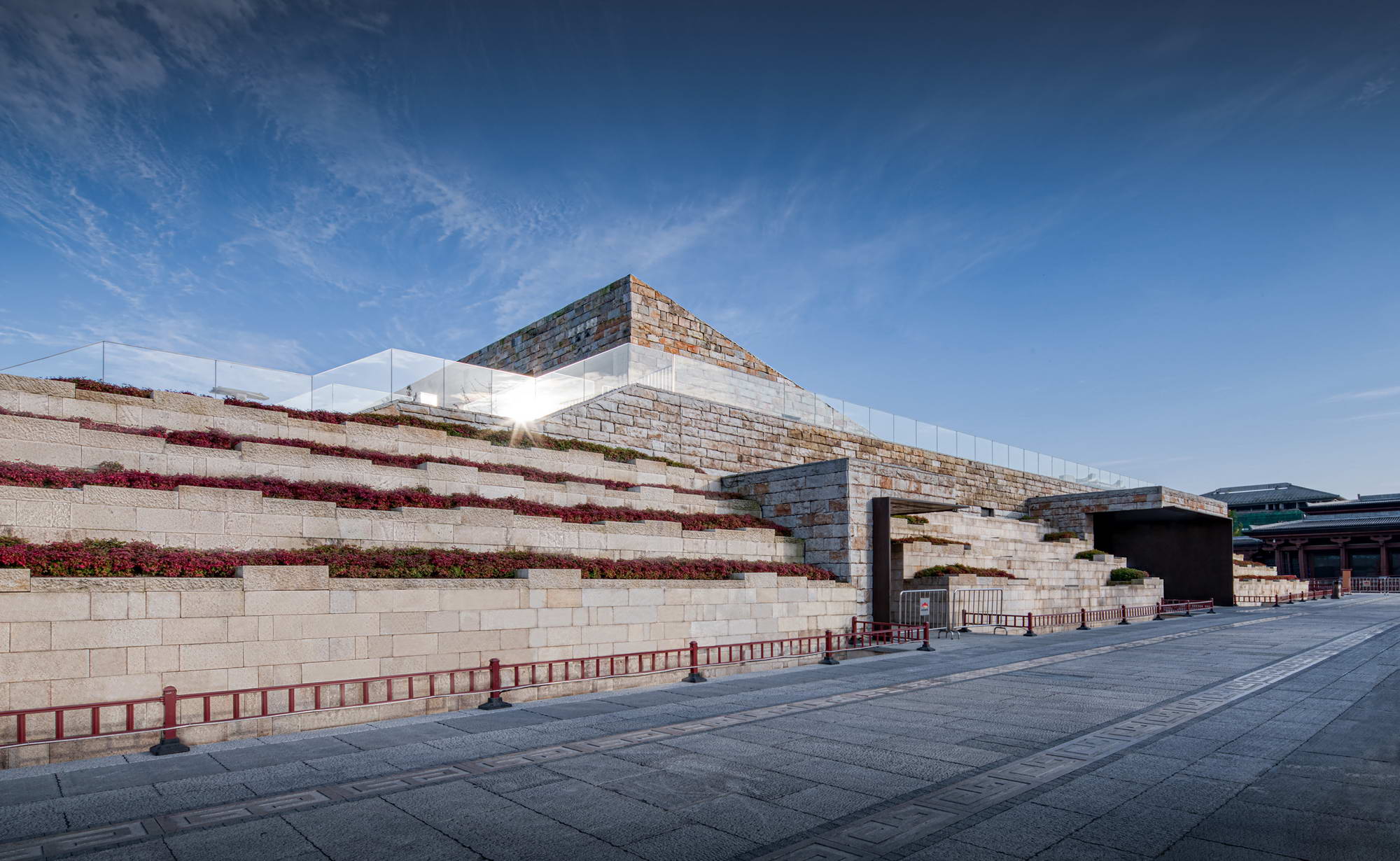
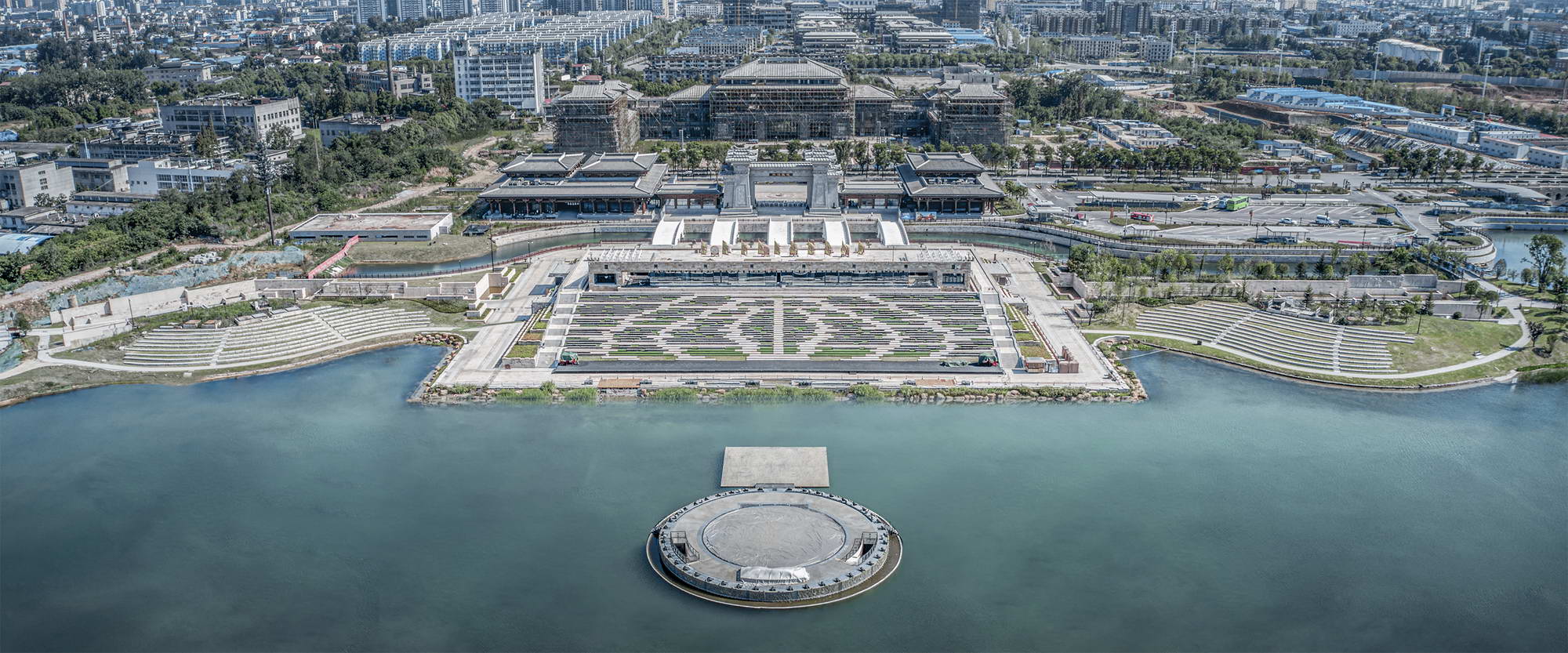
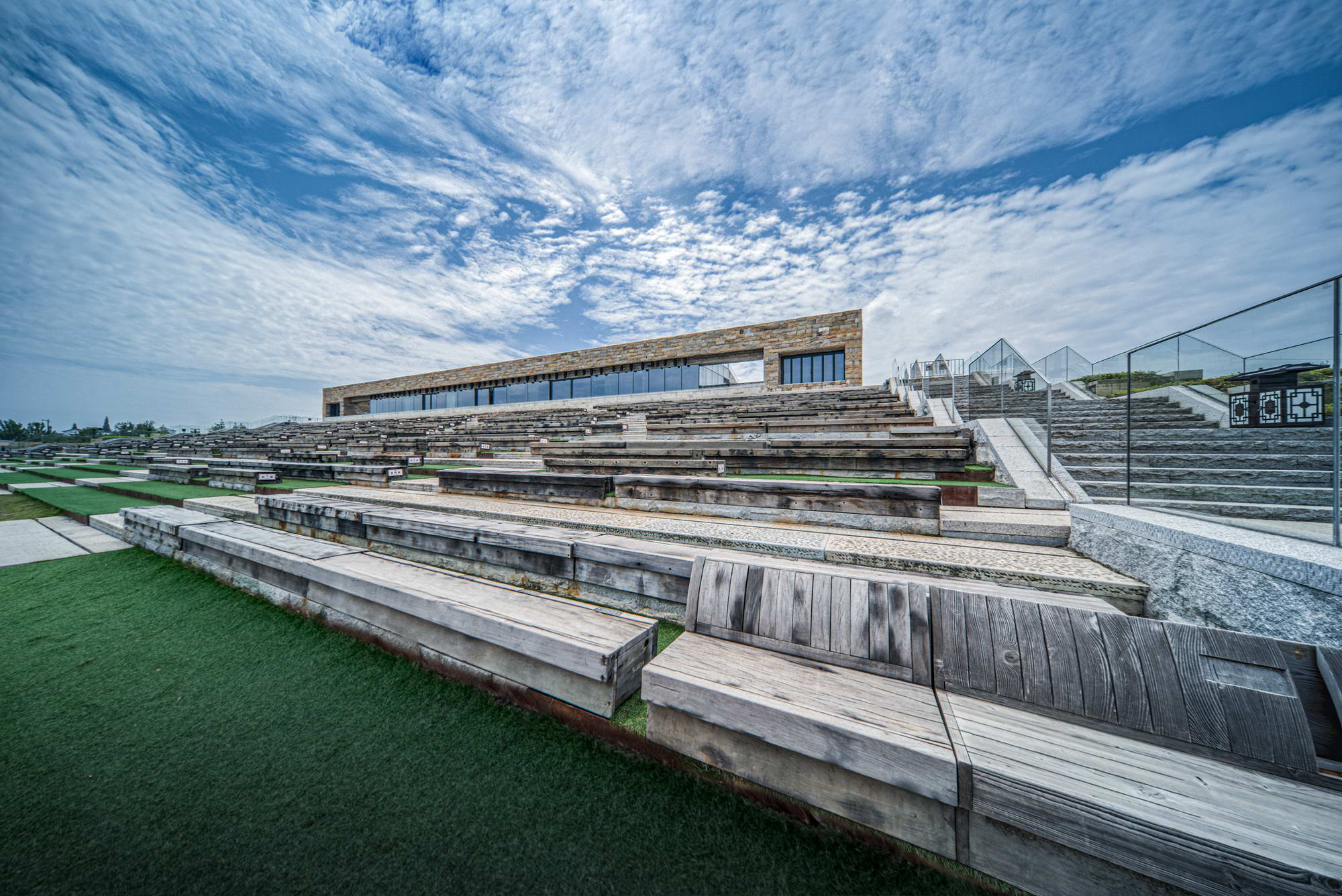
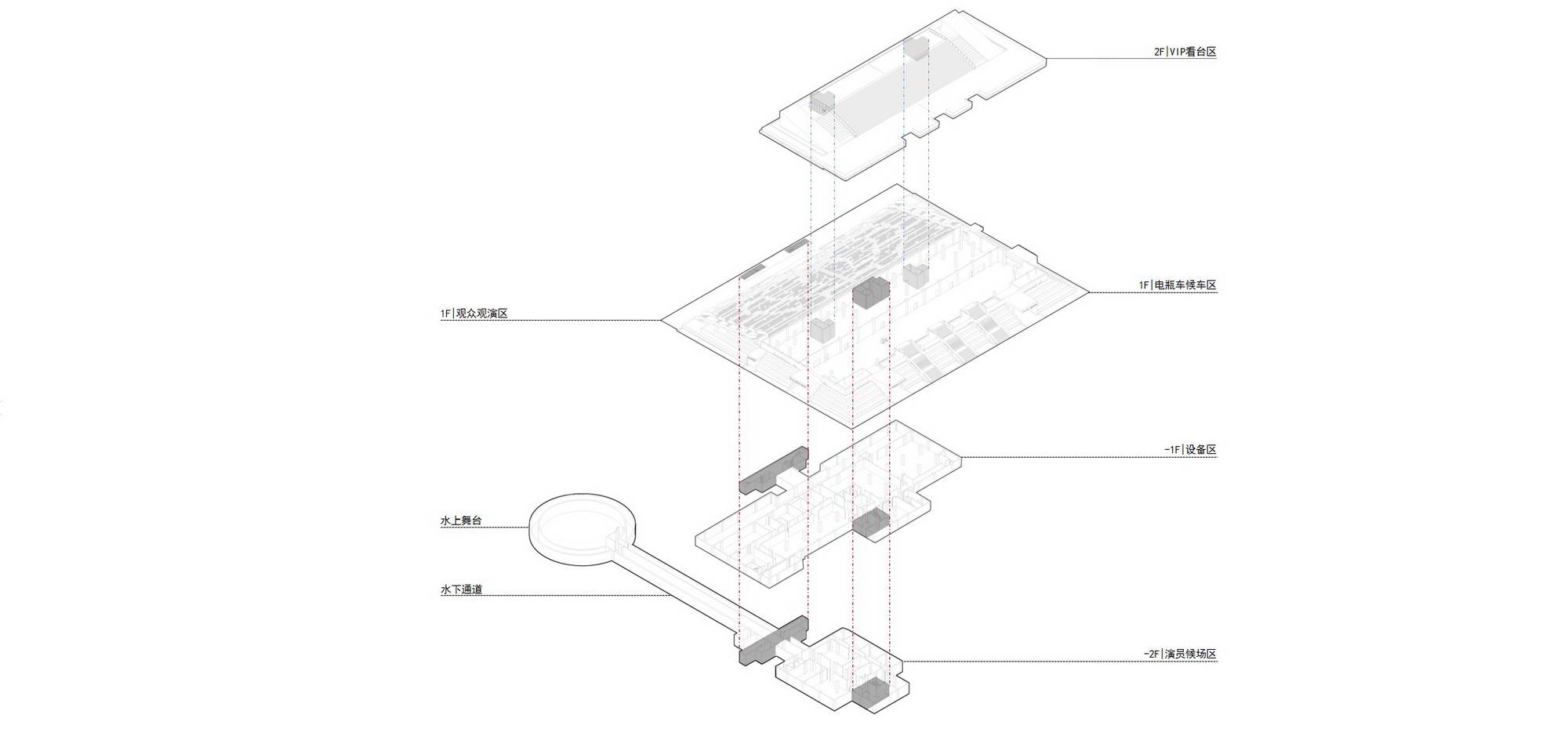
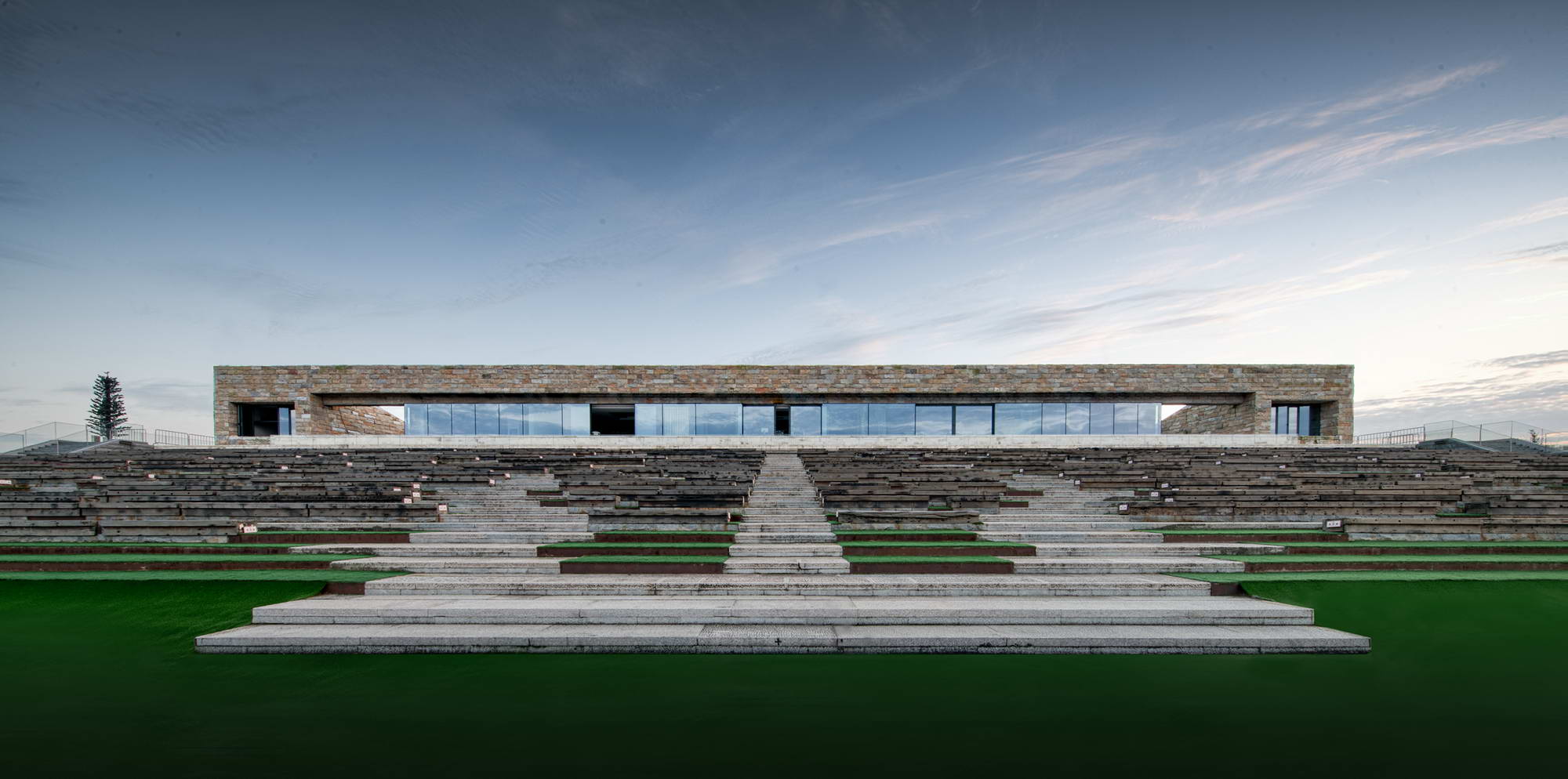
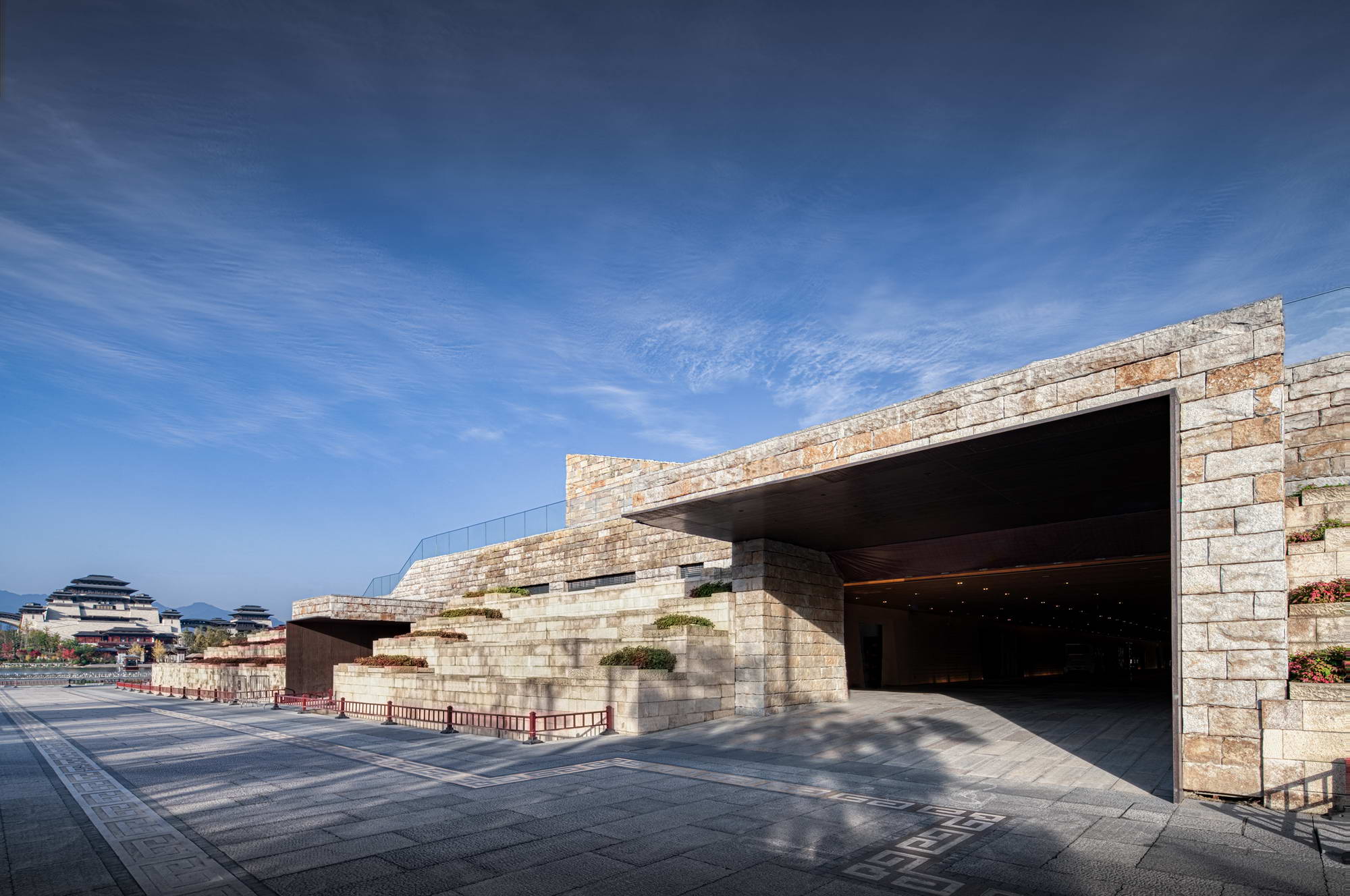
Xinghan Performance Stage is an architectural landscape in the Xinghan Shengjing scenic area of Hanzhong, designed by Fandu Design Office with landscape built by Shanghai Julong Greening. High-platform construction was the principal building type of Han-dynasty palaces and rituals, admired for its grandeur and adopted by later official architecture; Hanzhong still holds the remains of the ancient Han platform and the General-Welcoming platform, and the project seeks a similar terrace from which to converse with history. Standing in the entry square and looking through the que gate, visitors see the Han Palace placed with apparent precision on the nearby platform; across the 300-meter Hanyuan Lake, near and far overlap like a Chinese landscape painting. Layered stone steps lead visitors through the que gate and over the Golden Water Bridge, at which point the palace is hidden behind the high terrace. Below, grass runs up the steps under a high sky; above, visitors wonder whether they will find the palace's walls, and climb with expectation. What meets them, however, is a pool of open water with distant mountains beyond; the palace itself sits far across the blue water, following the hills. This deliberate reversal pushes the terrace out of the visitor's visual and mental focus, turning it into a means of guidance and a foil to the main subject. The stage was originally commissioned as the main venue for Tianhan Legend, a large outdoor performance, but within the broader Xinghan Shengjing composition the Han Palace is the undisputed protagonist; the stage was therefore designed from the start to be subordinate, hidden and supporting. Following Laozi's remark in the Dao De Jing about the formless form and imageless image, the project uses the Han architectural base, the tai platform, to conceal the building's functional mass: visitors approaching do not see its head, following do not see its rear, and the palace alone appears.







 Editor's Pick